
Flash Freeze: What It Means And How To Prepare Your Home
October 19, 2026

A flash freeze is a sudden drop from above to below freezing within a few hours, quick enough that rain and meltwater turn to ice before they can drain or dry. Roads glaze over first, but wet heat pump coils and exposed pipes can freeze just as fast.
TL;DR
A flash freeze happens when temperatures fall below 32°F (0°C) so quickly that standing water freezes in place, usually within hours of rain or a thaw. Canada issues formal warnings, while U.S. forecasters mention it in special weather statements. The best time to prepare is the mild, wet window before the drop.
Key Takeaways
Speed defines a flash freeze, since water freezes before it can evaporate or drain.
Flash freeze ice often forms as black ice, a clear glaze that looks like wet pavement.
Canada issues official flash freeze warnings. In the U.S., wet surfaces and a forecast low below 32°F within hours signal a flash freeze.
Exterior pipes, outdoor spigots, heat pump units, and furnace vents face the highest icing risk.
A clean air filter and a steady thermostat keep warm air moving.
What Is A Flash Freeze?
A flash freeze is a weather event in which the air temperature falls from above 32°F (0°C) to below freezing in a matter of hours, usually behind a cold front that follows rain or a midwinter thaw. Instead of running off or evaporating, the water freezes where it sits, coating roads and driveways in ice.
Flash Freeze Vs. Black Ice
A flash freeze is the event, and black ice is one of its most common results. Because black ice is thin and transparent, it takes on the color of the pavement beneath it, so a frozen road can look merely wet. On the road, Federal Highway Administration road weather data attributes 18 percent of weather-related crashes to freezing precipitation such as sleet and freezing rain.
Flash Freeze Warning Meaning In Canada And The United States
In Canada, a flash freeze warning is an official alert from Environment and Climate Change Canada (ECCC), the federal department that runs the country's national weather service. The warning signals that ice will form quickly as temperatures drop, and ECCC files it alongside freezing rain in the Ice category of Environment and Climate Change Canada's weather impact guides.
The United States handles it differently. The U.S. National Weather Service (NWS) does not list a flash freeze warning among its standard winter alerts, so local offices tend to cover it in special weather statements about wet roads freezing. The NWS Freeze Warning is a separate alert, issued when temperatures are forecast to stay below 32°F for a long period, according to the National Weather Service winter alert definitions.
How To Spot A Flash Freeze Yourself
U.S. forecasts often skip the term, so read the setup yourself. Treat tonight as a flash freeze when surfaces are wet now, the forecast low drops below 32°F, and the drop is due within a few hours, often behind a cold front. If all three line up, start the checklist below.
Flash Freeze Vs. Other Cold Weather Alerts
Alert definitions from Environment and Climate Change Canada and the U.S. National Weather Service.
How A Flash Freeze Affects Your Home
A flash freeze damages homes through water already in place when the temperature drops, including water in exterior pipes, rain on a heat pump's outdoor coil, and slush around furnace vents. Most coverage stops at icy roads, so Filterbuy focuses here on plumbing and HVAC equipment.
Exterior Pipes And Outdoor Spigots
Pipes along exterior walls and in crawl spaces freeze first, and a garden hose left connected traps water that can freeze back into the spigot. The American Red Cross guidance on frozen pipes recommends a steady thermostat day and night, a slow drip from faucets served by exposed pipes, open sink cabinets, and closed garage doors when water lines run through the garage. If you will be away, leave the heat set no lower than 55°F.
Heat Pump Outdoor Units
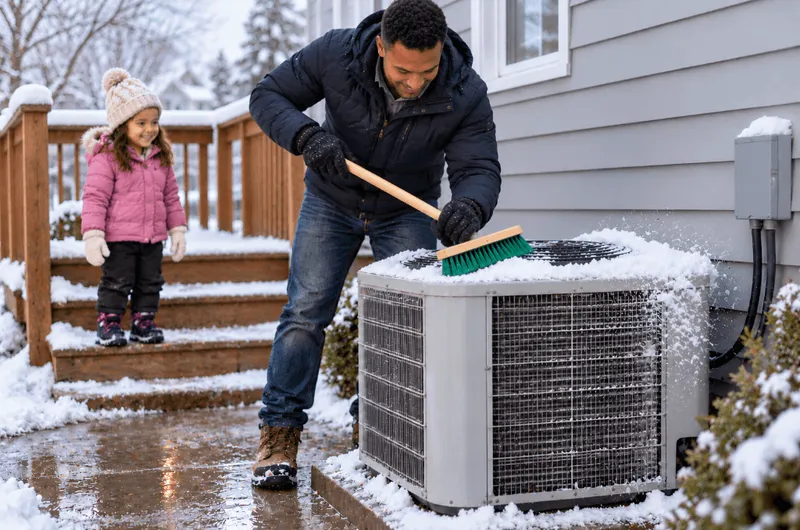
A heat pump's outdoor unit is especially exposed because rain soaks its coil right before the freeze. Light frost is normal and clears during the defrost cycle, when the outdoor fan stays off for 30 seconds to a few minutes, according to InterNACHI's guide to the heat pump defrost cycle from the International Association of Certified Home Inspectors. A quiet fan and a little steam are expected. A flash freeze, however, can leave a heavier glaze than a routine defrost is built to melt.
Wind makes that glaze harder to clear. The U.S. Department of Energy's guide to air-source heat pumps notes that high winds can cause defrosting problems, and flash freeze cold fronts often bring strong gusts. Keep the unit clear, but resist the urge to chip at the ice, because tools can bend the coil fins. If it stays encased for several hours, call a licensed HVAC technician. Filterbuy's heat pump winter prep guide covers the full checklist, and if ice forms on the indoor coil instead, read why your heat pump filter might freeze in winter.
Furnace Vents And Condensate Lines
High-efficiency gas furnaces, also called condensing furnaces, usually vent through two plastic pipes on an exterior wall or roof. When slush freezes over those openings, a safety switch can shut the furnace off overnight, and an outdoor condensate line can freeze shut.
A blocked exhaust pipe can also push carbon monoxide (CO) back indoors, which is why the CDC carbon monoxide prevention guidance calls for battery-operated or battery backup CO detectors near every sleeping area.
Air Filters And Airflow
As an air filter manufacturer, Filterbuy has a simple rule: check the filter as soon as a flash freeze is forecast. Heating systems run longer as temperatures fall, and a clogged filter chokes the airflow they depend on. The ENERGY STAR maintenance checklist recommends inspecting furnace and heat pump filters monthly. Most residential systems run well on a pleated MERV 8 or MERV 11 air filter. Before moving up to MERV 13, check your HVAC system's manual, since higher-efficiency filters need equipment rated for them. For more comfort tips, see Filterbuy's cold snap airflow tips.
How To Prepare For A Flash Freeze: The Three-Window Checklist
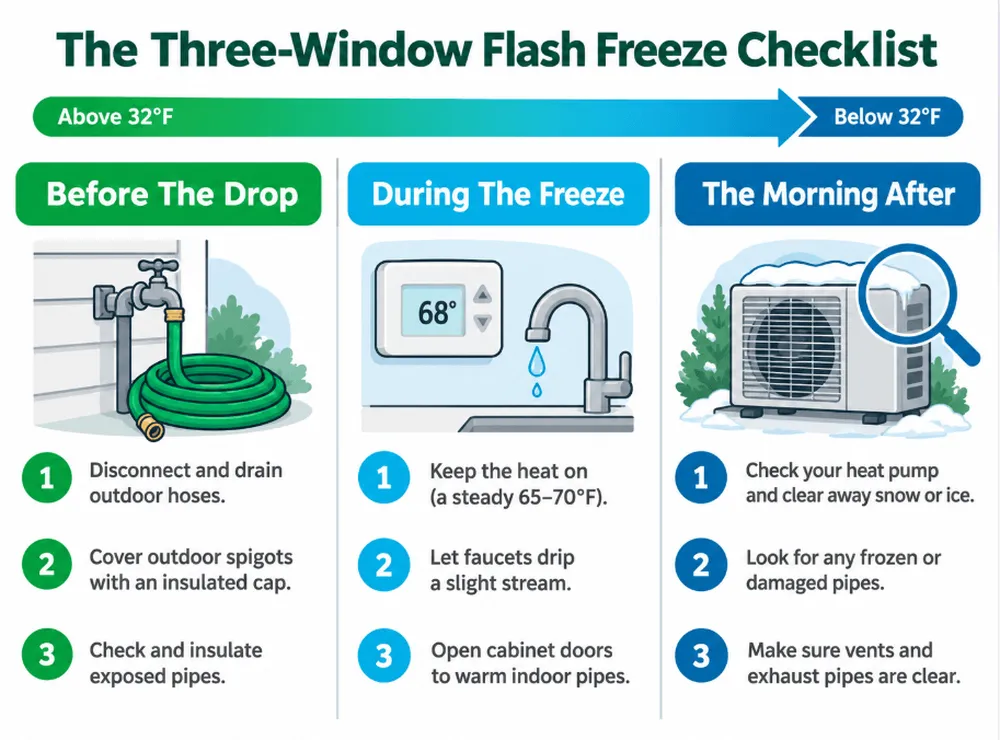
Filterbuy built this checklist around the mild, wet hours before the drop, while outdoor water is still easy to manage.
Before The Drop: While It Is Still Above Freezing
Disconnect garden hoses, and drain outdoor spigots if you have an interior shutoff valve.
Clear slush and snow from the heat pump outdoor unit and the furnace vent pipes.
Swap out the furnace or air handler filter if it looks gray or clogged.
Spread sand or ice melt on steps and the driveway before the water freezes.
Test your smoke and CO alarms, and charge phones and flashlights in case the power goes out.
During The Freeze: The First Few Hours
Keep the thermostat at one steady setting through the day and night.
Let cold water drip from faucets served by exposed pipes, and open the sink cabinets on exterior walls.
Stay off the roads if you can. If you must drive, treat any pavement that looks wet as ice.
If the power goes out, run a generator outdoors more than 20 feet from windows, doors, and vents, and never heat with a gas oven, as the CDC advises.
The Morning After: Inspect And Reset
Check the heat pump first. Ice still thick after a few hours calls for a technician.
Check the furnace vent pipes and the condensate line exit for ice.
Turn on each faucet. A trickle instead of full pressure points to a frozen pipe.
What To Do If Your Pipes Freeze
A faucet that only trickles is the classic sign of a frozen pipe. The Red Cross recommends leaving that faucet open and warming the frozen section with an electric heating pad, a hair dryer, a space heater kept away from flammable materials, or towels soaked in hot water. Never use a blowtorch or any other open flame. If you cannot reach the frozen section, or it will not thaw, call a licensed plumber.
Supporting Statistics
$15,400: The average homeowners water damage and freezing claim for 2019–2023, per Insurance Information Institute's homeowners claim data.
Nearly 100: U.S. deaths each year from portable generator carbon monoxide, per the U.S. Consumer Product Safety Commission.
41 percent: The share of fatal home heating fires involving portable heaters, which caused just 3 percent of heating fires in 2017–2019, per U.S. Fire Administration heating fire data.
Frequently Asked Questions
How fast does the temperature have to drop for a flash freeze?
There is no single official rate. A flash freeze generally means the temperature drops below 32°F (0°C) within a few hours while surfaces are still wet.
Is a flash freeze warning the same as a freeze warning?
No. A flash freeze warning, issued in Canada, means ice will form quickly on wet surfaces as temperatures drop. A Freeze Warning from the U.S. National Weather Service means temperatures are forecast to stay below 32°F for a long period, which puts pipes in unheated spaces and outdoor spigots at risk.
Should I drip my faucets if a flash freeze is expected tonight?
Yes, for any faucet fed by pipes along exterior walls or in unheated spaces, and open the sink cabinets so warm air reaches the plumbing.
Should I change my air filter before a flash freeze?
Yes, if the filter looks gray or clogged, since a clogged filter restricts airflow just as heating demand spikes. Filterbuy recommends a correctly sized filter in a MERV rating your HVAC system's manual allows.
Can a flash freeze happen without rain?
Yes. A flash freeze only needs water on surfaces, and snowmelt from a warm afternoon or heavy fog can supply it.
Get Your Home Ready Before The Next Cold Front
Flash freeze alerts can arrive with only hours of notice, so we recommend keeping a spare filter on hand. Filterbuy makes pleated filters in more than 600 sizes plus custom air filters, with fast and free 2-day delivery to most US states. Filterbuy's air filter auto-delivery can also send a fresh filter on the schedule you choose.
Glossary
Flash freeze: A rapid temperature drop below 32°F (0°C) within hours that freezes water on surfaces.
Flash freeze warning: An Environment and Climate Change Canada alert that ice will form quickly as temperatures drop.
Black ice: A thin, clear layer of ice on pavement that looks wet rather than frozen.
Freeze Warning: An NWS alert issued when temperatures will stay below 32°F for a long period.
ECCC: Environment and Climate Change Canada, which runs Canada's national weather service.
NWS: The National Weather Service, the U.S. federal forecasting agency within NOAA.
Heat pump: An HVAC system that heats a home by moving heat from outdoor air indoors.
Defrost cycle: A heat pump routine that briefly reverses operation to melt frost on the outdoor coil.
Condensing furnace: A high-efficiency gas furnace that vents through plastic pipes and drains condensate water.
Carbon monoxide (CO): A colorless, odorless gas from burning fuel that builds up when vents are blocked.
MERV: Minimum Efficiency Reporting Value, a scale rating how well an HVAC filter captures airborne particles.