
Does Closing Windows in Winter Affect Air Quality? What Builds Up in a Sealed-Up Home
October 29, 2026
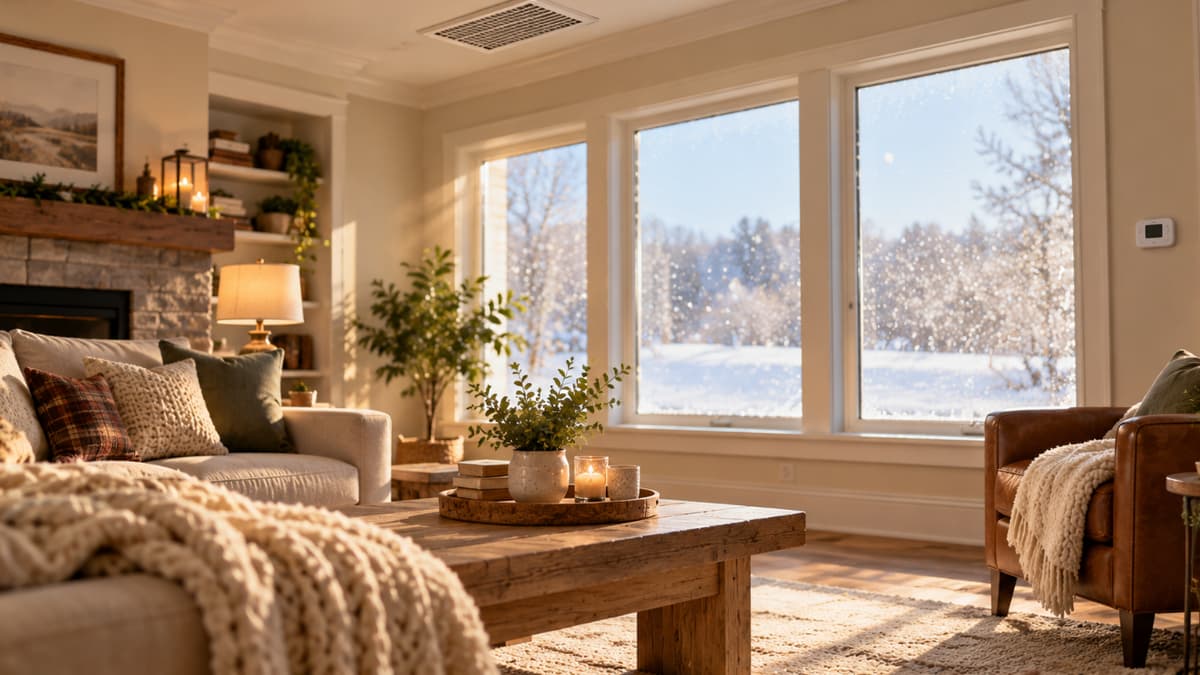
Yes. Closed windows cut fresh-air ventilation, so carbon dioxide, moisture, and indoor pollutants can build up. But when outdoor air quality is poor, keeping windows shut also keeps smoke and pollution out.
The fix is balance: short bursts of fresh air, a well-fitted HVAC filter, and humidity between 30% and 50%. Take the quick quiz below to find the right filter for your winter home.
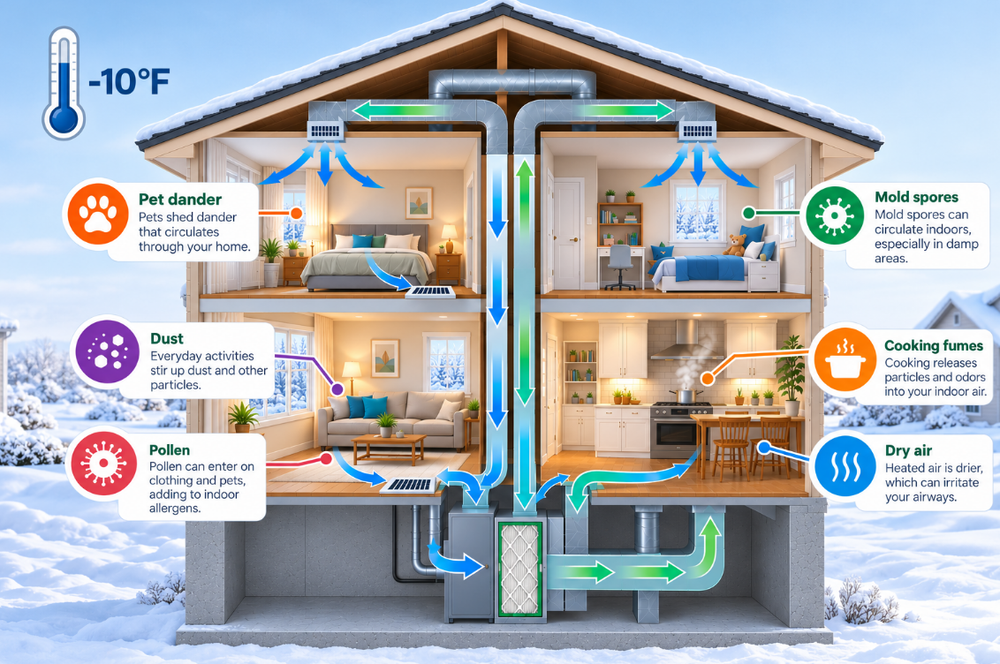
- Carbon dioxide (CO2) from breathing
- Moisture from showers and cooking
- Dust, pet dander, fine particles
- VOCs from cleaners, fresheners
Find Your Winter Filter Match
Answer a few quick questions and we'll match you to the right filter for your home.
Already know your size? Shop Filterbuy filters — made in the USA, with free shipping.
TL;DR
Yes. Closing windows in winter can reduce fresh-air ventilation, allowing carbon dioxide, moisture, and indoor pollutants to build up. However, keeping windows closed can also protect your home when outdoor air quality is poor. The best approach combines fresh-air ventilation when conditions allow, proper HVAC filtration, and indoor humidity control.
Key Takeaways
When windows close, indoor pollutants linger. The EPA reports some run 2 to 5 times higher indoors.
Bedrooms feel it first. In a Dutch study, closed bedrooms averaged 1,150 ppm of CO2 overnight, and people slept worse.
Radon can accumulate indoors, particularly in homes with elevated soil-gas entry, and the EPA estimates nearly 1 in 15 U.S. homes is above its 4 pCi/L action level.
Humidity cuts both ways. Below 30% dries airways, while above 50% feeds condensation and mold.
HVAC filters help capture airborne particles such as dust, pollen, and pet dander, but they cannot replace fresh-air ventilation or remove gases such as carbon dioxide, carbon monoxide, and radon.
Does Closing Windows in Winter Affect Air Quality?
Yes, closing windows in winter can affect indoor air quality by reducing natural ventilation. Without enough fresh outdoor air, moisture, carbon dioxide, cooking fumes, and other indoor pollutants may accumulate. However, closed windows can also help keep outdoor smoke and other pollutants from entering your home when outside air quality is poor.
That matters because Americans spend about 90% of their time indoors (EPA Report on the Environment), and the EPA's winter weather guidance warns that cold weather can trap harmful pollutants inside.
Why Does Closing Windows in Winter Affect Air Quality?
It comes down to the air exchange rate, or how quickly outdoor air replaces indoor air. The EPA names it a key factor in indoor pollution, since fewer air changes let pollutants build up.
Winter adds to it quietly. Homes are sealed tighter, and we spend more hours inside near candles and fireplaces.
What Builds Up Indoors When Windows Stay Closed?
Six pollutants do most of the damage in a closed-up winter home: carbon dioxide, moisture, fine particles, VOCs, radon, and carbon monoxide. Each needs a different fix.
| Pollutant | Main Winter Source | Why Closed Windows Matter | Best Fix |
|---|---|---|---|
| Carbon dioxide (CO2) | People and pets breathing | Builds fastest in bedrooms | Air out daily; open interior doors |
| Moisture (humidity) | Showers, cooking, breathing | Condenses on cold glass, feeding mold | Exhaust fans; keep RH 30–50% |
| Fine particles (PM2.5, dust, dander) | Cooking, candles, fireplaces, pets | Recirculated instead of diluted | Higher-MERV HVAC filter; regular changes |
| VOCs | Cleaners, fresheners, new furniture | Off-gassed chemicals linger | Limit sources; activated-carbon filter |
| Radon | Soil gas under the house | Stack effect pulls soil gas inside | Test; mitigate at 4 pCi/L or higher |
| Carbon monoxide (CO) | Furnaces, gas stoves, fireplaces | Leaks concentrate | CO alarms; annual furnace inspection |
Sources: U.S. EPA (indoor air quality, radon, humidity guidance) and CDC (carbon monoxide).
When Should You Keep Windows Closed in Winter?
Opening windows can improve ventilation, but it is not always the best choice. During wildfire smoke events, winter pollution inversions, or periods of elevated outdoor particle pollution, keeping windows closed can help limit pollutants entering your home.
Check your local Air Quality Index (AQI) before airing out your home. When outdoor air quality improves, briefly opening windows may help remove accumulated indoor pollutants. If outdoor conditions remain poor, use kitchen and bathroom exhaust systems appropriately, reduce indoor pollution sources, and run compatible HVAC filtration or portable air cleaners to help control airborne particles.
Remember that ordinary HVAC particle filters cannot remove gases such as carbon monoxide, carbon dioxide, or radon. These hazards require appropriate ventilation, source control, detection, or professional mitigation.
Carbon monoxide deserves the most respect. CDC carbon monoxide data shows more than 400 Americans die from unintentional CO poisoning each year. No filter removes CO, so working alarms are non-negotiable. If you burn wood, see Filterbuy's guide to protecting indoor air during fireplace season.
Does Closing Windows Affect Air Quality in Bedrooms?
Yes, and it shows up overnight. A Dutch field study (Mishra et al., Indoor Air, 2017) found closed bedrooms averaged 1,150 ppm of CO2, and people slept less efficiently than with a window or door open.
A 2024 bedroom ventilation study found associations between higher bedroom CO2 levels and poorer sleep outcomes. Leaving the bedroom door open may improve airflow between rooms, but it does not introduce fresh outdoor air by itself. Adequate ventilation is needed to reduce indoor CO2 buildup.
How Does Closing Windows in Winter Affect Humidity, Allergies, and Asthma?
Moisture ties most winter allergy and asthma triggers together, and closed windows trap it. Above 50% humidity, damp air condenses on cold glass, and mold can take hold on wet sills. The EPA recommends keeping humidity below 60%, ideally between 30% and 50% (EPA's guide to mold and moisture).
Turning a humidifier up too high trades a scratchy throat for sweating windows, so Filterbuy's team treats humidity and filtration as a pair. See our guides to the best winter furnace filters for allergies and furnace filters for asthma relief.
Which Homes Should Act First?
Not every home faces the same risk, so Filterbuy would prioritize:
| Your Home | Biggest Closed-Window Risk | First Move |
|---|---|---|
| Gas stove or fireplace | CO and combustion particles | CO alarms; range hood every time you cook |
| Pets | Dander recirculating | MERV 11–13 filter; check it monthly |
| Asthma or allergies | Dust mites, mold, dander | MERV 13 if your system allows; humidity under 50% |
| Newer, tightly sealed home | CO2 and VOC buildup | Daily airing-out; exhaust fans |
| Basement bedrooms | Radon | Test this winter |
| Apartment | Small, shared air volume | Exhaust fans; portable HEPA purifier |
How Much Heat Do You Lose by Airing Out?
Briefly opening windows in winter does cause some heat loss, but the amount depends on outdoor temperature, ventilation time, and how much indoor air is replaced. For example, a simplified calculation for a 2,000-square-foot home estimates roughly 18 cents in natural gas to reheat one complete air exchange under the stated assumptions. Actual heating costs may be higher because walls, furniture, and other surfaces can also lose heat.
The real loss comes from long openings that chill walls and furniture, which hold far more warmth than air. That's why we suggest opening wide for 5 to 10 minutes instead of cracking a window all night.
How to Keep Winter Air Clean Without Opening Every Window
You can keep winter air clean with the windows mostly shut by pairing short bursts of fresh air with good filtration and source control.
Run exhaust fans during and after showers and whenever you cook.
Replace 1-inch filters every 60 to 90 days, or sooner if you have pets (see how often to change your HVAC filter).
Choose depth and rating together. MERV 8 traps dust, pollen, and dander, while MERV 11 and 13 capture finer particles, including smoke. In Filterbuy's factories in Alabama, Florida, Pennsylvania, and Utah, a 1-inch filter gets 14 pleats per foot and a 4-inch gets 8 much deeper ones, so thicker filters last months longer. Compare options in our MERV rating chart or shop MERV 13 air filters.
Make sure it fits. Filterbuy cuts each filter slightly under its nominal size so it seats snugly, because air slipping around the edges goes unfiltered.
Set the thermostat fan to "On" for part of the day.
Keep humidity at 30% to 50%, checked with a $10 to $50 meter.
Test for radon using the EPA's radon risks and solutions page.
Install CO alarms outside each sleeping area and on every level, and test them monthly.
Family-owned Filterbuy has made filters in the U.S. since 2013, in 600+ sizes with free shipping.
Filterbuy's Three-Check Winter Air Routine
Run three quick checks before opening a window:
Check your local AQI before opening windows. When outdoor air quality is good, briefly opening windows can help introduce fresh air. When pollution levels are elevated, especially during wildfire smoke or winter inversions, keeping windows closed may help reduce outdoor pollutants entering your home. People with respiratory conditions should take extra precautions.
Check the glass. Frequent window condensation may indicate excess indoor moisture for the outdoor temperature, so turn the humidifier down.
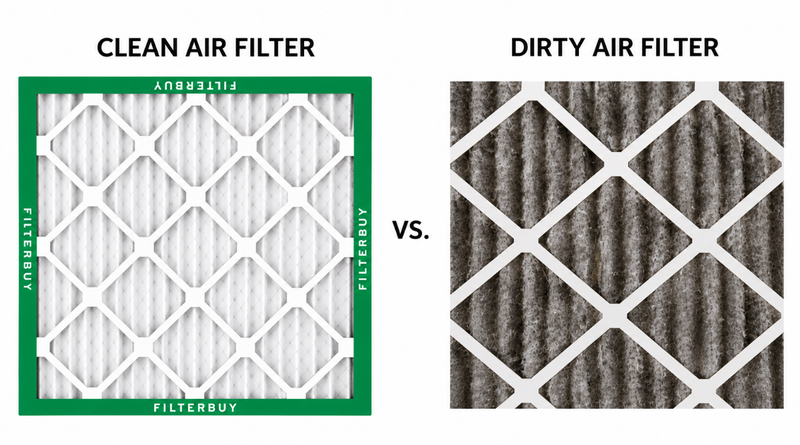
Check the filter against white paper, not a lamp. A new pleated filter already blocks plenty of light, so a lamp can fool you. Compare your filter with a clean white surface to help identify visible dust buildup. However, color alone does not determine whether a filter needs replacing. Follow the manufacturer's recommended replacement schedule and check for heavy dust accumulation or restricted airflow.
"I don't want anyone to feel like they need an HVAC license just to pick the right filter. My job is to give you the straight answer," says Michelle Wan, Brand Manager and Air Quality Writer at Filterbuy.
Read more on why indoor air quality gets worse in winter.
Supporting Statistics: What Research Shows for Closed-Up Winter Homes
1. Over 90% of U.S. homes have three or more detectable allergens. A study of nearly 7,000 U.S. homes found that over 90% had at least three detectable allergens in bedroom dust, while approximately 73% had at least one allergen at elevated levels. Source: PubMed – Bedroom Allergen Exposures in US Households (2017)
2. The colder it gets outside, the lower indoor humidity should be. ASHRAE's maximum, published by the EPA, falls from 35% at 20°F outdoors to 25% at 0°F. Source: U.S. EPA, moisture control
3. Radon causes an estimated 21,100 U.S. lung cancer deaths a year. That's 13.4% of U.S. lung cancer deaths, and about 1 in 4 among nonsmokers. Source: U.S. EPA Assessment of Risks from Radon in Homes
Frequently Asked Questions
Should I crack a window in winter?
Opening a window can improve ventilation when outdoor air quality is good. A short opening may help limit heat loss compared with leaving a window open for extended periods, although the actual results depend on weather conditions and airflow.
Can closed windows cause mold?
Not on their own, but they trap moisture. Daily window fog means humidity is too high.
Can closing windows in winter cause headaches?
Headaches shared by several people at once can signal carbon monoxide. If your CO alarm sounds, get outside and call 911.
Does closing windows in winter affect air quality in apartments?
Often more so, because apartments are smaller and share air with neighbors.
How often should I change my air filter in winter?
Check it monthly and replace 1-inch filters every 60 to 90 days. Filterbuy auto-delivery can ship one every 1, 2, or 3 months.
Glossary
AQI: The EPA's 0–500 Air Quality Index; above 100 is unhealthy for sensitive groups.
Air exchange rate (ACH): How many times per hour outdoor air replaces indoor air.
Carbon dioxide (CO2): A gas people exhale; indoor levels show ventilation.
Carbon monoxide (CO): An odorless, poisonous gas from burning fuel.
MERV rating: ASHRAE's 1–16 filter efficiency scale. Filterbuy makes MERV 8, 11, and 13.
pCi/L: Picocuries per liter, the unit for radon levels.
PM2.5: Airborne particles 2.5 micrometers or smaller.
Radon: A radioactive soil gas linked to lung cancer.
Relative humidity (RH): Moisture in the air as a share of the most it can hold.
Stack effect: Rising warm air that pulls soil gas in through the foundation.
VOCs: Volatile organic compounds released by cleaners, paints, and furniture.