
Cabin Air Filter Mold: Signs, Risks, And How To Fix It
August 4, 2026
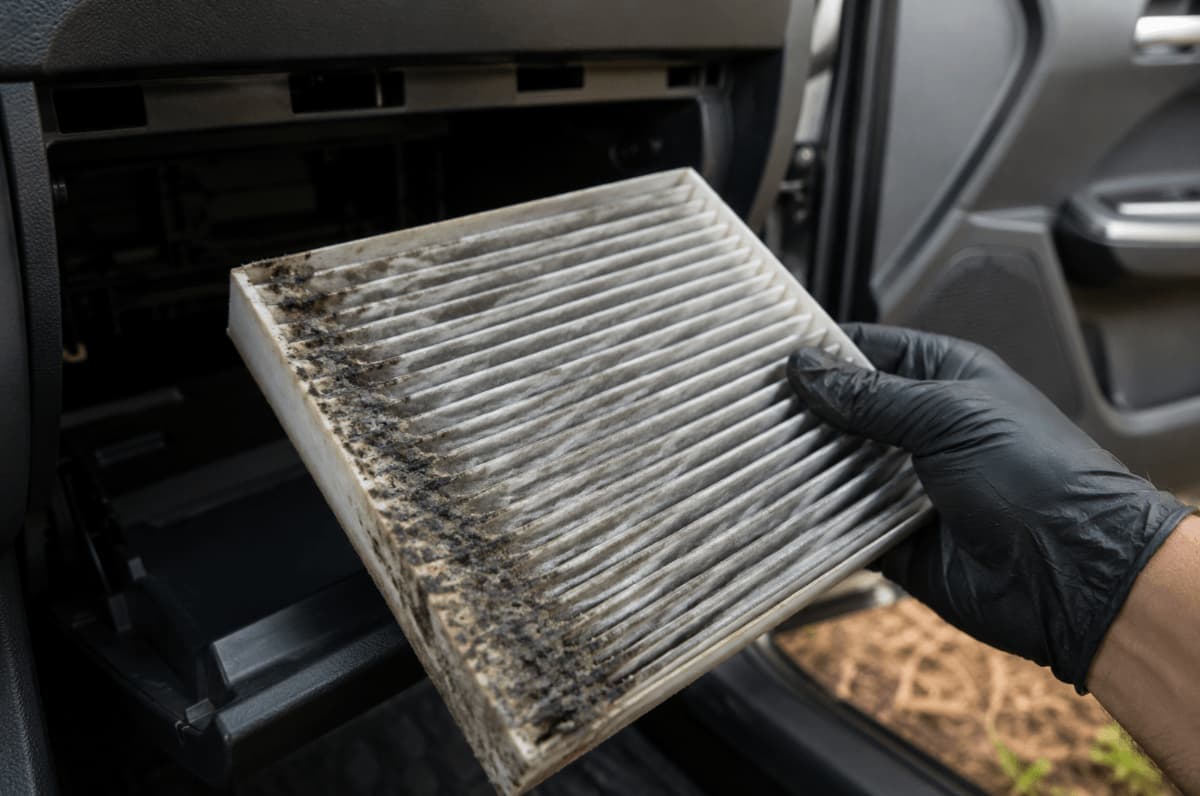
Mold on a cabin air filter cannot be cleaned off — the filter has to be replaced. It grows when trapped moisture meets the dust the filter has already collected, so a new filter only stays clean once the water behind it is dealt with. Check that the air conditioning condensate drain is flowing and that the evaporator is drying out.
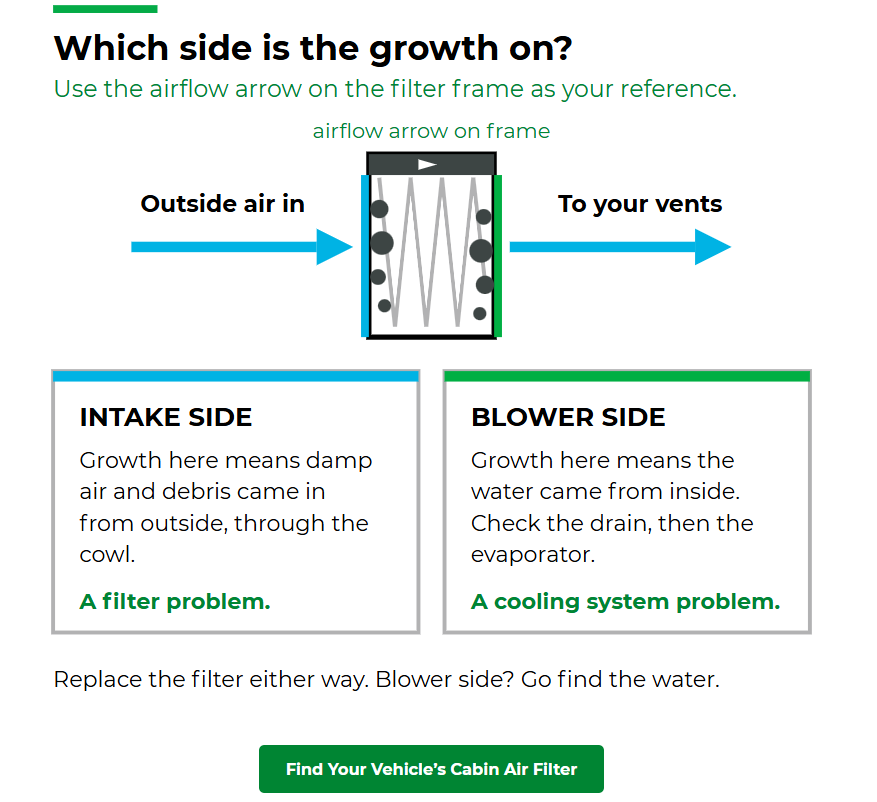
Which face of the airflow arrow the growth sits on tells you which of those two problems you have:
Growth on the intake side — damp air and debris came in from outside. A filter problem.
Growth on the blower side — the water is coming from inside. Check the drain, then the evaporator.
Most drivers need a fresh filter every 12,000 to 15,000 miles, sooner in humid climates. Find the exact-fit cabin filter for your vehicle by year, make, and model.
Not sure which filter you need? Answer a few quick questions and we’ll match you to the right one.
TL;DR
A moldy cabin air filter is a symptom of standing moisture in the vehicle air conditioning path. Damp air from the cowl intake settles into media already loaded with pollen and road debris, and growth follows. A new filter clears the smell only when the water source behind it gets fixed, which means a flowing condensate drain and a dry evaporator.
Key Takeaways
Mold on a cabin air filter is not a filter defect. It signals standing moisture, usually a slow air conditioning drain.
A moldy cabin filter cannot be cleaned. Wetting pleated media destroys the fold geometry that makes it work.
Which face the growth sits on tells you where the water came from. Blower-side growth points at the evaporator rather than the road.
You do not need to know the mold species. Removal and moisture control are the same for every type.
Is The Dark Growth On Your Cabin Air Filter Mold Or Just Dirt
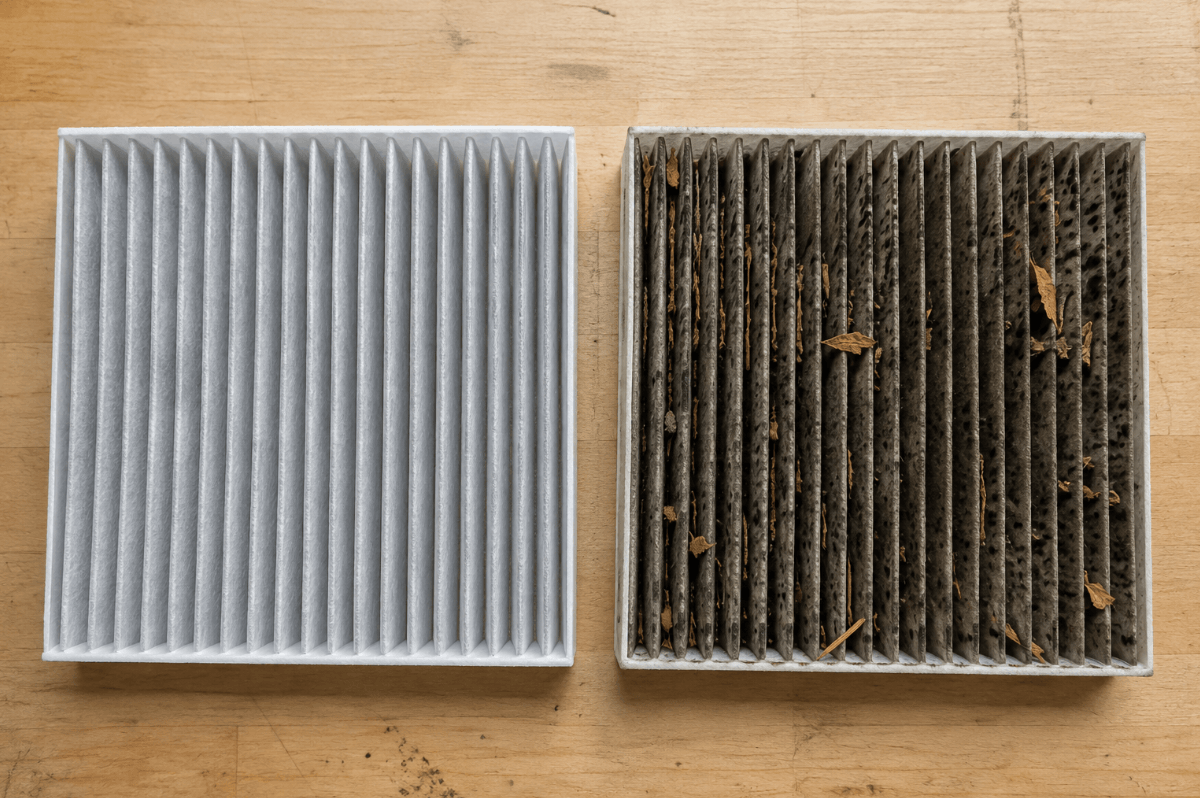
Mold on a cabin air filter looks like fuzzy or speckled patches, usually gray, black, or greenish, clustered where the media stays damp. Road dirt looks flat and spreads evenly across the pleats. Mold has texture you can see when you tilt the filter against the light, and it carries a cellar-like odor that stays with the filter after removal.
One check settles more than the rest, and we have not seen it on a competing page. As a filter manufacturer, Filterbuy reads a growth pattern the way you would read a water stain. Note which face the growth sits on, using the airflow arrow as your reference. Intake-side growth means wet air and debris came through the cowl. Blower-side growth, downstream of the arrow, means the water came from inside the system, which points at the evaporator or a drain that is not shedding. That separates a filter problem from a cooling system problem.
New to the part itself? Start with what a cabin air filter actually does
What Causes Mold To Grow On A Cabin Air Filter
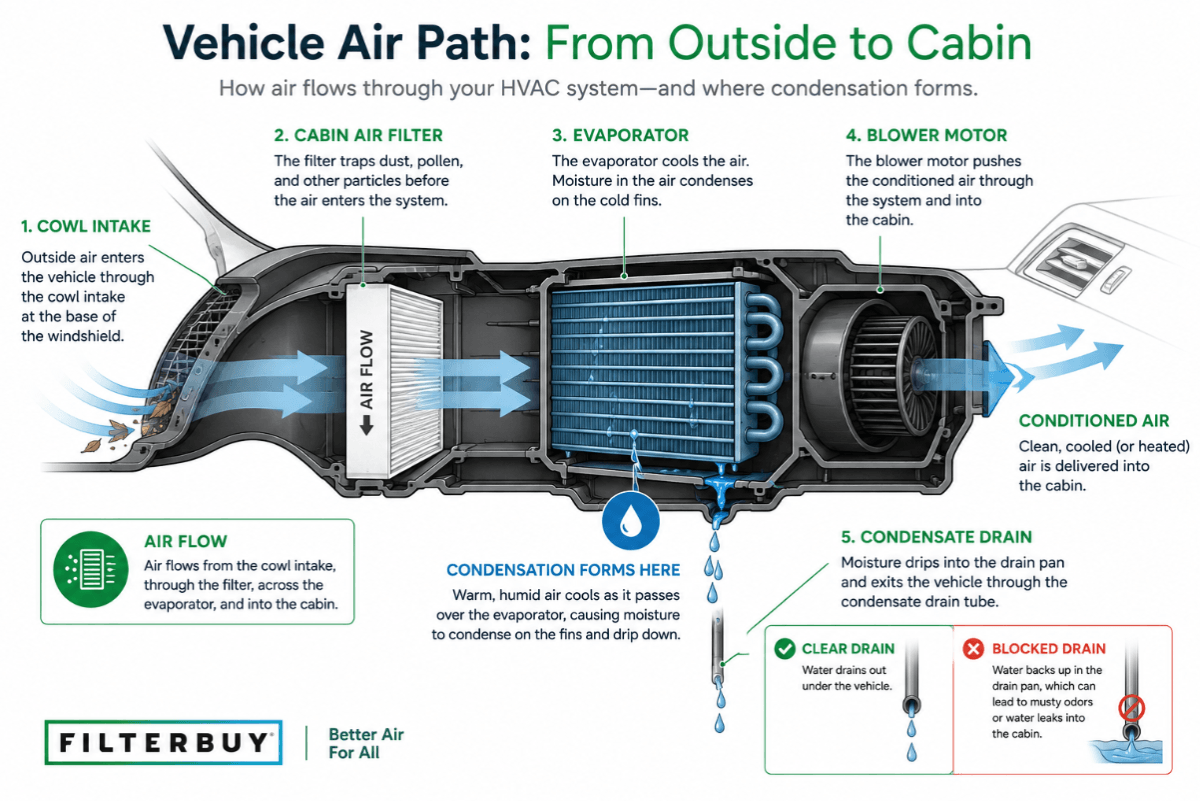
Mold needs moisture, a food source, and time, and a cabin filter housing supplies all three. Air conditioning condenses water on the evaporator whenever it runs, and that water should exit through a drain tube under the vehicle. When the drain slows, humidity stays in the housing and the trapped pollen becomes food. Humid climates accelerate it, as do short trips that end before airflow dries the housing out.
One cause gets overlooked, and Filterbuy watches it closely as a manufacturer. A filter that does not match the housing leaves edge gaps, so damp unfiltered air tracks around the media and wets housing walls where nobody looks. Fit is a moisture control feature. The airflow side of that story is in how a clogged filter affects your AC
Our Symptom To Source Diagnostic For A Musty Cabin
The filter is where the problem shows up, and the evaporator or drain is usually where it starts. Filterbuy built this table to help you sort the cheap fix from the real one before spending money.
A sweet smell points to coolant rather than mold and needs a technician, not a filter.
Can You Clean A Moldy Cabin Air Filter
No. Standard cabin filters use pleated paper or synthetic media. Rinsing collapses the pleats, and vacuuming tears fibers while releasing spores into the space you sit in. Compressed air drives contamination deeper into the housing.
Filterbuy builds this media, so the mechanism is worth stating plainly. Pleats work because the folds hold a fixed geometry that multiplies surface area while keeping resistance low. Water softens the media and the folds lose that shape permanently. A cleaned filter looks better and filters worse. Washable filters are the narrow exception, and even those must dry fully before reinstallation. The walkthrough is in how to replace a cabin air filter at home
How To Get Rid Of Cabin Air Filter Mold
Five steps in order. Most repeat smells trace back to a drain check nobody ran.
1. Remove and discard the filter. Wear a mask and gloves, and bag it before carrying it through the cabin.
2. Inspect the empty housing. Wipe out debris and water. A wet housing floor points at the drain.
3. Confirm the drain is flowing. Run the air conditioning ten minutes and look for a puddle under the passenger side. None on a humid day means it needs clearing.
4. Install a correctly sized replacement. Match the airflow arrow and exact dimensions so damp air cannot bypass the edges.
5. Dry the system after each drive. Switch to fan only for the last two minutes with the air conditioning off.
Filterbuy does not recommend the disinfectant sprays that circulate on owner forums. Federal guidance advises against routine bleach and biocide use during mold cleanup, and a cabin is a small space where aerosolized chemicals reach your lungs directly.
Three Habits That Quietly Make It Worse
None of these looks like a mistake at the time.
Running recirculate all summer. Recirculate cycles cabin humidity back through the same evaporator instead of flushing it with drier outside air. Use it in traffic, then switch back.
Pulling the filter out for airflow. Airflow rises slightly, and grit and moisture then land on the evaporator fins, where growth is far harder to reach than growth on a filter you throw away.
Masking the smell with a vent clip. Fragrance covers the signal that water is sitting somewhere, and every week of masking is another week of growth you are not watching.
Is A Moldy Cabin Air Filter Dangerous
Breathing mold spores affects people differently, and risk tracks with sensitivity rather than the amount of visible growth. Health authorities link damp environments to nasal congestion, coughing, wheezing, eye and skin irritation, and worsened asthma symptoms, with higher risk for people who have weakened immune systems or chronic lung disease. Talk to a clinician about symptoms that persist after the filter and the water source are handled.
Skip the species question, where much of the online advice sends people. Federal health guidance advises against mold testing and states you do not need to identify the type before removing it, because the response is the same either way.
Where DIY Ends And A Technician Starts
The filter swap and the fan-only routine need no tools beyond a screwdriver. A condensate drain sits on the line, reachable from underneath on some vehicles and buried behind trim on others. Hand the work off when growth is on the evaporator fins, when the drain will not clear with gentle air, when carpet stays wet after the drain is flowing, or when the smell is sweet rather than musty.
The Filterbuy Water First Rule
One rule and three checks, the framework Filterbuy would give a neighbor before they spent a dollar at a shop. Water beats filtration, and no filter dries a system that keeps making standing water.
1. Drain. Confirm the condensate line sheds water on humid drives, because a blocked drain defeats everything else here.
2. Dryness. End each drive with two minutes of fan only so the evaporator is not damp overnight, when growth takes hold.
3. Deadline. Replace on mileage rather than on odor, since by the time you smell it the media is saturated.
"The question I get most is whether a new filter will fix the smell. My answer is that it depends on where the mold was sitting. If it grew on the side facing the blower, the water is coming from your air conditioning, and a new filter buys you a few weeks at best."
Michelle Wan, Brand Manager and Air Quality Writer, Filterbuy
Filterbuy manufactures air filters in the United States, including exact-fit cabin filters for hundreds of vehicles. Find the right cabin air filter for your vehicle by year, make, and model.
How To Prevent Cabin Air Filter Mold From Returning
Prevention is water control, and the interval does the rest. Guidance sits between 12,000 and 15,000 miles, with the owner manual as the final word. Two windows deserve a check rather than a guess, the first humid week you run the air conditioning hard and the weeks after autumn leaf drop.
The breakdown is in how long a cabin air filter lasts, and the cost of ignoring it is in what happens if you never replace it. Set up Filterbuy automatic filter delivery if the calendar is what slips. Your home runs the same physics on a longer schedule, covered in whether a home filter helps with mold spores.
Supporting Statistics
Indoor humidity above 50 percent supports mold growth, and the most common indoor molds are Cladosporium, Penicillium, and Aspergillus. The same threshold logic applies to a vehicle housing that cannot dry out.
Source: CDC mold basics
Fungal contamination on car air conditioning filters was highest in the vehicles that had gone longest since their last filter change, and Aspergillus species appeared in most filter samples across both summer and winter sampling. Mileage since replacement tracks with what grows in the housing.
Source: Peer-reviewed study of car air conditioning filters
The mean one-way commute in the United States reached 27.2 minutes in 2024, and 69.2 percent of workers drove alone. Exposure duration inside a small cabin is what makes filter condition worth attention.
Source: Census Bureau commuting estimates
Frequently Asked Questions
Q: Will A New Cabin Air Filter Fix The Musty Smell
A: Often, yes, when the filter held the growth. A smell that returns within a few weeks means water is still sitting on the evaporator or in a blocked drain.
Q: Is The Black Mold On My Cabin Air Filter The Dangerous Kind
A: Federal health guidance advises against mold testing and states you do not need to know the species, because removal and moisture control are the same for every type. Color alone identifies nothing.
Q: How Do I Know If My Cabin Air Filter Has Mold
A: Look for fuzzy or speckled patches with visible texture near damp edges, and note which face they sit on. A cellar-like odor that stays with the filter after removal confirms it. More detail is in signs your cabin air filter needs replacing.
Q: Can I Just Run The Air Conditioning Without A Cabin Air Filter
A: No. Debris and moisture land straight on the evaporator fins, where growth is far harder to remove than growth on a filter you replace in minutes.
About The Author
Michelle Wan is Filterbuy's Brand Manager and air quality writer. She works directly with Filterbuy's United States manufacturing team and bases her guidance on how filters are built and used rather than on spec sheets.
Glossary
Cabin air filter. The filter in a vehicle heating and cooling system that cleans outside air before it enters the passenger compartment, usually behind the glove box.
Evaporator. The air conditioning component that chills incoming air. Water condenses on it in operation, making it the dampest surface in the system.
Condensate drain. The tube that carries evaporator water out under the vehicle. A blocked drain keeps that water inside the housing.
Airflow arrow. The marker on a cabin filter frame showing which face is the intake side and which is the blower side.
Mold spore. The microscopic reproductive particle mold releases into the air.
Filterbuy. A United States air filter manufacturer making home HVAC filters and exact-fit auto cabin air filters, sold factory direct.