
Long-Term Effects Of Air Pollution On The Lungs (And How To Limit Damage)
July 23, 2026
Author: Michelle Wan Reviewer: David Clark, Licensed HVAC Technician Published: July 23, 2026 Updated: July 23, 2026
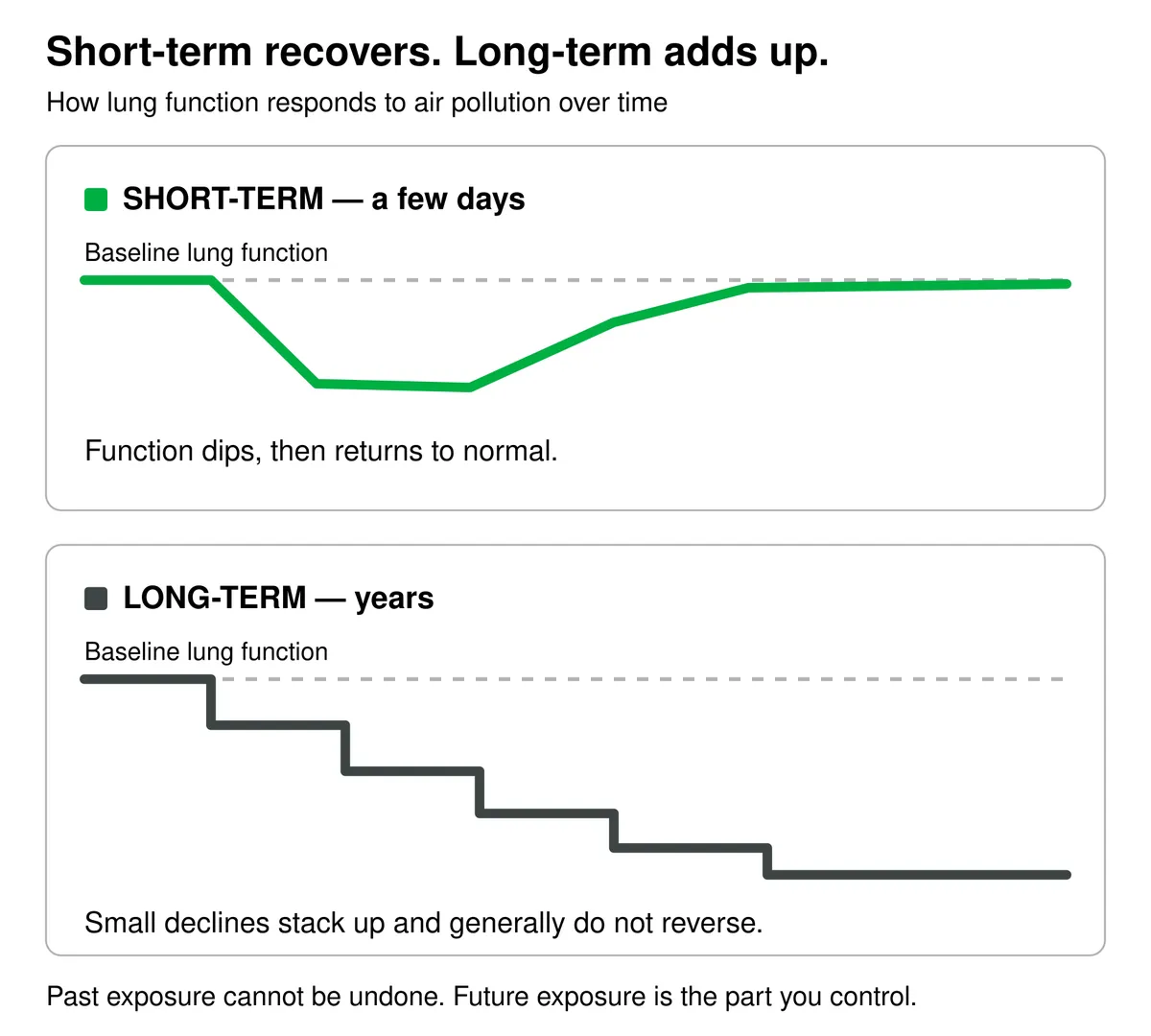
Years of breathing polluted air change the lungs in ways that generally do not reverse. Fine particulate matter (PM2.5) and ozone trigger repeated, low-level inflammation deep in the lungs, and over years that adds up to measurable declines in lung function along with higher COPD and lung cancer risk. A single bad-air day works differently: short-term irritation usually clears within hours to days. Existing damage cannot be undone, but the exposure you take on from here is still yours to change.
- Short-term exposure: a temporary dip in lung function that typically recovers.
- Long-term exposure: gradual decline over years, with higher COPD and lung cancer risk.
- Highest risk: children, older adults, pregnant people, and anyone with asthma, COPD, or heart disease.
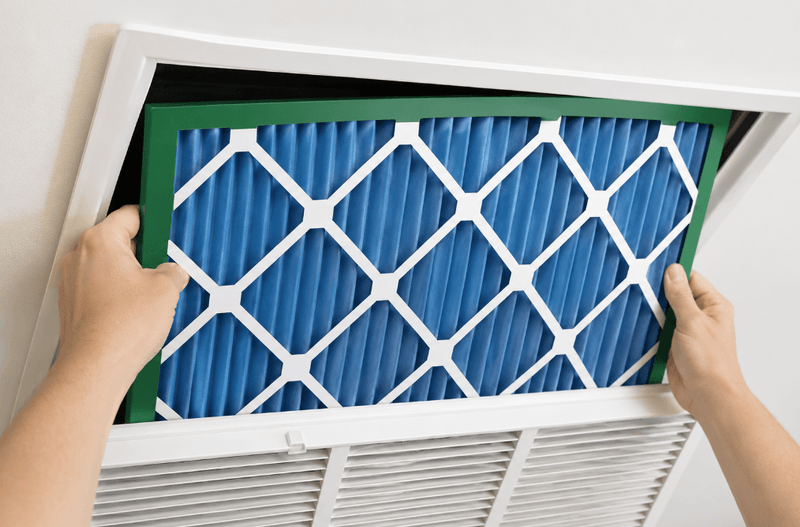
Most people spend the majority of their time indoors, so your HVAC filter decides which particles get captured before air circulates through your home. MERV 8 captures larger debris, dust, and dust mites. MERV 11 captures finer particles like pet dander and mold spores. MERV 13 captures microscopic particles and is the highest residential filtration. Confirm your system’s rated compatibility before moving up.
Answer 3 quick questions and we’ll match you to your MERV rating.
Prefer to browse first? Shop Filterbuy air filters — made in Talladega, Alabama and shipped direct.
Educational only. This page is not medical advice. Talk to a doctor about ongoing respiratory symptoms.
Years of breathing polluted air change the lungs in ways a single bad-air day never will. Chronic exposure to fine particulate matter (PM2.5) and ozone is tied to permanently reduced lung function, a higher lifetime risk of chronic obstructive pulmonary disease (COPD), and a higher risk of lung cancer, according to research from the National Institutes of Health and the American Lung Association. The damage builds slowly and often shows no symptoms until lung function has already declined.
TL;DR
Long-term air pollution exposure damages lung tissue through repeated inflammation and oxidative stress rather than a single acute event. Over years, this raises COPD risk, reduces lung function, and increases lung cancer risk, with children, older adults, and people with existing heart or lung disease facing the highest risk. Reducing ongoing exposure can lower future risk, but existing structural damage generally cannot be reversed.
Key Takeaways
Chronic PM2.5 and ozone exposure causes repeated, low-level inflammation that accumulates into measurable lung function decline over years, not days.
Long-term exposure is linked to higher COPD incidence, including in people who have never smoked.
Fine particulate matter is classified as a carcinogen, and air pollution is a recognized lung cancer risk factor.
Children, older adults, pregnant people, and anyone with existing asthma, COPD, or heart disease face disproportionately higher risk from the same exposure level.
Reducing future exposure can slow further decline, but structurally damaged lung tissue generally does not fully repair itself.
Why Filterbuy Is Weighing In On Lung Health
Filterbuy manufactures pleated air filters in Talladega, Alabama, and ships them directly to households nationwide. We are not a medical authority, and nothing here replaces advice from a doctor. Our vantage point comes from repeated customer conversations about whether a filter upgrade is worth it, usually during wildfire or allergy season. That perspective shapes this article: fewer restated specs, more explanation of the actual mechanism, so readers can judge whether an upgrade fits their situation.
"The question we hear most from customers isn't 'What does my filter capture?' It's 'Will this actually help my child's asthma?' or 'Is this just marketing?' People deserve a straightforward answer instead of a spec sheet, which is why this guide explains the health science first and the filter second."
Michelle Wan, Brand Manager and Air Quality Writer, Filterbuy
What Long-Term Exposure Does To Lung Tissue
Short-term exposure causes temporary irritation that typically resolves within hours to days. Long-term exposure works differently. PM2.5 particles travel deep into the alveoli, the tiny air sacs where oxygen exchange happens, triggering ongoing inflammatory and oxidative stress responses. Repeated over months and years, this alters lung structure and reduces tissue elasticity and capacity, a mechanism documented in respiratory research on wildfire smoke and fine particulate exposure. Ozone reaches a similar outcome by irritating the airway lining directly with repeated exposure, according to AirNow.gov's health guidance on ground-level ozone. The result is thousands of small inflammatory events across years rather than one irritated episode, which is why chronic exposure is often described as a silent risk.
Short-Term Vs. Long-Term Air Pollution Effects At A Glance
Effects vary by individual health status, exposure level, and duration. This table is educational and is not a substitute for medical advice.
How Air Pollution Raises Your Risk Of COPD
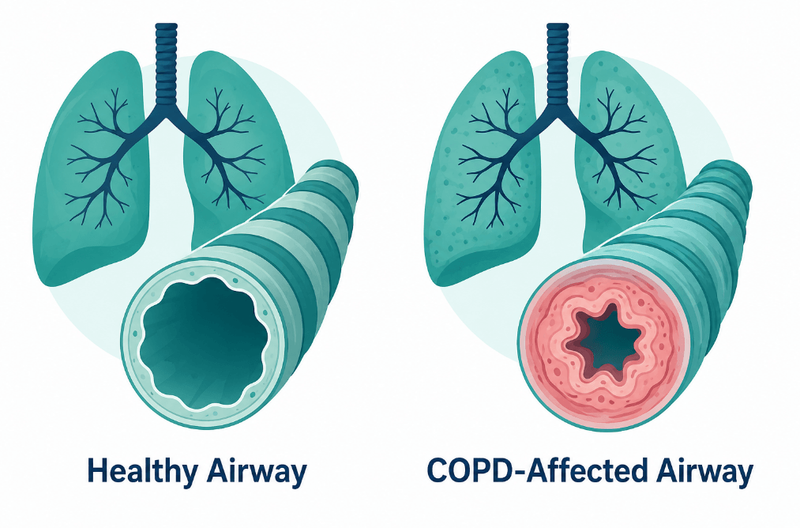
COPD is a progressive lung disease that limits airflow and makes breathing harder over time. Long-term exposure to PM2.5 and traffic-related pollutants is associated with increased COPD incidence and worsens outcomes in people who already have it, per National Institutes of Health-supported research on particulate matter and pulmonary disease. A meaningful share of COPD cases occur in people with no smoking history, pointing to environmental exposure as a contributing factor on its own.
The Link Between Chronic PM2.5 Exposure And Lung Cancer
Long-term PM2.5 exposure is associated with increased lung cancer risk, including in people who have never smoked, according to the CDC's lung cancer risk factor guidance. Fine particulate matter carries compounds classified as carcinogens, and prolonged inhalation gives them sustained contact with lung cells over years. Researchers describe the relationship as dose-and-duration dependent: longer, higher exposure carries greater associated risk rather than any single exposure causing cancer outright.
Who Faces The Highest Risk From Years Of Polluted Air
The same pollution level affects people differently. Children are especially vulnerable because their lungs are still developing and they breathe more air relative to body size. Older adults and anyone with existing asthma, COPD, or cardiovascular disease face amplified risk from the same exposure, per guidance from the Asthma and Allergy Foundation of America. Pregnant people and outdoor workers also carry higher exposure risk from more time spent breathing ambient air.
A personal risk picture depends on more than today's AQI reading. Worth asking yourself: how many years you've lived somewhere with poor air quality, how close your home sits to a highway, airport, or industrial facility, whether you've worked around dust, fumes, or exhaust, whether you or a family member has a history of asthma, COPD, or lung cancer, and whether you smoke now or previously. No single factor determines risk alone, but together they give a far more accurate picture than checking today's AQI.
How You Would Actually Know If Air Pollution Has Affected Your Lungs
Long-term damage rarely announces itself with one dramatic symptom, and the tools that detect it are the same ones used for any chronic respiratory concern. Spirometry, the standard lung function test, measures how much air you can exhale and how quickly, and is the primary tool doctors use to detect gradual decline from chronic exposure. Subtle signs worth mentioning to a doctor include getting more winded than usual during ordinary activity, a cough that lingers past a typical cold, or avoiding stairs without consciously deciding to. A primary care physician or pulmonologist can order spirometry, review exposure history, and determine whether further testing is warranted. Symptoms alone are not reliable for self-diagnosis, since the same signs overlap with many other conditions.
This page is educational and does not replace a medical evaluation. If you are experiencing ongoing respiratory symptoms, talk to a doctor.
Can Lung Damage From Air Pollution Be Reversed
Mostly, no. Structural changes built up over years of chronic exposure generally do not fully repair themselves once they've occurred. What helps is stopping the ongoing damage: reducing future exposure, whether through indoor air quality improvements, avoiding high-pollution days outdoors, or addressing occupational exposure, can slow or halt further decline and ease some inflammatory symptoms, even though it will not restore lung tissue to its original state. This is why doctors emphasize prevention over reversal for chronic respiratory conditions generally.
How To Limit Long-Term Damage To Your Lungs
You cannot control regional air quality, but you can meaningfully reduce your own long-term exposure. Start by checking your local Air Quality Index before extended outdoor activity and limiting exertion outdoors on high-pollution days. Since most people spend the majority of their time indoors, matching your filter's MERV rating to the day's air quality is the other half of the equation, since a higher-rated filter measurably reduces how much outdoor particulate matter circulates through your home's air, according to EPA and ENERGY STAR indoor air quality guidance. A higher MERV number is not automatically the safer choice for every HVAC system, so confirm your system's rated compatibility before upgrading. It will not undo existing damage, but it lowers ongoing exposure, the one variable inside your control. Explore Filterbuy's MERV 13 air filters to see filtration options built for finer particulate capture.
MERV Rating And Particle Capture Guide
Confirm HVAC system compatibility before upgrading to a higher MERV rating, since airflow restriction can affect equipment performance.
Common Mistakes People Make When Trying To Protect Their Lungs From Air Pollution
Many well-intentioned habits do little to reduce exposure, and a few make indoor air worse:
Relying on houseplants to clean the air. NASA's original research measured particulate removal inside a sealed testing chamber, not a normal ventilated room; in a real home, plants have little measurable effect on PM2.5.
Burning candles or running scented air fresheners during a smoke event, which adds new particles and volatile organic compounds at the exact moment you're trying to reduce exposure.
Cracking a window during a high-AQI period, which pulls more outdoor pollution indoors rather than clearing anything out.
Assuming a cloth or surgical mask blocks PM2.5 outdoors. A well-fitted N95 or KN95 is the minimum needed for meaningful outdoor protection.
Buying the highest MERV-rated filter available without checking HVAC compatibility. A filter your system cannot properly pull air through restricts airflow, which can reduce filtration rather than improve it.
"In most of the HVAC systems I service, the return air handles far more contaminants than homeowners expect, which is why the filter matters more than many people realize. Upgrading to a higher-rated filter won't undo years of exposure, but it can significantly reduce how much new particulate matter circulates through your home and into the air you breathe. Always check system compatibility first, since forcing a MERV 13 filter into an HVAC system that isn't designed for it can reduce airflow and create more problems than it solves."
David Clark, Licensed HVAC Technician
Essential Resources For Understanding And Reducing Air Pollution's Long-Term Effects On Your Lungs
Learn Which Pollutants Pose The Greatest Threat To Your Lungs
AirNow.gov, the EPA's official air quality resource, explains how ground-level ozone and fine particle pollution affect the respiratory system differently.
Understand The Full Range Of Health Risks Linked To Long-Term Exposure
The American Lung Association's State of the Air report documents how chronic particle and ozone exposure raises COPD, lung function decline, and lung cancer risk.
Know How Air Pollution Ranks Among Lung Cancer Risk Factors
The CDC confirms that living in higher-pollution areas increases lung cancer risk, placing it alongside radon and workplace exposures as a recognized factor beyond smoking.
Get Practical Guidance If You Or A Family Member Has Asthma
The Asthma and Allergy Foundation of America outlines how air pollution triggers and worsens asthma symptoms, with steps for reducing indoor and outdoor exposure.
See The Peer-Reviewed Data Behind The PM2.5 And Lung Damage Link
This Nature Communications study found fine particulate matter drives measurable increases in respiratory hospital admissions, with wildfire-specific particles producing a larger effect than particles from other sources.
Choose The Right Air Cleaner Or Filter For Your Home
The EPA's consumer guide explains how to size a portable air cleaner correctly and confirms that a furnace filter rated MERV 13 or higher provides meaningful particle removal.
Supporting Statistics On Air Pollution And Lung Health
1. GSA: Filtration Level Determines How Much PM2.5 Reaches Your Lungs
PM2.5 contributes to long-term chronic conditions including heart disease, respiratory disease, and lung cancer. A MERV 13 filter removes about 60% of indoor PM2.5, versus about 30% for MERV 8.
2. AACR: Mortality Risk Climbs With Every Increase In PM2.5
Per each 10 µg/m³ increase in long-term PM2.5 exposure, risk of dying from any cancer type rises 22%, lung cancer mortality risk rises 36%, and breast cancer mortality risk rises 80%, the highest of the cancers studied.
3. IASLC: Air Pollution's Global Share Of Lung Cancer Cases
Air pollution causes an estimated 14% of lung cancer cases worldwide. Each 10 µg/m³ increase in PM2.5 is linked to a 14% rise in lung cancer mortality, and outdoor air pollution and particulate matter are classified as Group 1 carcinogens.
Frequently Asked Questions
Can air pollution cause permanent lung damage?
Yes. Long-term exposure to PM2.5 and ozone is associated with lasting reductions in lung function and structural changes that generally do not fully reverse, even after exposure decreases.
How long does it take for polluted air to damage your lungs?
There is no single timeline. Lung damage develops gradually through repeated inflammation, and research typically measures the effects over years of ongoing exposure rather than after a single pollution event.
Does air pollution cause COPD even in people who never smoked?
It can contribute to it. A meaningful share of COPD cases occurs in people with no smoking history, and long-term exposure to air pollution is recognized as one of the environmental risk factors.
Can lung damage from air pollution be reversed?
Generally, no. Existing structural lung damage does not fully heal, but reducing ongoing exposure to air pollution can slow further decline and help improve respiratory symptoms.
Do air filters protect your lungs from outdoor air pollution?
Indoor filtration, including the MERV 8, MERV 11, and MERV 13 filters manufactured by Filterbuy, helps reduce the amount of outdoor particulate matter that enters your home's air. While filtration can lower ongoing exposure, it cannot reverse lung damage that has already occurred.
Glossary
PM2.5: Fine particulate matter 2.5 micrometers or smaller, small enough to travel deep into lung tissue and, in some cases, the bloodstream.
Ozone: A ground-level gas that irritates the respiratory tract and worsens conditions like asthma and COPD with repeated exposure.
COPD: A progressive lung disease that narrows airways and reduces airflow over time, often worsened by long-term pollutant exposure.
MERV Rating: A 1 to 16 scale rating how effectively an air filter captures airborne particles, with higher numbers capturing smaller particles. Filterbuy manufactures pleated filters across the MERV 8, 11, and 13 range.
Lung Function: A measurable indicator of how well the lungs move air in and out, commonly tested through spirometry.
Air Quality Index (AQI): A 0 to 500 U.S. scale communicating daily outdoor air pollution levels and associated health risk.
Spirometry: A standard lung function test measuring how much air a person can exhale and how quickly, used to detect gradual declines in lung capacity.
N95 Or KN95 Respirator: A tight-fitting mask rated to filter at least 95% of fine airborne particles, including PM2.5, unlike cloth or surgical masks.