
How Does An Air Filter Work?
July 8, 2026
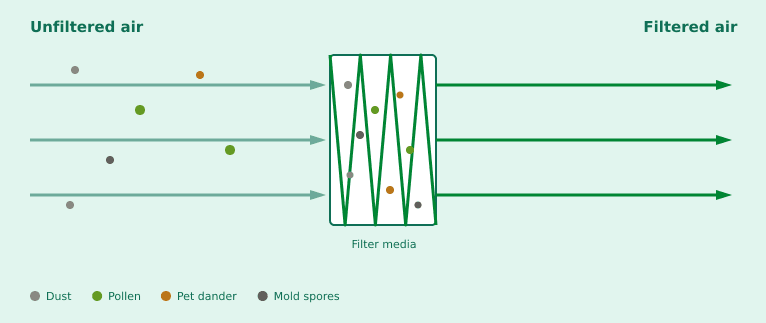
Every air filter in your home does one job: capture particles like dust, pollen, pet dander, and mold spores as air passes through it, so cleaner air circulates back into your rooms. The right filter for your system depends on your filter size, your household (pets, dust, allergy-prone family members), and the MERV rating you choose. Below, we'll walk through how filtration works, compare filter types, and help you find the right fit — with quick links to shop by size or brand.
Shop Air Filters
Know your size? Shop directly below. Not sure? Use the comparison table or quiz further down the page.
Key Takeaways
Air filters trap dust, pollen, pet dander, mold spores, and other airborne particles as air passes through them.
Filter type and MERV rating determine which particle sizes are captured — pleated and higher-MERV filters trap finer particles than basic fiberglass filters.
Filters should be checked monthly and typically replaced every 1–3 months, depending on household and usage.
Choosing the right size and MERV rating for your system matters as much as filter quality — an ill-fitting filter lets unfiltered air bypass it
What Is an Air Filter?
An air filter is a component of your HVAC system built to capture airborne particles — dust, pollen, pet dander, mold spores, and similar debris — before they recirculate through your home. As your system heats or cools air, that air passes through the filter first.
How Does an Air Filter Work?
Filtration happens in three stages:
Large particles are captured on the surface — dust, lint, and larger debris are trapped as air first contacts the filter media.
Smaller particles are caught in the fibers — pollen, mold spores, and fine dust get trapped within the filter's woven or pleated fibers.
Filtered air circulates back through your home — air continues through your HVAC system and out through your vents.
| Type | Typical MERV Range | Best For | Shop |
|---|---|---|---|
| Fiberglass | MERV 1–4 | Basic dust and lint capture, lowest cost | |
| Pleated | MERV 8–11 | Homes with pets, more surface area for finer particles | Shop MERV 8 / MERV 11 |
| High-MERV Pleated | MERV 13 | Finer particle capture, including smoke-sized particles* | Shop MERV 13 |
| Carbon / Odor-Eliminating | Varies by base MERV | Absorbing odors from pets, cooking, or smoke, in addition to particle capture | Shop Carbon Filters |
Which Air Filter Is Right for Your Home?
A few factors narrow this down quickly:
Pets in the home: Consider MERV 8–11 pleated filters to capture pet dander and hair.
Smoke, wildfire season, or nearby construction dust: MERV 13 captures a broader range of fine particles.
Cooking or pet odors: Look at carbon/odor-eliminating options.
Budget-conscious, low-particle environments: Standard fiberglass or lower-MERV pleated filters may be sufficient.
Not sure of your filter size or system compatibility: Take the quiz below — it matches you to a size and MERV rating in under two minutes.
Not sure which filter fits your home?
Take our 2-minute quiz to get matched to the right size and MERV rating.
Start the QuizFrequently Asked Questions:
What size air filter do I need?
Check the frame of your current filter — the size is usually printed on the edge. If you can't find it, measure the length, width, and depth of your filter slot. Our custom size finder can help if your measurements don't match a standard size.
Do air filters actually make a difference?
Yes, air filters play a critical role in improving indoor air quality, especially for individuals who suffer from allergies, asthma, or other respiratory conditions. They work by trapping harmful airborne particles like dust, pet dander, pollen, and mold spores before they circulate in your home. By using a high-quality air filter in your HVAC system, you can significantly reduce allergens and pollutants in the air, making your living environment cleaner and healthier.
How do you tell if an air filter is working?
The best way to tell if an air filter is working is by observing the overall air quality in your home. Signs that your filter is effective include reduced dust, fewer allergy symptoms, and less buildup on surfaces. Additionally, if you notice your HVAC system is running more efficiently or your indoor air feels fresher, then your filter is likely doing its job. Checking the filter’s condition periodically, such as if it looks dirty or clogged, is also a good indicator of whether it’s working effectively.
What does an air filter actually do?
An air filter cleans the air by trapping airborne particles before they pass through your HVAC system. As air moves through the filter, it captures dust, pollen, pet dander, mold spores, and other pollutants. The filter prevents these particles from circulating in your home, helping to improve the overall air quality. A well-maintained air filter ensures that only clean, filtered air is distributed through your living spaces.
How long does it take to see the effects of an air filter?
The effects of an air filter can be noticed almost immediately after installation, particularly in the form of improved air quality. For most homeowners, changes like reduced dust or fewer allergy symptoms may be noticeable within a few hours or days. However, the full benefits of better air quality will depend on the type of filter, the level of pollution, and how often the filter is replaced.
Is there a downside to air filters?
While air filters are essential for maintaining clean indoor air, there are a few potential downsides to consider:
Regular maintenance is needed: Filters need to be replaced regularly (every 1–3 months) to maintain their effectiveness.
Lower efficiency with dirty filters: A clogged or dirty filter can reduce your HVAC system's efficiency, leading to higher energy bills.
Initial cost of high-quality filters: Some premium filters, such as HEPA filters, can be more expensive upfront, though they often provide better filtration and long-term benefits.
Where is the best place to put an air filter?
An air filter is installed in the air return vent of your HVAC system, where it can filter the air before it circulates throughout your home. Make sure to place the filter in the correct orientation according to the airflow direction indicated on the filter. For best results, ensure the filter fits properly in the vent and that there are no gaps that could allow unfiltered air to pass through.
Should you leave an air filter on all day?
Yes, air filters should be left in place and regularly replaced to ensure continuous filtration of your home’s air. It’s the filter within your HVAC system that works continuously to keep the air clean as your system runs. If you’re asking about running your HVAC system all day, it’s best to leave it on or set it on automatic so the filter can keep cleaning the air. This helps maintain healthy air quality, particularly if you live in an area with higher pollution or allergens.
How long does it take for an air filter to clean a room?
An air filter works as soon as your HVAC system begins circulating air through it. However, the time it takes to clean a room depends on the filter’s quality and the size of the room. Generally, it can take anywhere from 30 minutes to a couple of hours for the air in a room to be filtered and purified, with higher-efficiency filters cleaning air more quickly.
Do air filters help with dust?
Yes, air filters are highly effective at reducing dust levels in your home. As air circulates through your HVAC system, the filter captures dust particles before they have a chance to settle on surfaces. Regularly replacing your air filter can help maintain lower dust levels in your home, reducing the amount of dust that accumulates on furniture, floors, and other surfaces.
Should you sleep with an air filter on?
Yes, it’s a good idea to leave an air filter on while you sleep, especially if you suffer from allergies or respiratory issues. Air filters work 24/7 to ensure that the air you breathe is as clean as possible, even while you sleep. If noise is a concern, many filters are designed to operate quietly or have "sleep mode" options that reduce noise while maintaining filtration.
Do air filters dry the air?
No, air filters do not dry the air. They are designed solely to trap and remove particles such as dust, allergens, and pollutants from the air. Unlike humidifiers or dehumidifiers, air filters do not alter the moisture content in the air, so your indoor humidity levels will remain unaffected.
Are air filters worth buying?
Yes, air filters are a worthwhile investment if you care about improving indoor air quality and reducing allergens. They are especially beneficial for individuals with allergies, asthma, or anyone living in areas with high levels of dust or pollen. High-quality filters, like HEPA filters, can remove a large percentage of airborne particles, providing cleaner, fresher air and reducing health risks associated with poor indoor air quality.
Read more
Why Is Indoor Air Quality Important?
It’s not just about comfort; poor indoor air quality can have significant health consequences.
Health Risks of Poor Air Quality
Indoor air pollutants like dust, mold, or pet dander can cause respiratory issues, allergies, and asthma. Over time, exposure to these allergens can weaken the immune system or exacerbate pre-existing conditions.
The Role of Air Filters in Health
A properly maintained air filter is your first line of defense against airborne allergens and pollutants. It significantly reduces exposure to harmful particles, ensuring a healthier environment for everyone in the house. Regularly replacing your air filter, like those offered by Filterbuy, ensures consistent protection and improved air quality.
How to Tell if Your Air Filter Needs Replacing
Even the best air filter can only do its job if it’s maintained.
Signs of a Dirty Filter
Your HVAC system is running harder than usual.
There’s more dust accumulating on surfaces in your home.
Unpleasant odors linger, even with ventilation.
Increased utility bills due to reduced system efficiency.
How Often Should You Replace Your Air Filter?
Typically, air filters should be replaced every 1–3 months. However:
Households with pets may need replacements every month.
Homes in dusty areas or with heavy HVAC usage may require more frequent changes.
When it’s time to replace, Filterbuy makes the process seamless with a variety of cost-effective and high-performance filters tailored to your needs.
Why Are Air Purifiers Worth It?
While air purifiers and air filters both cleanse the air, they serve different purposes:
Air Purifiers focus on cleaning air in specific rooms and are great additions to areas of high traffic or concentrated pollutants.
Air Filters clean air circulating through the entire home, making them critical for comprehensive air quality improvement.
How to Use Both Together
Use a high-quality HVAC air filter as your primary defense for whole-house air cleaning. Complement that with an air purifier in high-use spaces like bedrooms, home offices, or living rooms to create the ultimate clean-air strategy.
How Filterbuy Can Help Improve Your Indoor Air
Filterbuy is more than just a provider of air filters. It’s your partner in maintaining a healthier home.
Why Choose Filterbuy?
High-Quality Products: Filterbuy’s filters are designed to capture even the finest particles, ensuring optimal air quality in your home.
Custom Sizes and Options: Whether it’s a common size or a custom fit, Filterbuy has you covered.
Eco-Friendly and Made in the USA: Products that support sustainability and local manufacturing.
Affordable Subscriptions: Save time and money with recurring deliveries designed to match your replacement schedule, ensuring you never forget to change your filter.
Additional Perks
Fast, Free Shipping on all standard filters.
Extensive Compatibility with top HVAC brands.
Expert Guidance from a team of trained professionals.
Take advantage of their 24/7 customer support and explore exclusive offers like financing options or multi-filter discounts.
Start Breathing Easier Today With Filterbuy
Your air filter is working silently every hour of the day to ensure your home stays comfortable and healthy. Why not invest in it? Filterbuy makes it simple to maintain clean, safe air with top-quality filters and expert support.
Are you ready to take control of your indoor air quality? Visit Filterbuy today to find the perfect filter for your home. Clean air starts with a single click!