
Best Heating & Cooling Options for Homes Without Ductwork
The best way to heat and cool a home without ducts is a ductless mini split. It handles both heating and cooling from one system, runs quietly, and skips the energy that central systems lose through leaky ducts. Window units, portable ACs, and through-the-wall PTACs all work too, but each trades off efficiency, noise, or year-round comfort.
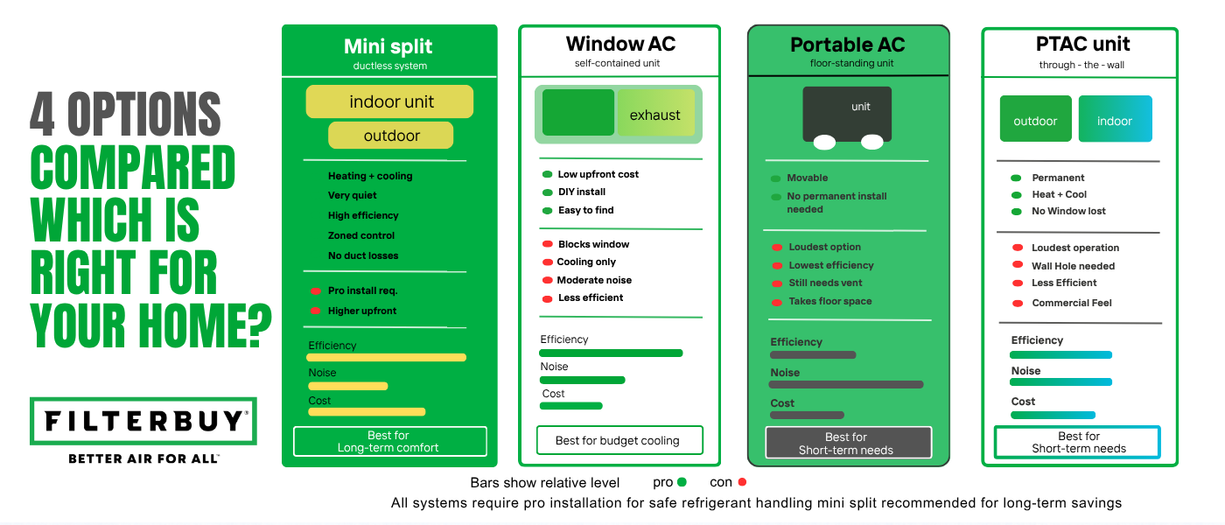
Here is how the four ductless options compare:
- Mini split — high efficiency, very quiet, heats and cools; best for long-term comfort.
- Window AC — low upfront cost, DIY install; best for budget cooling.
- Portable AC — movable room to room; best for temporary needs.
- PTAC — permanent through-the-wall unit; best for single rooms.

Not sure which size fits your space? Answer 3 quick questions and we will match you to the right mini split.
Keeping your home comfortable without central air ducts can be a challenge. Older homes, garages, and new additions often lack the ductwork needed for traditional heating and cooling, leaving you to rely on loud, inefficient solutions.
For years, window AC units were the go-to option. But today, modern technology offers far better alternatives. New HVAC systems can provide quiet, efficient climate control without tearing down walls or installing expensive ductwork.
So, what's the right choice for you? It depends on your space, budget, and energy goals. This guide will walk you through the best heating and cooling options for homes without ducts, so you can find the perfect fit.
Key Takeaways
Efficient Alternatives Exist: Modern HVAC systems offer quiet and energy-efficient solutions, eliminating the need for noisy, outdated window AC units.
Flexibility for Ductless Homes: You don’t need to install expensive ductwork to enjoy efficient heating and cooling.
Personalized Choices: Selecting the best system depends on your home's size, budget, and specific energy efficiency goals.
Innovative Technology: Advanced systems provide comfort without compromising on space, making them ideal for homes without existing ductwork.
Why Some Homes Don’t Have Ductwork
Not every home is equipped for central air. There are several common scenarios where ductwork is either missing or impractical to install.
Older Homes Built Before Central HVAC
Many historical properties and homes built before the 1970s were constructed long before central air conditioning became a standard feature. These houses often rely on radiators or baseboard heaters for warmth and lack the wall cavities required to retrofit bulky metal ducts.
Home Additions and Renovations
When you add a new bedroom or expand a living space, extending your existing central HVAC system can be complicated. Your current system might not have the capacity to handle the additional square footage, and installing new ducts within the existing architecture is often prohibitively expensive.
Garages, Basements, and Sunrooms
These functional spaces have unique climate control needs. Garages and sunrooms are rarely connected to a home's main ductwork. Even when basements are connected, they often suffer from poor airflow and require independent heating and cooling solutions to remain comfortable year-round.
Fortunately, several systems can provide efficient climate control without installing ductwork.
Ductless Mini Split Systems (Best Overall Option)
A ductless mini split AC system is widely considered the best alternative to window AC units. These systems consist of two main components: an outdoor compressor and an indoor air handler. They are connected by a small conduit routed through a tiny hole in the wall, eliminating the need for bulky ductwork.
High Energy Efficiency
Mini splits are incredibly efficient. Many models achieve SEER2 (Seasonal Energy Efficiency Ratio) ratings of 20 to 30 or higher, meaning they use significantly less electricity to cool your home than traditional alternatives.
Heating and Cooling in One System
Most modern mini splits function as heat pumps. They provide powerful air conditioning during the summer and efficient heating throughout the winter, offering true year-round comfort from a single device.
Zoned Temperature Control
With a multi-zone mini split system, each room gets its own indoor air handler and thermostat. This allows you to cool the living room while keeping a bedroom slightly warmer, avoiding the energy waste of cooling unoccupied spaces.
Quiet Operation
Because the loud compressor is located outside, the indoor units operate at a whisper-quiet 19 to 42 decibels. You can easily watch television or sleep without the disruptive hum common to window units.
No Energy Loss Through Ducts
According to the U.S. Department of Energy, traditional central HVAC systems can lose up to 30% of their energy consumption due to leaks and poor insulation in the ductwork. Ductless heating and cooling systems avoid this energy loss entirely, delivering conditioned air directly into the room.
Comparison Table: Heating & Cooling Options Without Ductwork
| Feature | Mini Split | Window AC | Portable AC | PTAC |
|---|---|---|---|---|
| Installation | Professional | DIY | DIY | Moderate |
| Efficiency | High | Medium | Low | Medium |
| Heating Capability | Yes | Limited | Limited | Yes |
| Noise | Very quiet | Moderate | Loud | Moderate |
| Best For | Long-term solution | Budget cooling | Temporary | Single rooms |
Why Mini Splits Are the Best Alternative to Window AC Units
Homeowners are increasingly ditching their window units in favor of ductless mini split systems. The primary driver is long-term energy savings. With up to 30% greater energy efficiency, a mini split can noticeably lower your monthly utility bills.
Furthermore, upgrading to a ductless HVAC system reclaims your windows. You no longer have to sacrifice natural light, fresh air, or home security to keep your house cool. Combine that with substantially quieter operation and zoned comfort, and it becomes clear why ductless technology is the premier choice for homes without central air options.
Looking for an efficient ductless system? Explore Filterbuy’s mini split options.
Recommended Solution: Filterbuy 12,000 BTU Mini Split
If you are looking for an efficient cooling solution for older homes or a new addition, the Filterbuy 12,000 BTU Mini Split is an outstanding choice. It is ideally sized for primary bedrooms, living rooms, and large garages, roughly 450 to 550 square feet in size.
Upgrade your comfort with an energy-efficient ductless mini split system. Shop Filterbuy mini splits with:
✅ Fast Free Shipping
✅ 5-Year Warranty
✅ Available in 115V and 230V configurations
✅ Heats effectively down to 5°F (-15°C)
✅ Variable-speed inverter compressor technology
✅ Eco-friendly R32 refrigerant
Important note: Filterbuy provides high-quality HVAC systems directly to consumers but does not provide installation services.
Should You Install a Mini Split Yourself?
While it might be tempting to tackle a ductless mini split as a DIY project, professional installation is highly recommended.
Licensed HVAC professionals have the specialized tools and training required to handle high-pressure electrical connections safely. Furthermore, federal regulations mandate strict handling procedures for refrigerants. Having a certified technician install your system ensures optimal performance, prevents costly refrigerant leaks, and protects your manufacturer's warranty.
Next Steps With Filterbuy for a More Comfortable Home
You do not need invasive renovations to achieve perfect indoor temperatures. By understanding the alternatives to window AC units, you can select an HVAC solution that matches your home's layout and your family's needs. Ductless systems provide unparalleled efficiency, quiet operation, and total climate control.
Browse Filterbuy Mini Split Systems today to find the perfect heating and cooling setup for your space.
Frequently Asked Questions