How to Cool a Florida Room or Sunroom
April 9, 2026
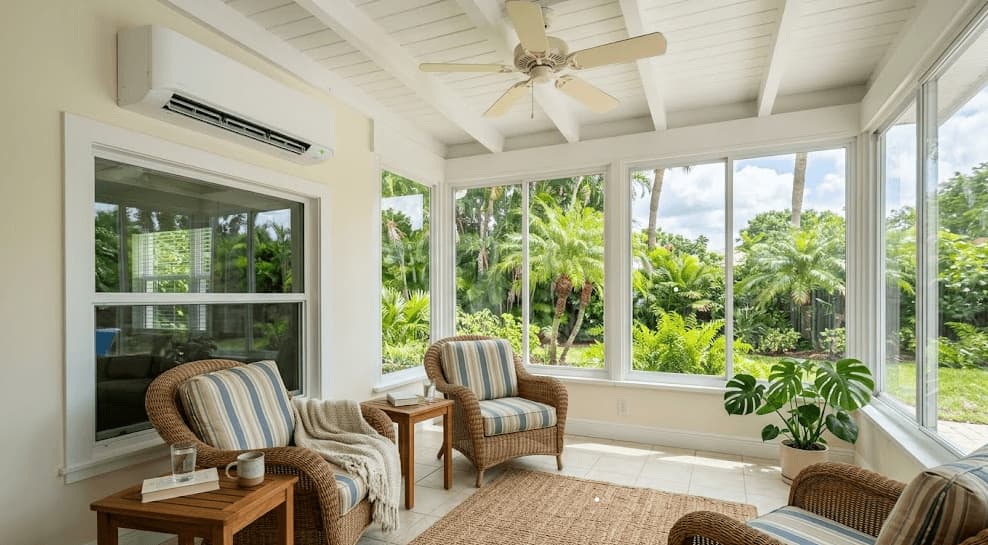
To cool a Florida room or sunroom, a properly sized ductless mini-split is the option built for the job. It cools without ductwork, runs quietly, and removes humidity from the air — the three things glass-walled rooms struggle with most.
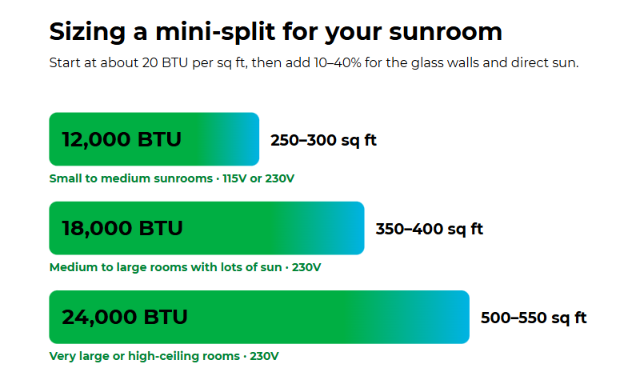
Sunrooms need extra cooling power because all that glass traps the sun’s heat. Plan on about 20 BTU per square foot, then add 10–40% for the glass walls and direct sunlight.
12,000 BTU — 250–300 sq ft (small to medium sunrooms)
18,000 BTU — 350–400 sq ft (medium to large rooms with lots of sun)
24,000 BTU — 500–550 sq ft (very large or high-ceiling rooms)
Not sure which size fits your space? Answer a few quick questions and we’ll point you to the right mini-split for your sunroom.
Your sunroom should be your go-to place for relaxation, but does it feel more like a sauna nowadays? These sun-filled spaces are known for trapping heat, making them the hottest rooms in the house.
So, why does your sunroom get so hot? Large glass walls create a greenhouse effect, and many of these rooms aren't connected to your home's central HVAC system. This combination can make the space unusable during warmer months.
If you're tired of sweating through summer in your favorite room, this post is all you need. This will walk you through the most effective ways to cool your sunroom. Then, explore passive and active cooling methods, show you how to calculate the cooling power you need, and explain how to keep your space comfortable year-round.
Key Takeaways
Sunrooms can become unbearably hot in the warmer months without proper cooling.
Understanding why your sunroom gets overly warm is the first step to finding an effective solution.
Both passive methods (like reflective window films or shades) and active methods (such as portable air conditioners or ductless mini-split systems) can help cool your sunroom.
Calculating the right cooling power is essential to ensure efficiency and comfort.
Year-round comfort is achievable by considering both heating and cooling options tailored to your sunroom's structure and needs.
Why Is My Sunroom So Hot?
Before you can effectively cool your space, it helps to understand why the temperature spikes in the first place. Several structural and environmental factors work together to trap heat inside.
The Greenhouse Effect
Glass is excellent at letting sunlight stream into a room, but it is terrible at letting the resulting heat escape. As the sun shines through the windows, it warms the floors, furniture, and air inside. Because the glass blocks the heat from radiating back outside, the temperature quickly climbs.
Too Much Glass, Not Enough Insulation
Traditional walls are packed with insulation to keep outdoor heat away from your indoor air. Sunrooms have a very high window-to-wall ratio. Even high-quality, double-pane windows provide only a fraction of the insulating power of a standard wall. This lack of insulation makes it incredibly easy for outdoor heat to transfer inside.
Poor Air Circulation
A lack of moving air makes any hot room feel significantly worse. Many sunrooms lack proper air vents or connections to the main central air system. Without a way for hot, stagnant air to escape or circulate, the heat simply builds up throughout the day.
Florida’s Heat and Humidity
If you are cooling a sunroom in Florida or another southern state, the high outdoor humidity drastically increases your discomfort. High humidity prevents your body's sweat from evaporating, making a warm room feel unbearably hot. Controlling the temperature is only half the battle; you also have to control the moisture.
Passive Ways to Cool a Sunroom
Passive cooling methods do not use heavy machinery or refrigerants. They rely on blocking the sun and moving the air. While these methods rarely solve severe heat problems completely, they are excellent first steps to reduce solar heat gain.
Install Solar Shades or Window Film
The most direct way to stop the greenhouse effect is to block the sunlight before it heats up your furniture. Solar shades and reflective window films are highly effective heat blockers. High-quality window films can block up to 99% of harmful UV rays and reject a significant amount of solar heat, all while letting you keep your view.
Add Exterior Awnings
Stopping sunlight from ever touching the glass is even more effective than treating the windows from the inside. Exterior awnings provide shade for your sunroom walls during the hottest parts of the day. By keeping the glass itself in the shade, you prevent a massive amount of heat transfer.
Improve Ventilation
Sometimes, you just need to let the trapped hot air escape. Operable windows placed on opposite sides of the room allow for cross-breeze ventilation. You can also install roof vents or dedicated exhaust fans to pull the hot air up and out of the room.
Use Ceiling Fans
Ceiling fans do not actually lower the temperature of the room, but they make you feel cooler. During the summer, set your ceiling fans to spin counterclockwise. This pushes air straight down, creating a wind-chill effect on your skin.
Active Cooling Options for a Florida Room
When shades and fans are not enough, you need an active cooling system. Here are the most common ways to bring air conditioning into your sunroom.
Portable Air Conditioners
Portable AC units are easy to find and simple to set up. You just plug them into a standard outlet and vent the exhaust hose out of a window.
Pros: Very affordable and requires zero professional installation.
Cons: They often struggle to cool large, sunny spaces. They also take up floor space, operate loudly, and are generally inefficient in highly humid climates.
Window Air Conditioners
Window AC units sit directly in the window frame and blow cold air into the room.
Pros: They are budget-friendly and free up your floor space.
Cons: They block your beautiful sunroom view. They are also notoriously noisy and might not provide enough power for a room completely made of glass.
Ductless Mini-Split Systems (Best Option)
If you want to know how to cool a Florida room permanently and efficiently, a ductless mini-split sunroom installation is the answer. These systems consist of an outdoor compressor and a sleek indoor air handling unit mounted high on the wall.
Benefits: They require no ductwork, making them perfect for room additions. They are whisper-quiet, highly energy-efficient, and provide powerful built-in dehumidification. Because they operate independently from your main central air system, you only cool the sunroom when you are actively using it.
How Many BTU Do I Need for a Florida Room?
Air conditioner cooling capacity is measured in British Thermal Units (BTU). If you buy a unit with too few BTUs, it will run constantly and never cool the room. If you buy a unit with too many BTUs, it will shut off too quickly, failing to remove the humidity from the air.
Because of the intense solar heat gain, sunrooms need extra cooling power compared to a standard bedroom. As a general rule, you need about 20 BTU per square foot for a standard room. However, for a sunroom, you must increase that base number by 10% to 40% to account for the glass walls and direct sunlight.
Here is a quick reference for common mini-split sizes and their corresponding coverage, keeping in mind the increased demand of a sunroom:
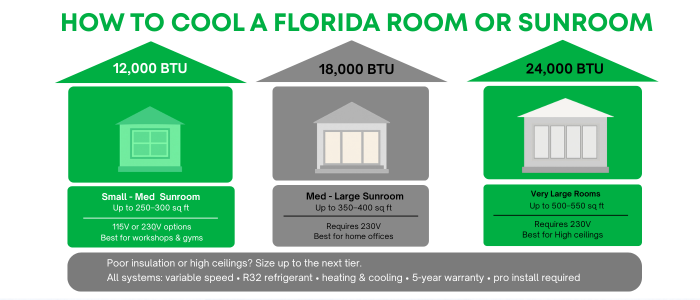
12,000 BTU: Covers up to 250–300 sq ft. An excellent choice for small to medium-sized sunrooms. (Available in 115V or 230V options)
18,000 BTU: Covers up to 350–400 sq ft. Best for medium to large sunrooms with significant sun exposure. (Requires 230V)
24,000 BTU: Covers up to 500–550 sq ft. Ideal for very large, open-concept sunrooms or spaces with high ceilings. (Requires 230V)
Keep in mind that factors like high ceilings, western sun exposure, and the quality of your insulation will impact these numbers. Always consult an HVAC professional for precise sizing before making a purchase.
Best Way to Heat and Cool a Sunroom Year-Round
While keeping cool in the summer is the main priority, sunrooms can also get uncomfortably chilly during the winter. The absolute best way to heat and cool a sunroom year-round is by installing a mini-split heat pump.
These versatile systems offer powerful cooling in the summer and reverse their operation to provide efficient heating during the winter. You get independent temperature control, allowing you to keep the sunroom comfortable without adjusting the thermostat for the rest of the house.
Filterbuy offers high-quality solutions for these exact scenarios. For example, a 12,000 BTU mini-split system from Filterbuy offers efficient inverter cooling technology, built-in humidity reduction, and multi-layer air filtration to keep your indoor air fresh. They even feature self-cleaning technology, making maintenance a breeze. Shop our energy-efficient mini-split systems today and enjoy Fast Free Shipping and a 5-Year Warranty.
Quick Tips to Keep Your Sunroom Cooler
If you are looking for immediate relief, here is a quick checklist of actions you can take today to lower the temperature in your sunroom:
Close your solar shades or curtains during peak sun hours (usually between noon and 4 PM).
Run your ceiling fans counterclockwise simultaneously with your AC to distribute the cold air faster.
Seal any visible gaps and apply weatherstripping around doors to keep the cool air from escaping.
Apply reflective window film to the windows that receive the most direct afternoon sunlight.
Make sure you properly size your cooling systems to manage both heat and humidity.
The Final Word on Cooling Your Sunroom
Florida rooms get exceptionally hot primarily because of the vast amount of glass and the resulting solar heat gain. While passive cooling methods like shades, window films, and ceiling fans provide helpful relief, they rarely solve the underlying problem entirely.
If you want a truly comfortable space, the most reliable and efficient solution is a properly sized ductless mini-split system like those from Filterbuy. They provide the power needed to overcome the greenhouse effect, effectively control humidity, and operate quietly enough to let you enjoy the peace of your sunroom.
Always consult a licensed HVAC professional before purchasing and installing a new cooling system. They will calculate the exact BTUs required for your unique space, ensuring your Florida room remains a comfortable oasis year-round.
Frequently Asked Questions
What is the best cooling system for a Florida room?
A ductless mini-split system is often considered the best cooling solution for a Florida room. It provides efficient temperature control, operates quietly, and can handle the challenges of high humidity. Consult with an HVAC professional to select the right unit for your specific space.
How do I determine the appropriate size of a ductless mini-split system for my sunroom?
The size of your mini-split system should be based on the square footage of your sunroom, insulation levels, and the amount of sun exposure it receives. A licensed HVAC professional can calculate the required BTUs to ensure optimal performance.
Can I use a portable air conditioner for my Florida room?
While a portable air conditioner may temporarily cool smaller sunrooms, it is not as efficient or effective as a ductless mini-split system for larger spaces. Additionally, portable units often struggle to control the high humidity found in Florida rooms.
Why is humidity control important in a sunroom?
Humidity levels directly impact your comfort and the durability of your furniture. Excess humidity can make the space feel muggy and promote mold growth. A proper HVAC system helps maintain a balanced and comfortable humidity level.
How should I maintain my ductless mini-split system?
Regular maintenance, such as cleaning or replacing filters, ensuring the unit is free of debris, and scheduling periodic check-ups with an HVAC professional, will keep your system running efficiently. Proper maintenance extends the life of your unit and ensures consistent performance.