

Tip: Ensure you buy the exact air filter size for your system. Certain brands have precise dimensions that only fit their specific models. See related filters
Actual Size: 20.25x20.75x5.25"
 Free Delivery
  Factory-Direct Low Prices, Made in the USA
 Hassle-Free Returns & Free Exchanges
RESIDENTIAL AND/OR COMMERCIAL USE
Change Every 3 Months
Tip: Ensure you buy the exact air filter size for your system. Certain brands have precise dimensions that only fit their specific models. See related filters
Actual Size: 20.25x20.75x5.25"
Free Delivery Factory-Direct Low Prices, Made in the USAHassle-Free Returns & Free ExchangesRESIDENTIAL AND/OR COMMERCIAL USE
Change Every 3 Months
Tip: Ensure you buy the exact air filter size for your system. Certain brands have precise dimensions that only fit their specific models. See related filters
Actual Size: 20.25x20.75x5.25"
Free Delivery Factory-Direct Low Prices, Made in the USAHassle-Free Returns & Free ExchangesRESIDENTIAL AND/OR COMMERCIAL USE
Change Every 3 Months
At Filterbuy, we don't cut corners—we craft high-quality air filters right here in the USA and ship them to your doorstep for free. No delays, no gimmicks—just clean air, made easy. With thousands of five-star reviews and filters built for real life & every HVAC system, it's no wonder why over 4 million families trust Filterbuy.

Proudly Made In The USA

Fast, Free Shipping on Every Order

Premium Materials That Go The Distance

85,000+ 5-Star Reviews From Happy Customers

Save Up to 70% Per Filter with Packs


Measure length × width × depth with a tape measure to find the actual size.

Round up each dimension to the nearest whole number to get the nominal size. Example: 20.25x20.75x5.25" in → 20X20X5 nominal.

Search by nominal size on our site for the best fit.


5″ filters give you maximum filtration with minimal maintenance — lasting up to 12 months while handling higher MERV ratings without restricting airflow.
Sizing note:

If the filter you buy doesn't fit, we'll send you a better size.
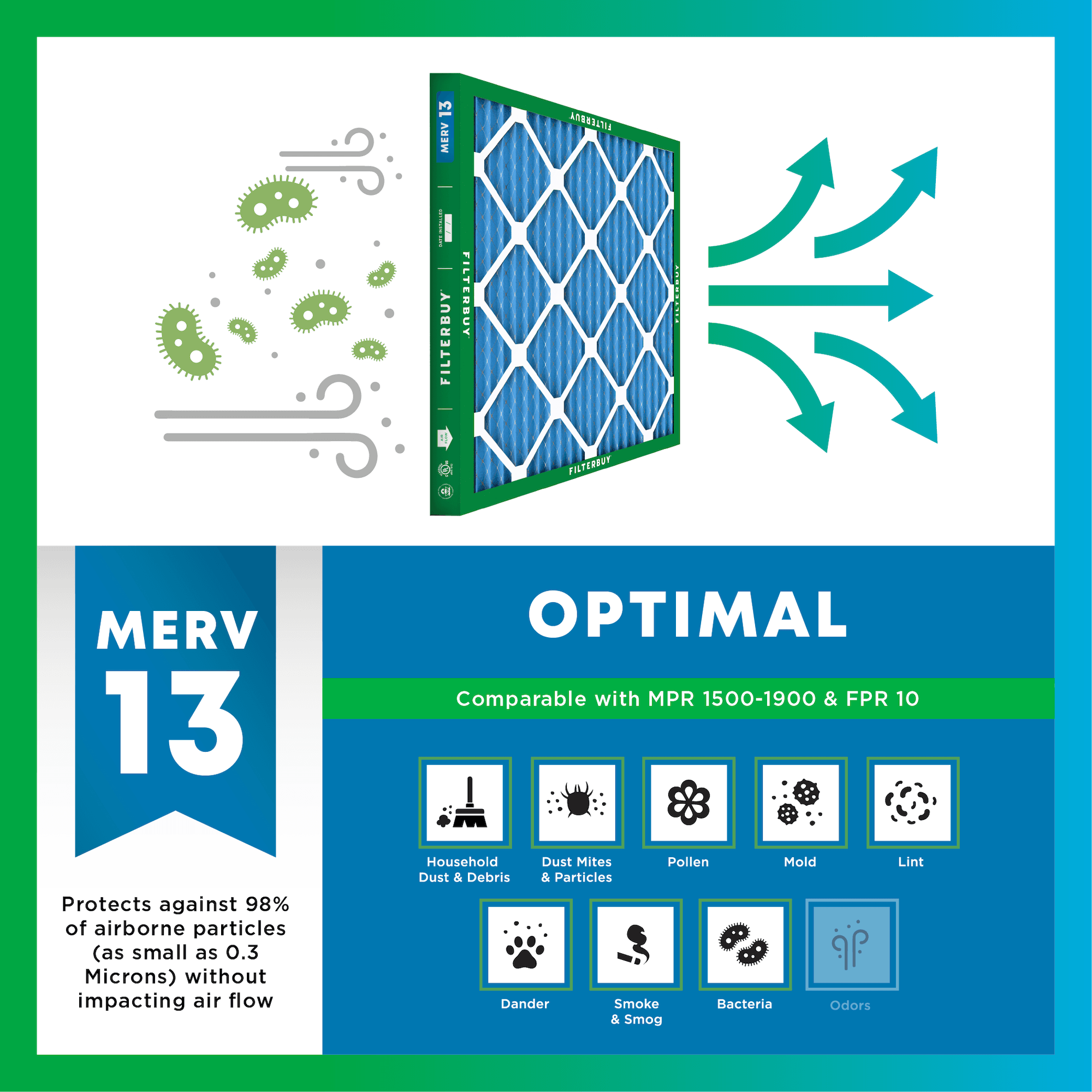
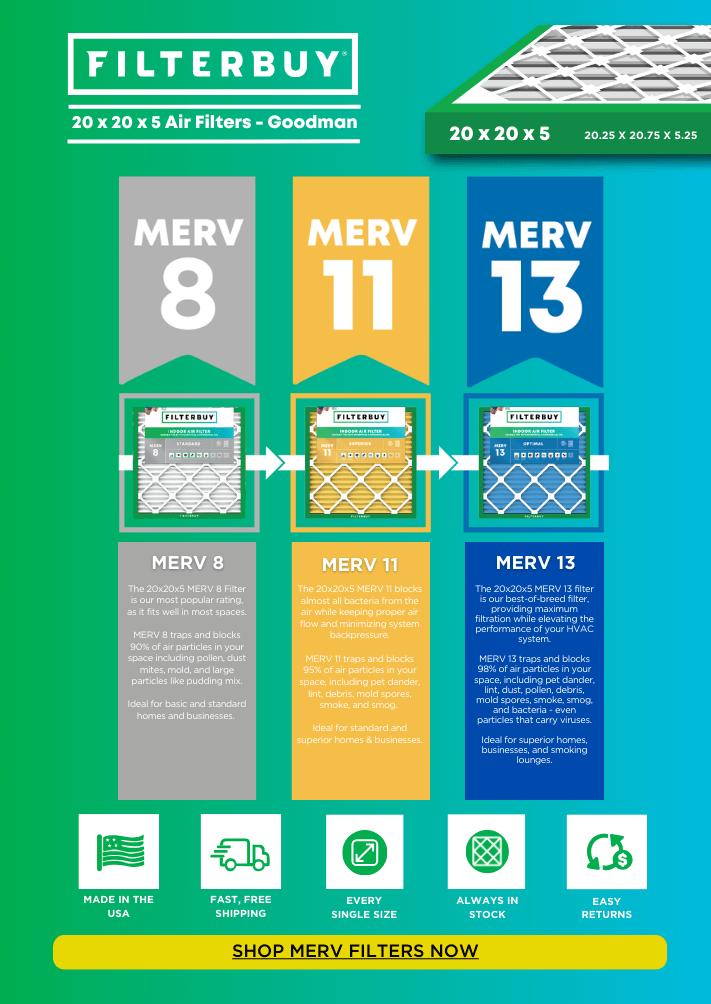
MERV stands for Minimum Efficiency Reporting Value—but don't let the technical name fool you. It's just a way to rate how well an air filter traps stuff like dust, pollen, pet dander, and smoke. The higher the MERV number, the more particles it catches—and the cleaner your air will be.

Comparable to:FPR: 4-7
MPR: 600-1000
 Dust & Debris
 Dust Mites & Particles
 Pollen
 Mold
Mold Lint
Lint Dander
Comparable to:FPR: 6-9
MPR: 1200-1550
Dust & DebrisDust Mites & ParticlesPollenMoldLintDander Smoke & Smog
Comparable to:FPR: 10
MPR: 1900-2800
Dust & DebrisDust Mites & ParticlesPollenMoldLintDanderSmoke & Smog Bacteria


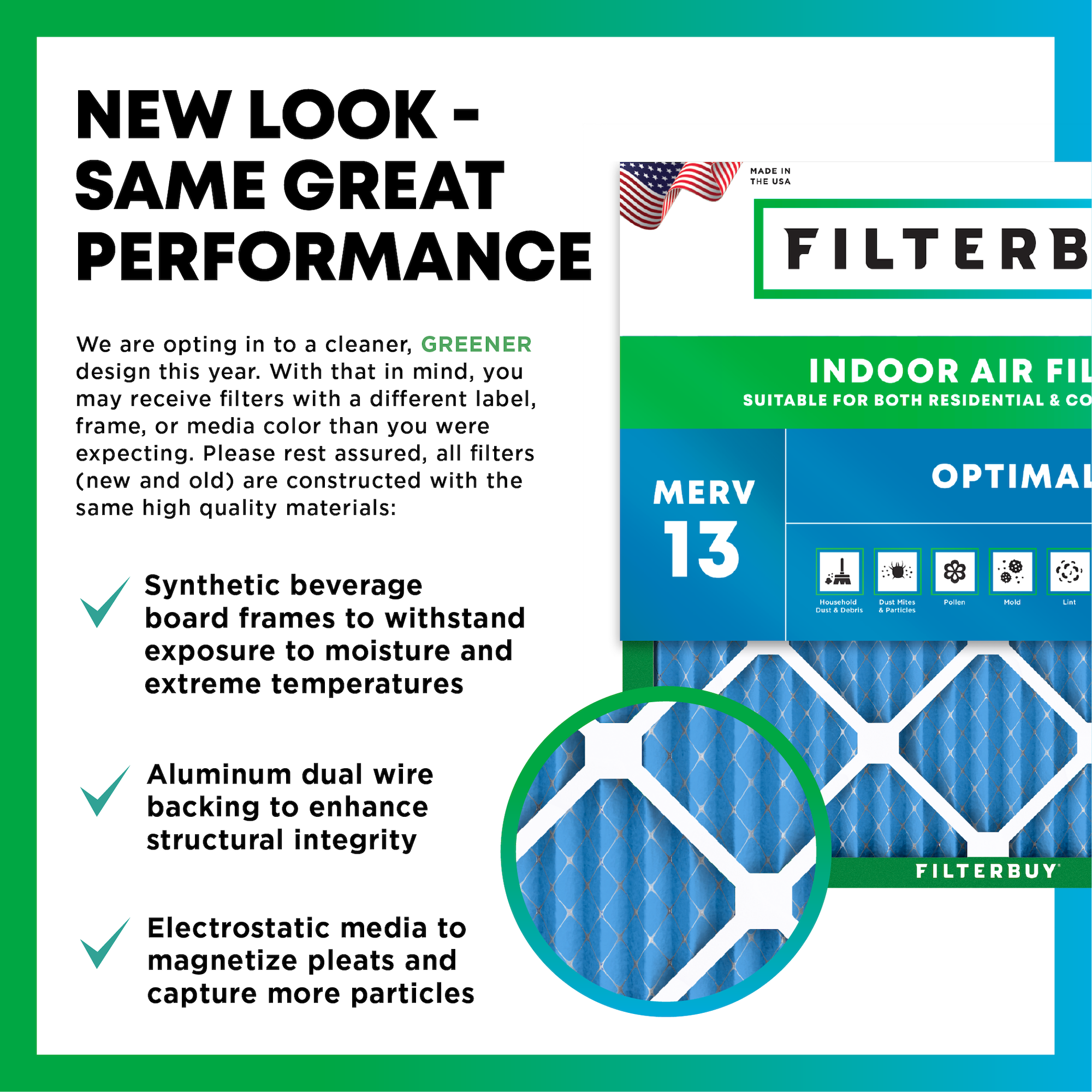
We build every Filterbuy filter to deliver reliable 90-day performance—thanks to smart design and premium materials that do the heavy lifting. Here's what makes the difference:
More pleats = more surface area to capture dust and debris, keeping your air cleaner longer.
Pleats are magnetized to attract and trap microscopic particles—like pet dander, pollen, and smoke.
Engineered to resist warping in extreme temperatures and high humidity.

A layer of metal reinforcement keeps pleats evenly spaced and structurally sound—no sagging, even at high airflow.
Assembled with care. Built to perform. Ships fast, free, and reliably from our U.S. facilities.

Turn Off Your HVAC SystemSafety first.

Remove The Old FilterLook for the airflow arrow and make note of the direction.

Slide In Your New FilterArrow should point toward the system (same direction as before).

Turn Your System Back OnAnd enjoy the fresh, clean air.

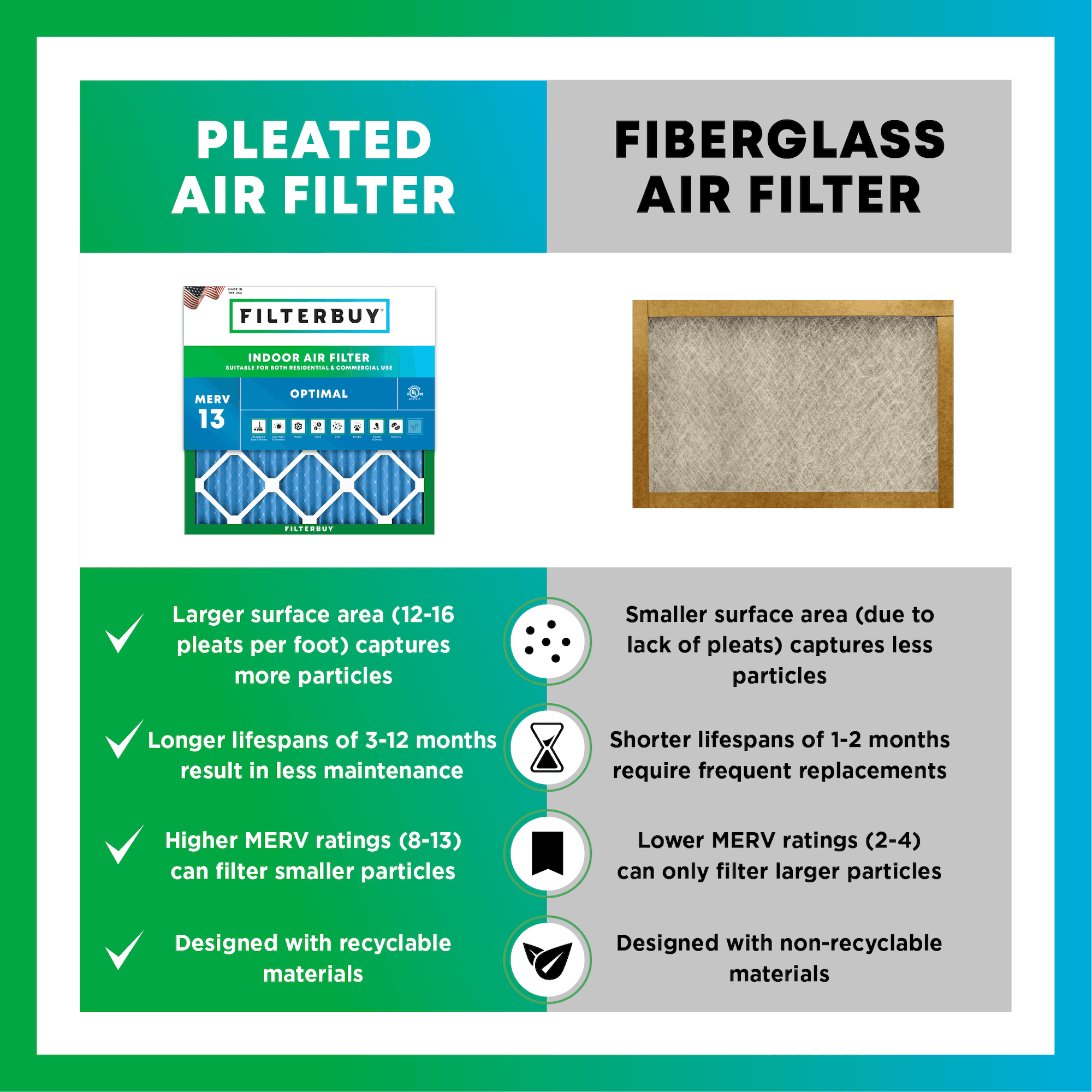
Not all air filters are created equal. Pleated filters don't just last longer—they actually clean your air better. Here's how they stack up:

Efficiency:
High (MERV 8–13) – Traps more particles
Lifespan:
90 days – Long-lasting performance
Air Quality:
Excellent – Cleaner, healthier air
Materials:
Recyclable and durable

Efficiency:
Low (MERV 4 or less) – Misses small stuff
Lifespan:
30 days or less – Replace often
Air Quality:
Minimal – Basic protection only
Materials:
Thin, flimsy, and not recyclable
Pleated filters are a no-brainer—more protection, less hassle, and better air for your home.
Changing your filter on time keeps your HVAC system running efficiently—and helps protect your lungs from dust, allergens, and airborne irritants. Here's how often to swap it out based on your needs:

For most homes without pets or special air quality concerns. Great for general upkeep and energy efficiency.

Shedding fur, dander, and allergy triggers can build up fast. Changing your filter every two months helps keep the air fresher and symptoms at bay.

For households affected by smoke, pollution, or respiratory conditions, monthly changes ensure maximum protection.

| Nominal Size | 20X20X5 |
| Actual Size | 20.25 x 20.75 x 5.25" inches |
| Filter Type | Pleated |
| Media | Electrostatically Charged |
| Frame | Beverage Board |
| MERV Ratings Available | 8, 11, 13 |
| Lifespan | Up to 12 Months |
| Origin | Made in USA |
Your Goodman system conditions your air—but without the right filter, it's recirculating the pollutants your family breathes every day.
After manufacturing millions of MERV 13 filters and fitting countless Goodman systems, we've learned something most homeowners don't realize: the jump from MERV 8 to MERV 13 captures up to 50% more airborne particles, including the microscopic allergens and irritants that trigger symptoms indoors. Customers consistently tell us they notice the difference within days—less dust accumulation, fewer allergy flare-ups, and air that simply feels cleaner.
The 5-inch depth isn't just about longevity. From our testing and direct customer feedback, thicker filters maintain stronger airflow while trapping more contaminants, meaning your Goodman system runs efficiently while delivering genuinely healthier air. That's a balance most thin filters can't achieve.
This guide shares what we've discovered through over a decade of filter manufacturing—how MERV 13 filtration specifically supports respiratory health, why proper sizing matters for your Goodman unit, and the real-world benefits families experience after making the switch.
A MERV 13 20x20x5 air filter is a high-efficiency replacement filter designed to fit Goodman HVAC systems that accept 5-inch depth media. After manufacturing millions of these filters, we can confirm this configuration delivers the optimal balance of particle capture and airflow performance for residential use.
What it captures:
85-90% of particles in the 1-3 micron range
Dust mite debris, mold spores, pollen, pet dander, and bacteria
Key specifications:
Nominal size: 20x20x5 inches
Actual size: Approximately 19.75 x 19.75 x 4.38 inches (verify before ordering)
Replacement frequency: Every 6-12 months under normal conditions
Why customers choose MERV 13:
EPA recommends MERV 13 as the minimum for capturing fine particles
Noticeable reduction in dust and allergy symptoms within 2-4 weeks
5-inch depth maintains efficiency without straining Goodman systems
Before purchasing: Confirm your Goodman unit accepts 5-inch filters and measure your filter slot to ensure proper fit. Gaps around the filter allow unfiltered air to bypass.
MERV 13 is the threshold where filtration makes a real health difference. It captures 85-90% of particles in the 1-3 micron range—the size that includes allergens, bacteria, and respiratory irritants that standard filters miss.
The 5-inch depth balances performance with longevity. Greater media surface area means better particle capture, consistent airflow, and 6-12 months of protection without frequent replacements.
Indoor air is often worse than outdoor air. Americans spend 90% of their time indoors where pollutant levels run 2-5x higher. Your Goodman system can either recirculate those contaminants or actively filter them out.
Customers notice the difference within weeks. Less dust on surfaces, fewer allergy symptoms, and fresher-smelling air are the consistent patterns we hear from families who upgrade to MERV 13.
MERV 13 represents a significant upgrade in particle capture efficiency. At this rating, filters trap 85% or more of airborne particles between 1.0 and 3.0 microns—the size range that includes bacteria, tobacco smoke, sneeze droplets, and fine dust that lower-rated filters miss entirely.
From our manufacturing perspective, we engineer MERV 13 media with tighter fiber density specifically to intercept:
Dust mite debris and pet dander
Mold spores and pollen
Legionella and lead dust
Auto exhaust particles that enter through ventilation
Fine particulate matter (PM2.5) linked to respiratory issues
Customers upgrading from standard MERV 8 filters frequently report that surfaces stay cleaner longer and seasonal allergy symptoms decrease noticeably. These aren't placebo effects—they're the measurable result of capturing particles that previously circulated freely through living spaces.
Thicker isn't just about longer replacement intervals. After testing filter performance across thousands of HVAC configurations, we've found that 5-inch filters deliver health benefits that 1-inch alternatives simply can't match.
Greater surface area means better capture without restriction. A 20x20x5 filter holds significantly more filtration media than a 20x20x1, allowing it to trap more contaminants while maintaining the airflow your Goodman system needs. When airflow stays consistent, your system circulates and filters air more frequently throughout the day.
Sustained efficiency over time. Thin filters clog faster, which reduces their effectiveness and strains your system. The 5-inch depth maintains MERV 13 performance for 6 to 12 months, keeping filtration consistent rather than degrading within weeks.
Goodman systems specifically benefit from this balance. These units are designed for reliable, efficient operation—pairing them with a properly sized 5-inch MERV 13 filter supports that design rather than working against it.
Based on over a decade of customer feedback, the health improvements from MERV 13 filtration follow consistent patterns:
Respiratory comfort improves. Families with asthma or allergy sufferers notice fewer flare-ups indoors. Removing airborne triggers at the source reduces the load on respiratory systems, particularly during high-pollen seasons or in homes with pets.
Sleep quality often increases. Cleaner bedroom air means less nighttime congestion and irritation. Customers tell us they wake up feeling clearer, especially children and older family members who are more sensitive to air quality.
Overall dust reduction compounds over time. Less airborne particulate means less settling on furniture, bedding, and floors. This creates a cleaner environment while reducing the allergens that get stirred up during daily activity.
HVAC systems stay cleaner. When filters capture more particles, fewer contaminants coat your evaporator coils and ductwork. This protects equipment longevity while ensuring conditioned air reaches living spaces without picking up additional pollutants along the way.
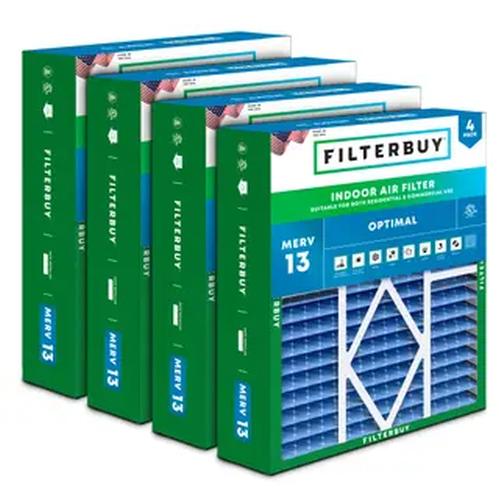
"After manufacturing millions of MERV 13 filters and hearing from families who've made the upgrade, one pattern stands out consistently: the difference isn't subtle. Customers tell us they notice cleaner surfaces within the first week and fewer allergy symptoms within the first month—that's the tangible impact of capturing particles that lower-rated filters simply let pass through."
Finding reliable information about MERV 13 filtration and Goodman system compatibility means knowing where to look. These seven authoritative resources provide the guidance you need to make an informed decision for your home's air quality.
The U.S. Environmental Protection Agency explains how MERV ratings measure particle capture efficiency and recommends upgrading to MERV 13 or higher when your system allows. This government resource establishes the baseline for evaluating residential air filtration performance.
Source: U.S. Environmental Protection Agency
URL: https://www.epa.gov/indoor-air-quality-iaq/what-merv-rating
The American Society of Heating, Refrigerating, and Air-Conditioning Engineers sets the professional standards for ventilation and acceptable indoor air quality in residential buildings. ASHRAE's MERV 13 recommendation for managing airborne contaminants reflects current best practices in the HVAC industry.
Source: ASHRAE (American Society of Heating, Refrigerating and Air-Conditioning Engineers)
URL: https://www.ashrae.org/technical-resources/bookstore/standards-62-1-62-2
Goodman's official guidance explains how media filters improve air quality compared to standard furnace filters and why matching filter capacity to your blower matters. This resource helps ensure any filter upgrade remains compatible with your specific Goodman system.
Source: Goodman Manufacturing
URL: https://www.goodmanmfg.com/resources/faq/maintenance/what-type-of-filter-should-i-use
The American College of Allergy, Asthma & Immunology confirms that air filtration reduces airborne allergens and provides measurable relief for allergy sufferers. Board-certified allergists recommend whole-house HVAC filtration as part of a comprehensive environmental control strategy.
Source: American College of Allergy, Asthma & Immunology
URL: https://acaai.org/allergies/management-treatment/living-with-allergies/air-filters/
This National Institutes of Health publication reviews clinical studies examining how HVAC filtration impacts allergic respiratory diseases including asthma and rhinitis. The research demonstrates that whole-house filtration ranks among the most commonly implemented strategies for reducing indoor allergen exposure.
Source: National Institutes of Health / PubMed Central
URL: https://pmc.ncbi.nlm.nih.gov/articles/PMC3165134/
This comprehensive guide explains which MERV rating works best for different household situations, from standard filtration needs to homes with severe allergies or immunocompromised family members. Practical guidance helps you balance air quality goals with HVAC system compatibility.
Source: Filterbuy
URL: https://filterbuy.com/resources/air-filter-basics/which-merv-rating-should-I-use/
Understanding when to replace your 5-inch filter ensures consistent MERV 13 performance throughout its service life. This resource covers the 9-12 month replacement timeline for 5-inch filters and factors like pets, allergies, and seasonal usage that may require earlier changes.
Source: Filterbuy
After manufacturing millions of air filters, we've seen how research aligns with real-world experience. These statistics from U.S. government and health organizations confirm what customers consistently tell us.
The research shows:
Americans spend approximately 90% of their time indoors
Indoor pollutant concentrations run 2-5x higher than outdoor levels
Children, older adults, and those with respiratory conditions spend even more time inside—compounding their exposure
What we see in practice: Families notice dust accumulation and allergy flare-ups without connecting symptoms to their HVAC air quality. This statistic explains why upgrading filtration produces noticeable results.
Source: U.S. Environmental Protection Agency
URL: https://www.epa.gov/report-environment/indoor-air-quality
The research shows:
4 out of 5 U.S. homes have dust mite allergens in at least one bed
Dust mites rank among the most common indoor asthma triggers
Allergens settle into fabrics and bedding where they accumulate over time
What we see in practice: Customers ask why symptoms persist after regular cleaning. Standard filters allow microscopic dust mite debris to recirculate. MERV 13 captures these particles before they resettle. After helping families select filters for over a decade, we've found this upgrade often delivers the relief lower-rated filters couldn't.
Source: American Lung Association
URL: https://www.lung.org/clean-air/indoor-air/indoor-air-pollutants/dust-mites
The research shows:
Approximately 27 million Americans currently live with asthma
Nearly 5 million are children under 18
Airborne triggers include dust, pollen, mold spores, and pet dander
What we see in practice: Customers managing asthma seek filtration that makes a real difference. We've engineered MERV 13 media to capture the particle sizes that trigger respiratory symptoms. Families consistently report noticeable improvement in symptom frequency after upgrading.
Source: Asthma and Allergy Foundation of America (CDC data)
URL: https://aafa.org/asthma/asthma-facts/
Upgrading to a MERV 13 20x20x5 filter is one of the simplest, most cost-effective changes you can make for healthier indoor air.
Your Goodman system already circulates thousands of cubic feet of air daily. The filter you choose determines whether that air gets cleaner—or just moves contaminants from room to room.
What the evidence confirms:
MERV 13 captures 85-90% of particles in the 1-3 micron range
5-inch depth maintains airflow while providing 6-12 months of consistent performance
Families with allergies and asthma report measurable symptom improvement
The core issue we see: Most homeowners underestimate how much filter choice affects daily health—and overestimate how well their current filter performs.
We've talked with thousands of customers who assumed MERV 8 was "good enough." They cleaned regularly, changed filters on schedule, and still dealt with:
Persistent dust accumulation
Ongoing allergy symptoms
Stale indoor air
The missing piece wasn't effort. It had a filtration capacity.
The honest truth about MERV 13:
It's not overkill. Modern Goodman units handle this filtration level without issue when properly sized.
Health benefits aren't marketing claims. They're consistent feedback from real families.
The 5-inch depth matters. Deeper media captures more particles while lasting longer than thin filters that clog quickly.
Ready to improve your indoor air quality? Follow these steps to select the right filter and start breathing cleaner air.
Before purchasing:
Check your current filter cabinet and measure the slot depth
Review your Goodman manual for filter specifications
Locate your model number on the unit's rating plate
Note: Systems using 1-inch filters may need a cabinet upgrade. Consult an HVAC technician if unsure.
Filter sizing requires precision. Gaps allow unfiltered air to bypass.
Measure the filter slot directly:
Length (first number)
Width (second number)
Depth (third number)
Important: Measure the slot—not your old filter, which may have been incorrectly sized.
What to look for:
Confirmed MERV 13 rating (not "MERV 13-like")
Dimensions matching your actual measurements
Rigid frame with tight seal
Quality pleated media
U.S.-made with verified specifications
Installation steps:
Turn off your HVAC system
Note the airflow direction arrow on the filter frame
Insert filter with arrow pointing toward the blower
Confirm a snug fit with no edge gaps
Replace cabinet door and restore power
Common mistake: Installing backwards restricts airflow. Always follow the directional arrow.
Replacement timeline: 6-12 months for 5-inch MERV 13 filters
Replace sooner if you have:
Multiple pets
Allergy or asthma sufferers
Recent construction
High outdoor pollen or pollution
Signs replacement is needed:
Visible dirt covering filter surface
Reduced airflow from vents
Increased dust on surfaces
What to expect in the first month:
Less dust on furniture and surfaces
Reduced allergy or asthma symptoms
Fresher-smelling air
Pro tip: Inspect your filter on the first of each month.
A: In most cases, no. After manufacturing MERV 13 filters for Goodman systems for over a decade, we've found that the 5-inch depth makes the difference.
Why it works:
Greater surface area allows efficient airflow
Fine particle capture without restriction
Designed to match Goodman system specifications
When issues occur:
Incorrect filter sizing
Systems already struggling with static pressure
Our recommendation: Check your owner's manual or consult an HVAC technician if uncertain. Most modern Goodman units handle 5-inch MERV 13 without issues.
A: Based on feedback from thousands of customers, expect 6-12 months under normal conditions.
Replace closer to 6 months if you have:
Multiple pets
Family members with allergies or asthma
Recent renovation or construction
High outdoor pollen or pollution
Signs it's time to replace:
Filter surface visibly coated with debris
Reduced airflow from vents
Increased dust accumulation indoors
Pro tip: Check your filter on the first of each month. A fresh MERV 13 always outperforms an overdue one—even higher-rated filters lose effectiveness when clogged.
A: This trips up more customers than almost any other filter question.
Definitions:
Nominal size (20x20x5): Rounded industry-standard name
Actual size: Precise measurements, typically slightly smaller (example: 19.75 x 19.75 x 4.38 inches)
Why it matters: Gaps around the air filter allow unfiltered air to bypass the media entirely. This defeats the purpose of MERV 13 filtration.
Our advice:
Measure your filter slot directly with a tape measure
Don't rely on your old filter's label—it may have been wrong
Match slot dimensions to the filter's actual size specifications
A: Customers consistently report noticeable improvements within the first month.
What families tell us:
Less dust settling on surfaces
Fewer allergy flare-ups
Air that feels cleaner and fresher
What MERV 13 captures (85-90% efficiency at 1-3 microns):
Dust mite debris
Mold spores
Pet dander
Bacteria
Supporting evidence: The EPA and American Lung Association both recognize improved filtration as an effective indoor air quality strategy. Our customer feedback confirms it works in practice.
A: Not without modification. Your existing slot won't accommodate the 5-inch depth.
Why the upgrade is worth it:
5-inch filters hold more media
Longer service life (6-12 months vs. 1-3 months)
Maintains MERV 13 efficiency throughout use
1-inch filters clog faster and lose performance within weeks
How to upgrade:
Contact an HVAC technician
Install a media cabinet compatible with your Goodman system
Typically completed in a single service visit
What customers tell us: Most wish they'd made the upgrade sooner.
Your Goodman system is ready to support healthier living—it just needs the right filter. Shop MERV 13 20x20x5 Goodman-compatible filters at Filterbuy.com and experience the difference cleaner air makes for your family.

