
Tip: Ensure you buy the exact air filter size for your system. Certain brands have precise dimensions that only fit their specific models. See related filters
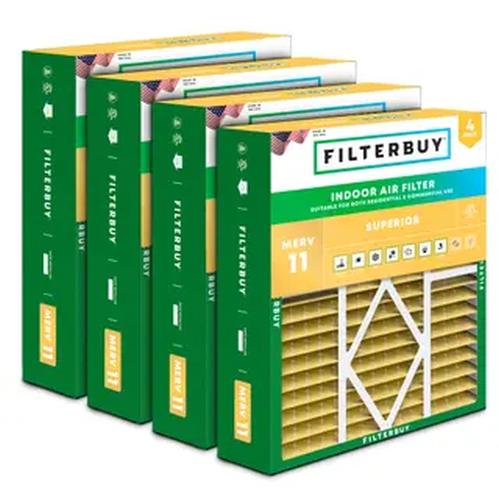
Actual Size: 20.25x20.75x5.25"
 Free Delivery
  Factory-Direct Low Prices, Made in the USA
 Hassle-Free Returns & Free Exchanges
RESIDENTIAL AND/OR COMMERCIAL USE
Change Every 3 Months
Tip: Ensure you buy the exact air filter size for your system. Certain brands have precise dimensions that only fit their specific models. See related filters
Actual Size: 20.25x20.75x5.25"
Free Delivery Factory-Direct Low Prices, Made in the USAHassle-Free Returns & Free ExchangesRESIDENTIAL AND/OR COMMERCIAL USE
Change Every 3 Months
Tip: Ensure you buy the exact air filter size for your system. Certain brands have precise dimensions that only fit their specific models. See related filters
Actual Size: 20.25x20.75x5.25"
Free Delivery Factory-Direct Low Prices, Made in the USAHassle-Free Returns & Free ExchangesRESIDENTIAL AND/OR COMMERCIAL USE
Change Every 3 Months
At Filterbuy, we don't cut corners—we craft high-quality air filters right here in the USA and ship them to your doorstep for free. No delays, no gimmicks—just clean air, made easy. With thousands of five-star reviews and filters built for real life & every HVAC system, it's no wonder why over 4 million families trust Filterbuy.

Proudly Made In The USA

Fast, Free Shipping on Every Order

Premium Materials That Go The Distance

85,000+ 5-Star Reviews From Happy Customers

Save Up to 70% Per Filter with Packs


Measure length × width × depth with a tape measure to find the actual size.

Round up each dimension to the nearest whole number to get the nominal size. Example: 20.25x20.75x5.25" in → 20X20X5 nominal.

Search by nominal size on our site for the best fit.


5″ filters give you maximum filtration with minimal maintenance — lasting up to 12 months while handling higher MERV ratings without restricting airflow.
Sizing note:

If the filter you buy doesn't fit, we'll send you a better size.
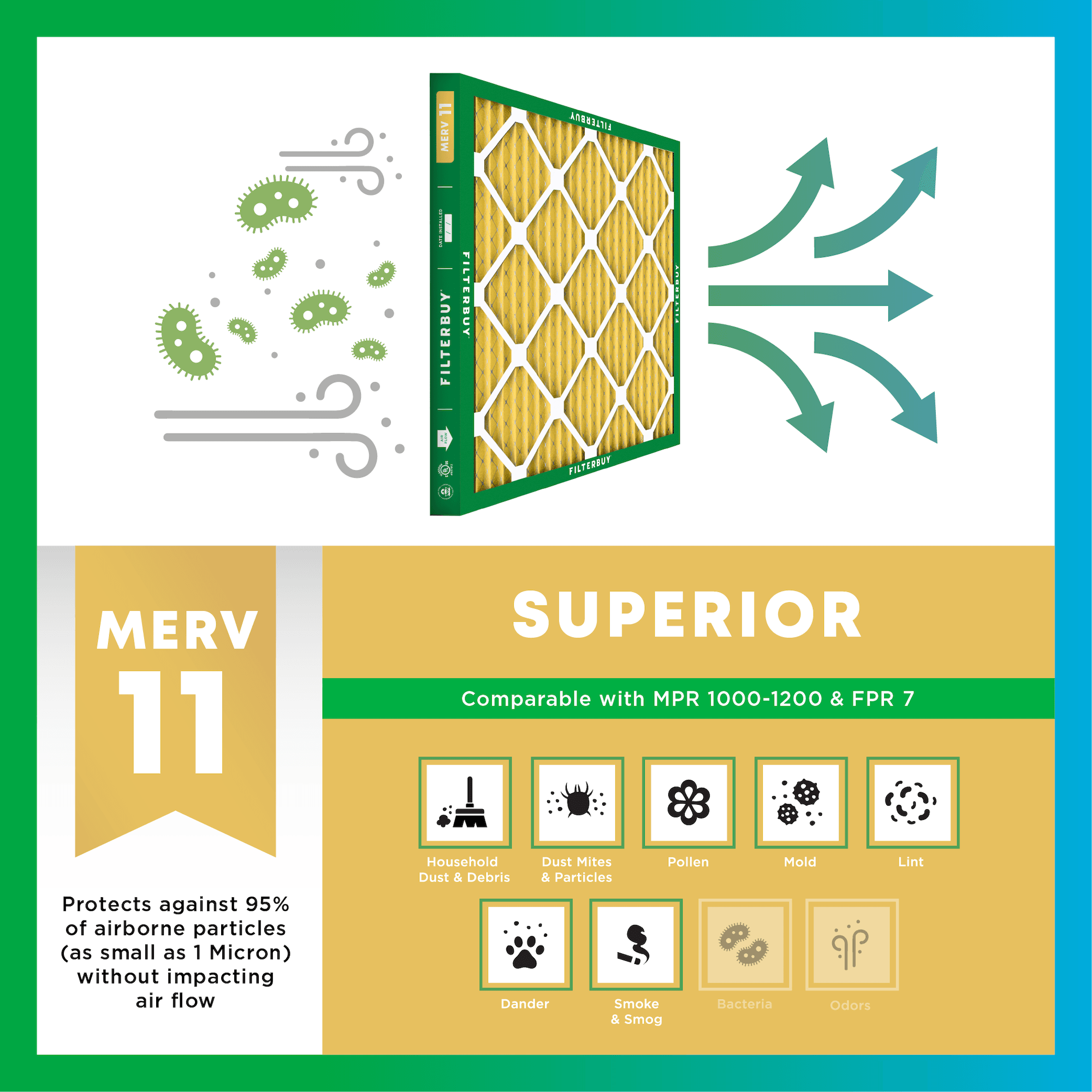
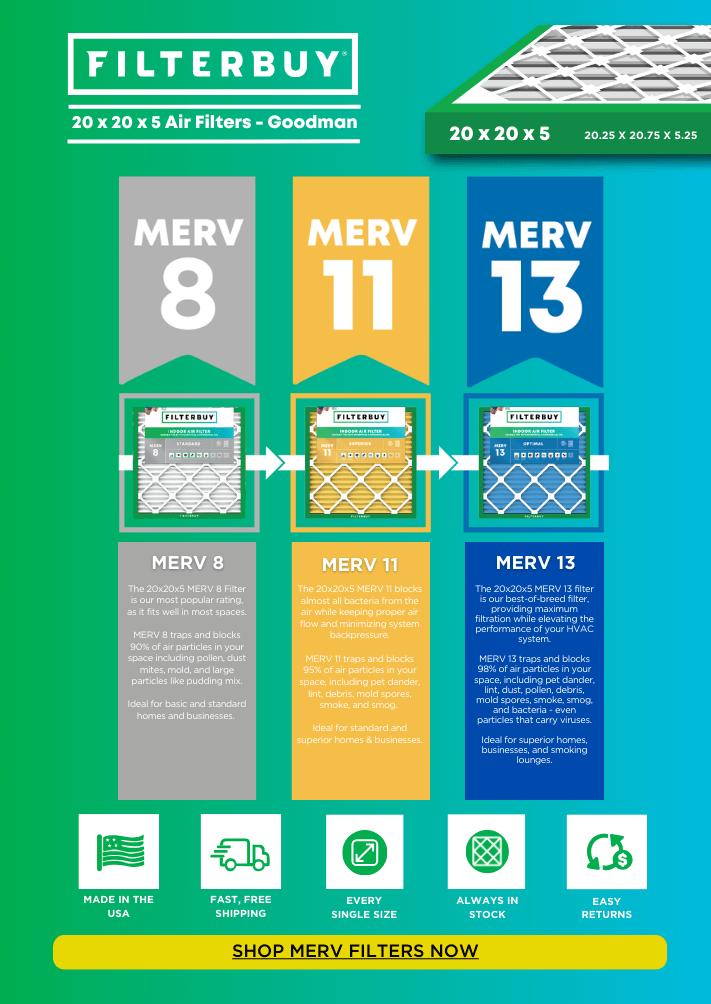
MERV stands for Minimum Efficiency Reporting Value—but don't let the technical name fool you. It's just a way to rate how well an air filter traps stuff like dust, pollen, pet dander, and smoke. The higher the MERV number, the more particles it catches—and the cleaner your air will be.

Comparable to:FPR: 4-7
MPR: 600-1000
 Dust & Debris
 Dust Mites & Particles
 Pollen
 Mold
Mold Lint
Lint Dander
Comparable to:FPR: 6-9
MPR: 1200-1550
Dust & DebrisDust Mites & ParticlesPollenMoldLintDander Smoke & Smog
Comparable to:FPR: 10
MPR: 1900-2800
Dust & DebrisDust Mites & ParticlesPollenMoldLintDanderSmoke & Smog Bacteria


We build every Filterbuy filter to deliver reliable 90-day performance—thanks to smart design and premium materials that do the heavy lifting. Here's what makes the difference:
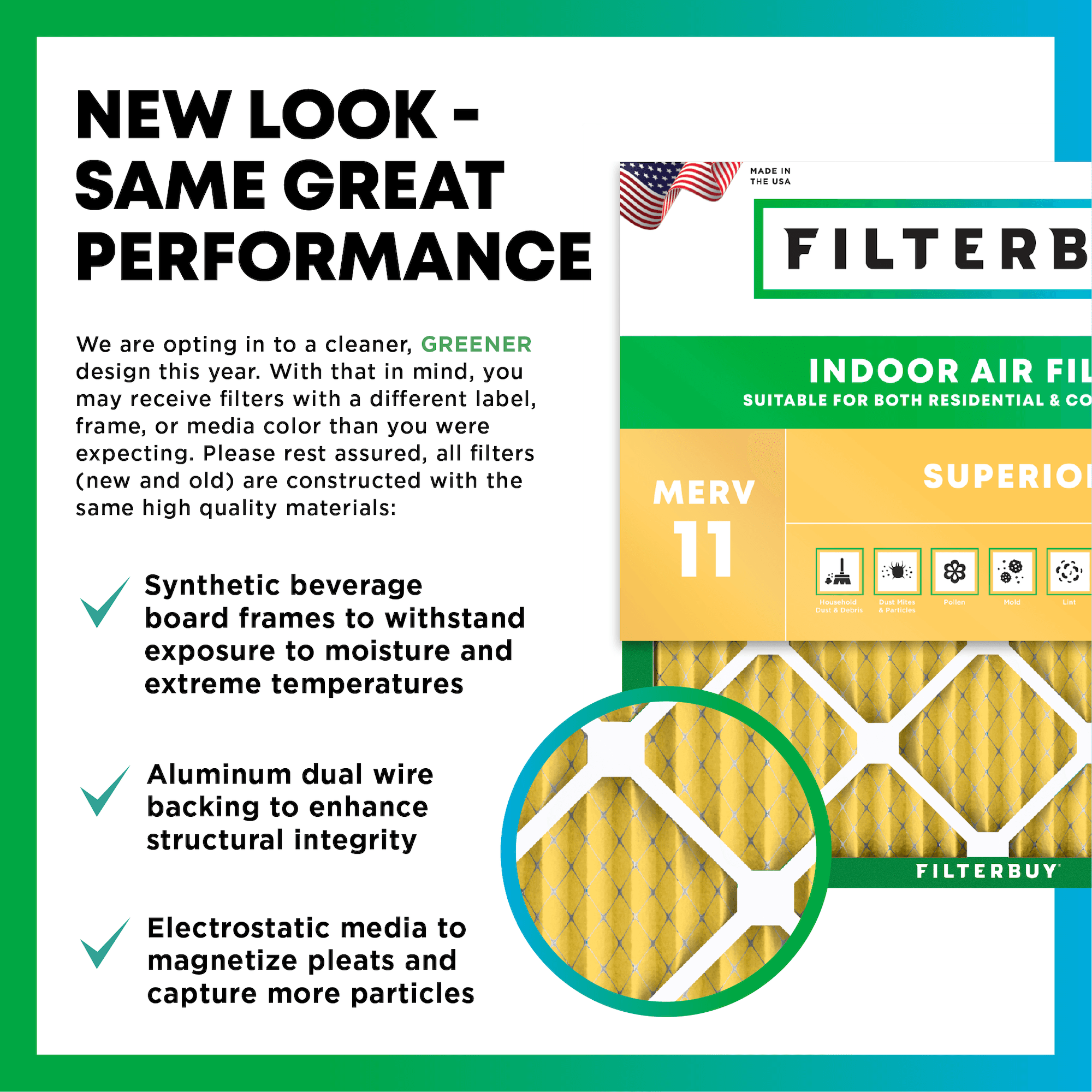
More pleats = more surface area to capture dust and debris, keeping your air cleaner longer.
Pleats are magnetized to attract and trap microscopic particles—like pet dander, pollen, and smoke.
Engineered to resist warping in extreme temperatures and high humidity.

A layer of metal reinforcement keeps pleats evenly spaced and structurally sound—no sagging, even at high airflow.
Assembled with care. Built to perform. Ships fast, free, and reliably from our U.S. facilities.

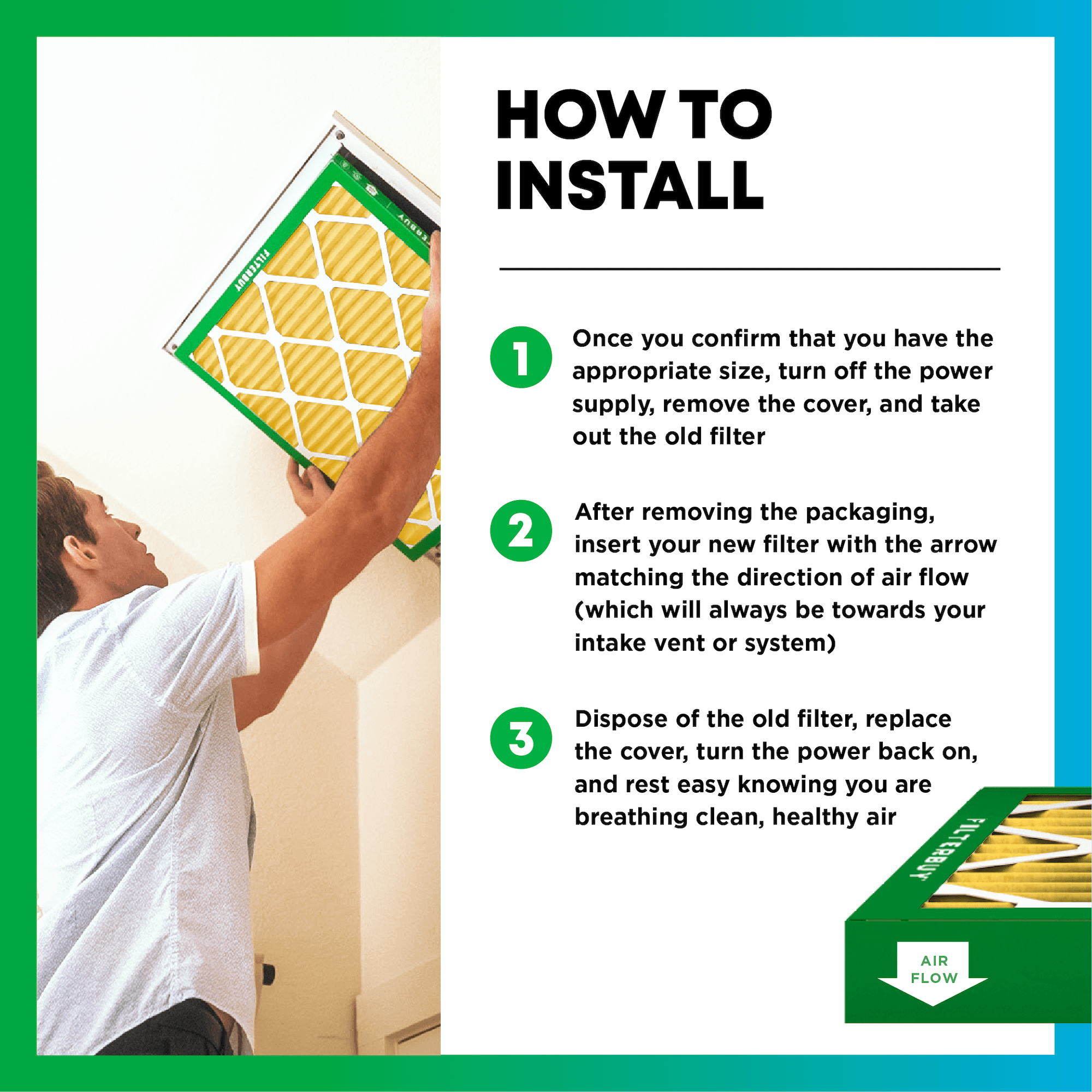
Turn Off Your HVAC SystemSafety first.

Remove The Old FilterLook for the airflow arrow and make note of the direction.

Slide In Your New FilterArrow should point toward the system (same direction as before).

Turn Your System Back OnAnd enjoy the fresh, clean air.

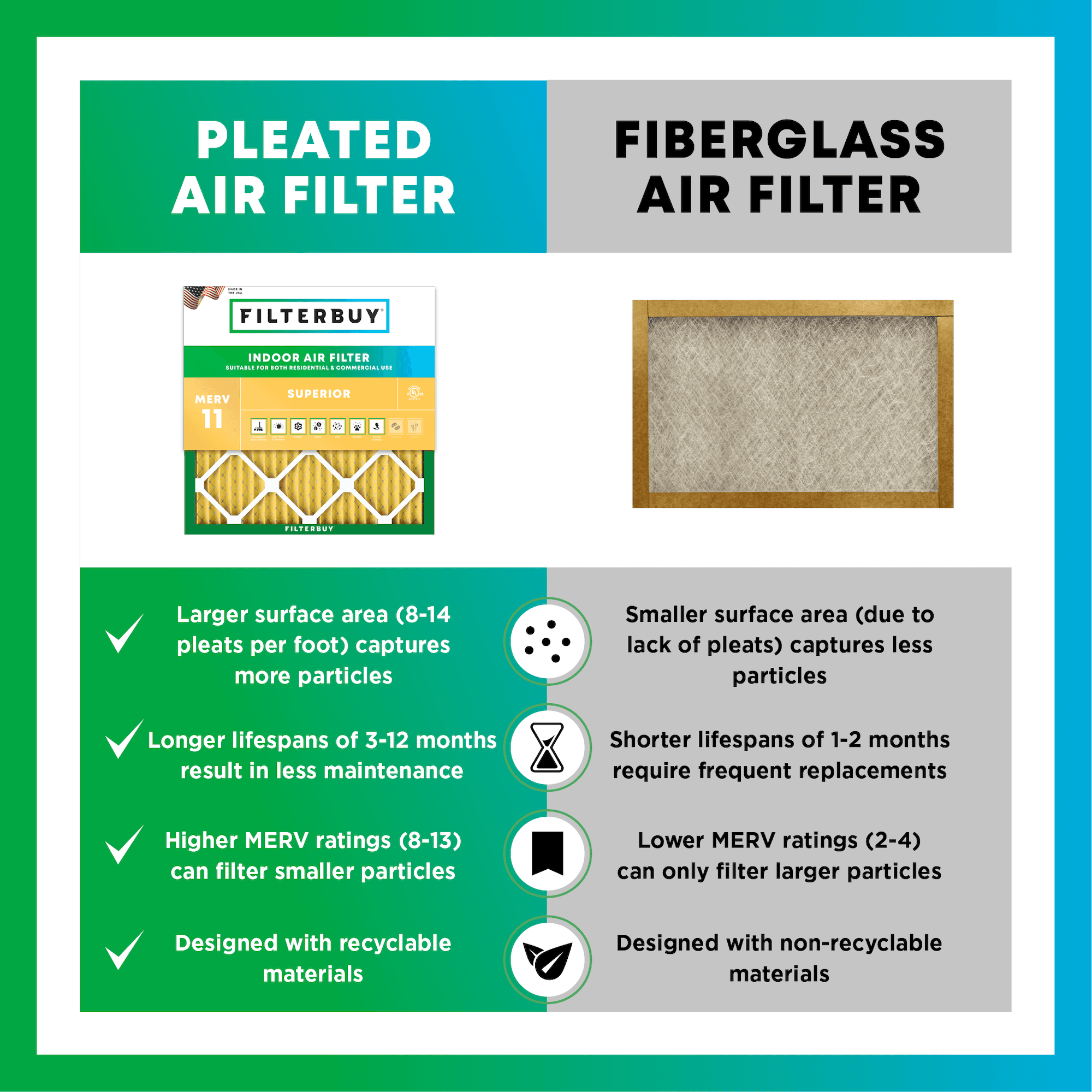
Not all air filters are created equal. Pleated filters don't just last longer—they actually clean your air better. Here's how they stack up:

Efficiency:
High (MERV 8–13) – Traps more particles
Lifespan:
90 days – Long-lasting performance
Air Quality:
Excellent – Cleaner, healthier air
Materials:
Recyclable and durable

Efficiency:
Low (MERV 4 or less) – Misses small stuff
Lifespan:
30 days or less – Replace often
Air Quality:
Minimal – Basic protection only
Materials:
Thin, flimsy, and not recyclable
Pleated filters are a no-brainer—more protection, less hassle, and better air for your home.
Changing your filter on time keeps your HVAC system running efficiently—and helps protect your lungs from dust, allergens, and airborne irritants. Here's how often to swap it out based on your needs:

For most homes without pets or special air quality concerns. Great for general upkeep and energy efficiency.

Shedding fur, dander, and allergy triggers can build up fast. Changing your filter every two months helps keep the air fresher and symptoms at bay.

For households affected by smoke, pollution, or respiratory conditions, monthly changes ensure maximum protection.

| Nominal Size | 20X20X5 |
| Actual Size | 20.25 x 20.75 x 5.25" inches |
| Filter Type | Pleated |
| Media | Electrostatically Charged |
| Frame | Beverage Board |
| MERV Ratings Available | 8, 11, 13 |
| Lifespan | Up to 12 Months |
| Origin | Made in USA |
A 5-inch filter holds up to five times more filter media than a standard 1-inch—which is exactly why it lasts up to 12 months instead of 30 days. It's not marketing spin; it's surface area math.
After manufacturing filters for Goodman systems for over a decade, we've tracked real-world performance data across millions of installations. The pattern is consistent: deeper filters maintain optimal airflow longer because particles distribute across more media instead of clogging a thin layer fast. Customers running 20x20x5 MERV 11 filters in their Goodman units routinely tell us they've cut annual filter purchases from 12 down to 1 or 2—without sacrificing air quality.
Here's what Goodman owners need to know about filter depth, MERV 11 efficiency, and getting maximum lifespan from every replacement.
A MERV 11 20x20x5 Goodman air filter is a 5-inch deep pleated filter designed for Goodman HVAC systems with media filter cabinets. It captures 65-80% of airborne particles down to 1.0 micron—including dust, pollen, mold spores, and pet dander.
Key facts:
Dimensions: 20" × 20" × 5" (nominal)
Efficiency: MERV 11 rating
Lifespan: 9-12 months under typical conditions
Compatibility: Goodman systems with 5-inch filter cabinets
Why it matters:
After manufacturing millions of these filters, we've found the 5-inch depth provides 4-5x more media than standard 1-inch filters. This means longer lifespan, consistent airflow, and sustained filtration efficiency throughout the filter's life.
Best for:
Allergy and asthma sufferers
Homes with pets
Homeowners wanting fewer filter changes
Goodman systems designed for 5-inch media filters
Our take: MERV 11 delivers the ideal balance of particle capture and airflow for residential Goodman systems—effective filtration without straining your blower motor.
Depth determines lifespan. 5-inch filters hold 4-5x more media than 1-inch filters. That's 9-12 months of use instead of 30-90 days.
MERV 11 hits the sweet spot. Captures 65-80% of particles down to 1.0 micron—without straining residential blower motors.
Surface area beats MERV rating. A 5-inch MERV 11 often outperforms a 1-inch MERV 13. Prioritize depth over higher numbers.
Clean filters save energy. HVAC uses 52% of home energy. Clogged filters add 5-15% to consumption. Deeper filters stay efficient longer.
Indoor air quality matters. Americans spend 90% of time indoors where air is 2-5x more polluted than outside. Your filter is the first defense.
Filter lifespan comes down to one factor: how much media is available to capture particles before airflow restriction occurs. A 1-inch filter has roughly 10-12 square feet of pleated media. A 5-inch filter of the same face dimensions contains 40-60 square feet—giving airborne contaminants far more surface area to land on before the filter loads up.
Think of it like a parking lot. A small lot fills up fast and backs up traffic. A larger lot accommodates the same number of cars without congestion. Your filter media works the same way. More depth means particles spread out across more material, and your HVAC system maintains consistent airflow months longer.
After manufacturing 5-inch filters for Goodman systems across millions of orders, we consistently see the same result: deeper filters hold more debris while maintaining the static pressure your system needs to run efficiently.
MERV 11 captures particles down to 1.0 micron with 65-80% efficiency—trapping dust, pollen, mold spores, and pet dander that lower-rated filters miss. But unlike MERV 13 or higher, it does this without creating excessive resistance that strains residential HVAC blower motors.
Goodman systems are engineered for standard residential airflow requirements. Customers tell us MERV 11 delivers noticeably cleaner air without the energy penalty or system stress that comes from over-filtering. It's the rating we recommend most often for households with allergy concerns or pets who want meaningful filtration improvement without modifying their system.
The 5-inch depth adds another advantage here: because MERV 11 media is denser than basic fiberglass, the extra surface area prevents premature clogging that can occur when higher-MERV filters are crammed into 1-inch frames.
Goodman HVAC systems with 5-inch filter cabinets are specifically designed to accommodate deeper filters—this isn't an aftermarket upgrade or modification. The 20x20x5 size fits Goodman filter cabinets that shipped with models requiring this dimension, and proper fit is critical for both performance and longevity.
An ill-fitting filter allows air bypass around the edges, which means unfiltered air enters your system while the filter itself loads unevenly. We manufacture our 20x20x5 Goodman-compatible filters to exact specifications because even small dimensional variances create gaps that defeat the purpose of quality filtration.
When ordering, confirm your cabinet dimensions match. If you're unsure, measuring your existing filter or cabinet opening takes 30 seconds and prevents the frustration of returns or poor performance.
"After manufacturing millions of 5-inch filters and tracking customer feedback over the years, we've found that filter depth is the single most underrated factor in both longevity and air quality—homeowners expect to change filters less often, but they're often surprised to discover their indoor air actually stays cleaner because deeper media maintains efficiency longer instead of degrading as it loads up."
Making an informed filter decision means understanding ratings, compatibility, maintenance, and health benefits. These authoritative resources from government agencies and industry organizations provide the foundational knowledge every Goodman owner needs.
Source: U.S. Environmental Protection Agency
The EPA explains the MERV scale, particle capture ranges, and how ratings translate to real-world filtration performance in residential systems.
Resource: What is a MERV Rating?
Source: ASHRAE (American Society of Heating, Refrigerating and Air-Conditioning Engineers)
ASHRAE developed the MERV rating system and provides technical guidance on filter efficiency testing, proper selection criteria, and HVAC system compatibility.
Resource: Filtration and Disinfection FAQ
Source: U.S. Department of Energy
Federal maintenance guidelines detail how dirty filters reduce system efficiency and increase energy consumption—with data showing measurable savings from regular replacement.
Resource: Air Conditioner Maintenance
Source: U.S. Environmental Protection Agency
Comprehensive guide covering common indoor pollutants, their health effects, and practical steps for improving air quality through filtration and humidity control.
Resource: The Inside Story: A Guide to Indoor Air Quality
Source: Goodman Manufacturing
Direct manufacturer guidance on filter types, media depth options, and blower capacity considerations specific to Goodman HVAC equipment.
Resource: What Type of Filter Should I Use?
Source: ENERGY STAR
Government-backed recommendations for filter inspection schedules, replacement timing, and system tune-ups that extend equipment life and maintain performance.
Resource: Heat & Cool Efficiently
Source: U.S. Environmental Protection Agency
Details specific biological contaminants—dust mites, mold spores, pet dander, pollen—that quality filtration removes, along with associated health benefits.
Resource: Biological Pollutants' Impact on Indoor Air Quality
What the Data Confirms—And What We See Firsthand
After manufacturing filters for Goodman systems for over a decade, we've watched these federal statistics play out in real customer experiences.
Americans spend 90% of their time indoors—where pollutant concentrations run 2-5x higher than outdoor air.
What customers tell us:
They assumed their home air was "clean" until symptoms said otherwise
Visible dust accumulation surprised them after switching to higher-efficiency filters
Allergy improvements were noticeable within weeks of upgrading
Why 5-inch MERV 11 matters: More media means contaminants distribute across a larger surface. Filtration stays consistent for months instead of degrading within weeks.
Source: U.S. Environmental Protection Agency
The Department of Energy confirms: a dirty filter forces your system to work harder and consume more electricity.
What we see in practice:
Customers forget 1-inch filters for months—efficiency drops steadily
5-inch filters maintain airflow through entire cooling seasons
Utility bill differences are noticeable, especially in summer
The physics: Clogged media restricts airflow. Your blower motor compensates by drawing more power. Deeper filters delay that restriction point significantly.
Source: U.S. Department of Energy
Heating and cooling represent the largest single category of household energy consumption.
Why this matters for filter selection:
Half your energy bill flows through your HVAC system
Anything improving efficiency delivers compounding returns
Filter upgrades are among the simplest changes with measurable payoff
What we consistently hear: Goodman owners running 20x20x5 MERV 11 filters report the combination of better air quality and reduced energy strain makes deeper filters one of the most worthwhile upgrades they've made.
Source: U.S. Energy Information Administration
Our Take on 5-Inch MERV 11 Filters for Goodman Systems
After manufacturing millions of filters for Goodman systems, we've reached a simple conclusion: filter depth is the most undervalued factor in residential air quality.
The 20x20x5 MERV 11 hits the sweet spot for most Goodman owners:
4-5x more media than standard 1-inch filters
MERV 11 efficiency without straining residential blower motors
9-12 month lifespan under typical conditions
Direct compatibility with Goodman 5-inch filter cabinets
The result: cleaner air, lower energy bills, fewer filter changes.
Most homeowners overthink MERV ratings and underthink surface area.
We've watched customers install MERV 13 in 1-inch frames expecting superior results—then experience restricted airflow, higher bills, and premature failure. A 5-inch MERV 11 often outperforms a 1-inch MERV 13 because more media prevents rapid clogging and maintains airflow longer.
The best filter balances filtration efficiency with airflow requirements—and stays effective between changes.
Use your full cabinet depth. If it accepts 5 inches, use all 5 inches.
Prioritize surface area over MERV bragging rights. A well-sized MERV 11 beats an undersized MERV 13.
Check quarterly, replace when loaded. Visual inspection confirms reality better than calendar dates.
Ensure proper fit. Air bypass around gaps defeats quality media.
The data is clear:
Americans spend 90% of time indoors
Indoor air runs 2-5x more polluted than outside
HVAC consumes 52% of home energy
Your filter is the primary defense. Deeper filters last longer, maintain airflow better, and keep systems efficient.
That's not marketing—it's physics, validated by a decade of manufacturing and millions of customer data points.
Ready to Upgrade? Here's What to Do
Follow these five steps to get the right filter and maximum performance from your Goodman system.
Check your current filter label for printed dimensions
Measure cabinet slot if no filter installed: length × width × depth
Note that nominal size (20x20x5) runs slightly larger than actual size
Remember: Even small size variances create air bypass that defeats filtration.
Look for a media filter cabinet between return duct and air handler
Check system manual for maximum filter depth
Confirm your system handles MERV 11 (most Goodman units do)
If uncertain: Reference your model number on Goodman's support site or consult an HVAC technician.
Select MERV 11 for balanced filtration and airflow
Choose 5-inch depth to maximize lifespan
Consider multi-packs to reduce cost and keep replacements ready
Turn off HVAC system
Remove old filter
Locate airflow arrow on new filter frame
Insert with arrow pointing toward the blower
Confirm flush fit with no edge gaps
Restore power
Common mistake: Installing backwards. Arrow always points toward equipment.
Inspect visually every 3 months
Replace when media looks matted or dark
Check more often with pets, smokers, or high dust
Quick test: Hold filter to light. Light passes through = still working. Blocked or uneven = time to replace.
A: Most households get 9-12 months under typical conditions.
What we've learned from tracking millions of orders:
Homes with multiple pets: 6-9 months
High-pollen regions: 6-9 months
Standard single-pet or no-pet homes: 9-12 months
Our recommendation: Check every 3 months. The filter tells you when it's done better than any calendar date.
A: Yes—MERV 11 works with virtually all residential Goodman units.
The real compatibility question is cabinet depth:
Your system needs a 5-inch media filter cabinet between return duct and air handler
Standard 1-inch return grilles cannot accommodate 5-inch filters without a cabinet upgrade
Measure your existing filter slot before ordering
Common mistake we see: Customers assume thicker filters fit anywhere. They don't.
A: MERV 13 captures smaller particles. MERV 11 maintains better airflow. For most Goodman systems, MERV 11 wins.
What we've observed:
MERV 13 creates more static pressure on residential blowers
Customers report higher energy bills and reduced airflow with MERV 13 in systems not designed for it
MERV 11 captures dust, pollen, mold spores, and pet dander effectively
What customers tell us: After trying both, most stick with MERV 11. Airflow stays consistent. Systems run efficiently.
A: Use the light test. Hold the filter up to light.
Light passes through evenly = still working
Matted, dark, or blocked sections = time to replace
Other warning signs:
Reduced airflow from vents
Increased dust on surfaces
System running longer than usual
Our advice: Trust what you see over what the calendar says.
A: Yes. After manufacturing both for over a decade, our position is clear.
The math:
5-inch air filters hold 4-5x more media
Particles spread across more surface area
Airflow restriction takes months instead of weeks
What customers report after switching:
No more monthly filter purchases
Steady system performance instead of gradual decline
Lower long-term cost despite higher upfront price
Bottom line: The upfront cost is higher. The long-term value isn't close.
Now that you understand why 5-inch filters outperform standard 1-inch options, see it for yourself with a MERV 11 20x20x5 Goodman-compatible filter from Filterbuy. Shop now and enjoy cleaner air, lower energy costs, and up to 12 months between filter changes.

