
Kenosha Real-Time AQI Tracker


Get Alerts For Unhealthy AQI In Your Area
When air quality in your area reaches unhealthy levels, we'll send you a quick alert, along with expert tips on how to reduce your exposure.
What's Actually In Kenosha Air Today?
What High AQI Means for Your Lungs in Kenosha
How to Read AQI
The Air Quality Index (AQI) measures how polluted the air is and how it may affect your health.
0–50 (Good): Air quality is satisfactory.
51–100 (Moderate): Acceptable, but some pollutants may pose minor concerns.
101–150 (Unhealthy for Sensitive Groups)
151–200 (Unhealthy)
201–300 (Very Unhealthy)
301+ (Hazardous)
Moderate
Still okay for most, but if you have asthma or allergies, take it easy and avoid long outdoor workouts.
Shop MERV 11 filters→What's the Right Filter for Your AQI Level?


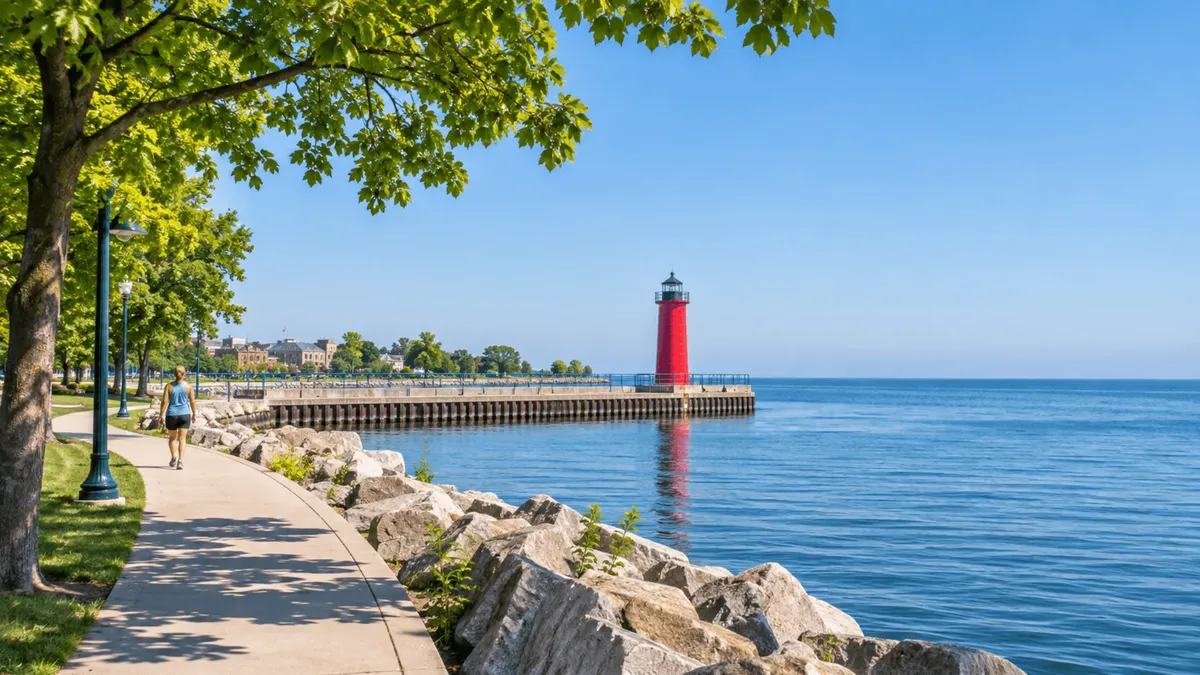
Check Today's Live Real Time Air Quality Index AQI Map in Kenosha, WI Now
TL;DR
Kenosha's air is acceptable most days. Summer ozone forms over Lake Michigan and blows onshore with the lake breeze, and wildfire smoke can bring fine particles for days. At an AQI of 100 during smoke, Filterbuy recommends MERV 13, the fan on, and a HEPA air cleaner in each occupied room.
Key Takeaways
The Kenosha AQI uses the U.S. EPA's 0–500 scale. Readings above 100 are unhealthy for sensitive groups.
The Chiwaukee Prairie monitor, roughly 500 feet from the Lake Michigan shore, often records some of Wisconsin's highest ozone.
Wildfire smoke is Kenosha's biggest short-term risk, as the July 2026 statewide advisories showed.
Filterbuy's smoke action line is an AQI of 100: MERV 13 in the HVAC, fan set to On, a portable HEPA air cleaner in each occupied room, and the house closed up.
How to Read Kenosha's Live AQI Map
The map boils monitor data down to one color-coded number: green and yellow mean carry on, and orange or above means adjust.
Kenosha County's ozone monitors sit at Chiwaukee Prairie and atop the Kenosha water tower, and the Wisconsin DNR's monitoring network runs Kenosha County's ozone season from April 1 to October 31.
What Each AQI Color Means for Your Plans in Kenosha
The ranges below follow AirNow's AQI basics, and sensitive groups are the people the Wisconsin DNR singles out: children, older adults, pregnant women, and people with heart or lung conditions.
AQI ranges and categories per AirNow (U.S. EPA). Sensitive groups per the Wisconsin DNR. Filterbuy's smoke action line is an AQI of 100.
Why Kenosha's AQI Can Lag or Look Off
AirNow's NowCast blends several hours of readings, so a fresh smoke plume can look milder on the map than it feels outside. Monitors are also spread thin. In the 2017 Lake Michigan Ozone Study, researchers near Kenosha measured ozone swings of about 20 parts per billion within 2.5 miles. If you see haze or smell smoke, act early.
Is It Safe to Breathe the Air in Kenosha Today?
Kenosha air quality today is acceptable for nearly everyone when the live AQI reads 100 or below. Between 101 and 150, sensitive groups should ease off outdoors, and above 150, everyone should.
Where to Find Kenosha Air Quality Forecasts and Alerts
The Wisconsin Department of Natural Resources (DNR) forecasts air quality and issues Air Quality Advisories for Kenosha County, usually when the AQI is expected to reach orange.
Sign up for DNR advisory emails or texts, check the next-day AQI forecast on AirNow, and use the AirNow Fire and Smoke Map during smoke events. You can also get Filterbuy's AQI alerts in the module above.
What's Actually in Kenosha's Air?
Most Kenosha air pollution comes down to two pollutants. Ground-level ozone drives summer afternoon spikes along the lakeshore, while fine particulate matter (PM2.5) drives the worst smoke days.
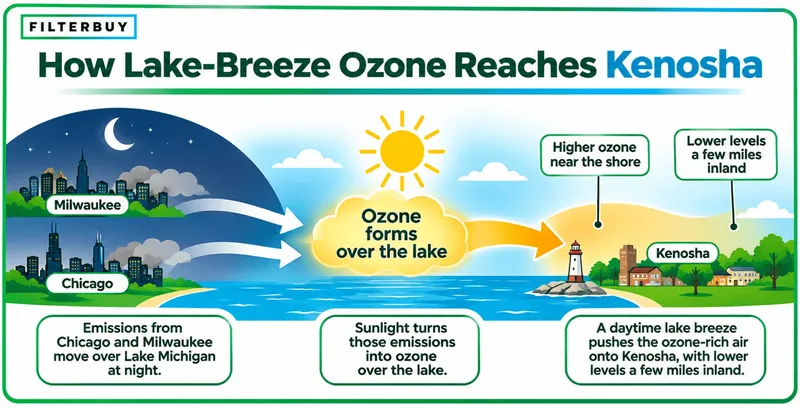
Ozone. Overnight winds carry Chicago and Milwaukee pollution over Lake Michigan, sunlight turns it into ozone, and a lake breeze pushes it onshore. A peer-reviewed study found a lake breeze on 76–82% of Wisconsin shoreline days when ozone reached 70 ppb for at least an hour.
The Wisconsin DNR also reports that most ozone-causing emissions reaching the shoreline cross state lines and are outside Wisconsin's control.
PM2.5. Everyday fine particles come from I-94 traffic and regional sources. Per the DNR, all of Wisconsin met the stricter federal PM2.5 standard in 2023–2025 regulatory data.
How Kenosha's Air Compares with the Rest of Wisconsin
The EPA's ozone designation analysis calls the Chiwaukee Prairie site the high downwind ozone monitor for the Chicago region.
Today, part of eastern Kenosha County is in nonattainment for the 2015 ozone standard, though its classification is still tied up in court.
Wildfire Smoke: Kenosha's Biggest Air Quality Wildcard
When Kenosha's AQI climbs into red or worse, wildfire smoke is usually the reason:
2023: Canadian fires led the DNR to issue 15 PM2.5 advisories, almost five times the prior 12-year average.
July 14–20, 2026: Minnesota and Ontario fires triggered statewide advisories, and the DNR forecast hazardous smoke from Lake Superior south to Kenosha and noted that large lakes can hold smoke along their shores.
Follow plumes on Filterbuy's Wisconsin wildfire and smoke map.
What a Kenosha Air Quality Advisory Means for Your Day
Start by checking which pollutant triggered the advisory.
Guidance per AirNow and the Wisconsin DNR. Pleated HVAC filters capture particles, not ozone.
Filterbuy's Four Steps at AQI 100 or Higher
Check AirNow and Wisconsin DNR advisories first and follow local instructions. Then, at an AQI of 100 during smoke, Filterbuy recommends:
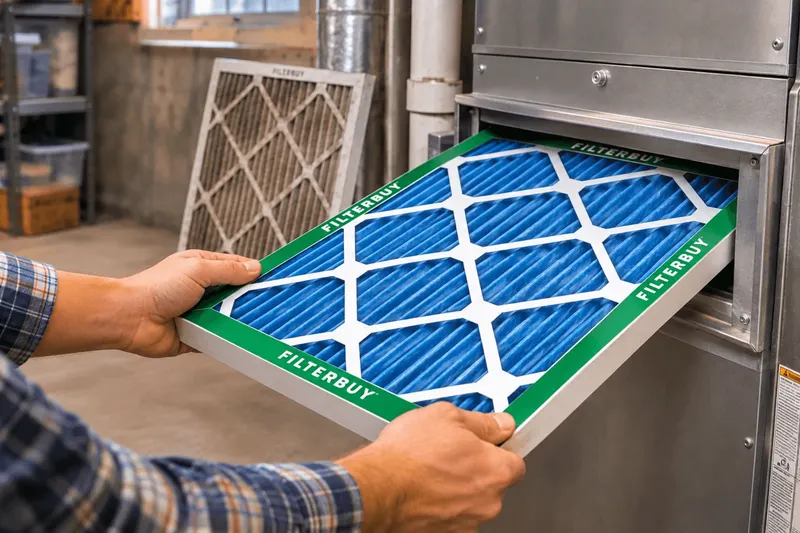
Put a MERV 13 filter in your HVAC. It's the whole-home layer.
Set the thermostat fan to On. Auto only filters while the system heats or cools.
Run a portable HEPA air cleaner in each occupied room, bedrooms first.
Close the house up. Keep windows and doors shut, and skip candles, frying, smoking, and vacuuming without a sealed unit.
The AQI 100 line and the room-by-room air cleaners are Filterbuy's recommendations. The EPA recommends a MERV 13 or higher filter during smoke events and notes that most furnaces and HVAC systems handle one without equipment problems when it's replaced often. We act at 100, the top of the Moderate range, rather than waiting for orange.
No Central Air? Keeping a Kenosha Home's Air Clean Without Ducts
Without ducts, a portable HEPA air cleaner is the primary defense, not an add-on. Size it to the room: the EPA's guidance calls for a smoke CADR of at least two-thirds of the room's square footage, so a 300-square-foot bedroom needs a smoke CADR of about 200. Skip ionizers and any air cleaner that produces ozone, which EPA advises against. Filterbuy doesn't sell them, but they're the right call.
If you can't get one, a DIY box-fan air cleaner built with a MERV 13 filter is a reasonable stopgap that EPA research found effective. Use a certified fan made in 2012 or later, and don't leave it running unattended.
Our Take: What a Filter Maker Sees in Kenosha's Air
Filterbuy has built filters to order in its U.S. plants since 2013. Here's what that work shows us in Kenosha:
Most of Kenosha's ozone isn't made in Kenosha. The air inside your home is where you have control.
The lakefront changes the math. Lakefront homes should keep windows shut longer than inland ones.
The filter has to be in before the advisory. A filter ordered the day smoke arrives shows up after the worst of it.
Working alongside our manufacturing team, I’ve learned to treat Kenosha’s map as two different problems. Ozone you plan around, so move the run to the morning. Smoke you filter: a fresh MERV 13 in the return, the fan set to On, a HEPA air cleaner in each occupied room, and the house closed up.
Michelle Wan, Brand Manager & Air Quality Writer at Filterbuy
Which Air Filter Kenosha's AQI Calls For
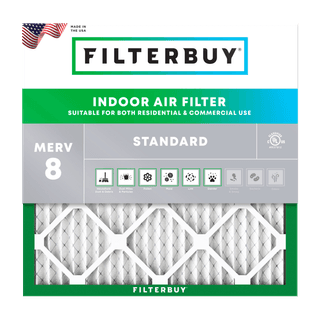
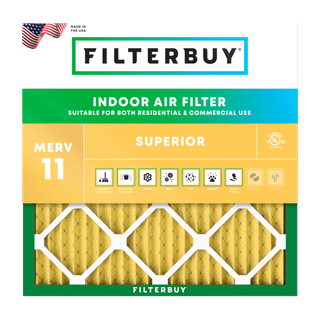
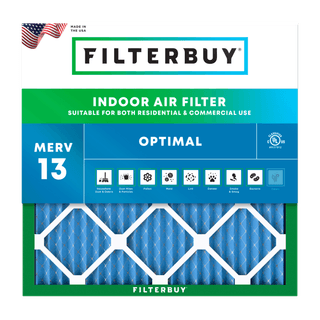
For wildfire smoke, the answer is MERV 13. Filterbuy makes MERV 8, 11, and 13 on the same lines, so we match the tier to the job. Do a quick fit check, the same way you'd confirm a size. Most furnaces and HVAC systems can use a MERV 13 without equipment problems when it's replaced often, according to EPA.
Smoke maps to MERV 13. Do a normal fit check, as you would for size. EPA notes most HVAC systems accommodate MERV 13 when it is replaced often.
Shop MERV 8, MERV 11, or MERV 13 air filters.
Here's the Kenosha filter calendar Filterbuy recommends:
Early April: Fresh filter and a spare before spring smoke and pollen.
During any smoke event: Check the filter and replace it when it looks dark brown or black, which can be well before the normal interval.
Late October: Start heating season with a fresh filter.
Filterbuy makes 600+ sizes, and auto-delivery keeps a spare on hand before the next advisory.
Supporting Statistics
Both filtration layers reduce indoor particles.
Thermostat fan set to "On": up to 24% lower particle levels.
Portable high-efficiency air cleaner: up to 85% lower.
Source: U.S. EPA Wildfire Smoke Factsheet: Indoor Air Filtration
Indoor air is the air you breathe most.
Americans spend about 90% of their time indoors, where some pollutants run 2 to 5 times higher.
Source: U.S. EPA Report on the Environment: Indoor Air Quality
Local air is earning failing grades.
802,686 Wisconsin children breathe unhealthy air.
Racine County, just north of Kenosha, earned an F for ozone.
Source: American Lung Association, State of the Air 2026: Wisconsin
Kenosha Air Quality FAQs
What Is the Air Quality in Kenosha Today?
The live map at the top of this page shows the current AQI and the pollutant behind it. Up to 100 is acceptable for most people.
Is the Air Quality Bad in Kenosha Today?
It is once the live AQI tops 100 (orange), when sensitive groups should limit heavy outdoor activity.
Where Can I See Kenosha PM2.5 Today?
On the live map, or on the AirNow Fire and Smoke Map during smoke events.
When Is Kenosha's Air Usually Worst?
Ozone peaks from April through October on hot, sunny afternoons. Smoke advisories have come in spring and summer.
What MERV Rating Do I Need for Kenosha Wildfire Smoke?
MERV 13. After checking AirNow and local guidance, Filterbuy recommends switching to a MERV 13 filter at an AQI of 100, setting the fan to On, and running a portable HEPA air cleaner in each occupied room.
Explore more: Wisconsin air quality map · Milwaukee air quality map · Chicago air quality map · Wisconsin wildfire and smoke map
Kenosha Air Quality Glossary
Air Quality Index (AQI): The U.S. EPA's 0–500 scale, split into six color-coded health categories.
Lake breeze: A daytime wind off Lake Michigan that can carry ozone onto the shoreline.
MERV: Minimum Efficiency Reporting Value, a 1–16 rating of how well an HVAC filter captures particles.
NowCast: AirNow's method for estimating current AQI from recent hourly readings.
Ozone (O3): A gas formed when sunlight reacts with nitrogen oxides and volatile organic compounds.
PM2.5: Particles 2.5 micrometers or smaller, including smoke, that can reach deep into the lungs.