
Lakewood Real-Time AQI Tracker


Get Alerts For Unhealthy AQI In Your Area
When air quality in your area reaches unhealthy levels, we'll send you a quick alert, along with expert tips on how to reduce your exposure.
What's Actually In Lakewood Air Today?
What High AQI Means for Your Lungs in Lakewood
How to Read AQI
The Air Quality Index (AQI) measures how polluted the air is and how it may affect your health.
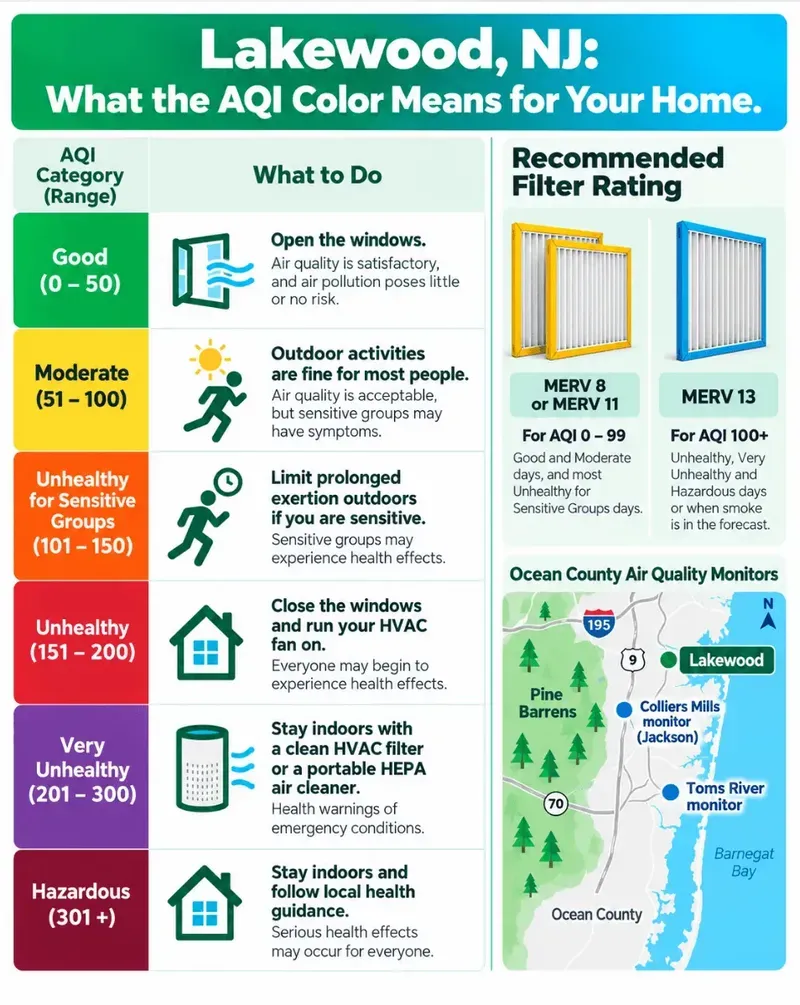
0–50 (Good): Air quality is satisfactory.
51–100 (Moderate): Acceptable, but some pollutants may pose minor concerns.
101–150 (Unhealthy for Sensitive Groups)
151–200 (Unhealthy)
201–300 (Very Unhealthy)
301+ (Hazardous)
Moderate
Still okay for most, but if you have asthma or allergies, take it easy and avoid long outdoor workouts.
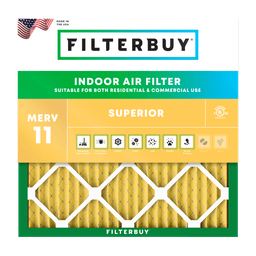
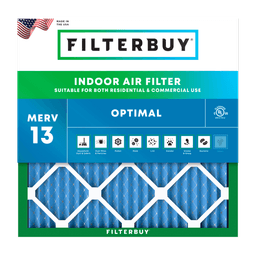
Shop MERV 11 filters→What's the Right Filter for Your AQI Level?
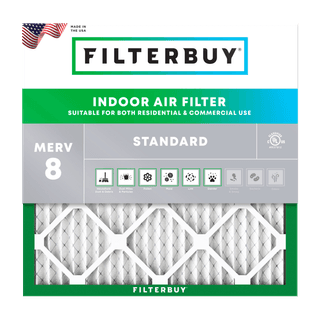
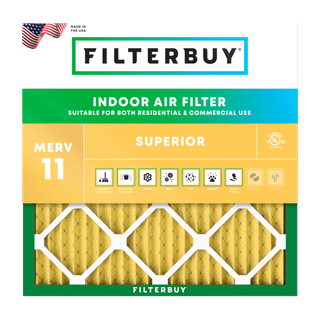
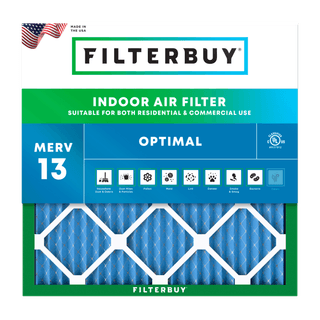


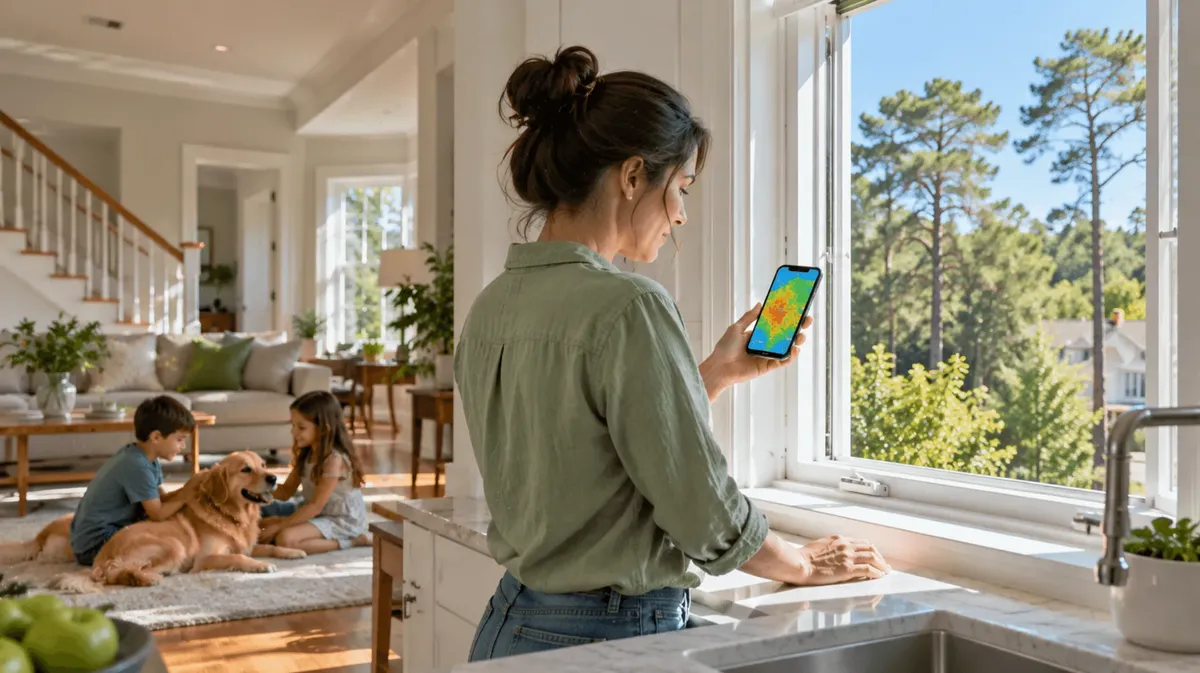
Check Today's Live Real Time Air Quality Index AQI Map in Lakewood, NJ Now
TL;DR
Filterbuy's live AQI map shows Lakewood air quality right now, using U.S. Environmental Protection Agency (EPA) and New Jersey Department of Environmental Protection (NJDEP) monitors. Under 50 is good for everyone, and above 100 is the signal for sensitive groups to ease off outdoors. Ozone drives most of Ocean County's bad-air days, and Pine Barrens smoke is the wild card. At AQI 100, Filterbuy's action line, switch to a MERV 13 filter and close the house up.
Reading the Lakewood AQI Map Right Now
Start with the map above. At Filterbuy, we read it in two steps. The color comes first: green and yellow mean keep your plans, while orange and above mean sensitive groups should cut back. Then check the pollutant, since ozone and PM2.5, the fine particles in smoke and exhaust, call for different fixes at home.
Key Takeaways
Ground-level ozone is Ocean County's main air problem and earned an F from the American Lung Association in 2026.
Fine particulate (PM2.5) usually stays low in Lakewood, though wildfire smoke can push it up within hours.
Closed windows handle most ozone. For PM2.5, Filterbuy's action line is AQI 100: MERV 13 in the HVAC and a portable HEPA cleaner in each occupied room.
What Each Lakewood AQI Color Means and What to Do
The U.S. AQI runs from 0 to 500 across six color categories. The categories and health guidance below follow EPA AirNow. The filter steps are Filterbuy's own.
Filterbuy acts at AQI 100. That's the top of the Moderate range, so we move before the map turns orange.
Why the Lakewood Reading Can Lag What You See and Smell
Mapping NJDEP's monitors for this page, Filterbuy found a gap: no regulatory monitor sits in Lakewood. According to NJDEP's 2024 Ambient Air Monitoring Network Plan, the closest station is Colliers Mills in neighboring Jackson Township. It measures ozone drifting in from the Philadelphia area. Fine particles are measured at Hooper Avenue Elementary School in Toms River.
The EPA reports current AQI as a NowCast, which averages up to 12 hours of data. When smoke rolls in fast, the number can lag what you smell, so check the AirNow Fire and Smoke Map, which adds nearby sensor readings.
Is Lakewood's Air Safe to Breathe Today?
It depends on the live reading. Below 50 is good for everyone; up to 100 is fine for most. Past 100, sensitive groups, including children, older adults, and people with heart or lung disease, should limit outdoor exertion. Past 150, everyone should. If you have a health condition, follow your doctor's plan.
Reading Ocean County's Air Forecast and Alerts
NJDEP's Bureau of Air Monitoring forecasts next-day air quality, and the National Weather Service office in Mount Holly posts it for Ocean County each afternoon. Unhealthy forecasts trigger an Air Quality Action Day, like the Code Orange alert for Ocean County on July 2, 2026.
We also read the primary pollutant, because it tells you what to do.
Forecasts: NJDEP via the National Weather Service.
What's in Lakewood's Air? Ozone, PM2.5, and Local Sources
The AQI is set by whichever of six pollutants scores highest, usually ozone in summer and PM2.5 during smoke.
Ozone forms when sunlight cooks tailpipe emissions, much of it upwind.
PM2.5 comes from Route 9 and Parkway traffic, plus wildfire smoke.
Indoors, ozone breaks down quickly, but PM2.5 lingers for hours, which is where your MERV rating matters.
Lakewood's Air Through the Year
Lakewood's riskiest air comes in spring fire season and summer ozone season.
Fire-season date per the New Jersey Forest Fire Service.
How Lakewood Air Quality Compares with the Rest of New Jersey
Lakewood's ozone ranks among the worst in the country, while Ocean County avoided failing grades for particle pollution. That matters for a town of 143,765 people (U.S. Census Bureau QuickFacts, 2025), nearly half of them under 18, the group the American Lung Association calls more susceptible.
Ozone: The American Lung Association's State of the Air 2026 report ranked the New York–Newark metro, which includes Ocean County, 12th worst nationally for ozone.
Ocean County grade: Ocean County earned an F for ozone in the 2026 report, as Lakewood Alerts reported, repeating its 2025 F.
Compare towns on Filterbuy's New Jersey air quality map.
Pine Barrens Wildfire Smoke in Lakewood: What to Do
Because Lakewood borders the Pine Barrens, smoke can drift in from next door as easily as from Canada. On April 22, 2025, the Jones Road Wildfire started in the Greenwood Forest Wildlife Management Area. It burned roughly 15,000 acres and led to an NJDEP air quality alert. In June 2023, Canadian smoke pushed NJDEP's alert to Unhealthy statewide.
Once the AQI reaches 100 or smoke moves in, check AirNow and NJDEP guidance first. Then follow Filterbuy's steps, in order:
Switch to a MERV 13 filter in the HVAC. The central system treats the whole house.
Set the thermostat fan to On. Auto only filters while the system heats or cools.
Run a portable HEPA air cleaner in each occupied room, bedrooms first. It treats that room harder than the central system can. If you can buy only one, start with the bedroom. We don't make them, but we recommend them anyway.
Close the house up. Shut windows and doors, and skip candles, frying, smoking, and vacuuming without a HEPA vacuum.
EPA's wildfire guidance recommends MERV 13 or higher during smoke and setting the fan to On instead of Auto. EPA also advises a room cleaner that doesn't produce ozone, with a smoke CADR about two-thirds of the floor area; a 300 sq ft bedroom calls for roughly 195, per EPA's sizing chart.
Pleated filters capture particles, but smoke odor is a gas; for odors, Filterbuy's line is the Odor Eliminator.
If your household doesn't adjust the thermostat on Shabbat or yom tov, check Friday's forecast and switch the fan to On beforehand. Higher-risk relatives should follow their doctor and the CDC's wildfire smoke guidance.
What If Your Lakewood Home Has No Ducts?
Window units and ductless mini-splits have no central filter slot and, per EPA, only limited filtration. Filterbuy would rather say so than sell you a filter that won't fit. In these homes, portable HEPA cleaners are the main defense against smoke.
What works instead:
A portable HEPA air cleaner in each occupied room, bedrooms first.
Windows shut during smoke, with each window unit's outdoor damper closed.
Clean mini-split filters on the manufacturer's schedule.
Don't seal yourself in without cooling; in a heat wave, use a cooling center.
Our Take: What a Filter Maker Sees in Lakewood's Numbers
Filterbuy has made pleated filters in the U.S. since 2013, so we read Lakewood's air quality data for what it means indoors.
Lakewood's usual bad-air day is an ozone day. A closed window does most of the work.
Lakewood's worst air day is a smoke day. Its fuel grows nearby.
Lakewood households are big. The Census counts 4.36 people per home, and more people load a filter faster. We'd check it monthly instead of waiting 90 days.
A filter ordered the morning the sky turns orange arrives too late, so put it in place before the smoke does.
Most people don’t want a lecture on filtration. They want to know whether the filter in the hallway closet is the right one, and whether it can stay another month.
Michelle Wan, Brand Manager and Air Quality Writer, Filterbuy
Which Filter Lakewood's AQI Level Calls For
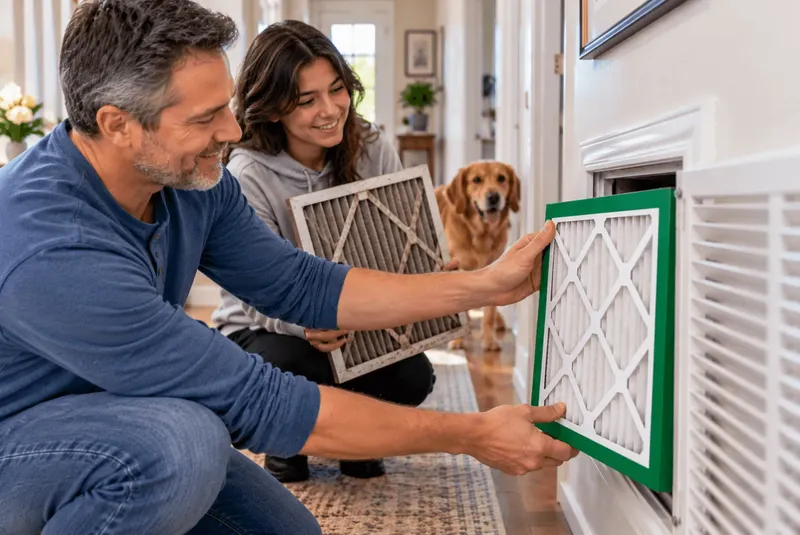
For wildfire smoke, the answer is MERV 13. That is the tier Filterbuy recommends once the AQI reaches 100. Shop MERV 13 in your size, or MERV 8 and MERV 11 for everyday air.
Confirm your filter size before you order, as with any replacement.
The question Filterbuy hears most is whether a home system can run MERV 13. The EPA says most furnaces and HVAC systems can, provided the filter is replaced often. The mistake we see more often is a filter slightly too small, which lets air slip around the frame. HEPA belongs in a portable cleaner, never the furnace slot; our HEPA vs. furnace filter guide explains why.
Supporting Statistics
767,000+ New Jerseyans have asthma.
600,000+ adults and 167,000 children, all in EPA's sensitive groups.
Source: NJ Department of Health
706,882 NJ children breathe unhealthy air.
Nearly half of Lakewood's residents are under 18.
Source: American Lung Association, 2026
HVAC systems run under 25% of the time.
Filters only clean air while the fan runs, so set it to On during smoke.
Source: U.S. EPA
Frequently Asked Questions
What MERV Rating Do I Need for Wildfire Smoke in Lakewood?
MERV 13, which Filterbuy recommends once the AQI reaches 100. Pair it with a portable HEPA cleaner in each occupied room.
What Is the Air Quality in Lakewood Today?
Check Filterbuy's live air quality map at the top of this page for the current reading and the pollutant driving it.
Is the Air Quality Bad in Lakewood Today?
Orange (101+) is unhealthy for sensitive groups, and red (151+) is unhealthy for everyone. Summer ozone causes most bad days, while smoke causes the sharpest spikes.
Where Can I See Lakewood PM2.5 Today?
The live map lists PM2.5 when it drives the reading.
How Often Should I Change My Filter During Wildfire Smoke?
Check it often during smoke and replace it when it looks dirty, which can be well before the normal interval. Keep a spare on hand.
Glossary
AQI (Air Quality Index): The EPA's 0-to-500 daily pollution scale.
PM2.5: Fine particles 2.5 micrometers or smaller, the main pollutant in smoke.
Ozone (O3): A lung irritant formed when sunlight reacts with emissions.
NowCast: The EPA method behind current AQI, weighting recent hours more.
MERV: Minimum Efficiency Reporting Value, the 1-to-16 filter efficiency scale.
HEPA: A standard capturing 99.97 percent of 0.3-micron particles.