
Air Quality in New Jersey
Air quality index (AQI⁺) and PM2.5 air pollution in New Jersey •


Get Alerts For Unhealthy AQI In Your Area
When air quality in your area reaches unhealthy levels, we'll send you a quick alert, along with expert tips on how to reduce your exposure.
Live Air Quality Ratings in New Jersey
Live Most Polluted City Ranking
Real-time most polluted cities in New Jersey
Live Cleanest City Ranking
Real-time cleanest cities in New Jersey
The Right Air Filter For High AQI Days
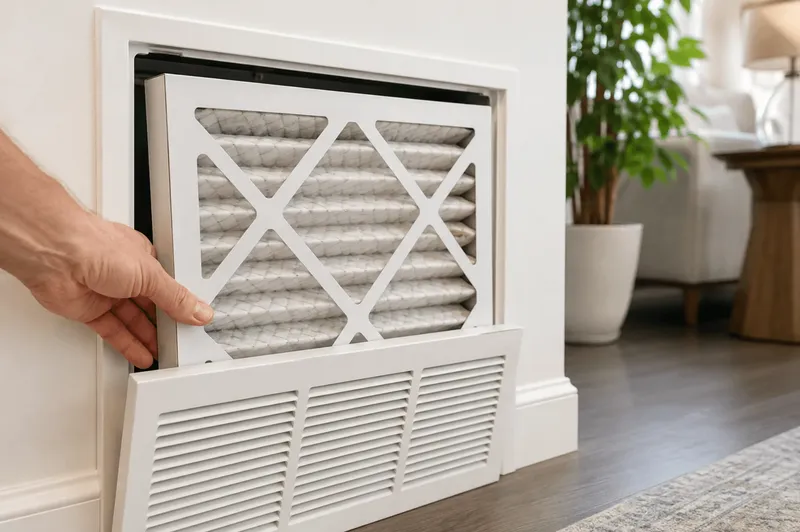
When outdoor air quality drops, the EPA recommends upgrading to a MERV 13 filter — or the highest-rated filter your HVAC system can handle — to help capture more of the fine particulate (PM2.5) that comes with poor air quality. MERV 13 is the highest rating most residential systems can run without restricting airflow.
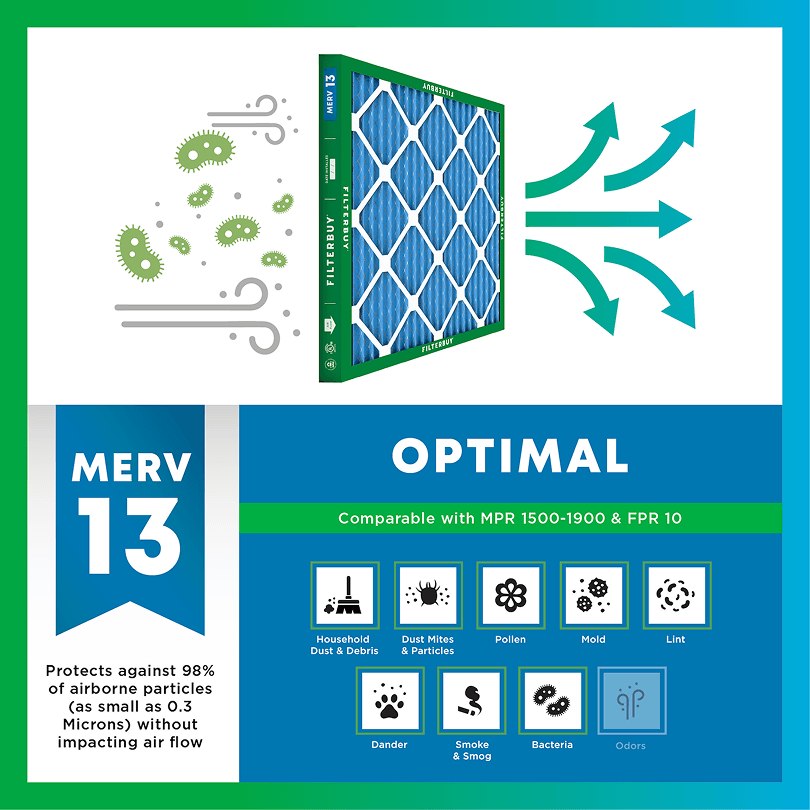
- Captures PM2.5 and other fine particulates
- Filters ash, soot, and smoke particles
- Rated to capture particles as small as 0.3 microns
- Matches the filter rating the EPA suggests during high-AQI and smoke events

AQI FAQs
What is AQI?
AQI stands for Air Quality Index, the EPA's scale for reporting daily air quality. It runs from 0 to 500. The higher the number, the greater the level of air pollution. Values at or below 100 are generally considered satisfactory; values above 100 mean air quality is unhealthy, first for sensitive groups, then for everyone as numbers climb.
What does AQI measure?
The AQI tracks five major pollutants regulated by the Clean Air Act: ground-level ozone, particle pollution (PM2.5 and PM10), carbon monoxide, sulfur dioxide, and nitrogen dioxide. The reported AQI value reflects whichever pollutant is highest at that time — most often ozone or fine particles (PM2.5).
How is AQI calculated?
Monitoring stations measure pollutant concentrations, and the EPA converts each into a standardized 0–500 score using set breakpoints. Each pollutant gets its own sub-index, and the highest sub-index becomes the reported AQI. That's why a single number can represent different pollutants on different days.
What is a good AQI?
An AQI of 0–50 is rated "Good" — air quality poses little or no risk. 51–100 is "Moderate," acceptable for most people though unusually sensitive individuals may want to limit prolonged outdoor exertion. Anything at or below 100 is generally considered satisfactory air quality.
What does an AQI of 100 (or 150) mean?
100 is the dividing line: at or below it, air quality is satisfactory for the general public. From 101–150, air is "Unhealthy for Sensitive Groups" — people with respiratory conditions, older adults, and children. From 151–200, it's "Unhealthy" and everyone may begin to feel effects.
Why is the AQI bad today?
Short-term AQI spikes usually come from wildfire smoke, temperature inversions that trap pollutants near the ground, high-ozone weather (hot, sunny, stagnant days), or heavy traffic and industrial activity. Check a real-time source like the map on this page to see which pollutant is driving today's reading in your area.
What AQI is bad for running or exercise?
Many runners follow the EPA category lines: below 50, no adjustment needed; 51–100, unusually sensitive people may shorten intense workouts; above 100, sensitive groups are advised to reduce prolonged or heavy outdoor exertion; above 150, that advice extends to everyone. Exercise increases how much air you breathe in, which is why thresholds matter more during workouts.
What AQI is safe to open windows?
A common rule of thumb is to keep windows open when the AQI is under 100 and close them when it climbs above, especially during wildfire smoke events when fine particles are elevated. When windows are closed, running your HVAC system with a fresh filter helps capture particles circulating indoors.
Should I wear a mask based on AQI?
Public health agencies generally suggest considering a well-fitted N95-style respirator outdoors when the AQI exceeds 150, particularly during smoke events. Cloth and surgical masks don't filter fine particles effectively. Follow guidance from your local health department, which may adjust recommendations during severe episodes.
Check Today's Live Real Time Air Quality Index AQI Map in New Jersey Now
Author: Michelle Wan, Brand Manager & Air Quality Writer | Filterbuy · Reviewer: David Clark, Licensed HVAC Technician · Publish Date: July 17, 2026 · Updated Date: July 17, 2026
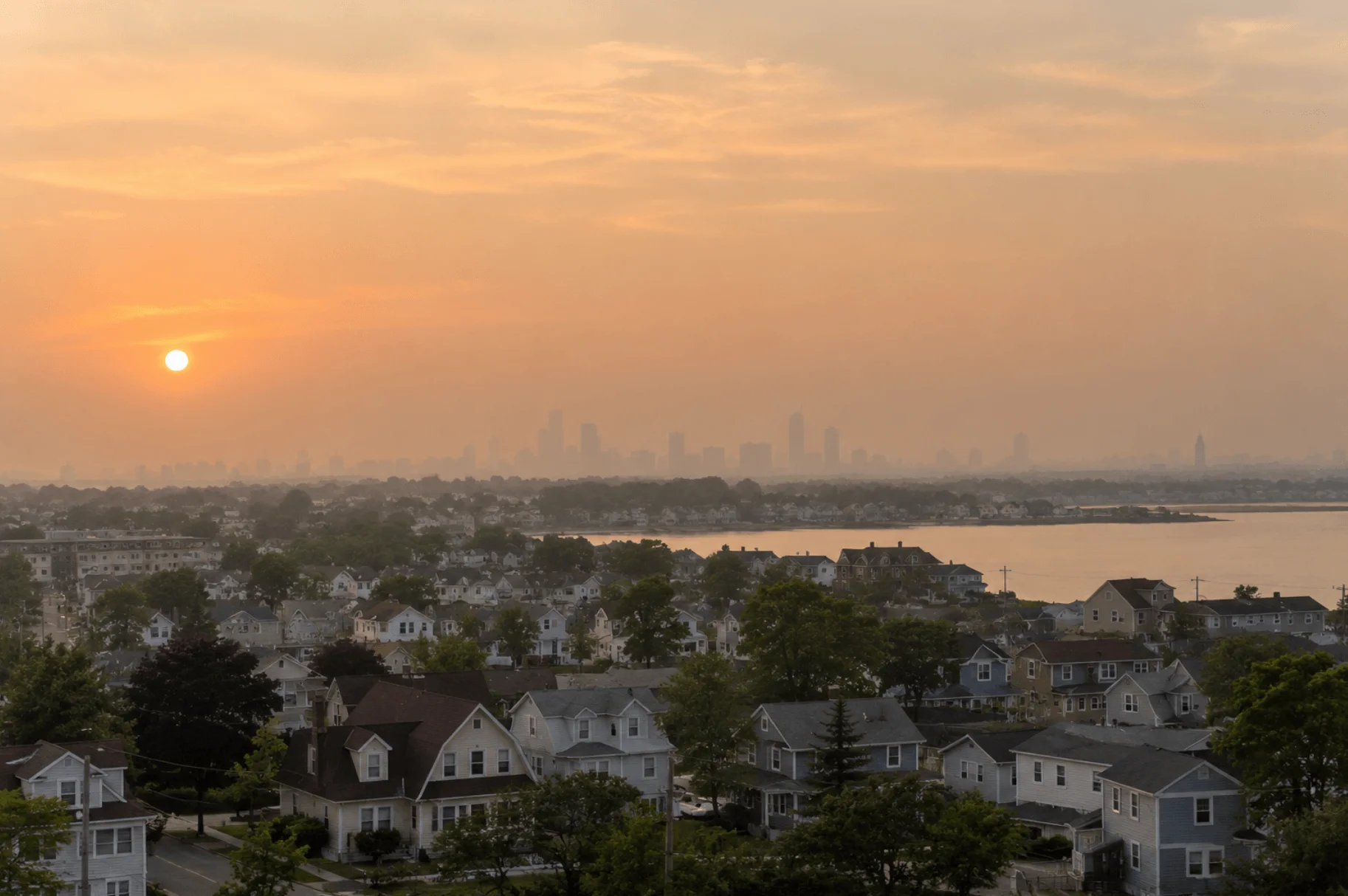
New Jersey's air quality is changing hour by hour this week. Wildfire smoke drifting down from Canada pushed the New Jersey Department of Environmental Protection to issue a Code Orange Air Quality Action Day for ground-level ozone and fine particulates, a status the National Weather Service in Mount Holly relayed on July 15, 2026, and that continued into July 16. Use the live map below to see the current AQI for your county, then read on to learn what today's colors mean for your health and your home.
A Note From Our Air Quality Writer
I track air quality alerts for every market Filterbuy covers, and New Jersey's pattern this week stands out. Most summers, one driver takes the lead: either ozone on a hot, still afternoon, or smoke drifting down from a specific wildfire event. Seeing a Code Orange day built from both at once, ozone and cross-border smoke, this early in the season is less common, and it's worth watching for the rest of the summer, not just today.
Michelle Wan, Brand Manager & Air Quality Writer, Filterbuy
TL;DR
New Jersey is under an active air quality alert this week. The New Jersey Department of Environmental Protection issued a Code Orange Air Quality Action Day for ozone and fine particulates as wildfire smoke from Canada moved into the region. Code Orange means the air is Unhealthy for Sensitive Groups, including children, older adults, and people with asthma or heart disease. Check the live map above for your exact county reading, limit strenuous outdoor activity if you fall into a sensitive group, and keep an eye on this page for updates as conditions change. Filterbuy is tracking this alert live and will update this page as conditions shift.
Key Takeaways
New Jersey's air quality this week is being driven by two factors at once: summer ground-level ozone and drifting Canadian wildfire smoke.
The New Jersey Department of Environmental Protection called a Code Orange Air Quality Action Day, meaning air quality is Unhealthy for Sensitive Groups in affected counties.
The U.S. Air Quality Index runs from 0 to 500 across six color categories: Green (Good), Yellow (Moderate), Orange (Unhealthy for Sensitive Groups), Red (Unhealthy), Purple (Very Unhealthy), and Maroon (Hazardous).
Northern New Jersey's ozone smog has earned an F grade three years running in the American Lung Association's "State of the Air" report, ranking 12th worst in the nation.
Fine particle pollution (PM2.5) from wildfire smoke can travel hundreds of miles and is small enough to reach deep into the lungs.
Sensitive groups, including children, older adults, and anyone with asthma or heart or lung disease, should limit prolonged outdoor exertion whenever New Jersey's AQI reaches Orange or higher.
New Jersey's air quality problem is really two separate problems on different schedules: regional ozone transported in from the New York City and Philadelphia metro areas, and wildfire smoke carried down from Canada. Checking the AQI once in the morning during summer isn't enough.
Check New Jersey's Live AQI Map Right Now
The map above pulls current New Jersey readings so you can see exactly what the air looks like in your county at this moment, rather than relying on a statewide average. Air quality can vary sharply from one county to the next, especially during a wildfire smoke event, so check your specific location before heading outside.
Traveling outside New Jersey or checking on family elsewhere? Filterbuy's live wildfire and smoke map tracks active fires and smoke plumes across the entire country in real time.
What Today's Code Orange Alert Means For New Jersey
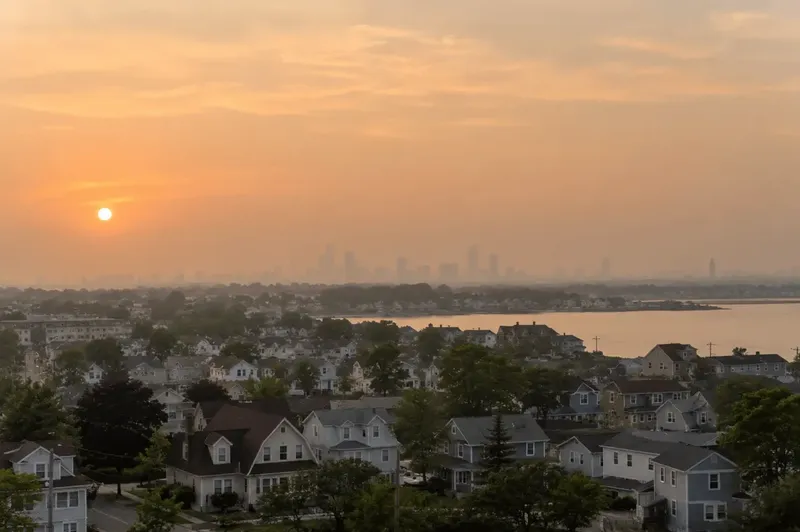
On July 15, 2026, the New Jersey Department of Environmental Protection issued a Code Orange Air Quality Action Day for ground-level ozone and fine particulates, an alert the National Weather Service's Philadelphia/Mount Holly office relayed across northern New Jersey counties including Sussex, Warren, Morris, Hunterdon, and Somerset. Wildfire smoke drifting down from Canada is layering on top of a summer heat stretch, and forecasters expect the pattern to keep affecting the Northeast into the following day.
A Code Orange day means air quality has crossed into "Unhealthy for Sensitive Groups" territory. Children, older adults, and people with asthma, heart disease, or other lung conditions are the most likely to notice symptoms first, even though the general public usually feels little effect at this level. We're watching this alert alongside our own New Jersey customers and will keep the guidance on this page current while it's in effect.
How The Air Quality Index Works
The U.S. Environmental Protection Agency's AQI Basics page explains the Air Quality Index as a national yardstick running from 0 to 500. The higher the number, the greater the health concern. An AQI at or below 100 is generally considered satisfactory, while values above 100 mean the air is unhealthy, first for sensitive groups and eventually for everyone as the number climbs.
According to New Jersey's Department of Environmental Protection, the state's AQI has rarely climbed above 150 and has never crossed 200 in its historical record, though the 2023 Canadian wildfire smoke event pushed several monitoring days into the Unhealthy and Very Unhealthy range. NJDEP tracks five pollutants under the Clean Air Act: ozone, particle pollution, carbon monoxide, nitrogen dioxide, and sulfur dioxide, using a statewide network of ambient air monitoring stations.
Source: U.S. EPA AirNow AQI Basics and the New Jersey Department of Environmental Protection.
For a closer look at what each color means day to day, see Filterbuy's AQI color chart, which breaks down the six categories in more everyday terms.
What Each AQI Level Means For Your Health
The Centers for Disease Control and Prevention recommends checking the AQI before planning extended time outdoors, the same way you would check the weather. Ground-level ozone and fine particle pollution are the two pollutants most likely to affect New Jersey residents day to day.
The EPA's guidance on patient exposure and the AQI breaks down who is most at risk at each level. At Moderate (Yellow), only unusually sensitive individuals may notice mild symptoms. At Unhealthy for Sensitive Groups (Orange), people with heart or lung disease, older adults, and children should reduce prolonged or heavy outdoor exertion. At Unhealthy (Red) and above, the general public can begin to feel effects too, and sensitive groups face a real risk of more serious symptoms.
Children and teens, whose lungs are still developing
Older adults
People with asthma, COPD, or other lung conditions
People with heart disease
Pregnant people
Anyone who works or exercises outdoors for extended periods
That list covers who needs to be careful outdoors. Filterbuy exists for the other half of the equation: what happens to that same air once it's inside your house.
Source: U.S. EPA AirNow AQI Basics and the CDC's guidance on air quality and health.
Why Wildfire Smoke Is Driving New Jersey's Air Quality Today
Wildfire smoke is not a once-a-summer story in New Jersey anymore. Smoke from Canadian wildfires has drifted into the state in multiple recent summers, and the effect on fine particle pollution can be significant even hundreds of miles from the actual fire.
A peer-reviewed study on wildfire-specific PM2.5 exposure, Aguilera et al. (2021), available through the National Institutes of Health, found that fine particulate matter from wildfire smoke carries measurable respiratory health risks, reinforcing why health agencies treat smoke-driven PM2.5 spikes with the same seriousness as any other Code Orange or Code Red air quality day.
When wildfire smoke is the primary driver, closing windows and running HVAC filtration indoors matters more than usual, since outdoor smoke particles are small enough to seep into homes through gaps and ventilation systems. In our experience supplying filters to homes across the Northeast during past smoke events, the clearest early warning usually isn't a smell in the house. It's a filter that looks noticeably grayer than it did a week earlier.
For a deeper look at how far this smoke travels and what to do about it, see Filterbuy's guide to Canadian wildfire smoke and U.S. air quality.
What Makes New Jersey's Air Quality Uniquely Tricky
New Jersey doesn't have one air quality problem. It has two, and they rarely show up on the same schedule.
Caught Between Two Major Ozone Sources
New Jersey sits in the transport corridor between two of the country's largest ozone-forming regions, the New York City metro area to the north and Philadelphia to the southwest. Vehicle and industrial emissions from both cities drift into the state on summer winds, which is a major reason New Jersey has been designated Moderate Nonattainment for ground-level ozone even though the state's own local emissions have dropped for decades. Wildfire smoke from Canada arrives through a separate route entirely, carried south by upper-level winds far above where ground-level ozone forms. The two problems can, and do, show up on the same day, which is exactly what happened this week.
When To Check Twice: New Jersey's Two Overlapping Seasons
Ozone season runs roughly May through September and peaks on hot, sunny, low-wind afternoons, so a morning that looks clear can still turn into an Orange afternoon. Wildfire smoke season overlaps the same months but follows no set schedule. Recent years have brought major smoke events in June, and this week's Code Orange day shows it can happen well into July too. Because the two drivers move on different clocks, checking the AQI once in the morning isn't enough during summer. Check again in the early afternoon, and once more in the early evening if you're planning anything outdoors after work.
Common New Jersey Air Quality Myths, Corrected
Myth: If the sky looks clear, the air is fine. Fact: fine particle pollution and ground-level ozone are both invisible at typical outdoor concentrations. A hazy sky means conditions are bad, but a clear sky doesn't guarantee they're good.
Myth: Wildfire smoke is a West Coast problem. Fact: smoke from Canadian wildfires has reached New Jersey in multiple recent summers, sometimes settling close to the ground hundreds of miles from the nearest fire.
Myth: The AQI stays about the same all day. Fact: ozone and smoke can each push the AQI up or down within a few hours, which is why New Jersey's own alerts are typically issued and lifted on a single-day basis.
Two overlapping problems on two different schedules is exactly why we built Filterbuy's filtration guidance around the AQI itself, rather than around the season or the calendar date.
How New Jersey's Air Quality Compares Across The State
According to the American Lung Association's 2026 "State of the Air" report for New Jersey, the New York-Newark metro area, which includes thirteen northern New Jersey counties, earned an F grade for ozone smog for a third consecutive report, ranking 12th worst in the nation. More than 706,882 New Jersey children live in counties with at least one failing air quality grade.
Not every county tells the same story. Sierra Club New Jersey's analysis of the 2025 report notes that the state's northern and southern regions are both designated Moderate Nonattainment for ground-level ozone under EPA's 2015 standard, meaning both regions have areas that don't yet meet the federal health-based limit, while a handful of counties, including Atlantic and Warren, have consistently earned passing or A grades.
Source: American Lung Association, "State of the Air" 2025 report, based on 2021-2023 air quality data.
Newark sits inside the New York-Newark metro area's ozone footprint. Filterbuy's Newark live AQI map shows current city-level conditions if you need a closer read than the statewide picture above.
Expert Quote
Every time wildfire smoke reaches the Northeast, we see the same thing on our end: customers who normally reorder filters every 90 days start reaching out much sooner, because the filter is already visibly loaded with soot. That's not a talking point. It's a pattern we've watched repeat across smoke season after smoke season, and it's exactly why we tell people to check their filter, not just the AQI app, once the sky turns hazy.
David Heacock, Founder and CEO, Filterbuy
After manufacturing filters for over a decade and serving millions of households, Filterbuy has seen firsthand how quickly outdoor air quality events like this week's wildfire smoke translate into indoor air problems for homes across New Jersey.
How To Protect Your Family When The AQI Turns Unhealthy
Check the live map above for your county before planning outdoor time.
Move workouts and strenuous chores indoors on Orange days or worse, especially for sensitive groups.
Close windows and doors when outdoor AQI is elevated, particularly during a smoke event.
Run your HVAC system with a high-efficiency filter to help capture fine particles indoors.
Sign up for NJDEP's EnviroFlash alerts so you know before an Action Day is called, not after.
Pro Tip: After manufacturing filters through more wildfire seasons than we can count, we've learned that the filter itself usually tells you a smoke event happened before your nose does. Pull yours and take a look after any Code Orange day, even one you didn't notice by smell.
Not sure which filter to reach for? Filterbuy's guide to MERV ratings for high-AQI days breaks down MERV 8 versus MERV 11 versus MERV 13 by AQI level.
Glossary
Air Quality Index (AQI): A 0-to-500 scale developed by the U.S. EPA that reports how clean or polluted outdoor air is, along with the associated health effects of concern for each range.
PM2.5: Fine particulate matter measuring 2.5 micrometers or smaller in diameter, small enough to be inhaled deep into the lungs and, in some cases, enter the bloodstream.
Ground-Level Ozone: A pollutant formed when sunlight reacts with emissions from cars and industry, most common on hot, sunny days and a leading driver of New Jersey's summer air quality problems.
Code Orange / Unhealthy for Sensitive Groups: An AQI reading of 101 to 150. The general public is unlikely to be affected, but children, older adults, and people with heart or lung disease should reduce prolonged outdoor exertion.
Air Quality Action Day: A day on which a state environmental agency, such as the New Jersey Department of Environmental Protection, forecasts that air pollution will reach unhealthy levels and issues a public alert.
NAAQS: National Ambient Air Quality Standards, the health-based limits the EPA sets for six criteria pollutants under the Clean Air Act.
Nonattainment Area: A region that does not currently meet a federal air quality standard for a specific pollutant, such as ground-level ozone.
Frequently Asked Questions About New Jersey's Air Quality
7 Essential Resources We Lean On For New Jersey's Air Quality
We've spent over a decade manufacturing air filters and helping families breathe easier, and none of that expertise means much without trustworthy data behind it. These are the seven sources behind every claim on this page, the same ones we check before we tell you what to do about your own air.
1. See New Jersey's Own Forecast Straight From The State
We always send New Jersey customers to NJDEP's AQI Today page first, since it comes straight from the agency running the state's own monitoring stations. Check it before you plan outdoor time on any day the color code looks uncertain.
2. Learn The Color Code Every Weather App Borrows
We build every AQI reference on this page around AirNow's AQI Basics page, the same 0-to-500 scale your local weather app quietly borrows. Once it clicks, you'll never wonder what "Orange" or "Red" means again.
3. Get Health Guidance You Can Actually Trust
When customers ask us what a bad air day means for their kids or their asthma, we point them to the CDC's air quality guidance. It turns AQI numbers into the same plain-language advice we'd give our own families.
4. Understand Exactly Who's At Risk At Each Level
We reference EPA's patient exposure guidance whenever we talk about sensitive groups, since it breaks down safe exertion levels category by category instead of treating every health condition the same way.
5. See The Peer-Reviewed Science Behind Wildfire Smoke Risk
After manufacturing filters through more wildfire seasons than we can count, we've learned to trust the research over the headlines. Aguilera et al.'s peer-reviewed study, published through the National Institutes of Health, is the science behind why we treat wildfire smoke differently than everyday PM2.5.
6. Check How Your County Stacks Up Against The Rest Of New Jersey
We check the American Lung Association's State of the Air report every year to see how our New Jersey customers' own counties are doing, not just the statewide average.
7. Get The Global Context Behind The AQI Concept
For customers who want the bigger picture, Wikipedia's Air Quality Index entry lays out how the U.S. scale compares to the systems used in Canada, the EU, and beyond, handy background during a cross-border smoke event.
Supporting Statistics
Three numbers worth knowing. Each comes from a federal or nonprofit research body, not a blog post.
1. 28 million Americans live with asthma. Air pollution is a documented trigger for flare-ups. Source: the Asthma and Allergy Foundation of America.
2. 5 New Jersey counties failed for ozone smog. 11 of 14 counties graded also received a D for particle pollution. Source: Sierra Club New Jersey's analysis of American Lung Association data.
3. 37 million Americans faced unhealthy air in June 2025. Canadian wildfire smoke pushed conditions to "Unhealthy for Sensitive Groups" or worse for over 37 million people. More than 9 million fell in the "Unhealthy" range. Source: the U.S. Census Bureau, paired with National Weather Service forecast data.