
Air Quality in Kansas
Air quality index (AQI⁺) and PM2.5 air pollution in Kansas •


Get Alerts For Unhealthy AQI In Your Area
When air quality in your area reaches unhealthy levels, we'll send you a quick alert, along with expert tips on how to reduce your exposure.
Live Air Quality Ratings in Kansas
The Right Air Filter For High AQI Days
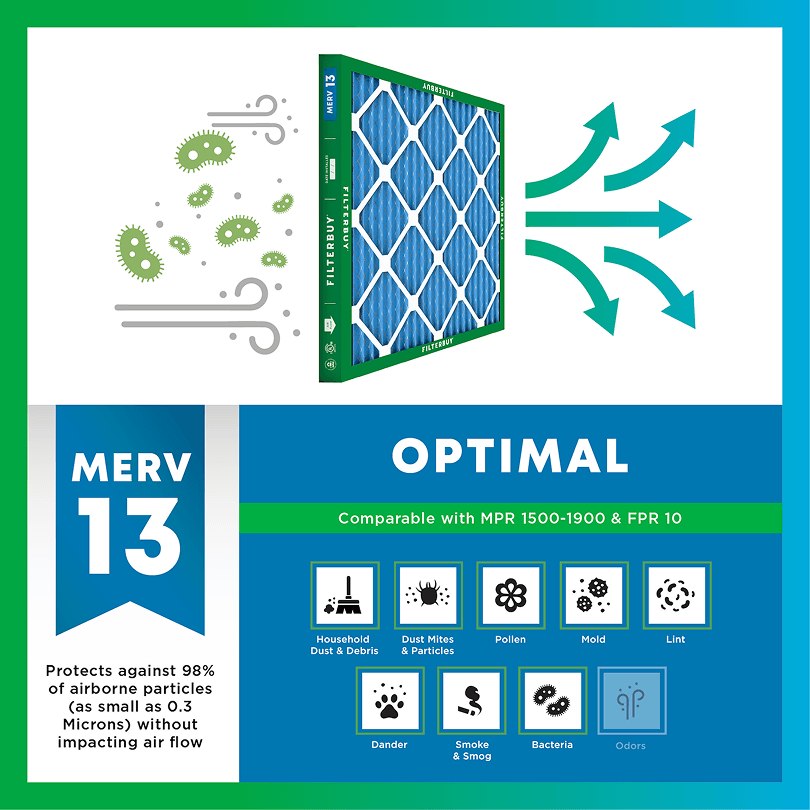
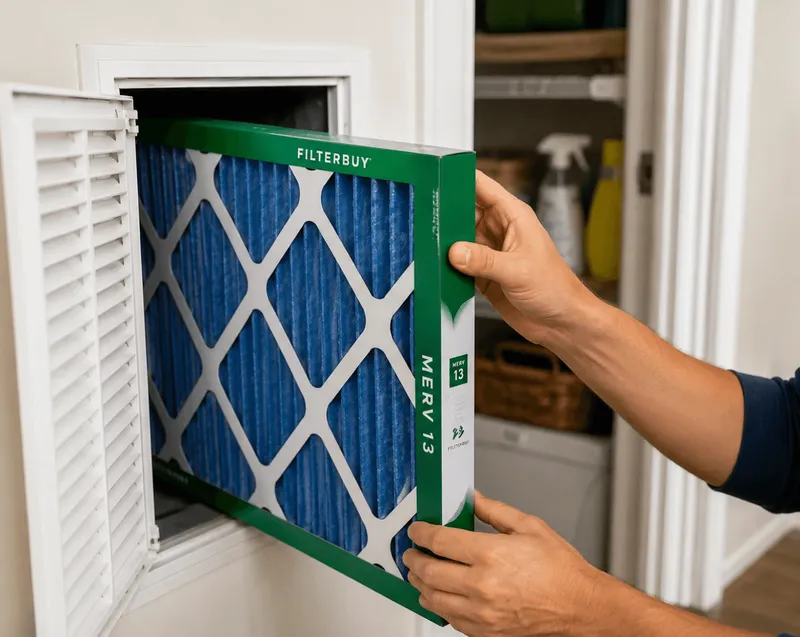
When outdoor air quality drops, the EPA recommends upgrading to a MERV 13 filter — or the highest-rated filter your HVAC system can handle — to help capture more of the fine particulate (PM2.5) that comes with poor air quality. MERV 13 is the highest rating most residential systems can run without restricting airflow.
- Captures PM2.5 and other fine particulates
- Filters ash, soot, and smoke particles
- Rated to capture particles as small as 0.3 microns
- Matches the filter rating the EPA suggests during high-AQI and smoke events

AQI FAQs
What is AQI?
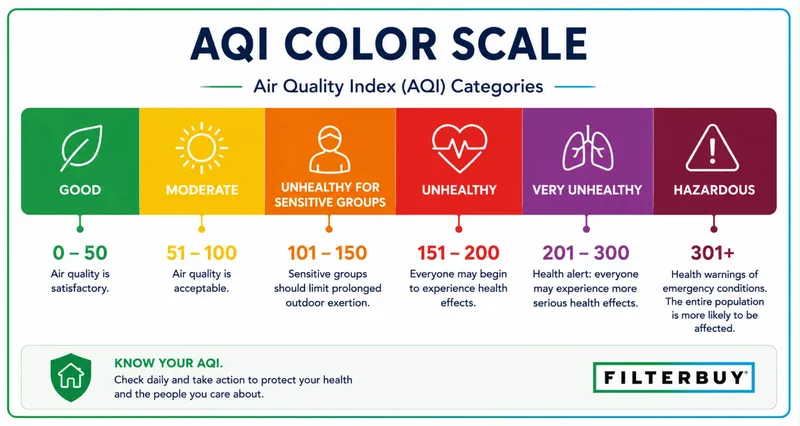
AQI stands for Air Quality Index, the EPA's scale for reporting daily air quality. It runs from 0 to 500. The higher the number, the greater the level of air pollution. Values at or below 100 are generally considered satisfactory; values above 100 mean air quality is unhealthy, first for sensitive groups, then for everyone as numbers climb.
What does AQI measure?
The AQI tracks five major pollutants regulated by the Clean Air Act: ground-level ozone, particle pollution (PM2.5 and PM10), carbon monoxide, sulfur dioxide, and nitrogen dioxide. The reported AQI value reflects whichever pollutant is highest at that time — most often ozone or fine particles (PM2.5).
How is AQI calculated?
Monitoring stations measure pollutant concentrations, and the EPA converts each into a standardized 0–500 score using set breakpoints. Each pollutant gets its own sub-index, and the highest sub-index becomes the reported AQI. That's why a single number can represent different pollutants on different days.
What is a good AQI?
An AQI of 0–50 is rated "Good" — air quality poses little or no risk. 51–100 is "Moderate," acceptable for most people though unusually sensitive individuals may want to limit prolonged outdoor exertion. Anything at or below 100 is generally considered satisfactory air quality.
What does an AQI of 100 (or 150) mean?
100 is the dividing line: at or below it, air quality is satisfactory for the general public. From 101–150, air is "Unhealthy for Sensitive Groups" — people with respiratory conditions, older adults, and children. From 151–200, it's "Unhealthy" and everyone may begin to feel effects.
Why is the AQI bad today?
Short-term AQI spikes usually come from wildfire smoke, temperature inversions that trap pollutants near the ground, high-ozone weather (hot, sunny, stagnant days), or heavy traffic and industrial activity. Check a real-time source like the map on this page to see which pollutant is driving today's reading in your area.
What AQI is bad for running or exercise?
Many runners follow the EPA category lines: below 50, no adjustment needed; 51–100, unusually sensitive people may shorten intense workouts; above 100, sensitive groups are advised to reduce prolonged or heavy outdoor exertion; above 150, that advice extends to everyone. Exercise increases how much air you breathe in, which is why thresholds matter more during workouts.
What AQI is safe to open windows?
A common rule of thumb is to keep windows open when the AQI is under 100 and close them when it climbs above, especially during wildfire smoke events when fine particles are elevated. When windows are closed, running your HVAC system with a fresh filter helps capture particles circulating indoors.
Should I wear a mask based on AQI?
Public health agencies generally suggest considering a well-fitted N95-style respirator outdoors when the AQI exceeds 150, particularly during smoke events. Cloth and surgical masks don't filter fine particles effectively. Follow guidance from your local health department, which may adjust recommendations during severe episodes.
Check Today's Live Real Time Air Quality Index AQI Map in Kansas Now
Author: Michelle Wan | Reviewer: David Clark, Licensed HVAC Technician | Publish Date: July 23, 2026 | Updated Date: July 23, 2026
TL;DR
Kansas air quality changes by the hour and by the region, driven mainly by ground-level ozone in summer and by wildfire smoke that regularly travels in from Canada and the western United States. Filterbuy's live map above shows the current Air Quality Index (AQI) reading nearest your location on the EPA's 0-to-500 scale. When the number climbs past 100, sensitive groups should limit outdoor time, and above 150 that advice applies to everyone.
Key Takeaways
Kansas has no single statewide AQI number. Readings vary by monitor, with Wichita, Topeka, and Kansas City tracked separately.
Ground-level ozone drives most Kansas air complaints from April through October, especially on hot, still afternoons.
Wildfire smoke from Canada and the western U.S. causes many of Kansas's worst AQI days, even with no fire nearby.
An AQI above 100 means checking on sensitive groups. Above 150, that guidance applies to everyone, per EPA and AirNow.
A MERV 13 filter captures a meaningfully higher share of fine smoke particles than a MERV 8, though it is not a HEPA substitute.
Why We Built This Page Around The Flint Hills
"Most AQI maps treat Kansas like anywhere else. They miss the Flint Hills, a smoke source almost no other state deals with. Each spring, the real question isn't just what the number is, it's whether it's ozone, transported wildfire smoke, or a prescribed burn a few counties over, because that changes what you should do about it," says Michelle Wan, Brand Manager and Air Quality Writer at Filterbuy.
What Today's AQI Reading Means For Kansas
The number on the live map above is the Air Quality Index, the 0-to-500 scale the EPA uses to translate five pollutants into one score and color. Kansas readings come from EPA and KDHE monitors, supplemented by satellite and sensor data that fill the gaps.
Source: EPA and AirNow Air Quality Index categories.
Kansas rarely reaches Very Unhealthy or Hazardous from local sources alone. It usually takes transported wildfire smoke.
Why Kansas Air Quality Changes So Fast
Two forces account for nearly every swing in the Kansas AQI, and both are worth understanding rather than just reading off the map. The first is ground-level ozone, a gas that forms when heat and sunlight react with pollutants from traffic and industry. Ozone builds through hot, still summer afternoons, which is why the Kansas City and Wichita metro areas often see their worst readings between noon and early evening.
The second force is fine particulate matter, or PM2.5, carried in from wildfire smoke. Kansas can inherit unhealthy air from fires burning hundreds or thousands of miles away when high-altitude winds carry the smoke south. That pattern played out in mid-July 2026, when smoke from fires in Canada and the northern United States pushed air quality across a broad swath of the Midwest and Northeast into unhealthy territory, including several Kansas and Missouri cities. See Filterbuy's guide to reading a wildfire smoke map for a walkthrough of the color-coded dots, plumes, and fire icons.
Kansas also carries a source most states do not, and most air quality guides skip entirely: the Flint Hills. Each spring, mainly in March and April, ranchers burn large sections of the region's tallgrass prairie to control invasive woody plants and improve grazing land. KDHE's Flint Hills Smoke Management program times these burns to reduce overlap, though smoke can still spike local PM2.5 readings for a day or two each spring.
Kansas's Year-Round Air Quality Calendar
No single guide puts Kansas's three air quality drivers on one timeline. Filterbuy built this one from watching all three play out across a full year.
Source: NOAA, EPA, and KDHE seasonal air quality guidance.
How To Tell What's Actually Behind Today's Haze
Smells like campfire smoke and stays hazy for days: wildfire smoke, often from hundreds of miles away.
Smells like burning grass in March or April: a Flint Hills prescribed burn, usually clearing within a day or two.
No smell at all on a hot, still afternoon: ground-level ozone, not smoke, and a filter will not remove it.
Still unsure: check the live map above for fire icons within a few hundred miles, or KDHE's site for an active burn advisory.
What To Do At Each AQI Level
Use this table with the live map to decide how to spend your day and whether to upgrade your filter.
Source: EPA guidance by AQI category.
How Outdoor Air Gets Inside Your Home
Every HVAC system pulls outdoor air through gaps around doors and windows, even in a tightly sealed home. When outdoor AQI climbs, fine particles like PM2.5 settle on the filter that already keeps dust and allergens in check.
After manufacturing filters for over a decade and serving more than two million households, we’ve seen that a home’s indoor air quality tracks the outdoor AQI more closely than most homeowners expect, especially during smoke events.
David Heacock, Founder and CEO of Filterbuy
The EPA recommends upgrading to MERV 13, or the highest efficiency your system safely supports, during smoke and other high-particulate days. MERV 13 is not a true HEPA filter and will not resolve a mold or moisture problem. David Clark, this page's technical reviewer, confirms these recommendations match a typical residential system.
Kansas Cities With Their Own Live AQI Map
Kansas conditions vary enough by region that one statewide reading only tells part of the story. Check Filterbuy's live AQI map for Wichita for city-specific readings, or the live AQI map for Kansas City, Kansas for the metro straddling the state line. For fire activity and plume tracking, see the live wildfire and smoke map for Kansas.
Frequently Asked Questions
Protect The Air Inside While You Wait For The Outdoor Air To Clear
On smoke or high-ozone days, upgrading your HVAC filter gives your home's air a fighting chance while conditions improve. Filterbuy makes MERV 13 and MERV 11 filters in over 600 sizes, builds them in the USA, and ships factory-direct. Shop MERV 13 Air Filters for the EPA-recommended upgrade during smoke events, or shop MERV 11 Air Filters for everyday filtration.
7 Expert-Backed Resources For Understanding Kansas Air Quality Right Now
Filterbuy's team vetted these seven sources, each an authoritative, article-level page from a separate government or nonprofit organization.
Get The Official AQI Number For Any Kansas Address
AirNow is the federal government's own lookup tool behind every reading here, for any city or ZIP code in Kansas.
Source: AirNow – Air Quality Index (AQI) Basics
See Kansas's Own State-Level Air Quality Guidance
KDHE operates Kansas's own air monitors and issues state advisories, including Flint Hills burn season alerts, that national AQI apps often miss.
Source: Kansas Department of Health and Environment – Air Quality Index
Understand What PM2.5 Actually Does Inside Your Lungs
The EPA explains what PM2.5 is and why it drives most wildfire-smoke warnings, the pollutant behind nearly every Unhealthy reading above.
Source: EPA – Particulate Matter (PM) Basics
Learn How To Plan Your Day Around The AQI
CDC's overview explains how to read AQI alerts and adjust plans, with guidance for asthma, heart disease, and other risk factors.
Source: CDC – About Air Quality
Find Out Why Ozone Is Kansas's Summer Air Quality Enemy
The American Lung Association explains how ground-level ozone forms and why hot, still summer afternoons are riskiest for exertion.
Source: American Lung Association – Ozone
See How Air Pollution Triggers Asthma Attacks
AAFA connects ozone and PM2.5 to asthma symptoms and names the AQI threshold that should prompt a change in plans.
Source: AAFA – Air Pollution and Asthma
Track Kansas's Unique Spring Prescribed-Burn Season
The Kansas Flint Hills Smoke Management program times the region's large-scale prairie burns to reduce overlapping smoke events nearby.
Source: Kansas Flint Hills Smoke Management – Prescribed Burning
3 Data Points Behind Kansas's Air Quality Risk
Filterbuy has manufactured air filters in the U.S. since 2013. This research lines up with what our team sees every smoke season.
1. Wildfire Smoke Hits Your Lungs Harder Than Everyday Pollution
A 10 µg/m³ rise in wildfire-specific PM2.5 raises respiratory hospitalizations by up to 10 percent.
The same rise in non-wildfire PM2.5 raises hospitalizations by only 0.67 to 1.3 percent.
A smoke day calls for a faster indoor-air response than an ordinary high-pollution day.
Source: NIH National Library of Medicine (PMC)
2. Smoke Reaching Kansas Comes From A Genuinely National Problem
Over 40,000 wildfires had burned nationwide as of mid-July 2026.
Those fires had burned upward of 3.9 million acres.
Smoke from fires hundreds of miles away can still push Kansas into unhealthy territory.
Source: National Interagency Fire Center
3. Nearly Three Million Kansans Have A Stake In Every AQI Swing
Kansas is home to roughly 2.97 million residents, per the latest Census Bureau estimate.
A single statewide AQI spike touches cities and rural counties alike.
Source: U.S. Census Bureau
Glossary Of Key Terms
AQI: The EPA's 0-to-500 scale converting pollutant levels into one number and color.
PM2.5: Fine particulate matter 2.5 microns or smaller, small enough to reach deep into the lungs, the main pollutant in wildfire smoke.
PM10: Coarser particulate matter up to 10 microns, including dust and pollen.
Ground-Level Ozone: A gas formed by pollutants reacting in sunlight and heat, Kansas's top summer air issue.
MERV Rating: A 1-to-16 scale rating how well an HVAC filter captures particles.
Flint Hills: A tallgrass prairie region across eastern Kansas where ranchers conduct large-scale prescribed burns each spring.
Sensitive Groups: Children, older adults, and people with asthma, COPD, or heart disease, at elevated risk at lower AQI levels.