
Wichita Real-Time AQI Tracker


Get Alerts For Unhealthy AQI In Your Area
When air quality in your area reaches unhealthy levels, we'll send you a quick alert, along with expert tips on how to reduce your exposure.
What's Actually In Wichita Air Today?
What High AQI Means for Your Lungs in Wichita
How to Read AQI
The Air Quality Index (AQI) measures how polluted the air is and how it may affect your health.
0–50 (Good): Air quality is satisfactory.
51–100 (Moderate): Acceptable, but some pollutants may pose minor concerns.
101–150 (Unhealthy for Sensitive Groups)
151–200 (Unhealthy)
201–300 (Very Unhealthy)
301+ (Hazardous)
Moderate
Still okay for most, but if you have asthma or allergies, take it easy and avoid long outdoor workouts.
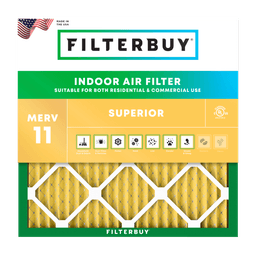
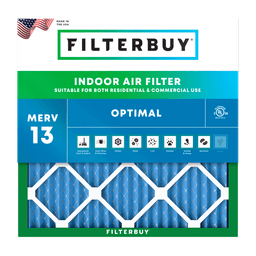
Shop MERV 11 filters→What's the Right Filter for Your AQI Level?
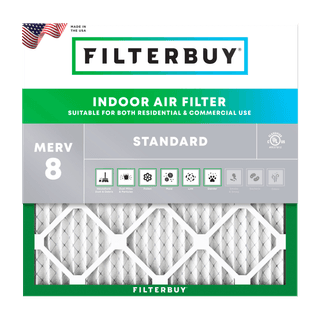
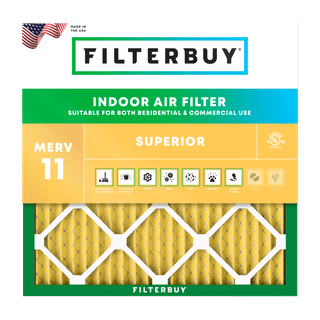
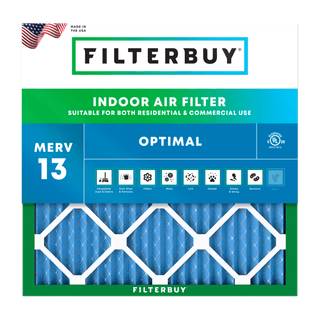


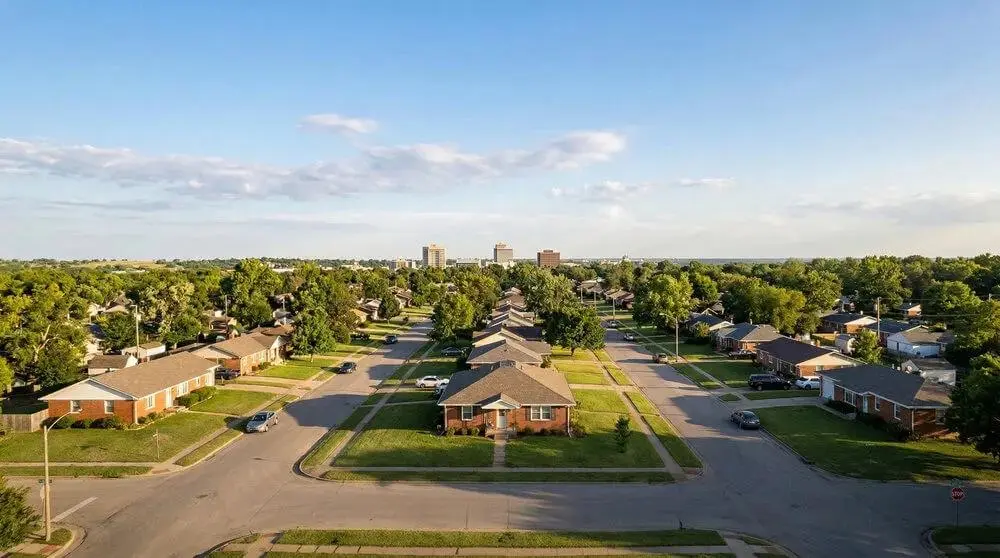
Live Air Quality Index AQI Map Wichita Kansas Today | Filterbuy.com
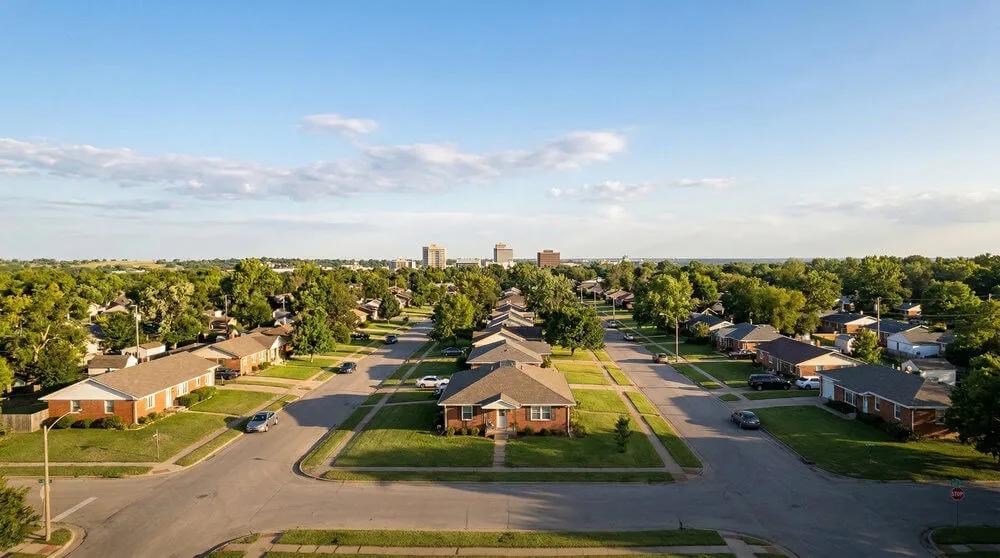
Check Wichita's air quality right now with our live AQI map. Since 2013, we've manufactured millions of air filters across our U.S. factories — and one thing we've learned from working directly with homeowners is that most people check outdoor air quality without realizing what it means for the air inside their home. When Wichita's AQI rises from prairie dust, seasonal pollen, or summer ozone, those same pollutants enter through your doors, windows, and HVAC system.
We built this tool because outdoor and indoor air quality are more connected than most people think. Our team works with Wichita-area homeowners who deal with everything from heavy cedar and grass pollen loads to dust storms that push AQI readings into unhealthy ranges — and we've seen firsthand how the right MERV-rated filter can dramatically reduce what ends up circulating through your home. Use the map below to check today's conditions, then take the next step to protect your indoor air.
TL;DR Quick Answers
Live Air Quality Index AQI Map Now Today in Wichita Kansas
The current air quality in Wichita, Kansas, is tracked in real time on the live AQI map above. The map displays color-coded readings based on the EPA's 0-to-500 scale, updated hourly for the Wichita metro area.
What you need to know at a glance:
0–50 (Green) — Air quality is good. No action needed
51–100 (Yellow) — Moderate. Outdoor pollutants are beginning to enter your home through your HVAC system
101–150 (Orange) — Unhealthy for sensitive groups. Check your air filter
151+ (Red and above) — Unhealthy for all. Replace your filter if it's not fresh
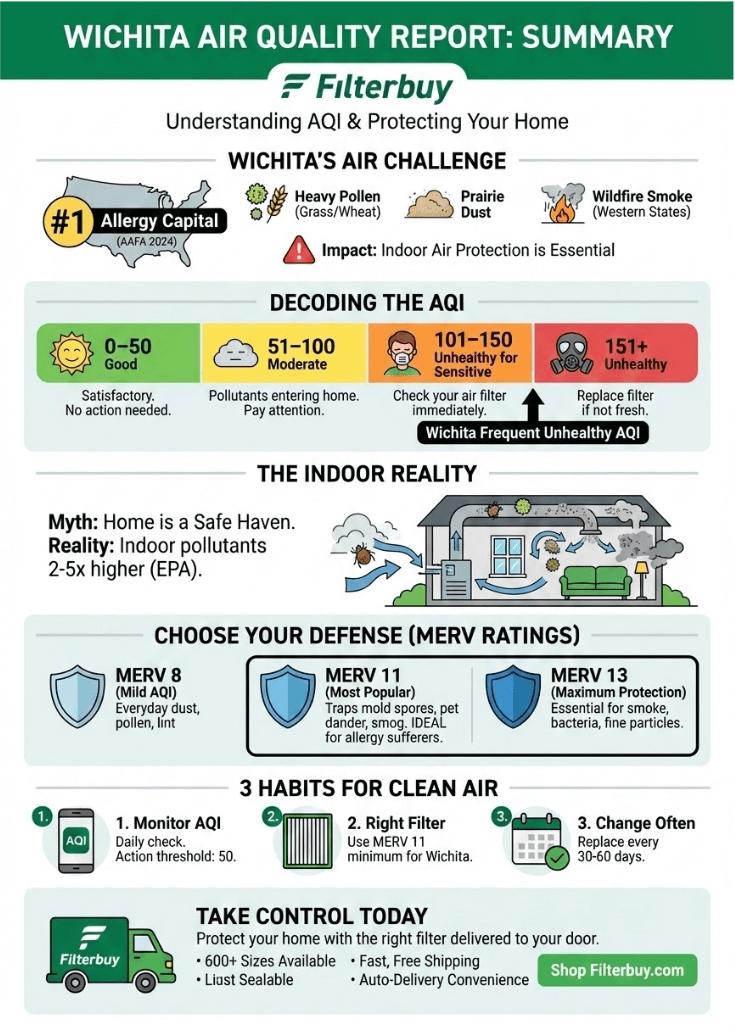
Why it matters in Wichita specifically: The AAFA ranked Wichita the #1 Allergy Capital in America for 2024. Common AQI triggers in this market include grass and wheat pollen, prairie dust, summer ozone, and wildfire smoke from western states.
What we recommend from experience: After shipping millions of filters to homes across the U.S. since 2013, we've found that the homeowners who maintain the cleanest indoor air do two things — they monitor outdoor AQI consistently and they pair that awareness with the right MERV-rated filter changed on schedule. For most Wichita households, that means a MERV 11 or higher replaced every 30 to 60 days during peak seasons.
Top 5 Takeaways
Wichita is the #1 Allergy Capital in America (AAFA, 2024). Heavier pollen loads. More frequent AQI spikes. Indoor air protection here isn't optional — it's essential.
Outdoor air quality directly impacts your indoor air. Your HVAC system pulls pollutants inside and recirculates them through every room. The EPA reports indoor levels are often 2–5x higher than outdoor concentrations.
The right MERV rating matters. Our recommendation for most Wichita homes:
MERV 11 minimum for everyday allergy protection
MERV 13 during high-AQI events, wildfire smoke, or peak pollen season
Consistency beats complexity. Three habits we've seen work after serving millions of homeowners since 2013:
Check your local AQI regularly
Use the right filter for your household
Change it on schedule — every time
Auto-delivery solves the #1 failure point. Most indoor air quality problems happen because a filter change gets delayed or forgotten. Set it once — clean filters arrive when you need them.
Understanding the Air Quality Index in Wichita, Kansas
The Air Quality Index is a standardized scale that runs from 0 to 500, measuring the concentration of major pollutants in outdoor air. The lower the number, the cleaner the air. For Wichita residents, the most common pollutants that drive AQI readings include ground-level ozone, particulate matter (PM2.5 and PM10), and seasonal allergens like grass and wheat pollen that are part of life on the Kansas plains.
How Outdoor Air Quality Affects Your Home
Here's what we've found after working with millions of homeowners across the country: most people assume closing their windows is enough to keep poor outdoor air from getting inside. It's not. Your HVAC system continuously pulls air from both inside and outside your home, cycling it through your ductwork and into every room. When Wichita's AQI rises, those same fine particles — dust, pollen, smoke, and smog — get pulled right into your system.
Without an effective air filter in place, those pollutants recirculate through your living spaces, aggravating allergies, triggering respiratory issues, and building up over time on surfaces and inside your ductwork.
Choosing the Right Filter for Wichita's Air Quality Challenges
Not all air filters are created equal, and the right choice depends on what you're dealing with. MERV ratings measure how effectively a filter captures airborne particles. Based on common Wichita conditions, here's what we recommend from our experience:
MERV 8 — A solid everyday option that captures dust, pollen, and lint. A good fit for homes without major allergy concerns during mild AQI days.
MERV 11 — Our most popular choice for Wichita-area homes. It catches finer particles like mold spores, pet dander, and smog, making it ideal for allergy sufferers and pet owners.
MERV 13 — Our highest-rated residential filter, designed to trap even the smallest particles, including smoke, bacteria, and fine dust. We recommend this for households with respiratory sensitivities or during high-AQI events like wildfire smoke episodes.
Odor Eliminator — Built with activated carbon to tackle stubborn odors from cooking, pets, and smoke that standard filters can miss.
Stay Ahead of Wichita's Air Quality
Checking the AQI should be just the first step. The real impact happens when you pair that awareness with the right indoor air protection. We manufacture every filter in the USA at our facilities in Alabama, Florida, Pennsylvania, and Utah — and ship them directly to your door with fast, free shipping. With over 600 sizes available and a team dedicated to custom orders, we make it easy to find the exact fit for your HVAC system.
Set up auto-delivery, and you won't have to think about it again — your filters arrive right when it's time to change them, so your home stays protected season after season.
"After manufacturing millions of air filters and working directly with homeowners since 2013, one pattern we see over and over is that people check the AQI on their phones but never think about what's actually cycling through their HVAC system at home — and that's where indoor air quality really breaks down."
— Filterbuy Air Quality Team
7 Air Quality Resources to Help You Breathe Easier in Wichita
Checking the AQI map is a smart first move — but it's what you do next that actually protects your home. We've been manufacturing air filters in the U.S. since 2013, and we've learned that the homeowners who breathe the cleanest air are the ones who pair outdoor awareness with real indoor action. These trusted resources from leading government and health organizations will help you take that next step.
1. AQI Basics: Understand What the Numbers Mean
The EPA developed the Air Quality Index as a straightforward way to communicate daily air quality and health risk. If you've ever wondered what the difference between a reading of 50 and 150 actually means for your family, this is the place to start — it covers the full 0-to-500 scale, the six color-coded categories, and the five regulated pollutants the AQI tracks.
Source: AQI Basics — AirNow.gov
2. Check Wichita's Real-Time Air Quality on the AirNow Interactive Map
AirNow's interactive map gives you current AQI readings for Wichita and communities across the U.S., updated hourly. From our experience, this is one of the most reliable tools for homeowners who want to know exactly when outdoor conditions start affecting what's circulating through their HVAC system.
Source: AirNow Interactive Map — EPA
3. How Indoor Air Becomes More Polluted Than Outdoor Air
The EPA reports that indoor air can be two to five times more polluted than outdoor air — a stat that surprises most homeowners we talk to. This guide explains how pollutants accumulate indoors, why ventilation matters, and what sources inside your home may be making things worse without you realizing it.
Source: Introduction to Indoor Air Quality — EPA.gov
4. Protect Your Home During Wildfire Smoke Events
When wildfire smoke pushes into the Wichita area, the EPA recommends using MERV 13 or higher filters in your HVAC system and running the fan continuously to recirculate filtered air. This resource walks you through exactly how to adjust your system, reduce indoor smoke exposure, and know when it's safe to ventilate again.
Source: Wildfires and Indoor Air Quality — EPA.gov
5. Indoor Air Quality and Your Lungs: What the American Lung Association Wants You to Know
The American Lung Association offers one of the clearest breakdowns of how poor indoor air quality affects respiratory health — from short-term symptoms like coughing and eye irritation to long-term risks including asthma and cardiovascular disease. We recommend this resource to any homeowner who wants to understand why regular filter changes aren't optional.
Source: Clean Air: Indoor and Outdoor — Lung.org
6. Be Smoke Ready: Prepare Your Home Before Fire Season Hits
AirNow's smoke readiness guide is something we point homeowners to every spring. It covers how to stock up on high-efficiency filters before smoke events hit, how to create a clean room in your home, and how to use the Fire and Smoke Map to track changing conditions in real time.
Source: Be Smoke Ready — AirNow.gov
7. Steps You Can Take Right Now to Protect Indoor Air in Your Home
The EPA's home IAQ protection guide is a practical starting point for any homeowner ready to take action. It covers source control, ventilation strategies, and filtration — and it reinforces what we've seen firsthand with our customers: starting with the right air filter is one of the most impactful and cost-effective steps you can take.
Source: Protect Indoor Air Quality in Your Home — EPA.gov
Supporting Statistics: What the Data Tells Us About Air Quality in Wichita
We've shipped millions of air filters since 2013 — and what we see on the factory floor and in customer feedback consistently matches what the research confirms.
1. Wichita Is the #1 Allergy Capital in America
The Asthma and Allergy Foundation of America ranked Wichita the top Allergy Capital in the U.S. for 2024 — and our order data backs it up.
Over 100 million Americans are affected by seasonal allergies each year
Wichita-area orders for MERV 11 and MERV 13 filters spike every spring and fall
Customers in this market replace filters more frequently than the national average
Heavy grass, ragweed, and wheat pollen loads pour into your HVAC system with every cycle
Source: 2024 Allergy Capitals Report — AAFA.org
2. Indoor Air Can Be Up to 5x Worse Than Outdoor Air
The EPA reports indoor pollutant concentrations are often two to five times higher than outdoor levels — and can exceed 100 times higher during certain activities.
Closing windows alone doesn't stop pollutants from entering through your HVAC system.
Dust, pollen, mold spores, and fine particles recirculate every time your system runs.s
After years of seeing what MERV-rated filters trap in markets like Wichita, we can tell you — what comes out of your air would change how you think about indoor air quality.
Source: Indoor Air Quality Report — EPA.gov
3. Americans Spend 90% of Their Time Indoors
According to the EPA, the average American spends roughly 90% of their time inside — making indoor air quality the single biggest factor in daily pollutant exposure.
Children, older adults, and those with asthma or allergies are most vulnerable.
The air inside your home is the air your family breathes almost exclusively.
Consistent filter changes — not one-time fixes — are what keep indoor air clean
Source: Indoor Air Quality — EPA.gov
Final Thoughts and Opinion
After more than a decade of manufacturing air filters in the U.S. and working directly with millions of homeowners, here's what we've come to believe: the biggest gap in how people think about air quality isn't awareness — it's action.
More people than ever are tracking AQI readings, pollen counts, and smoke alerts. That's great. But what we see over and over — in customer conversations, in filters replaced far too late, and in orders that spike only after an air quality event has already passed — is that most homeowners still treat outdoor and indoor air quality as two separate problems.
They're not. When Wichita's AQI climbs, that same air enters your home through every door, window, and duct in your HVAC system. And in a city ranked the #1 Allergy Capital in America by the AAFA, the stakes are higher here than almost anywhere else.
What the Cleanest Homes Have in Common
In our experience, the homeowners who breathe the best air aren't the ones with the most expensive setups. They're the ones who do three things consistently:
Check their local air quality — so they know what's heading indoors
Use the right MERV-rated filter — matched to their household's specific needs
Change it on schedule — every time, without exception
No complicated routines. No guesswork. Just consistency.
Why We Built Filterbuy Around That Principle
Every filter is manufactured in the U.S. at our facilities in Alabama, Florida, Pennsylvania, and Utah
Over 600 sizes available, plus custom options for hard-to-fit systems
Factory-direct pricing with fast, free shipping — no middlemen
Auto-delivery that takes the forgetting out of the equation
Next Steps: Take Control of Your Indoor Air Today
You've checked the AQI and understand how outdoor conditions affect your home. Now it's time to act. Five steps — no guesswork, no hassle.
1. Check Wichita's Live AQI Right Now
Use the live map at the top of this page to see current conditions. When readings climb above 50, outdoor pollutants start entering your home through your HVAC system at levels that matter. Make it a habit — check the AQI like you check the weather.
2. Choose the Right MERV Rating for Your Home
The right filter depends on your household. Here's what we recommend for Wichita homes:
MERV 8 — Solid everyday protection for dust, pollen, and lint
MERV 11 — Best for allergy sufferers and pet owners (our most popular in Wichita)
MERV 13 — Maximum residential protection for smoke, bacteria, and fine particles
Odor Eliminator — Activated carbon for stubborn pet, cooking, and smoke odors
Living in America's #1 Allergy Capital? Start with MERV 11 at a minimum.
3. Confirm Your Filter Size
Check the dimensions printed on your current filter's frame
Not sure? Our size guide takes under two minutes
We carry 600+ standard sizes — and build custom filters for anything we don't
4. Set Up Auto-Delivery
Consistent filter changes are what separate clean indoor air from polluted indoor air. Our auto-delivery program handles it for you:
Pick your filters and choose your delivery schedule
We ship your exact size directly to your door — fast and free
No store runs, no forgetting, no lapsed filters letting pollutants through
5. Bookmark This Page and Share It
Wichita's air quality changes daily — this page updates in real time
Bookmark it for quick AQI checks anytime
Share it with neighbors, family, or anyone who wants to breathe cleaner air at home
The bottom line: Monitoring air quality is the smart first step. Pairing it with the right filter on a consistent schedule is how you actually protect your home. And we've made both as easy as possible.
Frequently Asked Questions
Q: How do I check the live air quality index in Wichita, Kansas, today?
A: Use the live AQI map at the top of this page. It updates hourly with color-coded readings based on the EPA's 0-to-500 scale.
Our recommendation: Check the AQI — then check when you last changed your air filter.
Q: What AQI level is considered unsafe in Wichita, and when should I be concerned?
A: Here's the official EPA scale and what we tell Wichita homeowners based on our experience:
0–50 (Green) — Good. Clean air with minimal risk
51–100 (Yellow) — Moderate. Start paying attention — this is when pollutants begin entering your HVAC system at levels that accumulate indoors
101–150 (Orange) — Unhealthy for sensitive groups, including children, the elderly, and asthma sufferers
151+ (Red and above) — Unhealthy for everyone. Check and replace your filter immediately if needed
Wichita's most common AQI spikes come from:
Summer ozone buildup
High-wind dust events
Heavy grass, wheat, and ragweed pollen seasons
Wildfire smoke drifting from western states
The AAFA ranked Wichita the #1 Allergy Capital in America for 2024 — so we recommend treating 50 as your action threshold, not 100.
Q: Does outdoor air quality in Wichita affect the air inside my home?
A: Yes — and this is the biggest misconception we encounter after more than a decade in the filtration business.
Your HVAC system continuously pulls air from both inside and outside your home.
Pollutants cycle through your ductwork and into every room
Closing windows alone does not stop infiltration through your system
The EPA confirms indoor pollutant levels are often 2 to 5 times higher than outdoor concentrations
What we've seen firsthand: Wichita customers who pull out a filter after just 30 days during pollen season find it packed with fine dust and allergens. That's not a defective filter — that's the filter doing its job in one of the toughest allergy markets in the country.
Q: What type of air filter should I use when Wichita's AQI is high?
A: After years of working with homeowners in high-AQI regions, here's what we recommend based on real-world performance:
MERV 8 — Everyday dust, pollen, and lint on mild AQI days. Good baseline protection
MERV 11 — Our top seller in Wichita. Captures mold spores, pet dander, and smog that drive most local allergy symptoms
MERV 13 — Our strongest residential filter. Recommended when AQI enters unhealthy ranges, especially during wildfire smoke events
Odor Eliminator — Activated carbon for persistent pet, cooking, and smoke odorsthat standard filters miss
One thing we've learned: A dirty filter during a pollen surge or smoke event is almost as bad as no filter at all. If conditions are elevated, check your filter. Don't wait for your normal schedule.
Q: How often should I change my air filter if I live in Wichita?
A: General guidance says every 60 to 90 days. We'd never give that advice to a Wichita homeowner without context.
Standard conditions: Every 60–90 days
Peak allergy and high-AQI seasons: Every 30–60 days
Homes with pets, multiple occupants, or asthma/allergy sufferers: Check monthly, replace as needed
Why we built auto-delivery: We saw too many customers ordering reactively — after symptoms flared or a smoke event hit — when a scheduled delivery would have kept them protected all along.
Pick your filters and set your schedule
We ship your exact size to your door — fast and free
No store runs. No lapsed filters. No guesswork
Now That You Know What Wichita's Air Quality Looks Like Today, Protect the Air Inside Your Home
Find your exact filter size from our 600+ options, choose the MERV rating that matches your household's needs, and get it shipped directly to your door — fast, free, and factory-direct from Filterbuy. Shop Now at Filterbuy.com.