
Boulder Real-Time AQI Tracker


Get Alerts For Unhealthy AQI In Your Area
When air quality in your area reaches unhealthy levels, we'll send you a quick alert, along with expert tips on how to reduce your exposure.
What's Actually In Boulder Air Today?
What High AQI Means for Your Lungs in Boulder
How to Read AQI
The Air Quality Index (AQI) measures how polluted the air is and how it may affect your health.
0–50 (Good): Air quality is satisfactory.
51–100 (Moderate): Acceptable, but some pollutants may pose minor concerns.
101–150 (Unhealthy for Sensitive Groups)
151–200 (Unhealthy)
201–300 (Very Unhealthy)
301+ (Hazardous)
Moderate
Still okay for most, but if you have asthma or allergies, take it easy and avoid long outdoor workouts.
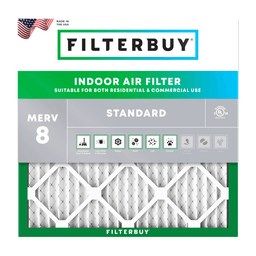
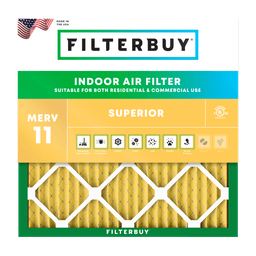
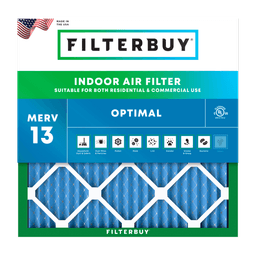
Shop MERV 11 filters→What's the Right Filter for Your AQI Level?

Check Today's Live Real Time Air Quality Index AQI Map in Boulder, CO Now
TL;DR
Filterbuy's live map above shows Boulder's current Air Quality Index (AQI) and the pollutant driving it. Most days, one of two pollutants sets that number: ground-level ozone on hot summer afternoons, or fine particles (PM2.5) when wildfire smoke drifts over the Front Range. Let the color guide your next step, and check the state's 4 p.m. forecast before planning tomorrow. Filterbuy has made air filters in the USA since 2013, and this page shares what we'd tell a Boulder neighbor.
Key Takeaways
Boulder's AQI and air pollution levels change by the hour; check the live map above for current conditions.
Ground-level ozone is Boulder's most persistent air problem.
Wildfire smoke is Boulder's biggest episodic risk.
Ozone breaks down indoors, but fine smoke particles don't. A MERV 13 filter in the HVAC and a portable HEPA cleaner in each occupied room are two layers that work together.
How to Read Boulder's Live AQI Map Right Now
Filterbuy's live, real-time air quality map above answers "What is the air quality in Boulder today?" The number you see is the AQI, the U.S. Environmental Protection Agency's (EPA) air quality scale. It runs from 0 to 500. The color shows the health category; the listed pollutant is the one pushing the index highest.
Start with the color. Green or yellow means carry on; orange or higher means adjust your plans.
Note the pollutant. Ozone usually eases after sunset; PM2.5 usually means smoke, which can linger day and night.
Compare nearby readings. Readings vary across town when smoke moves in bands; the Colorado live AQI map shows the whole Front Range.
What Each AQI Color Means for Your Boulder Plans
For the full color guide, see AQI Color Chart: What Green to Maroon Means | Filterbuy.
"Sensitive groups" means children, older adults, pregnant people, and anyone with asthma, heart disease, or lung disease.
Source: U.S. EPA Air Quality Index guidance. Check the live map above for Boulder's current reading.
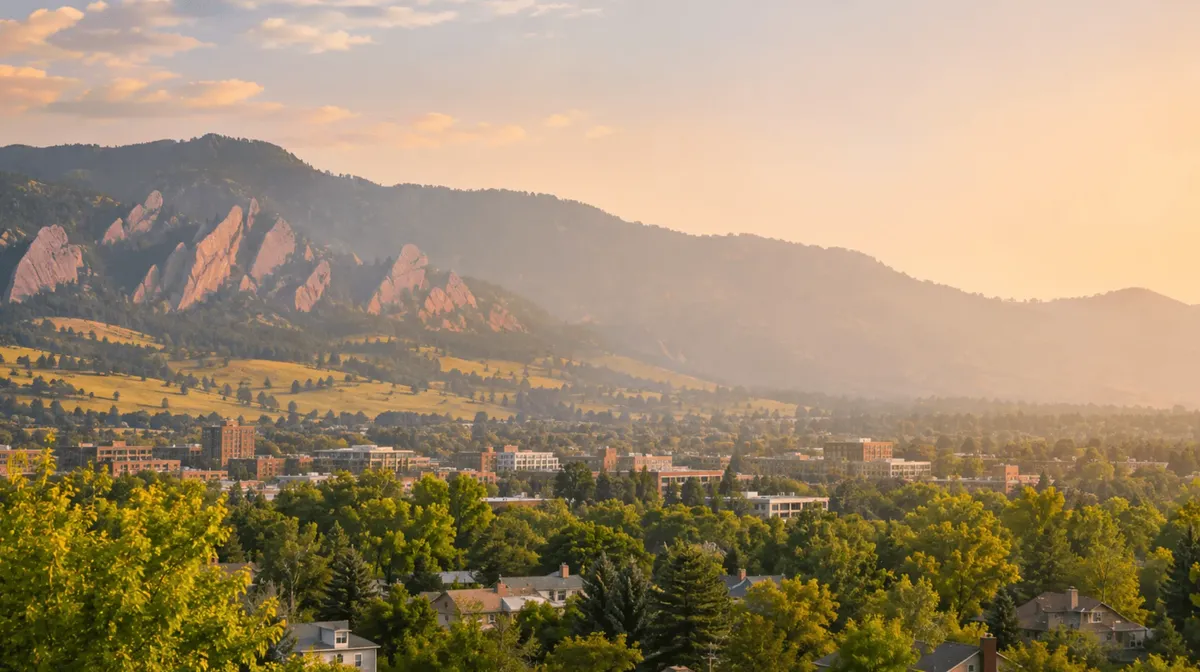
Why Boulder's AQI Can Lag What You See Over the Flatirons
EPA's NowCast method still averages recent hours, so a fast-moving smoke plume can outrun the number.
The Colorado Department of Public Health and Environment (CDPHE) measures ozone at Boulder Reservoir, northeast of town, so foothills neighborhoods can differ.
Is the Air Quality Bad in Boulder Today?
Whether Boulder's air is bad today depends on the live AQI above. Filterbuy's action line is AQI 100, the top of the Moderate range, one step before orange. At 100 or higher, we recommend four steps:
Put MERV 13 in the HVAC. It treats the whole house.
Set the thermostat fan to On. Auto filters only while heating or cooling.
Run a portable HEPA air cleaner in each occupied room, bedrooms first. If you can buy only one, start with the bedroom.
Close the house up. Skip candles, frying, smoking, and vacuuming without a sealed HEPA vacuum.
EPA recommends a MERV 13 or higher filter in the central system during smoke events. At 201 or higher, follow AirNow and local guidance first; filtration is only one layer.
CDPHE's rule of thumb for smoke: if it cuts visibility in your neighborhood below 5 miles, the air is unhealthy.
Where to Get Boulder's Air Quality Forecast and Alerts
CDPHE and the Regional Air Quality Council (RAQC) post the official forecast on the state's Front Range air quality advisory page. Action Day alerts typically go out at 4 p.m. for the next day.
For automatic alerts, sign up for EPA's EnviroFlash emails, for state forecasts and Action Day notices.
What's Actually in Boulder's Air?
Ozone and wildfire smoke cause most of Boulder's bad-air days.
Sources: Colorado Department of Public Health and Environment; Boulder County Boulder Reservoir air monitoring study (2019).
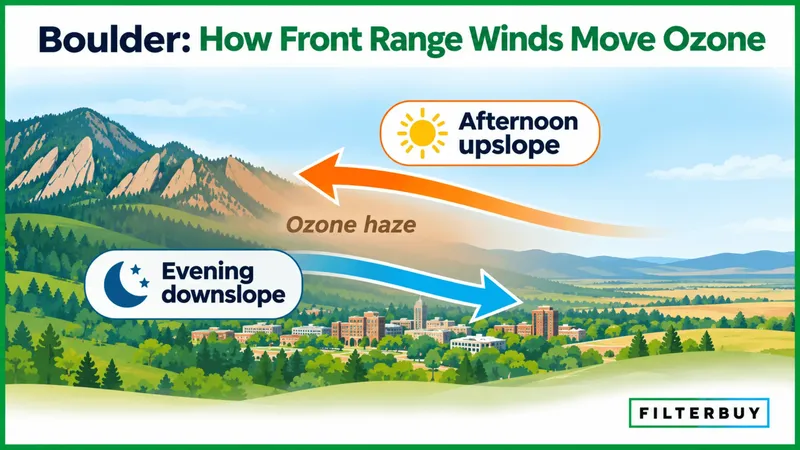
Daytime upslope winds often carry pollution west toward the mountains, and evening downslope flow can bring it back over town. Wind direction matters, too: Boulder County's monitoring study at Boulder Reservoir found that air arriving from the oil and gas fields to the northeast carried higher levels of ozone-forming volatile organic compounds (VOCs) and contributed to ozone violations.
How Boulder's Air Compares With Other U.S. Cities
The American Lung Association's 2026 "State of the Air" report placed the Denver-Aurora-Greeley metro area 8th worst in the country for ozone. That region includes Boulder County, which CDPHE reports the EPA rates "Severe" under the 2008 ozone standard.
Wildfire Smoke in Boulder: Recent History and What It Means for Your Home
Wildfire smoke can push Boulder's AQI from green to red within hours, and Filterbuy's Colorado wildfire smoke map tracks it.
CalWood Fire (October 17, 2020): Burned 10,106 acres northwest of Boulder, the largest wildfire in Boulder County history.
Marshall Fire (December 30, 2021): Pushed by winds near 100 mph, it destroyed 1,084 buildings and forced about 37,000 people to evacuate across Louisville, Superior, and unincorporated Boulder County.
After the Marshall Fire, University of Colorado Boulder (CU Boulder) researchers measured the air in surviving smoke-affected homes. The team found indoor VOC levels took about six weeks to return to normal, and settled ash could get stirred back into the air during cleanup.
After the Smoke Clears: A Boulder Home Reset
Wait for the map. Open the windows once the AQI drops to 100 or lower.
Protect yourself around ash. CU Boulder researchers urge KN95 masks and gloves in ash-damaged homes.
Clean without stirring. Damp-wipe surfaces and use only a HEPA vacuum, per EPA.
Ventilate and add carbon. The same CU research found open windows and low-cost activated carbon filters substantially improved indoor air.
Swap the HVAC filter. A smoke-loaded filter won't recover.
Boulder's Air by Season: What to Watch and When
Boulder's air risks shift with the seasons. A CDPHE Action Day means unhealthy air is here or expected by tomorrow.
Source: Colorado Department of Public Health and Environment, Front Range air quality advisories. Check the live map above for current conditions.
Two rules many residents miss:
Open burning is prohibited during any Action Day.
Winter Action Days limit indoor burning to approved devices across the seven-county Denver-Boulder area.
Cooling a Boulder Home Without Central AC
Swamp coolers (evaporative coolers), window units, and open windows all pull in unfiltered outdoor air on smoky days.
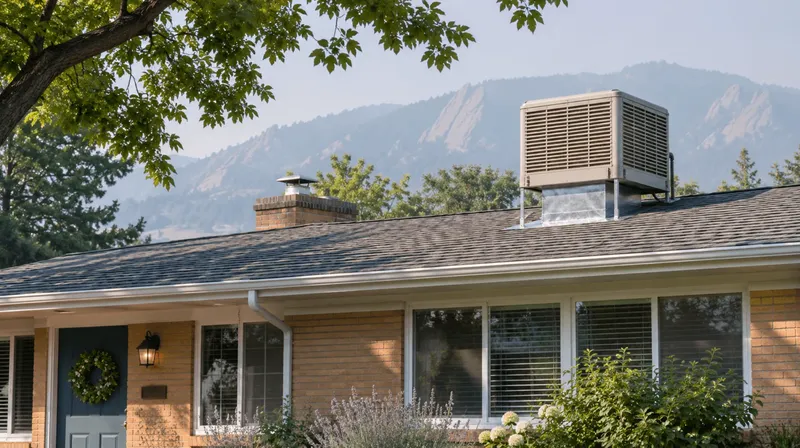
Swamp coolers: Owners usually hear "turn it off." Filterbuy sees a better option for hot, smoky afternoons: filter the intake. EPA's clean room guidance supports covering the intakes with 4-inch MERV 13 filters, if you can reach them safely, or running the cooler sparingly. Filterbuy's swamp cooler wildfire smoke guide has the setup.
Whole house fans: Switch them off in smoke; here's why whole house fans should stay off during smoke.
No ducts at all: Without a filter slot, portable HEPA cleaners are your main defense. Pick a portable HEPA air purifier sized for the room; EPA's table pairs a 300-square-foot room with a CADR of at least 195. Skip ionizers and ozone generators, since EPA advises against cleaners that produce ozone.
Filterbuy's Take: Boulder's Two-Season Air Plan
In Boulder, the air you can see and the air you can’t call for different moves. Smoke is easy to spot, so people react. Ozone is invisible, so it’s easy to ignore on a sunny July afternoon. Check the map before a hard run or ride. And get a fresh filter in the system before fire season, not after.
Michelle Wan, Brand Manager and Air Quality Writer, Filterbuy
Few filter companies say this: no HVAC filter we make removes ozone. Smoke is where MERV 13 earns its place.
Which Air Filter Boulder's AQI Calls For
For wildfire smoke, use MERV 13.
Most furnaces and HVAC systems can take MERV 13 if the filter is replaced often (EPA). Confirm your filter size before ordering.
Three lessons from Filterbuy's filter lines:
Fit beats rating. The mistake we see most often isn't the MERV number but the size.
Confirm the size, like any order. Most furnaces and HVAC systems can take MERV 13 without equipment problems if the filter is replaced often, per EPA.
Inspect it during smoke and keep spares. Shipping slows once regional smoke arrives, ours included.
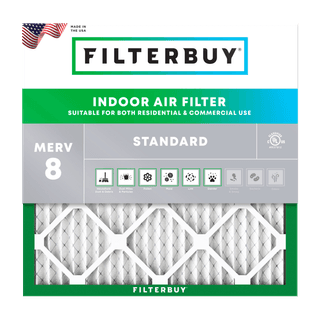
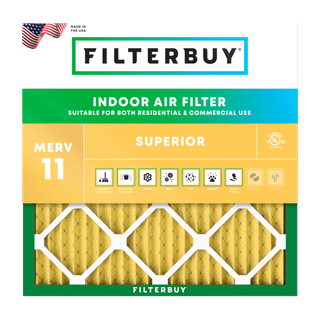
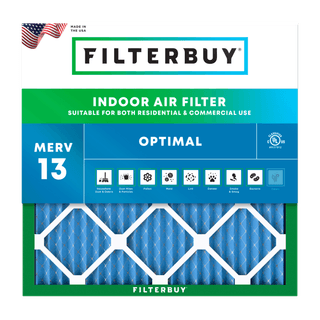
See the best MERV filter for wildfire smoke. Filterbuy makes MERV 8, MERV 11, and MERV 13 air filters in more than 600 sizes, made in the USA.
Supporting Statistics: What the Research Shows for Boulder
51% of ozone-forming VOCs at Boulder Reservoir came from produced natural gas.
Condensate tanks added 30%; gasoline exhaust added 13%.
Why it matters: oil and gas emissions drive much of Boulder's ozone.
Source: Boulder County Public Health, Boulder Reservoir study (2019, preliminary model)
985,296 Colorado children live with unhealthy air pollution.
The Denver-Aurora-Greeley ozone ranking rests on 29.7 unhealthy ozone days a year in neighboring Jefferson County.
Why it matters: check the map before kids play outside in summer.
Source: American Lung Association, State of the Air 2026: Colorado
Home HVAC systems usually run less than 25% of the time.
Filters clean the air only while the blower runs.
Boulder Air Quality FAQs
What Is the Air Quality in Boulder Today?
Boulder's current AQI and main pollutant, including today's PM2.5 reading, appear on the live map at the top of this page. For other cities, use Filterbuy's USA live AQI map.
Does Wildfire Smoke From Other States Affect Boulder?
Yes. Smoke from other western states and Canada can drift in and raise Boulder's PM2.5. The AirNow Fire and Smoke Map shows where it's coming from.
What MERV Rating Do I Need for Wildfire Smoke in Boulder?
MERV 13. It's the tier Filterbuy recommends for smoke, paired with the fan set to On and a portable HEPA cleaner in each occupied room.
Do HVAC Filters Remove Ozone?
No. Pleated filters capture particles, and ozone is a gas. On high-ozone afternoons, closing the windows is the fix.
How Often Should I Change My Filter During Smoke Season?
Check it often during smoke, and replace it when it looks dark brown or black, which can be well before the normal interval. Keep spares on hand.
Glossary
AQI (Air Quality Index): A 0-to-500 air quality scale. EPA sets its six color-coded categories.
CDPHE: Colorado Department of Public Health and Environment.
Ground-level ozone: Smog that forms when nitrogen oxides and VOCs react in sunlight.
HEPA: High-efficiency particulate air, the filter standard in portable purifiers.
MERV: Minimum Efficiency Reporting Value, a 1-to-16 rating for HVAC filters.
PM2.5: Fine particles 2.5 micrometers or smaller, and the main pollutant in smoke.
VOCs: Volatile organic compounds, gases that form ozone and can linger indoors.