
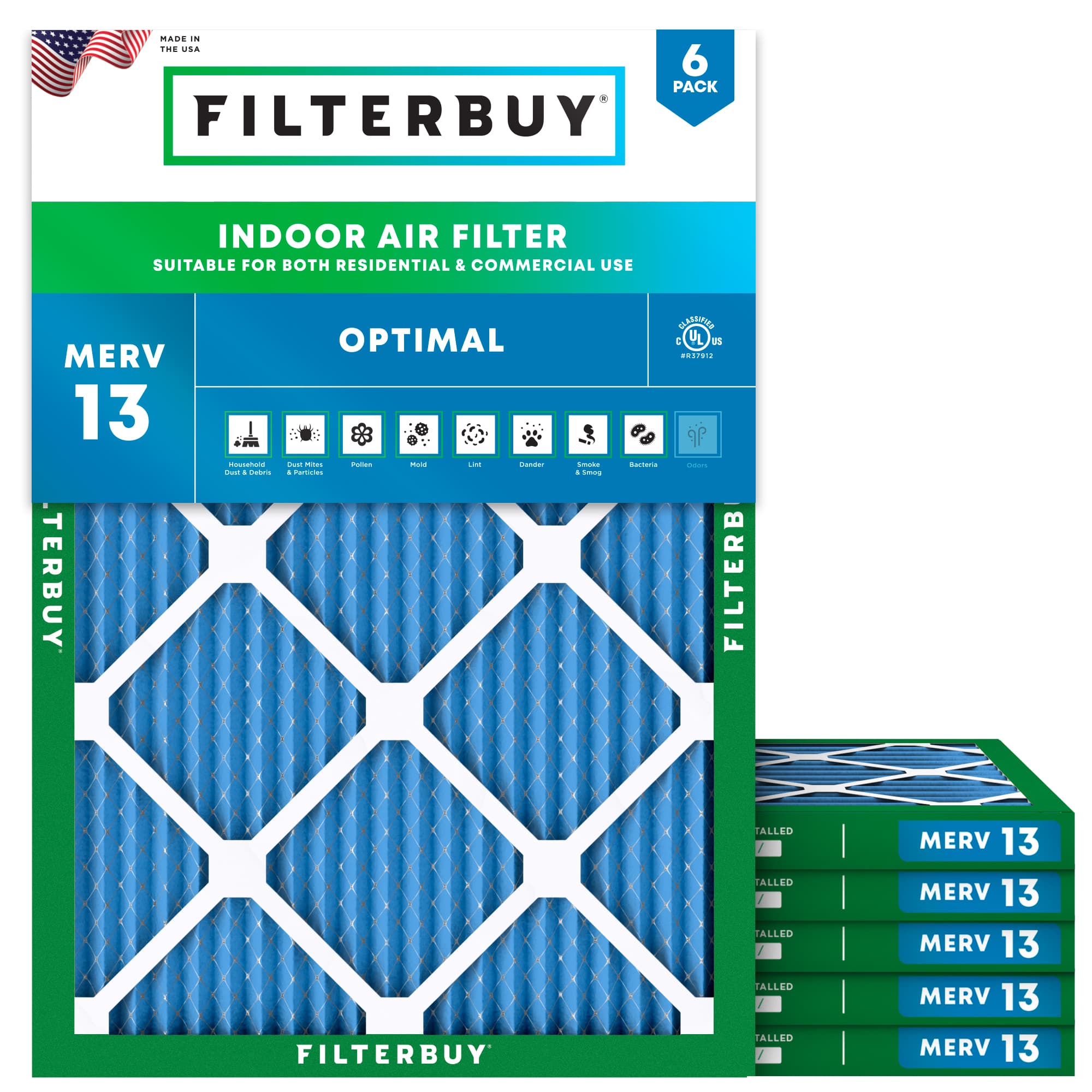
19x20x1 MERV 13 Pleated Air Filter
Actual Size: 19.0x20.0x0.75
 Free Delivery
  Factory-Direct Low Prices, Made in the USA
 Hassle-Free Returns & Free Exchanges
RESIDENTIAL AND/OR COMMERCIAL USE
Change Every 3 Months
19x20x1 MERV 13 Pleated Air Filter
Actual Size: 19.0x20.0x0.75
Free Delivery Factory-Direct Low Prices, Made in the USAHassle-Free Returns & Free ExchangesRESIDENTIAL AND/OR COMMERCIAL USE
Change Every 3 Months
19x20x1 MERV 13 Pleated Air Filter
Actual Size: 19.0x20.0x0.75
Free Delivery Factory-Direct Low Prices, Made in the USAHassle-Free Returns & Free ExchangesRESIDENTIAL AND/OR COMMERCIAL USE
Change Every 3 Months
About
- This is a list 19x20x1 MERV 13 air filter replacement for your furnace, air conditioner, heat pump, or HVAC system
- Actual air filter size: 19.0x20.0x0.75
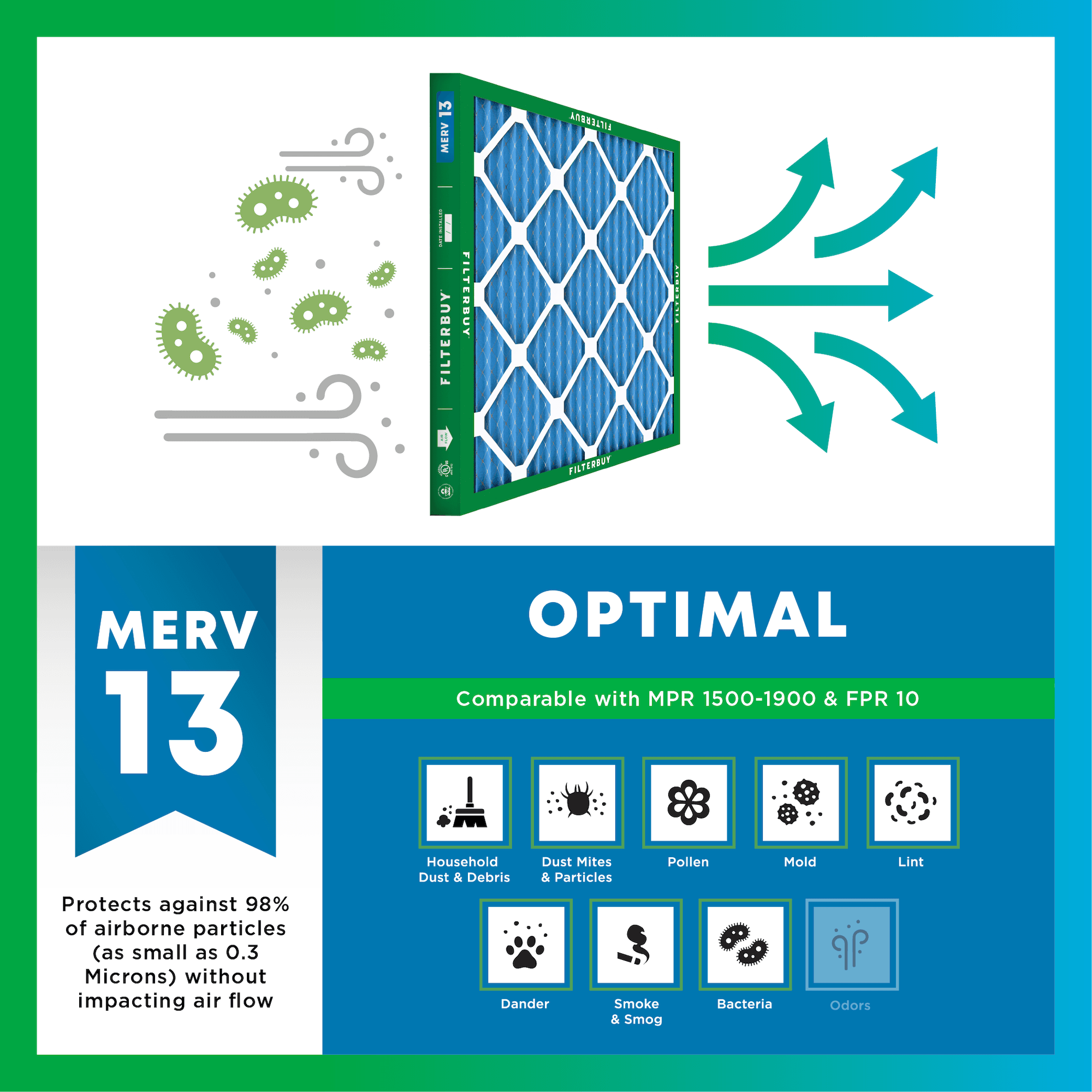
- MERV 13 synthetic media (comparable with MPR 1500/1900 and FPR 10) offers the best protection from dust, pollen, pet dander, mold, smog, bacteria, and virus carrying particles by trapping 98% of airborne particles without impacting air flow.
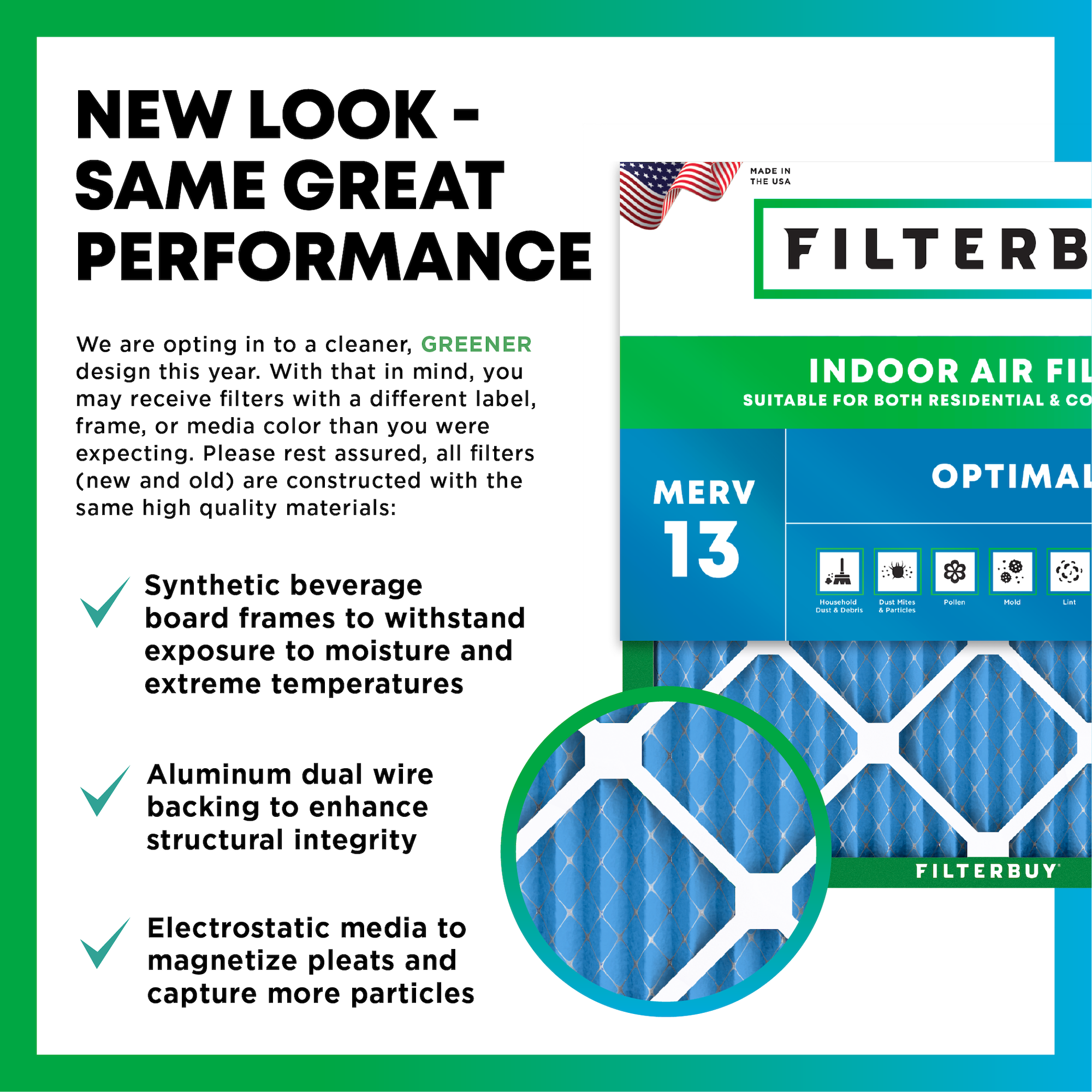
- High-quality construction means electrostatically charged pleated filter media, reinforced wire backing for structural integrity, and a durable frame to resist heat and humidity
- Built to last 3 months. 300% longer than fiberglass models
- 100% manufactured in the United States and designed with recyclable materials
- Learn more about 19x20x1 Air Filters
Top-Rated Filters. American Made. Delivered Free.
At Filterbuy, we don't cut corners—we craft high-quality air filters right here in the USA and ship them to your doorstep for free. No delays, no gimmicks—just clean air, made easy. With thousands of five-star reviews and filters built for real life & every HVAC system, it's no wonder why over 4 million families trust Filterbuy.

Proudly Made In The USA

Fast, Free Shipping on Every Order

Premium Materials That Go The Distance

85,000+ 5-Star Reviews From Happy Customers

Save Up to 70% Per Filter with Packs
Things to Know About Filter Sizes

Nominal Size
- The rounded size printed on your filter or HVAC unit (e.g., 19x20x1).
- Usually whole numbers to make identifying and ordering easier.
- A label for compatibility—not the exact measurement.

Actual Size
- The true, trimmed dimensions of the filter (e.g., 19.0x20.0x0.75 inches).
- Filters are manufactured slightly smaller so they slide into the filter slot without forcing.
- If you don't know your nominal size, measure your filter to get the actual size, then round up to find the nominal size to search on our site.

Why the difference?
- Nominal sizes simplify shopping and standardize categories.
- Actual sizes ensure the filter fits properly inside your HVAC's filter rack.
How To Find Your Nominal Size When You Don't Know It


Measure length × width × depth with a tape measure to find the actual size.

Round up each dimension to the nearest whole number to get the nominal size. Example: 19.0x20.0x0.75 in → 19x20x1 nominal.

Search by nominal size on our site for the best fit.

Why Getting the Right Size Matters
- Too small? Air can bypass the filter, reducing air quality and efficiency.
- Too big? It won't fit—risking bent frames and airflow issues.
- Just right? You get maximum performance, better filtration, and cleaner air.

Free Exchange Policy
If the filter you buy doesn't fit, we'll send you a better size.

What's a MERV Rating?
MERV stands for Minimum Efficiency Reporting Value—but don't let the technical name fool you. It's just a way to rate how well an air filter traps stuff like dust, pollen, pet dander, and smoke. The higher the MERV number, the more particles it catches—and the cleaner your air will be.

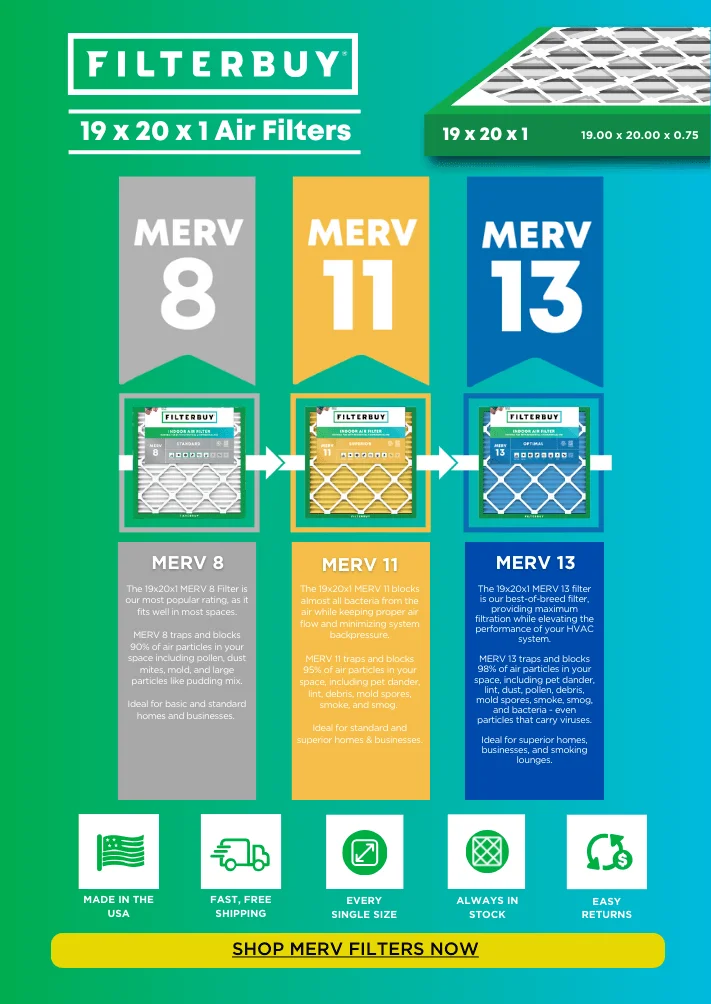
Merv 8
Comparable to:FPR: 4-7
MPR: 600-1000
 Dust & Debris
 Dust Mites & Particles
 Pollen
 Mold
Mold Lint
Lint Dander
Merv 11
Comparable to:FPR: 6-9
MPR: 1200-1550
Dust & DebrisDust Mites & ParticlesPollenMoldLintDander Smoke & Smog
Merv 13
Comparable to:FPR: 10
MPR: 1900-2800
Dust & DebrisDust Mites & ParticlesPollenMoldLintDanderSmoke & Smog Bacteria
MERV 8
Comparable to:FPR: 4-7MPR: 600-1000


MERV 11
Comparable to:FPR: 6-9MPR: 1200-1550

MERV 13
Comparable to:FPR: 10MPR: 1900-2800
What Makes Our Filters Last 90 Days? Quality, From the Inside Out
We build every Filterbuy filter to deliver reliable 90-day performance—thanks to smart design and premium materials that do the heavy lifting. Here's what makes the difference:
Pleated Design
More pleats = more surface area to capture dust and debris, keeping your air cleaner longer.
Electrostatically Charged Media
Pleats are magnetized to attract and trap microscopic particles—like pet dander, pollen, and smoke.
Synthetic Beverage Board Frame
Engineered to resist warping in extreme temperatures and high humidity.

Aluminum Dual Wire Backing
A layer of metal reinforcement keeps pleats evenly spaced and structurally sound—no sagging, even at high airflow.
Made in the USA
Assembled with care. Built to perform. Ships fast, free, and reliably from our U.S. facilities.
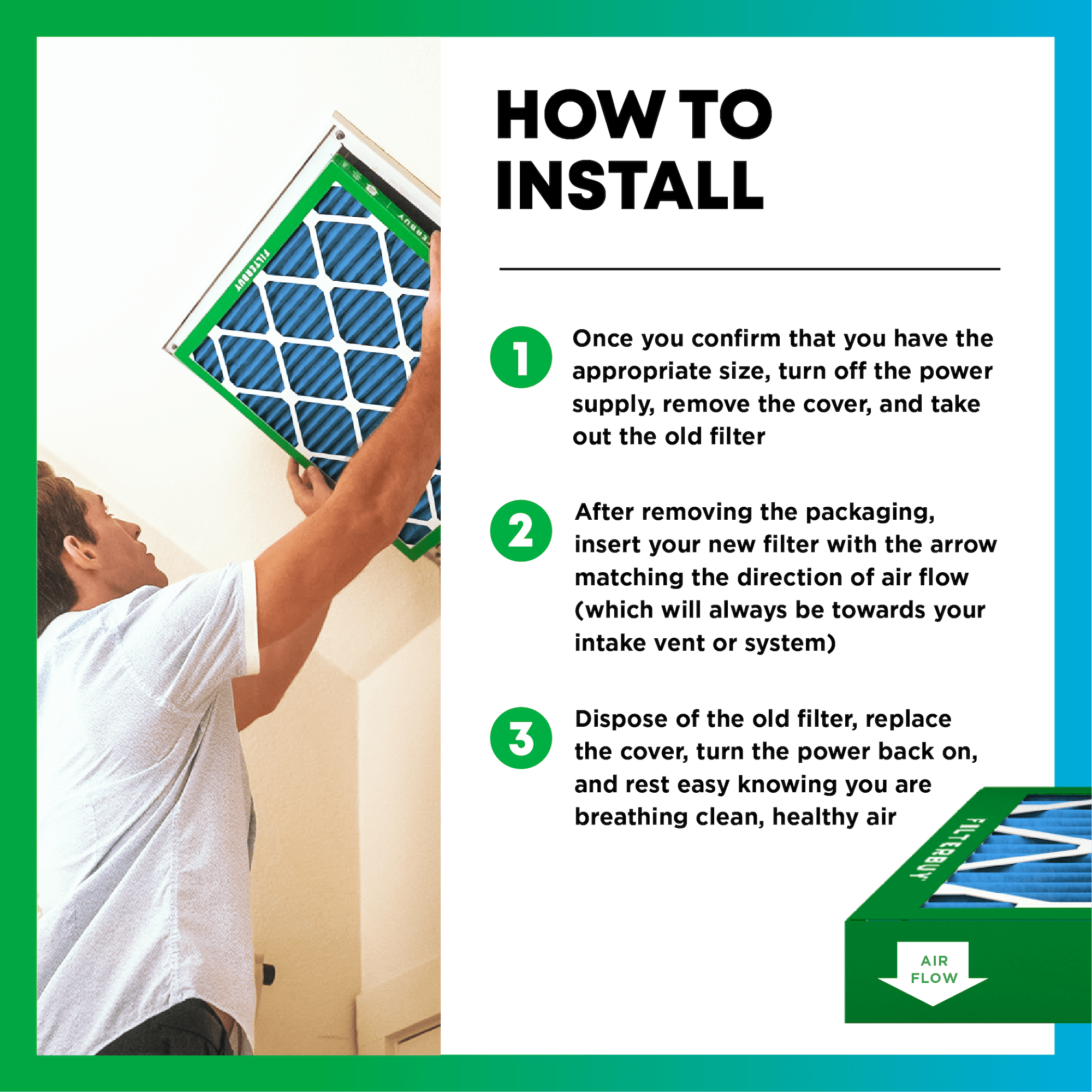
How to Install Your Filter in 4 Simple Steps

Turn Off Your HVAC SystemSafety first.

Remove The Old FilterLook for the airflow arrow and make note of the direction.

Slide In Your New FilterArrow should point toward the system (same direction as before).

Turn Your System Back OnAnd enjoy the fresh, clean air.

Never forget to replace your air filter again.
- Save 5% on every order
- Choose Your Delivery Schedule
- Edit, Skip, or Cancel Anytime.
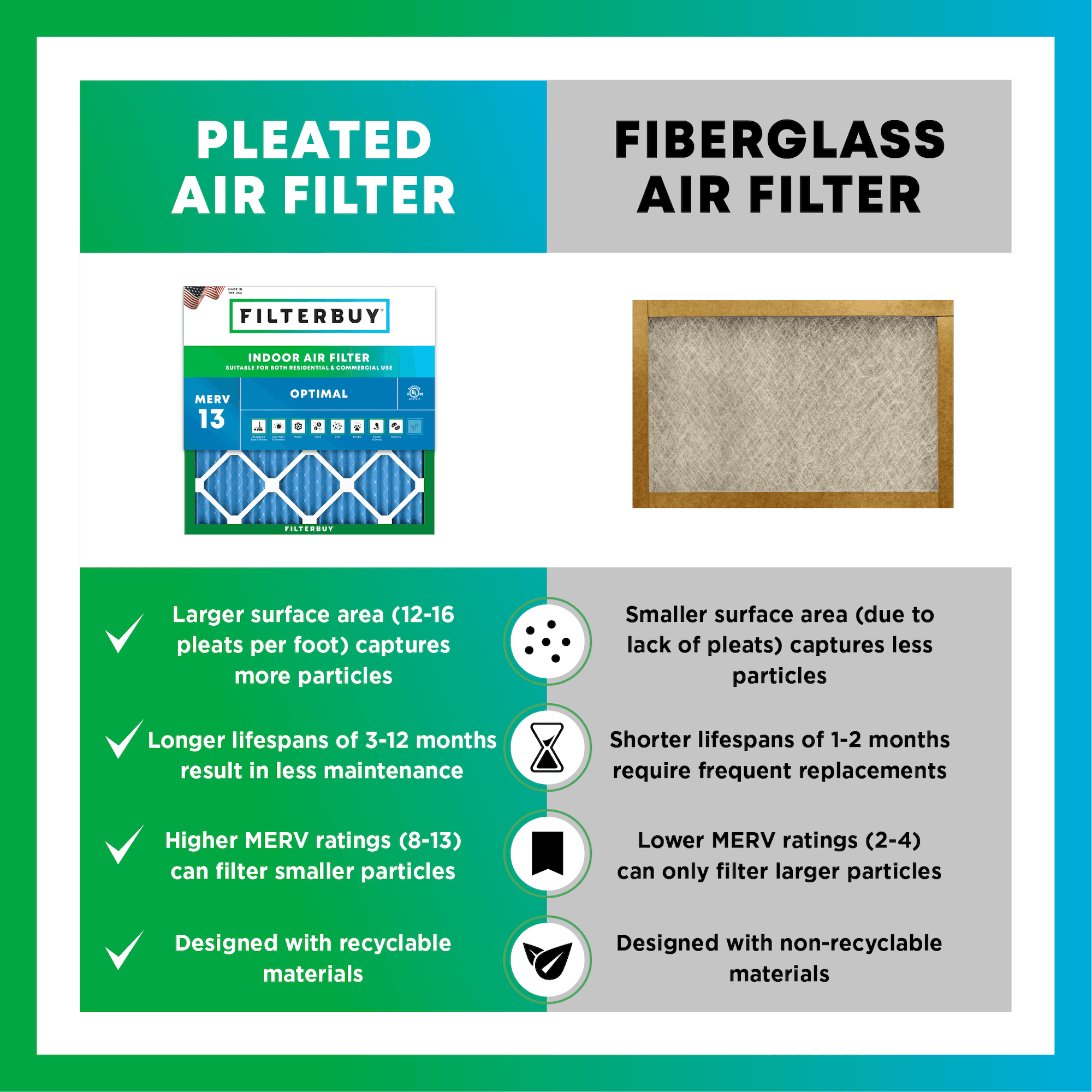
Pleated Filters vs. Fiberglass—What's the Difference?
Not all air filters are created equal. Pleated filters don't just last longer—they actually clean your air better. Here's how they stack up:

Pleated Filters
Efficiency:
High (MERV 8–13) – Traps more particles
Lifespan:
90 days – Long-lasting performance
Air Quality:
Excellent – Cleaner, healthier air
Materials:
Recyclable and durable

Fiberglass Filters
Efficiency:
Low (MERV 4 or less) – Misses small stuff
Lifespan:
30 days or less – Replace often
Air Quality:
Minimal – Basic protection only
Materials:
Thin, flimsy, and not recyclable
Pleated filters are a no-brainer—more protection, less hassle, and better air for your home.
How Often Should You Change Your Filter?
Changing your filter on time keeps your HVAC system running efficiently—and helps protect your lungs from dust, allergens, and airborne irritants. Here's how often to swap it out based on your needs:

Every 90 Days
Standard ScheduleFor most homes without pets or special air quality concerns. Great for general upkeep and energy efficiency.

Every 60 Days
If You Have Pets or AllergiesShedding fur, dander, and allergy triggers can build up fast. Changing your filter every two months helps keep the air fresher and symptoms at bay.

Every 30 Days
If You Have Respiratory Concerns or Live in Smog/Wildfire ZonesFor households affected by smoke, pollution, or respiratory conditions, monthly changes ensure maximum protection.

Want to stay on track? Set a reminder—or skip the stress with auto-delivery so fresh filters show up right when you need them.
Don't Just Take Our Word For It...
Got More Questions? We've Got Answers.
Product Specifications
| Nominal Size | 19 x 20 x 1 inches |
| Actual Size | 19.0 x 20.0 x 0.75 inches |
| Filter Type | Pleated |
| Media | Electrostatically Charged |
| Frame | Beverage Board |
| MERV Ratings Available | 8, 11, 13 |
| Lifespan | Up to 90 Days |
| Origin | Made in USA |
Best 19x20x1 MERV 13 Furnace & HVAC Air Conditioner Filters
By Michelle Wan · Reviewed by David Clark, Licensed HVAC Technician · Published August 7, 2026 · Updated August 7, 2026
TL;DR
The Filterbuy 19x20x1 MERV 13 is an exact-cut pleated filter: we cut it to a true 19.00" x 20.00" x 0.75", with no rounding down and no gap at the edges. MERV 13 is the rating the U.S. EPA recommends during smoky periods, catching fine particles MERV 8 and MERV 11 let past. A 4-pack or 6-pack cuts the price per filter by up to 52%.
Key Takeaways
Filterbuy cuts the 19x20x1 to exactly 19.00" x 20.00" x 0.75". Our other nominal sizes are trimmed half an inch under. This one is not.
Under ASHRAE 52.2, MERV 13 captures at least 50% of particles sized 0.3–1.0 microns, 85% sized 1.0–3.0, and 90% sized 3.0–10.0.
At 380 square inches of face area, a 19x20x1 sits within a quarter of a square inch of a nominal 20x20x1, so airflow behaves like the most common residential size.
A 6-pack works out to about $0.22 per day of filtered air; singles run roughly $0.47.
Is 19x20x1 Actually Your Size? Read This First
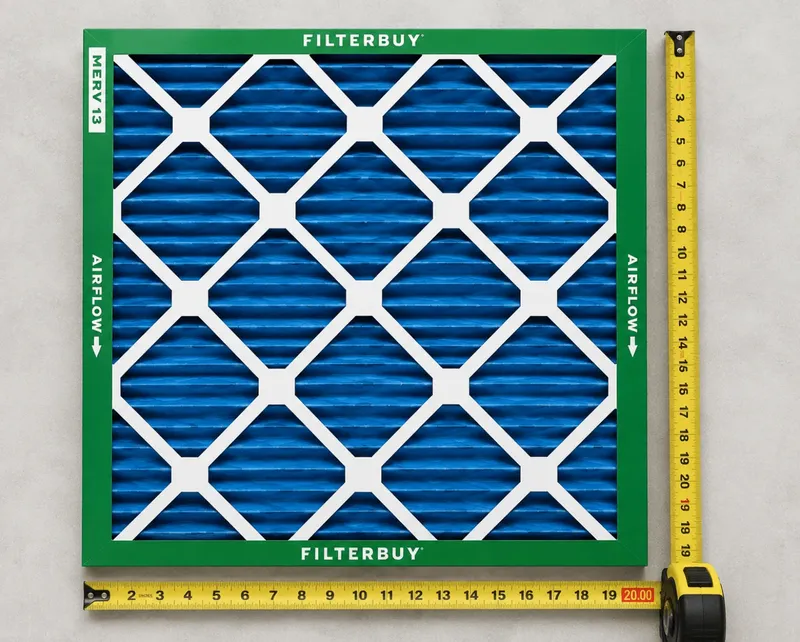
19x20x1 is an exact-cut size. Filterbuy cuts ours to a true 19.00 x 20.00 x 0.75 inches.
Our standard sizes come off the line half an inch under nominal, so our 20x20x1 measures 19.50 x 19.50. That half inch is clearance, letting the filter slide in without binding. 19x20x1 sits outside the rule: it is not on our standard size chart, so we cut it to the exact dimensions specified instead of trimming it down.
This is where we watch 19x20x1 orders go wrong. Someone measures 19 by 20, assumes the nearest "standard" size is right, and orders a 20x20x1. Air then slips around the gap instead of through the media.
The EPA puts it plainly: a filter must fit snugly so air does not leak around it (EPA, Guide to Air Cleaners in the Home). We publish our cut dimensions next to the nominal ones for that reason: you cannot check a fit nobody told you about.
How to Confirm Your Size in 60 Seconds
Pull the old filter and read the size printed on the frame. If it says 19x20x1, you are done.
If the print has worn off, measure the filter, or the housing opening if the slot is empty.
Match the old filter, not the slot. This is the part that trips people up on an exact-cut size.
Land on a true fraction and you have a custom slot. Full instructions: how to measure your air filter.
That second step matters, because the usual advice does not apply here. On a standard size you measure the slot, round up, and the half inch we trim off gives the filter room to slide.
A 19x20x1 has no half inch. We cut it to the full 19.00 x 20.00, which makes it a direct-match size. If your old filter measures 19 by 20, this replaces it exactly. If you are measuring an empty slot, it should read slightly over 19 by 20.
“I don't want anyone to feel like they need an HVAC license just to pick the right filter. My job is to give you the straight answer, explain why it matters, and let you get back to your day.”
If it still doesn't fit, we'll fix it. Our free exchange policy sends the correct size at no cost. Ordering the wrong size once is normal. Paying for it isn't.
What a MERV 13 Air Filter Actually Captures
MERV stands for Minimum Efficiency Reporting Value, the scale set by ASHRAE 52.2. MERV 13 is the highest rating Filterbuy offers in 19x20x1 and the highest most residential systems run safely. The published figures are floors, not averages. For the full scale, see all about air filter MERV ratings.
Source: ANSI/ASHRAE Standard 52.2.
The E1 row matters most, and competitors gloss over it. Particles between 0.3 and 1.0 microns slip past your nose and throat into deep lung tissue, and they are most of what wildfire smoke is made of. MERV 8 carries no E1 requirement at all under the standard, which is the whole argument for MERV 13.
The EPA states that filters rated MERV 13 and above must demonstrate at least 50% removal efficiency for the smallest particles tested, and advises choosing at least MERV 13, or as high as your system will accommodate (EPA, Guide to Air Cleaners in the Home). During smoky periods it recommends MERV 13 or higher (EPA, Preparing for Smoke and Heat).
Will a MERV 13 Filter Restrict Airflow in a 19x20x1 System?
For most residential systems, no. Resistance in a pleated filter is driven mainly by depth and media surface area, not the MERV number alone. A 19x20x1 presents 380 square inches of face area, within a quarter of a square inch of a nominal 20x20x1 at 380.25, the most common residential size in the country.
Our lab data, from testing across the millions of filters we have built, puts a clean 1-inch MERV 13 at roughly 0.25" w.g. at 1000 CFM. Most residential systems are built to stay under 0.5" of total external static pressure across the whole system (MERV ratings and pressure drop chart). Those are Filterbuy numbers, measured on filters we build ourselves rather than read off a spec sheet. What causes airflow trouble is a filter left in past its service life.
When a MERV 13 Is the Wrong Call
Filterbuy would rather you buy the right filter than this one. Three cases where it isn't:
Your system predates 2005 and nobody has measured its static pressure. Step down to MERV 11 until a technician confirms it can carry the resistance.
Odors are the actual complaint. MERV 13 captures particles, not gases, so cooking smells and pet odors pass straight through. An activated carbon filter is the right tool for that job.
Your slot is 2 or 4 inches deep. A 1-inch filter rattles in the track and lets air around it.
Single, 4-Pack, or 6-Pack? What Each One Actually Costs
A Filterbuy multi-pack is the easiest way to cut the cost. A 4-pack lowers the per-filter price 45%; a 6-pack lowers it 52%. Since each covers 90 days, the honest comparison is cost per day of filtered air. A 6-pack runs under a quarter.
Cost per day assumes the 90-day replacement interval. Pricing current as of August 2026.
Adding air filter auto-delivery takes another 5% off and schedules filters to arrive when due. For a filter replaced four times a year, the failure mode is rarely cost. It is forgetting.
How Often Should You Replace a 19x20x1 MERV 13 Filter?
Replace a Filterbuy 19x20x1 MERV 13 furnace filter every 90 days in a typical home, every 60 with pets or allergies, every 30 in a smoke or smog zone or with a respiratory condition in the house.
During an active smoke event, check monthly regardless. We see MERV 13 media darken in weeks in heavy smoke. If yours looks dark brown or black, replace it early. See the HVAC filter replacement checklist for the full routine.
What If 19x20x1 Isn't Your Size?
Odd sizes come from the ductwork, not the filter. Builders frame the return compartment around the duct run, and duct runs do not care what a catalog stocks, which is why older and manufactured homes throw off odd dimensions.
If yours doesn't land on 19x20x1, Filterbuy stocks 600+ sizes and builds custom air filters to any dimension, cut to exactly what you specify. Odd slots are common in older and retrofitted homes. This size is also stocked in 19x20x1 MERV 11 and MERV 8 if your system can't carry MERV 13.
19x20x1 MERV 13 Filter Specifications
Frequently Asked Questions
Is a 19x20x1 Filter Really 19 by 20 Inches?
Yes. The Filterbuy 19x20x1 measures exactly 19.00" x 20.00" x 0.75". Most nominal sizes are cut half an inch under their label. This one is not, which makes it a direct match for an old filter measuring 19 by 20.
Can I Use a 20x20x1 Filter Instead of a 19x20x1?
No. A 20x20x1 measures 19.50" x 19.50", so in a 19" x 20" slot it runs short on one side and long on the other. It won't seat, and air bypasses the media.
Is MERV 13 Too Strong for a Home HVAC System?
For most homes, no. The EPA notes most systems accommodate MERV 13 without equipment problems when the filter is replaced frequently. We are more cautious on older equipment: systems built before 2005 may struggle unless ductwork and blower capacity are sufficient.
Does a MERV 13 Filter Capture Wildfire Smoke?
Partly, and it is the best whole-home option most systems can run. Wildfire smoke is mostly PM2.5, in the E1 range where MERV 13 captures at least 50% per pass. Running the fan continuously adds passes and compounds that.
Does a MERV 13 Filter Remove Odors or VOCs?
No. MERV 13 is a particulate rating: it captures solids, not gases. Cooking smells, pet odors and volatile organic compounds pass straight through. Odor control needs activated carbon media, which is what our Odor Eliminator filters are built for.
Glossary
MERV: Minimum Efficiency Reporting Value. The efficiency scale set by ASHRAE 52.2. Higher numbers capture smaller particles.
MERV 13: Captures at least 50% of particles sized 0.3–1.0 microns, 85% sized 1.0–3.0, and 90% sized 3.0–10.0.
Nominal size: The rounded size printed on a filter frame. A compatibility label, not a measurement.
Actual size: A filter's true dimensions. The Filterbuy 19x20x1 measures 19.00" x 20.00" x 0.75", matching its nominal size on both faces.
PM2.5: Fine particulate matter 2.5 microns or smaller. The main component of wildfire smoke.
Air bypass: Air flowing around a filter's edges instead of through the media. Bypass negates a higher MERV rating.
About the Author and Reviewer
Michelle Wan is Brand Manager and Air Quality Writer at Filterbuy, where she turns MERV ratings, filtration and HVAC efficiency into plain-English advice (B.A., University of California, Santa Cruz). Working directly with Filterbuy's manufacturing teams, she writes from how filters are built and used, not from spec sheets. Author page.
David Clark is a Licensed HVAC Technician with Filterbuy HVAC Solutions and reviewed this page for technical accuracy.
Sources
Filterbuy lab pressure-drop data and 19x20x1 MERV 13 specifications. Verified August 6, 2026.