
Mugwort and Sagebrush Pollen: Season, Regional Differences, and Identification
October 2, 2026
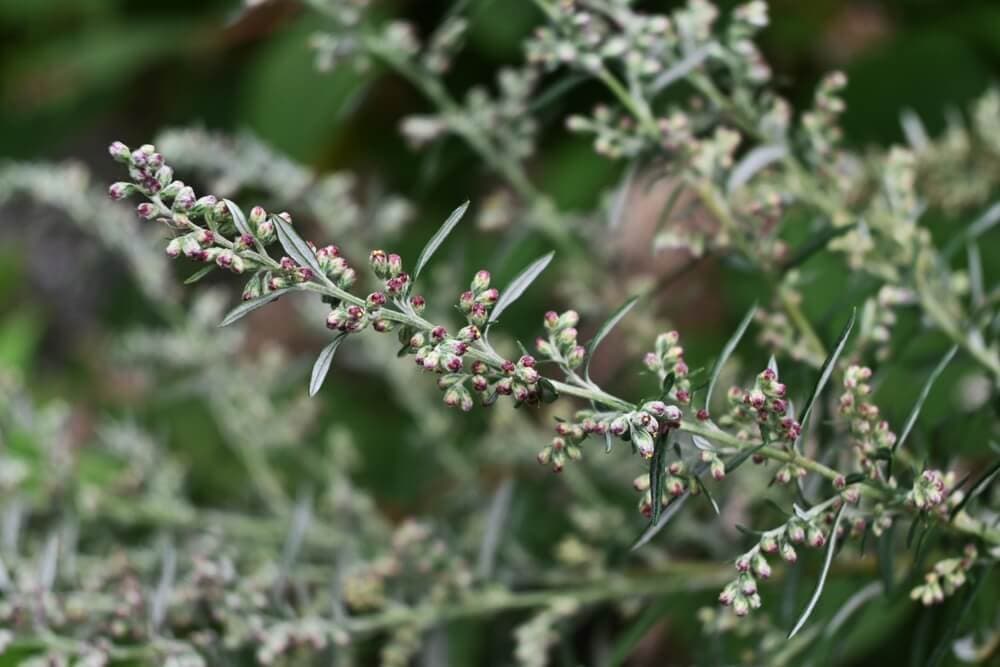
Mugwort and sagebrush both belong to the genus Artemisia, part of Asteraceae, the aster or daisy family. Pollen.com describes Artemisia as "the most significant cause of pollinosis after ragweeds and the grasses" (Pollen.com).
But the two plants tell different stories. Common mugwort (Artemisia vulgaris) is an invasive roadside plant of the eastern and central U.S. (NC State Extension). Big sagebrush (Artemisia tridentata) is a woody shrub of Western valleys, basins, and mountain slopes (Utah State University Extension).
Here is a fun twist: sagebrush is a cousin of both mugwort and tarragon in your spice rack, which is Artemisia dracunculus (University of Maryland Extension). The sage in your kitchen belongs to a different plant family entirely (NC State Extension).
Mugwort and Sagebrush Pollen Quick Facts
| Field | Detail |
|---|---|
| Plant type | Common mugwort: herbaceous perennial weed, 2 to 4 feet tall. Big sagebrush: woody shrub, 1 to 16 feet tall. |
| Genus and species | Artemisia; A. vulgaris (mugwort) and A. tridentata (big sagebrush) |
| Family | Asteraceae, the aster or daisy family |
| Typical season | Late summer into fall, varying by species, site, and elevation |
| Time of day | No universal peak release hour has been established. Don't assume ragweed's daily pattern applies. |
| U.S. regions | Mugwort: eastern and central U.S. (NC State Extension). Big sagebrush: Western valleys and basins from 2,500 to 10,000 feet (Utah State University Extension). |
| Pollination | Wind-pollinated, with high pollen production (Pollen.com) |
| Cross-reactions | Other Artemisia species, ragweed, and certain foods (see Cross-Reactions) |
Is Mugwort or Sagebrush Pollen High Near You Today?
Weed pollen won't show up in your local Air Quality Index. Intact pollen grains are too large for the PM2.5 and PM10 monitors the AQI relies on, which we explain in How Pollen Affects Air Quality Readings. For daily weed pollen counts, check the certified station nearest you on the AAAAI National Allergy Bureau pollen map. To see air quality where you live, use Filterbuy's Live Air Quality Index Map.
How to Identify Mugwort and Big Sagebrush
These two plants look nothing alike up close, so once you know the key features, telling them apart is easy.
Common Mugwort: The Roadside Weed
Common mugwort grows 2 to 4 feet tall with lobed green leaves that have pale, woolly undersides, one of its most useful clues. It spreads by underground rhizomes, and every piece of root can make a new plant. Look for it on roadsides, waste places, and other disturbed ground. Its flower heads are tiny, about ⅛ inch across, greenish-yellow or reddish-brown, and clustered on branched stems from mid-summer to early fall (NC State Extension). Leaf shape varies along the stem, so don't rely on a single leaf.
Big Sagebrush: The Western Shrub
Big sagebrush is a woody shrub with gray-green, silvery-haired leaves that are spatula-shaped and usually end in three lobes, which is where the name tridentata comes from. On older stems, the gray-brown bark shreds into long, flat strips. Small, inconspicuous flowers form dense clusters from August to September (Utah State University Extension).
One caution for both plants: a dust film on your car or windowsill can't identify the source as mugwort or sagebrush. Recognizing the plant itself, and checking local pollen counts, is far more reliable.
Mugwort and Sagebrush Look-Alikes: Sage, Rabbitbrush, and Ragweed
| Plant | How to Tell It Apart |
|---|---|
| Kitchen sage (Salvia officinalis) | Mint family (Lamiaceae), not Artemisia. Fuzzy, textured, oval leaves and showy lavender flower spikes that attract bees and butterflies. |
| Rubber rabbitbrush (Ericameria nauseosa) | Formerly Chrysothamnus nauseosus. Narrow, linear leaves, and show rounded clusters of yellow flowers that draw insect pollinators. Blooms anywhere from late July to October, depending on climate. |
| Common ragweed (Ambrosia artemisiifolia) | A separate genus in the same family. It overlaps mugwort's season and can grow in the same disturbed ground, so compare leaves and flowers side by side. |
Shared timing between any of these plants can't establish the source of a pollen reading or a reaction.
When Are Mugwort and Sagebrush Pollen Season? Timing by Region
Timing shifts with species, site, and elevation, and flowering records are not the same as measured airborne peaks.
| Region and Plant | What the Source Reports | Evidence Type |
|---|---|---|
| Eastern and central U.S., common mugwort | July through October | Flowering |
| Western valleys and basins, big sagebrush | August to September | Flowering |
| Sagebrush, general | July to late September, varying with latitude and elevation | Flowering |
| Idaho | Sage usually mid-August to September | Local clinic guidance |
| Boise, 2026 | Sage counts high to extreme from late September into early October (174 on October 1) | Measured pollen counts |
These entries are not directly comparable measurements. Verified city calendars for Reno and Salt Lake City were not available, so none are included. Ragweed overlaps in Idaho from August to early October (The Allergy Group).
In the Mountain West? Check current conditions for Boise, Reno, and Salt Lake City, or find your city on the Live Air Quality Index Map. Our seasonal allergy calendar shows how weed pollen fits into late summer and fall.
Mugwort and Sagebrush by the Numbers
- More than 175 million acres. The USGS describes the sagebrush biome as the largest terrestrial ecosystem in the U.S. That is a landscape footprint, not acreage uniformly covered by big sagebrush (USGS).
- Over 40 Artemisia species. Pollen.com lists more than 40 species in the genus, with up to 11 in the Rocky Mountains (Pollen.com).
- More than 95%. That is the share of mugwort-allergic patients sensitized to Art v 1, mugwort's major allergen, according to Thermo Fisher Scientific (Thermo Fisher Scientific).
- Nine species, strong cross-reactivity. A 1997 lab study found strong cross-reactivity among all nine Artemisia species tested, including mugwort and big sagebrush (Katial et al., 1997).
- A state emblem. Sagebrush is Nevada's state emblem and appears on the state flag (USDA Forest Service).
Mugwort and Sagebrush Pollen Myths vs. Facts
MYTHSagebrush is the herb in my kitchen.
FACTBig sagebrush is Artemisia in the aster family. Culinary sage is Salvia, in the mint family (NC State Extension).
MYTHBright yellow rabbitbrush must be the source of the local pollen reading.
FACTRabbitbrush's showy yellow flowers attract insect pollinators (USDA NRCS), while nearby sagebrush has small, inconspicuous flowers (Utah State University Extension). A showy bloom can't identify the source of a monitored reading.
MYTHMugwort and sagebrush are two names for one plant.
FACTBoth belong to Artemisia, but common mugwort is a herbaceous Eastern roadside weed (NC State Extension) and big sagebrush is a woody Western shrub (Utah State University Extension).
Mugwort and Sagebrush Pollen Cross-Reactions
This section is descriptive only and keeps two kinds of evidence separate.
Pollen to pollen. Katial et al. (1997) found strong laboratory cross-reactivity among nine Artemisia species, including A. vulgaris and A. tridentata (Katial et al., Annals of Allergy, Asthma & Immunology, 1997). Thermo Fisher Scientific also reports that mugwort and ragweed are highly cross-reactive because their pollens share common allergenic structures (Thermo Fisher Scientific). These are lab findings about related proteins, not predictions for any individual.
Mugwort-associated foods. Thermo Fisher Scientific describes mugwort-linked pollen-food syndromes involving celery and spices, fennel, mustard, and peach, as well as sunflower (Thermo Fisher Scientific). These associations are described for common mugwort and should not be transferred automatically to big sagebrush. They do not establish any individual's diagnosis.
For questions about symptoms or diagnosis, speak with a board-certified allergist.
How to Keep Weed Pollen Out of Your Home
Late-summer weed season often overlaps with the last stretch of air conditioning season, so your HVAC system is still moving a lot of air. A few steps help:
- Keep windows closed when outdoor pollen is high, especially in late September and early October in sagebrush country.
- Take shoes off at the door and wipe tracked-in dust with a damp cloth rather than dry sweeping.
- Match your HVAC filter to your household. MERV ratings measure how well a filter captures particles between 0.3 and 10 micrometers. A MERV 8 filter must capture at least 70% of particles in the 3 to 10 micrometer range, and a MERV 11 filter at least 85% (EPA). Intact pollen grains are larger than anything in that test. For most homes, MERV 8 is the standard choice. For households with allergies or pets, step up to MERV 11. Our MERV 8 vs. MERV 11 guide breaks down the difference.
- Change filters on schedule. Standard 1-inch filters are typically replaced about every 90 days. Filterbuy 4-inch filters last 6 to 12 months.
These steps reduce how much pollen circulates indoors. They are not a substitute for medical care, and no specific symptom outcome is claimed.
If your filter is due before fall, Filterbuy makes MERV 8 and MERV 11 filters in more than 600 standard sizes, plus custom sizes, so it's easy to find one that fits your system before weed season peaks.
Shop MERV 8 Filters Shop MERV 11 FiltersFrequently Asked Questions
What is mugwort, and is it the same as sagebrush?
Mugwort (Artemisia vulgaris) is an invasive herbaceous roadside weed (NC State Extension), while big sagebrush (Artemisia tridentata) is a woody Western shrub (Utah State University Extension). They share the genus Artemisia but are different species.
When is mugwort pollen season?
Mugwort flowers from July through October (NC State Extension), and Thermo Fisher describes its pollination season as mainly late summer into early autumn (Thermo Fisher Scientific). A local pollen count gives the most accurate picture.
When is sagebrush pollen season in Boise?
Idaho clinic guidance puts sage season at mid-August to September (Allergy Clinic of Idaho), but Boise counts in 2026 stayed high to extreme into early October (Boise Valley Asthma and Allergy Clinic). Check a current local count.
Is sagebrush the same as kitchen sage?
No. Big sagebrush is Artemisia, in the aster family. Culinary sage is Salvia, in the mint family (NC State Extension).
How can I tell sagebrush from rabbitbrush?
Rabbitbrush has narrow, linear leaves and showy clusters of yellow flowers (USDA NRCS). Big sagebrush has gray-green, three-lobed leaves and small, inconspicuous flowers (Utah State University Extension).
Do mugwort and ragweed release pollen at the same time?
They can overlap in late summer and fall. In Idaho, ragweed pollinates from August to early October (The Allergy Group). Their pollens are also highly cross-reactive (Thermo Fisher Scientific), so a local count is more useful than guessing by season.
Is tarragon related to sagebrush?
Yes. Tarragon is Artemisia dracunculus, in the same genus as mugwort and sagebrush (University of Maryland Extension). A botanical relationship alone says nothing about how any person will react to a food.
What air filter should I use during weed season?
It depends on your household. MERV 8 is the standard choice for most homes. For households with allergies or pets, MERV 11 captures a higher share of larger airborne particles (EPA). See our MERV 8 vs. MERV 11 guide to compare.