
Salt Lake City Real-Time AQI Tracker


Get Alerts For Unhealthy AQI In Your Area
When air quality in your area reaches unhealthy levels, we'll send you a quick alert, along with expert tips on how to reduce your exposure.
What's Actually In Salt Lake City Air Today?
What High AQI Means for Your Lungs in Salt Lake City
How to Read AQI
The Air Quality Index (AQI) measures how polluted the air is and how it may affect your health.
0–50 (Good): Air quality is satisfactory.
51–100 (Moderate): Acceptable, but some pollutants may pose minor concerns.
101–150 (Unhealthy for Sensitive Groups)
151–200 (Unhealthy)
201–300 (Very Unhealthy)
301+ (Hazardous)
Moderate
Still okay for most, but if you have asthma or allergies, take it easy and avoid long outdoor workouts.
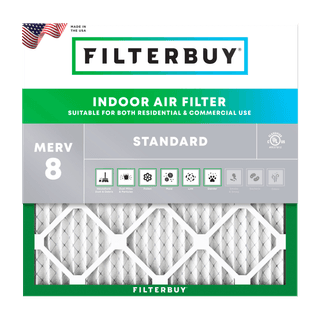
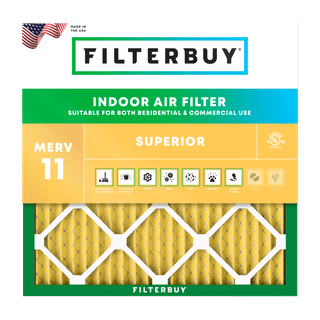
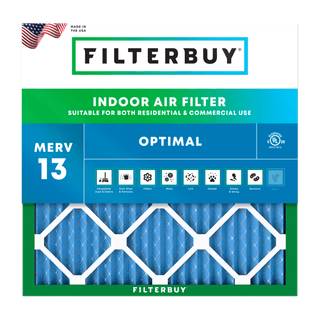
Shop MERV 11 filters→What's the Right Filter for Your AQI Level?


Check Today's Live Real Time Air Quality Index AQI Map in Salt Lake City, UT Now
Author: Michelle Wan · Reviewer: David Clark, Licensed HVAC Technician · Publish Date: July 21, 2026 · Updated Date: July 21, 2026
TL;DR: Salt Lake City’s air quality changes hour to hour, so check the live AQI map above for today’s real-time reading. The city sees some of the widest swings in the country: clean spring days, ozone-heavy summer afternoons, dust from the shrinking Great Salt Lake, and winter inversions that can briefly make its air the worst in the nation. When the outdoor AQI climbs, the fastest way to protect the air you actually breathe is a fresh, high-efficiency HVAC filter indoors.
What Is the Air Quality in Salt Lake City Today?
Check the live map above for the current number. It’s the only accurate answer, because Salt Lake City’s AQI can swing 15–25 points from a calm morning to a hot afternoon. The Air Quality Index (AQI) is a 0–500 scale from the U.S. EPA: 0–50 is good, 51–100 is moderate, and anything over 100 is unhealthy for sensitive groups or worse. Salt Lake City’s two main pollutants are fine particulate matter (PM2.5) in winter and ground-level ozone in summer, so the same AQI can mean very different things by season.
Key Takeaways
Check the live map first. Salt Lake City readings often rise 15–25 points from morning to afternoon, so a single daily number is misleading.
Ozone is the summer problem. In 2025, ozone was the primary pollutant on the majority of monitored days, peaking on hot, sunny afternoons.
PM2.5 is the winter problem. Temperature inversions can trap fine particles so densely that winter PM2.5 runs several times higher than summer levels.
The valley is the reason. Salt Lake City sits in a bowl between the Wasatch and Oquirrh ranges, which traps pollution during inversions.
Salt Lake County is an EPA nonattainment area for both PM2.5 and ozone.
Indoor air is your lever. You cannot change the outdoor AQI, but a MERV 13 HVAC filter captures the PM2.5 and smoke particles that drift inside.
How to Read the Salt Lake City AQI Map Above
The color on the live map tells you how to plan your day. The AQI uses six EPA categories, each with a color and a health message. Match today’s to the guidance below.
Source: U.S. EPA Air Quality Index categories (AirNow).
One AQI Number Doesn’t Fit the Whole Valley
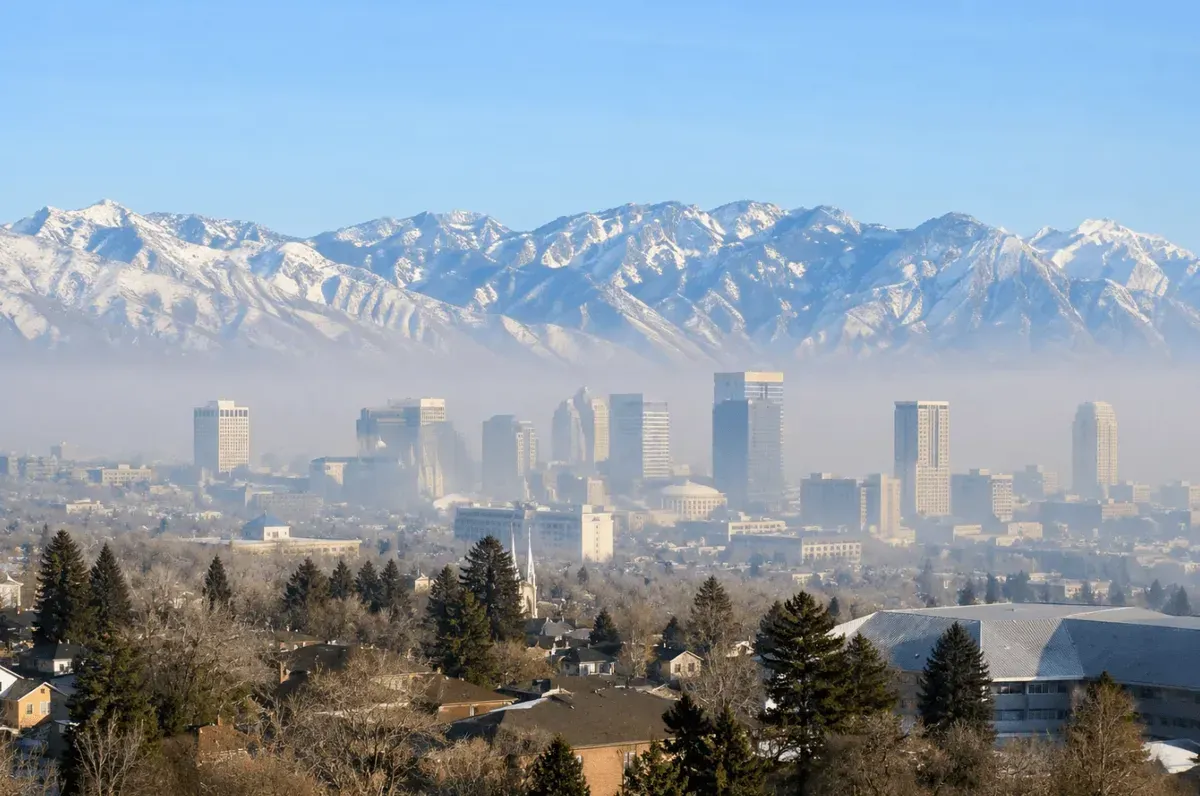
The local detail most maps miss: Salt Lake City’s air isn’t uniform. During an inversion it pools like soup in a bowl: thickest on the valley floor, thinnest up high. The east benches, canyons, and towns like Park City often sit above the haze in clean air while downtown chokes, and University of Utah researchers have measured PM2.5 dropping sharply a few hundred feet up. So zoom the map to your neighborhood, not the citywide average. On a bad-air day, going uphill is the fastest way out of the smog.
Why Is Salt Lake City’s Air Quality So Bad Some Days?
Salt Lake City has good air on many days (spring and early fall are often clean), but its geography drives sharp, seasonal spikes. The valley is a bowl ringed by the Wasatch and Oquirrh mountains, and that shape traps pollution instead of letting wind carry it off. Four drivers stack up across the year.
Source: Utah DEQ; Salt Lake City Sustainability; IQAir. On-road traffic is the largest man-made source along the Wasatch Front (about 39% of annual emissions, Utah DAQ 2022).
The largest man-made contributor across the Wasatch Front is traffic: on-road mobile sources produce roughly 39% of the region’s annual man-made emissions (Salt Lake City Sustainability).
Is the Air Quality Bad in Salt Lake City Today? What to Do at Each Level
On Orange (101–150) days, sensitive groups (kids, older adults, pregnant people, and anyone with asthma, COPD, or heart disease) should move hard exercise indoors and keep windows closed. On Red (151+) days, everyone should limit outdoor exertion, close up the house, and run the HVAC fan so the filter keeps scrubbing indoor air. During inversions, Utah’s Division of Air Quality also issues mandatory no-burn (“red air”) days. Skip the fireplace and fire pit, since wood smoke worsens valley PM2.5.
A helpful rule: in summer, mornings beat afternoons for ozone, so exercise earlier; in winter, pollution builds day over day until a storm clears it. Compare nearby areas on our live USA AQI map.
How to Protect Your Indoor Air When Salt Lake City’s AQI Spikes
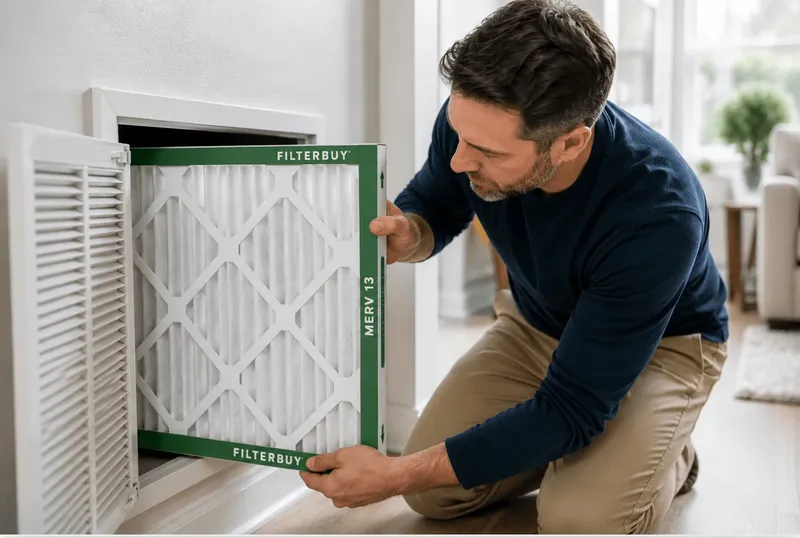
Here’s the part most air-quality tools skip. At Filterbuy, we’ve been making filters in the U.S. since 2013 and shipping them to millions of households, and every inversion season we see the same pattern: people track the outdoor number but forget that the air they’re actually breathing is indoors. You can’t lower the outdoor AQI, but you can control that indoor air. The most effective step is upgrading your HVAC filter, since your system pulls household air through it every time it runs, and a MERV 13 captures the fine PM2.5 and wildfire smoke that ordinary fiberglass filters let pass straight through.
How to match a filter to Salt Lake City’s air:
For winter inversions and wildfire smoke: a Filterbuy MERV 13. It captures the fine particles that dominate SLC’s worst air days, and wildfire smoke can travel hundreds of miles to reach the valley.
For everyday allergens and dust: MERV 11. A strong all-rounder for pollen, dust, and pet dander.
For smoke and cooking odors: add an Odor Eliminator (activated carbon) filter. Carbon helps with the smells and VOCs that particles alone do not catch.
Not sure which to choose? See how the MERV ratings compare. Filterbuy makes pleated filters in 600+ sizes plus custom cuts, all made in the USA and shipped free, factory-direct. One thing we’ve learned first-hand: filters load up far faster during heavy inversions and smoke, so check yours monthly instead of the usual 90 days, or set up auto-delivery and a fresh one arrives on time.
After more than a decade of building filters in the U.S., we’ve learned the same lesson in every inversion-prone city we serve: the AQI map tells you what’s outside, but the filter in your HVAC decides what your family actually breathes.
Filterbuy
For more, browse Filterbuy’s indoor air quality resources.
Frequently Asked Questions
7 Air Quality Resources We Trust for Salt Lake City
These are the sources we trust ourselves. Bookmark them to check today’s air and see how the valley works.
1. Make Sense of Today’s AQI in Plain English
Not sure what the number means? The EPA’s AirNow guide explains the AQI scale and colors simply, so a glance tells you if it’s a good day out.
2. Meet the Tiny Particles Winter Traps
Curious what’s in that winter haze? The EPA’s guide to PM2.5 keeps it plain: the fine particles inversions trap, and the ones your filter catches.
3. See Why Your Indoor Air Deserves the Attention
Here’s what most folks miss: the EPA finds indoor air is often 2 to 5 times dirtier than outside, and this guide covers the fixes that help most.
4. Check Utah’s Official Numbers Before You Head Out
Want the real-deal source? Utah’s Division of Air Quality posts live readings, a three-day forecast, and the no-burn “red air day” alerts locals watch for.
5. Finally Understand Why the Haze Just Sits There
Ever wonder why winter air gets stuck? Utah DEQ’s inversion study explains the warm-air “lid” that traps pollution until a storm clears it.
6. Know What Fuels That Summer Ozone
This Utah DEQ study ties the shrinking Great Salt Lake and Wasatch Front traffic to the ozone that flares up on hot afternoons.
7. Get the Local Lowdown on Your Air
The Salt Lake City air quality page lays out the bowl-shaped valley and the everyday sources shaping the air where you live.
Supporting Statistics
The research behind this page, in three numbers:
13th-worst metro for ozone. Salt Lake City–Provo–Orem averages 20.8 unhealthy ozone days a year, an “F” grade. (Source: American Lung Association, State of the Air 2026.)
750+ square miles of exposed lakebed. As the Great Salt Lake dries, winds carry its metal-laced dust into Wasatch Front neighborhoods, raising PM10 exposure. (Source: Utah Department of Environmental Quality.)
~90% of our time is spent indoors. So the air inside your home matters as much as the AQI outside. (Source: U.S. EPA, The Inside Story.)
Glossary
AQI (Air Quality Index): a 0–500 scale from the U.S. EPA that translates pollutant concentrations into a color-coded health rating, from green (good) to maroon (hazardous).
PM2.5: fine particulate matter 2.5 microns wide or smaller, small enough to reach deep into the lungs. Salt Lake City’s dominant winter pollutant, driven by inversions.
Ground-level ozone: a gas pollutant formed when sunlight reacts with vehicle and industrial emissions; Salt Lake City’s dominant summer pollutant, peaking on hot afternoons.
Temperature inversion: a weather pattern where warm air traps cold air (and pollution) in the valley like a lid, causing PM2.5 to accumulate.
Nonattainment area: an EPA label for a region that fails a federal air-quality standard; Salt Lake County is nonattainment for PM2.5 and ozone.
MERV rating: “Minimum Efficiency Reporting Value,” a 1–16 scale of how well a filter captures particles; MERV 13 catches fine PM2.5 and smoke.
Great Salt Lake dust: windblown particulate matter (PM10) from the shrinking lake’s exposed lakebed, an emerging Wasatch Front pollution source.
Red air day: a day when Utah DEQ forecasts unhealthy air and bans wood burning.
Filterbuy: a U.S. air-filter maker shipping pleated HVAC filters in 600+ sizes factory-direct, with auto-delivery.
Sources: U.S. EPA AirNow & Green Book; Utah Department of Environmental Quality / Division of Air Quality; Salt Lake City Sustainability; IQAir. Reviewed for accuracy by David Clark, Licensed HVAC Technician.