
Ash Pollen: Spring Season, Olive-Family Connection, and How to Spot It
September 28, 2026
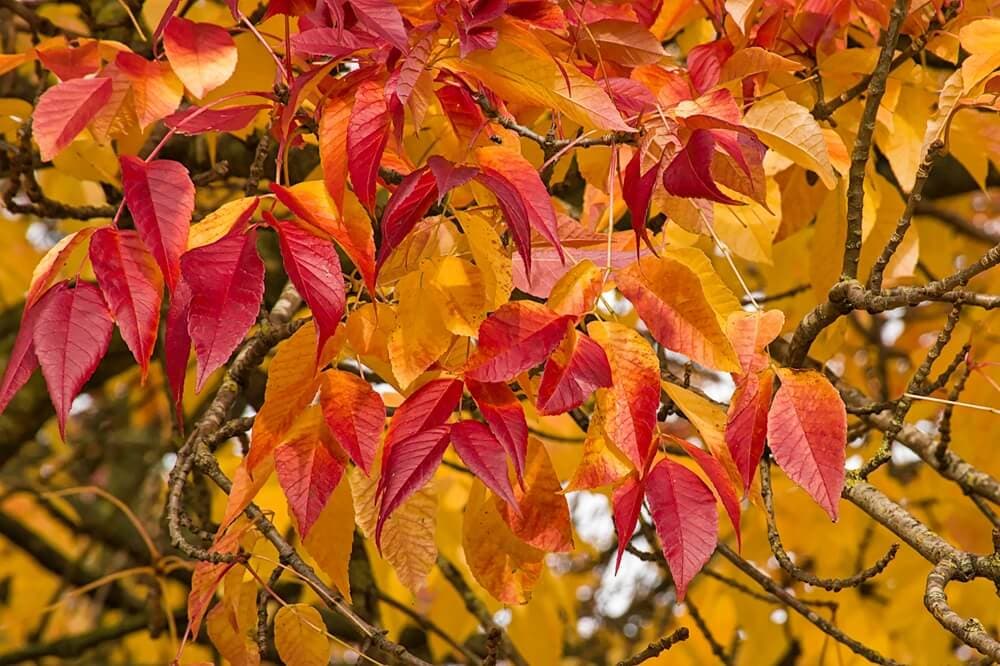
True ash trees belong to the genus Fraxinus in the olive family, Oleaceae (USDA Silvics of North America). Yes, the same family as the olive tree, even though the two look nothing alike. Every spring, ash produces small, wind-pollinated flowers, and researchers analyzing 15 years of National Allergy Bureau data describe ash as a tree that "can produce copious amounts of potent pollen" (Lo et al., Aerobiologia, 2019).
There is a second story worth knowing. An invasive beetle called the emerald ash borer has caused the death and decline of tens of millions of ash trees in North America (USDA APHIS). That loss changes local tree populations, but it does not automatically prove a measured drop in any city's airborne ash pollen count.
Ash Pollen Quick Facts
| Field | Detail |
|---|---|
| Type | Tree |
| Scientific name | Fraxinus, olive family (Oleaceae) |
| Pollination method | Wind-pollinated (USDA Silvics of North America) |
| Pollen grain size | About 26 to 28 micrometers (Pollen.com) |
| Typical season | Spring, from March in Florida to May farther north |
| Time of day | No universal ash-specific peak hour. Weather changes daily counts. |
| U.S. regions | Mainly the eastern and southeastern U.S. (Pollen.com); green ash reaches west to Montana and Texas (USDA Silvics of North America) |
| Commonly cross-reacts with | Olive, privet, and lilac pollen (see Ash Pollen Cross-Reactions) |
"Mountain ash" (Sorbus) is not a true ash. It belongs to the rose family and is not in the genus Fraxinus (NC State Extension).
Is Ash Pollen High Near You Today?
Ash pollen won't show up in your local Air Quality Index. Intact pollen grains are too large for the PM2.5 and PM10 monitors the AQI relies on, which we explain in How Pollen Affects Air Quality Readings. For daily tree pollen counts, check the certified station nearest you on the AAAAI National Allergy Bureau pollen map. To see air quality where you live, use Filterbuy's Live Air Quality Index Map.
How to Identify Ash Pollen at the Source: Leaves, Bark, and Seeds
True ash gives you a few reliable clues once you know what to check:
- Opposite, compound leaves. Leaves grow in pairs across the stem, and each leaf is made of several leaflets. White ash leaves are 8 to 12 inches long, usually with 7 leaflets (NC State Extension). Green ash has 5 to 9 leaflets (NC State Extension).
- Net-patterned bark. Mature white ash bark has deep furrows separating ridges in a net-like, diamond pattern (NC State Extension). Bark varies by species and age, so use it alongside other features.
- Single-winged seeds. Ash forms samaras with one wing per seed, not a joined pair (NC State Extension). White ash samaras reach up to 2 inches long and hang in drooping clusters that ripen in fall (NC State Extension).
The flowers matter for pollen. White and green ash have male and female flowers on separate trees (NC State Extension; USDA Silvics of North America). White ash flowers are small, purplish, and petal-less, and they open in April and May before the leaves emerge (NC State Extension). Male trees release the pollen, while female trees form the winged seeds after pollination.
You can't identify ash pollen from a dust film on your car or windowsill. At roughly 26 to 28 micrometers (Pollen.com), the grains are microscopic, and settled powder never confirms which plant produced it.
Ash Pollen Look-Alikes: Mountain Ash and Box Elder
Mountain Ash
Despite the name, American mountain ash (Sorbus americana) is in the rose family, Rosaceae, not a true ash. Its compound leaves are alternate, with 9 to 17 leaflets, and it bears flat clusters of creamy white flowers in early summer followed by bright red-orange, berry-like fruit (NC State Extension). True ash has opposite leaves and never forms berries.
Box Elder
Box elder (Acer negundo) is a maple. Its opposite compound leaves can look a lot like ash. Look closely at the leaflets: box elder's end leaflet is often lobed, while ash leaflets are more uniform and never lobed (Minnesota Wildflowers). The fruit settles it. Box elder forms paired winged samaras (Illinois Wildflowers), while true ash forms single-winged samaras (NC State Extension).
| Feature | True Ash (Fraxinus) | Mountain Ash (Sorbus) | Box Elder (Acer negundo) |
|---|---|---|---|
| Family | Olive family (Oleaceae) | Rose family (Rosaceae) | Soapberry family (Sapindaceae), a maple |
| Leaf arrangement | Opposite | Alternate | Opposite |
| Leaflets | 5 to 9, never lobed | 9 to 17 | 3 to 5, occasionally 7; end leaflet often lobed |
| Fruit | Single-winged samaras | Red-orange, berry-like clusters | Paired winged samaras |
Sources: NC State Extension; NC State Extension; Minnesota Wildflowers; Illinois Wildflowers.
When Is Ash Pollen Season? Spring Timing by Region
Ash timing depends on species, weather, and location. Ash start dates vary relatively little from year to year, with a standard deviation of about 12 days across National Allergy Bureau stations (Lo et al., 2019). The windows below are flowering ranges from named sources. A flowering window is not the same as a measured airborne peak, so treat them as sourced starting points, not a national calendar.
| Species and Region | Typical Flowering Window | Source |
|---|---|---|
| Green ash, Florida | As early as March or April | USDA Silvics of North America |
| Green ash, North Carolina | April through May | NC State Extension |
| Green ash, northern range | Late April to early May | USDA Silvics of North America |
| White ash, eastern North America | April to May | NC State Extension |
Check your nearest National Allergy Bureau station for the current year.
Find your city on Filterbuy's Live Air Quality Index Map, and see our seasonal allergy calendar for how ash fits into spring alongside oak, birch, and maple.
Ash Pollen by the Numbers
- One of the 11 most important allergenic pollen types. Across 31 National Allergy Bureau stations from 2003 to 2017, ash ranked seventh among the key allergenic pollen types tracked (Lo et al., 2019).
- Most pollen lands within 300 feet. Green ash pollen is spread by wind, but most of it falls within 200 to 300 feet of the tree (USDA Silvics of North America). That makes the ash trees on your street more relevant than ones across town.
- About 18 ash species. Pollen.com's plant database lists about 18 ash species, from black ash to white ash (Pollen.com).
- 38 states and D.C. Emerald ash borer, first detected in southeast Michigan in 2002, has now been found in 38 states and the District of Columbia (USDA APHIS).
- 3 to 5 years. Emerald ash borer typically kills an ash tree within 3 to 5 years after infestation (NC State Extension).
Ash Pollen Myths vs. Facts
MYTHAsh is unrelated to olive.
FACTBoth true ash and olive belong to the olive family, Oleaceae (USDA Silvics of North America).
MYTHMountain ash is an ash tree.
FACTMountain ash is Sorbus, a member of the rose family, not the true-ash genus Fraxinus (NC State Extension).
MYTHAn ash tree with no seeds releases no pollen.
FACTAsh has male and female flowers on separate trees (USDA Silvics of North America). Male trees shed pollen but never form seeds, so no samaras doesn't mean no pollen.
MYTHEmerald ash borer eliminated ash pollen.
FACTThe pest has killed tens of millions of ash trees (USDA APHIS), but surviving trees, other ash species, and remaining plantings still release pollen. Tree loss is not the same as a verified decline in airborne pollen, which would take station-specific data adjusted for weather and distance.
Ash Pollen Cross-Reactions and the Olive Connection
This section is descriptive only and is not medical advice.
Ash's major allergen, Fra e 1, is closely related to allergens in other olive-family plants. Thermo Fisher Scientific's allergen encyclopedia reports that Fra e 1 shares 91% of its amino acid sequence with privet (Lig v 1), 88% with olive (Ole e 1), and 82% with lilac (Syr v 1) (Thermo Fisher Scientific). Pollen.com also notes that ash is known to cross-react with olive pollen (Pollen.com).
Two things to keep in mind. Much of the published research involves European ash (Fraxinus excelsior), so it does not prove identical cross-reactivity for every ash species in the U.S. And this is a pollen relationship. The olive-family link is not a claim about olive as a food. For questions about symptoms or diagnosis, speak with a board-certified allergist.
How to Keep Ash Pollen Out of Your Home
Because most ash pollen lands close to the tree, a male ash in your yard or on your street can matter more than you'd expect. A few steps help:
- Check local counts in spring. Use your nearest National Allergy Bureau station from March through May.
- Keep windows and doors closed when ash is active. Open windows and doors are one of the main ways pollen gets indoors (2023 scientific review, PMC).
- Leave pollen at the door. Wipe down entry surfaces and sills, change clothes after time outdoors, and wipe pets down when they come in. Our spring allergy prep guide has a full room-by-room checklist.
- Match your HVAC filter to your household. MERV ratings measure how well a filter captures particles between 0.3 and 10 micrometers. A MERV 8 filter must capture at least 70% of particles in the 3 to 10 micrometer range, and a MERV 11 filter at least 85% (EPA). Intact ash pollen grains, at roughly 26 to 28 micrometers, are larger than anything in that test. For most homes, MERV 8 is the standard choice. For households with allergies or pets, step up to MERV 11. Our MERV 8 vs. MERV 11 guide breaks down the difference.
- Change filters on schedule. Standard 1-inch filters are typically replaced about every 90 days. Filterbuy 4-inch filters last 6 to 12 months.
These steps reduce how much pollen circulates indoors. They are not a substitute for medical care, and no specific symptom outcome is claimed.
Ash season lands right in the middle of spring tree pollen, so it pays to start with a clean filter. Filterbuy makes MERV 8 and MERV 11 filters in more than 600 standard sizes, plus custom sizes, so it's easy to find one that fits your system before the ash flowers open.
Shop MERV 8 Filters Shop MERV 11 FiltersFrequently Asked Questions
When is ash pollen season?
Ash is a spring tree pollen. Green ash can flower as early as March or April in Florida and from late April to early May farther north (USDA Silvics of North America), while white ash flowers in April and May (NC State Extension).
Does ash pollen start in March?
It can in the South. Green ash flowers as early as March or April in Florida (USDA Silvics of North America). Farther north, flowering comes later, so March isn't a nationwide start date.
Is ash related to olive?
Yes. True ash (Fraxinus) and olive both belong to the olive family, Oleaceae (USDA Silvics of North America), and their main pollen allergens are closely related (Thermo Fisher Scientific).
Do male or female ash trees release pollen?
Male trees release the pollen. White and green ash have male and female flowers on separate trees, and the females form the winged seeds (NC State Extension).
How far does ash pollen travel?
Green ash pollen is carried by wind, but most of it falls within 200 to 300 feet of the tree (USDA Silvics of North America).
How can I recognize an ash tree?
Look for opposite compound leaves, net-patterned bark on mature trees, and single-winged seeds (NC State Extension). Use several features together, since bark varies by species and age.
Is mountain ash really ash?
No. Mountain ash is Sorbus, in the rose family. It has alternate leaves and red-orange, berry-like fruit, unlike true ash (NC State Extension).
Is box elder an ash tree?
No. Box elder (Acer negundo) is a maple. Its opposite compound leaves resemble ash, but its seeds come in pairs, while ash seeds have a single wing (Illinois Wildflowers; NC State Extension).
Has emerald ash borer reduced ash pollen?
The beetle has caused the death and decline of tens of millions of ash trees (USDA APHIS), which changes local tree populations. But tree loss doesn't prove a measured decline in airborne ash pollen. That would take station-specific pollen data adjusted for weather, distance, and species.
What air filter should I use during ash season?
It depends on your household. MERV 8 is the standard choice for most homes. For households with allergies or pets, MERV 11 captures a higher share of larger airborne particles (EPA). See our MERV 8 vs. MERV 11 guide to compare.