
Spring Prep Guide: How to Allergy-Proof Your Home
July 23, 2026

Tomorrow is the first day of spring which means it's time to open things up, clear things out, and reset your home after a long winter. But spring cleaning isn't just about tidying up. Done right, it also tackles the invisible stuff: the dust, pollen, mold, and allergens that built up all season and are about to get a lot worse.
Use this checklist to clean smarter this year room by room, with a few allergy-busting upgrades built right in.
Why Spring Cleaning Matters More Than You Think
Winter seals your home tight and everything that accumulated inside (dust, dander, mold spores, stale air) has been circulating for months. Then spring arrives and brings its own wave of tree, grass, and weed pollen that sneaks in through open doors, windows, pets, and clothes. For the millions who suffer from spring allergies, a thorough spring clean isn't optional it's the difference between a home that makes symptoms worse and one that actually gives you relief.
Your Spring Cleaning Checklist
Work through these this week. Some take five minutes. A few take an afternoon. All of them are worth it.
1. Change Your Air Filter (Start Here)
This is the most skipped item on every spring cleaning list and the one that makes the biggest difference. If you do nothing else, do this.
Your HVAC filter has been trapping dust, dander, and mold spores all winter. By now, it's almost certainly clogged which means your system is working harder and your air is dirtier. Swapping it out takes five minutes and immediately improves the air quality in every room.
When you're picking a new filter, the MERV rating tells you how much it filters out:
MERV 8: Good everyday protection for most homes

MERV 11: Better; catches mold spores, pet dander, and finer particles

MERV 13: Best for allergy sufferers; blocks fine pollen, bacteria, and smoke

Note: Don't go above MERV 13 without checking your system specs.
Replace your filter every 1–3 months during allergy season. If you haven't changed it since last fall, now is the time.
2. Deep Clean the Bedroom
You spend a third of your life here. It's also where dust mites thrive — especially in bedding and mattresses. Make this room a priority.
Wash all bedding in hot water: sheets, pillowcases, duvet covers, and blankets
Flip or rotate your mattress and vacuum the surface
Wipe down ceiling fan blades: dust builds up all winter and gets flung around the moment you turn it on
Dust blinds, windowsills, and baseboards
Vacuum under the bed: a notorious dust trap
3. Tackle the Living Areas
High-traffic rooms accumulate the most: pet dander, tracked-in dirt, and settled dust that a weekly vacuum doesn't fully catch.
Deep vacuum carpets and area rugs: go slowly, two passes in different directions
Clean upholstered furniture: vacuum cushions and use a lint roller or fabric cleaner on surfaces
Wipe down all hard surfaces with a damp cloth: damp traps dust; dry just spreads it
Wash curtains or wipe down blinds
Move furniture and vacuum behind and beneath it: once a year, at minimum
4. Refresh the Kitchen
Kitchens are a hotspot for mold and lingering odors, especially in areas you don't clean regularly.
Clean inside the refrigerator — remove everything, wipe shelves and drawers, toss anything expired
Degrease the stovetop, oven, and range hood
Wipe down cabinet fronts and handles — grime builds up faster than you'd expect
Check under the sink for moisture or mold — address any leaks immediately
Run a cleaning cycle on your dishwasher and washing machine
5. Scrub Down the Bathrooms
Humidity makes bathrooms a prime spot for mold and mildew. Spring cleaning is the time to go deeper than the usual weekly wipe-down.
Scrub grout lines in the shower and around the tub — mold loves to hide there
Replace or wash your shower curtain liner
Clean the exhaust fan — a clogged fan can't pull moisture out, which leads to mold
Toss expired medicines, products, and toiletries
6. Whole-Home Tasks
These cut across every room and are easy to overlook when you're cleaning space by space.
Wipe down all light switches, doorknobs, and handles
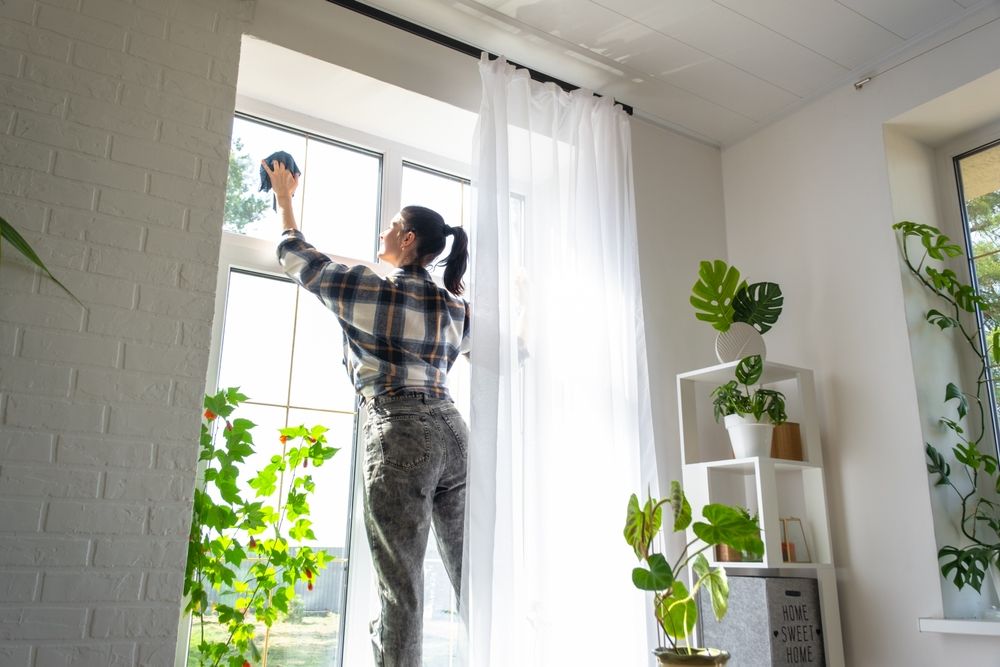
Wash windows inside and out — let that spring light actually in
Declutter closets and donate what you didn't touch all winter
Test smoke and carbon monoxide detectors — replace batteries while you're at it
Check humidity levels throughout the home — aim for 30–50% to deter mold and dust mites; run a dehumidifier in damp areas

Make Your Clean Last: Allergy-Proof as You Go
A clean home is a great start. But with pollen season ramping up, a few extra steps will keep allergens from moving back in the moment you open a window.
Keep windows closed on high-pollen days — check your local pollen count each morning before airing things out
Change clothes after being outside — pollen travels indoors on fabric
Wipe down pets after outdoor time — their fur picks up pollen and brings it straight to your furniture
Consider a HEPA air purifier — especially useful in the bedroom where you spend the most time
Switch to fragrance-free cleaning products — strong scents can trigger symptoms just like allergens do
Feeling It Already? Natural Ways to Get Relief
If symptoms are already hitting, these simple habits can help while you work through your cleaning list.
Stay hydrated — water helps thin nasal mucus and eases congestion
Add omega-3s to your diet — salmon, walnuts, and flaxseed help reduce inflammation
Ask your doctor about herbal options — stinging nettles and butterbur have well-documented anti-inflammatory properties
Frequently Asked Questions
How Does the Change in Diet and Hydration Affect the Body's Response to Allergens During Spring?
Changing your diet and hydration can affect your body's response to spring allergens. You'll boost your immune system, reduce inflammation, and hydrate your mucous membranes, making it easier to flush out allergens.
Can Regular Exercise Help in Reducing the Impact of Spring Allergies? if So, How?
Yes, regular exercise can help reduce your spring allergies. It boosts your immune system, helping you fight off allergens better. Plus, it can improve your breathing, lessening allergy-induced asthma symptoms.
What Are Some Potential Spring Allergens That Are Often Overlooked in the Home?
You're often overlooking potential spring allergens in your home. These include dust mites in bedding, mold in damp areas, pollen tracked indoors, pet dander, and even certain indoor plants. It's about being vigilant.
How Does Mental Health and Stress Levels Influence Our Body's Reaction to Allergens?
Your mental health and stress levels can significantly impact your body's response to allergens. High stress can weaken your immune system, making you more susceptible to allergic reactions. It's crucial to manage stress for better health.
Can Changes in the Surrounding Environment, Such as Home Renovation or a New Pet, Exacerbate Spring Allergies, and How Can These Be Managed?
Yes, home renovations or a new pet can worsen your spring allergies. Managing this involves regular cleaning, using air purifiers, and possibly changing pet grooming routines. Consult with an allergist for personalized advice.