
Indoor Air Quality During a Cold Snap: How to Keep Your Home’s Air Healthy
October 29, 2026

How to Protect Indoor Air Quality During a Cold Snap
A cold snap seals your home and keeps the furnace running, so the same dry air loops through your filter again and again. To protect it, check your air filter every 2 to 4 weeks, keep humidity on the low side, test your carbon monoxide (CO) alarms, and clear snow from outside vents.
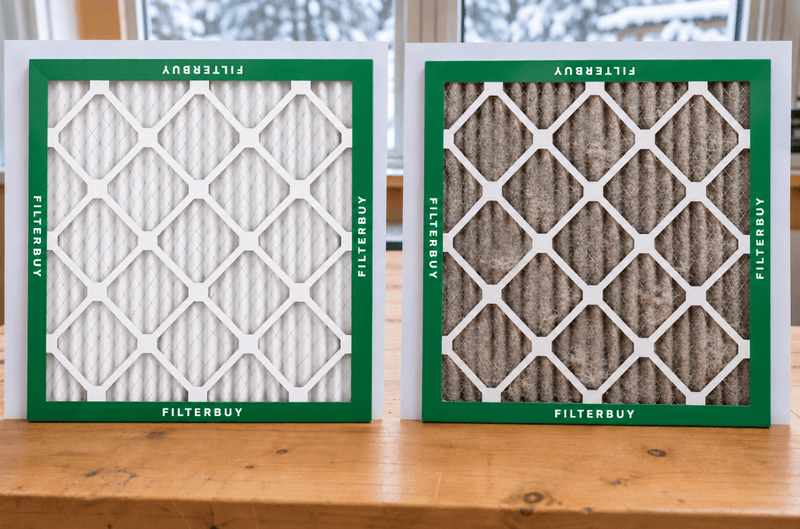
Not sure if your filter is due? Hold it against white paper. If it looks gray and matted, it's time for a fresh one.
Need a filter that fits? Take the quick quiz below to find your match.
A cold snap keeps the same air looping
Windows
stay shut
Furnace
runs nonstop
Filter loads
up faster
Check your filter every 2–4 weeks
Gray and matted against white paper? Replace it.
Find Your Furnace Filter Match
Answer a few quick questions, and we'll match you to the right filter for your home this winter.
TL;DR
Indoor air quality during a cold snap usually gets worse because the house is sealed tight and the furnace runs nonstop, drying out the air. Check your air filter every 2 to 4 weeks, keep humidity low, test your carbon monoxide (CO) alarms, and clear snow from furnace and dryer vents.
Key Takeaways
Closed windows cut fresh-air exchange, so dust and dander build up quickly.
The U.S. Environmental Protection Agency (EPA) Report on the Environment says indoor levels of some pollutants are often 2 to 5 times higher than typical outdoor levels.
The EPA recommends 30% to 50% humidity, but at 0°F outside the ceiling drops to about 25%.
The Centers for Disease Control and Prevention (CDC) reports that CO poisonings peak in fall and winter, when gas furnaces run the most.
MERV 11 suits most pet and allergy homes; the EPA recommends MERV 13 or the highest rating your system can handle.
Why Does Indoor Air Quality Get Worse During a Cold Snap?
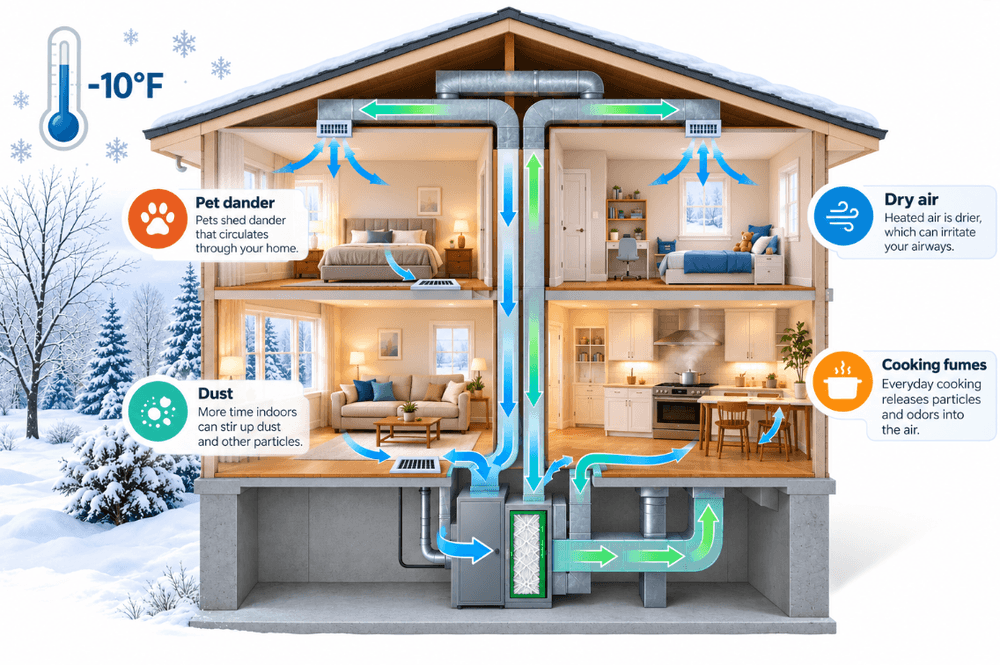
Indoor air quality drops during a cold snap because several things happen at once. The windows stay shut, the furnace runs longer and recirculates the same air, and that heated air loses humidity. The result is a warm house full of stale, dry air.
Don’t take your indoor air for granted when the temperature plunges. A cold snap packs the usual winter indoor air quality problems into a few days.
Less ventilation. The EPA indoor air quality report points to a home’s air exchange rate as a key factor in pollutant levels, and cold weather keeps windows closed.
What Are the Health Risks of Poor Indoor Air Quality During a Cold Snap?
The main health risks of poor indoor air quality during a cold snap are carbon monoxide exposure, asthma and allergy flare-ups, and irritation from very dry air. Carbon monoxide is the most dangerous because you can’t see or smell it.
| Cold Snap Air Risk | Common Source | Typical Symptoms | Who Is Most Affected |
|---|---|---|---|
| Carbon monoxide (CO) | Gas furnace, water heater, space heater, generator, snow-blocked vents | Headache, dizziness, nausea, confusion | Everyone; older adults, infants, pets |
| Trapped allergens | Dust, pet dander, dust mites recirculating through ducts | Sneezing, congestion, itchy eyes, asthma flare-ups | Allergy and asthma sufferers, children |
| Dry air (below 30% humidity) | Heated cold air with little moisture | Dry skin, cracked lips, nosebleeds, sore throat | Infants, older adults, people with sinus issues |
| Combustion particles | Fireplaces, wood stoves, candles, gas cooking | Coughing, throat irritation, worse asthma | People with lung or heart conditions |
According to the CDC, CO poisonings occur more often in fall and winter, and its furnace safety fact sheet notes that gas- and oil-burning furnaces produce CO. If an alarm sounds, get everyone outside and call 911.
“The cold snap call I get most is a high-efficiency furnace that shut down because snow blocked its PVC exhaust pipe. Clearing the vent usually fixes it and keeps exhaust from backing up inside.”
— David Clark, Licensed HVAC Technician
How to Improve Indoor Air Quality During a Cold Snap: 7 Steps
The fastest way to improve indoor air quality during a cold snap is seven checks: the filter, humidity, CO alarms, exterior vents, exhaust fans, indoor smoke, and blocked returns. Handle steps 1 and 3 before the forecast low arrives, then repeat steps 2 and 4 daily until the freeze breaks.
Check the filter before and during the freeze. Hold the filter against a sheet of white paper, and if the media looks gray and matted, replace it. We prefer paper to the old light test because a new pleated filter already blocks a lot of light. Check every 2 to 4 weeks and write the install date on the frame, a tip the Filterbuy support team gives callers. See Filterbuy’s guide on how often to change your air filter.
Keep humidity low in a deep freeze. The EPA’s guide to mold and moisture recommends 30% to 50%, but the colder it gets outside, the less moisture your windows can handle. We call this the cold snap humidity paradox: the air feels driest right when you should humidify least.
Test every CO alarm. Press each test button and swap out weak batteries. The EPA’s winter weather and indoor air quality guidance calls for an alarm outside each sleeping area and on every level.
Clear snow from exterior vents. Drifting snow can bury furnace exhaust, dryer, and water heater vents, so clear them after each storm to keep CO from building up inside, as the EPA advises. For furnace prep, see how to protect your furnace during a cold snap.
Run exhaust fans. Let range hoods and bath fans run for 15 to 20 minutes after cooking or showering.
Limit indoor smoke. Go easy on candles and wood fires, and never heat the house with a gas oven, grill, or unvented heater. If the power goes out, run any generator outdoors at least 20 feet from the house.
Keep returns unblocked. Move furniture and decor off the registers so the furnace can breathe.
Cold Snap Humidity Limits by Outside Temperature
Set your humidistat by the forecast low rather than by how dry the air feels. These limits from an EPA moisture-control guide help prevent window condensation and mold.
| Outside Temperature | Max Indoor Humidity | What to Do |
|---|---|---|
| 20°F | 35% | Normal humidifier use is fine |
| 10°F | 30% | Lower the humidistat a notch |
| 0°F | 25% | Turn the humidifier down overnight |
| -10°F | 20% | Check windows for fog each morning |
| -20°F | 15% | Run humidifiers only if windows stay dry |
How Do Pets and Allergies Affect Indoor Air Quality During a Cold Snap?
Pets make cold snap air harder to manage because dogs and cats spend more time inside, shedding dander into air that isn’t being refreshed. That recirculated dander and dust mite debris can trigger allergy symptoms within days. Filterbuy’s replacement guidance assumes one pet roughly halves a filter’s normal life, and a cold snap shortens it further.
Brush pets near a return vent so the HVAC filter catches loose hair.
Vacuum carpets and pet beds weekly.
Wash pet bedding in hot water weekly.
For more, see Filterbuy’s guides to keeping indoor air clean with pets in winter and the best winter furnace filters for allergies.
What Is the Best Air Filter for Indoor Air Quality During a Cold Snap?
The best air filter for a cold snap is a pleated one with the highest MERV rating your system is built for, usually MERV 8 to MERV 13. MERV (Minimum Efficiency Reporting Value) measures how well a filter captures particles from 0.3 to 10 microns. Higher ratings catch smaller particles but can restrict airflow in systems not designed for them.
| Filter Rating | Captures | Best for During a Cold Snap | Check During a Cold Snap |
|---|---|---|---|
| MERV 8 | Dust, lint, pollen, larger pet hair | Most homes without allergies or pets | Every 3–4 weeks |
| MERV 11 | MERV 8 particles plus finer dust and dander down to 1 micron, some smoke | Pet owners, mild allergies | Every 2–3 weeks |
| MERV 13 | MERV 11 particles plus particles down to 0.3 micron, including bacteria and fine smoke | Asthma, severe allergies, wood-burning homes | Every 2–3 weeks |
Supporting Statistics
53.5% Of Reported Co Exposures Happen November Through February
In a CDC review of 68,316 poison-center reports from 2000 to 2009, 77.6% of exposures happened at home. Source: CDC, MMWR: Carbon Monoxide Exposures, United States, 2000–2009.
90%+ Of U.S. Homes Have Three Or More Detectable Allergens
When National Institutes of Health (NIH) researchers tested nearly 7,000 homes, 73% had at least one allergen at high levels, driven largely by pets and pests. Source: National Institutes of Health.
~50% Of Home Energy Goes To Heating And Cooling
ENERGY STAR advises checking filters monthly during heavy-use months like winter. A cold snap is peak use, so Filterbuy recommends checking every 2 to 4 weeks. Source: ENERGY STAR: Heat & Cool Efficiently.
The Bottom Line
In a cold snap, your HVAC filter is the main barrier between your family and trapped dust and dander. Once the thaw arrives, check it again and replace it if it looks gray.
Filterbuy has made air filters in the U.S. since 2013, and from our side the real risk is speed. A filter that looked fine last week can fill up within days once the furnace barely shuts off.
“When the forecast drops into single digits, I tell people to do two things before anything else: put in a fresh filter and test the CO alarms. A cold snap is the wrong week to discover your filter has been in since October.”
— Michelle Wan, Brand Manager and Air Quality Writer, Filterbuy
Frequently Asked Questions
Should I Open a Window During a Cold Snap to Improve Air Quality?
Yes, briefly. Cracking a window for 5 to 10 minutes, especially after cooking, flushes out stale air without chilling the house. Skip it if outdoor air quality is poor.
Does Running the Furnace Fan on “On” Improve Indoor Air Quality?
It can. With the fan on, air keeps moving through the filter between heating cycles, and furnace filters only clean air while the system runs. Expect higher electricity use and faster filter loading.
Why Is My House So Dry During a Cold Snap?
Frigid outdoor air holds very little moisture, so when it leaks inside and warms up, relative humidity often falls below 30%. A humidifier helps if you stay within the limits in the table above. Filterbuy’s guide to humidity, dry air and static has more fixes.
How Often Should I Change My Air Filter During a Cold Snap?
Check it every 2 to 4 weeks and replace it once it looks gray against white paper. With pets, allergies, or a wood fire, lean toward every 2 weeks.
Can a Dirty Air Filter Cause Carbon Monoxide?
Not directly. A clogged filter restricts airflow and can overheat the furnace, stressing the heat exchanger. Because a cracked heat exchanger can leak CO, change the filter on schedule, book annual service, and keep a working CO alarm as a backstop.
About the author: Michelle Wan is Brand Manager and Air Quality Writer at Filterbuy, working directly with the U.S. manufacturing team. Reviewed by David Clark, Licensed HVAC Technician.
Glossary
Cold snap: A sudden, short stretch of unusually cold weather, often from an arctic air mass.
Indoor air quality (IAQ): The condition of indoor air as it affects health and comfort.
HVAC filter: A replaceable filter in a heating and cooling system that captures airborne particles.
MERV (Minimum Efficiency Reporting Value): An ASHRAE scale from 1 to 16 rating how well a filter captures particles from 0.3 to 10 microns.
Relative humidity (RH): Moisture in the air as a percentage of what the air can hold at that temperature.
Carbon monoxide (CO): An odorless, poisonous gas from incomplete fuel burning in furnaces and other appliances.
Humidistat: A control that turns a humidifier on and off at a set humidity level.
Heat exchanger: The furnace part that heats household air while keeping combustion gases separate.
Nominal size: The rounded filter size printed on the frame, which you order by.
Pet dander: Tiny skin flakes shed by cats and dogs; a common indoor allergen.