
Carrier Furnace Guide: Prices, Cost, Models, Reviews, Warranty Coverage, Efficiency Ratings, and Filter Tips
October 30, 2026
How Much Does A Carrier Furnace Cost?
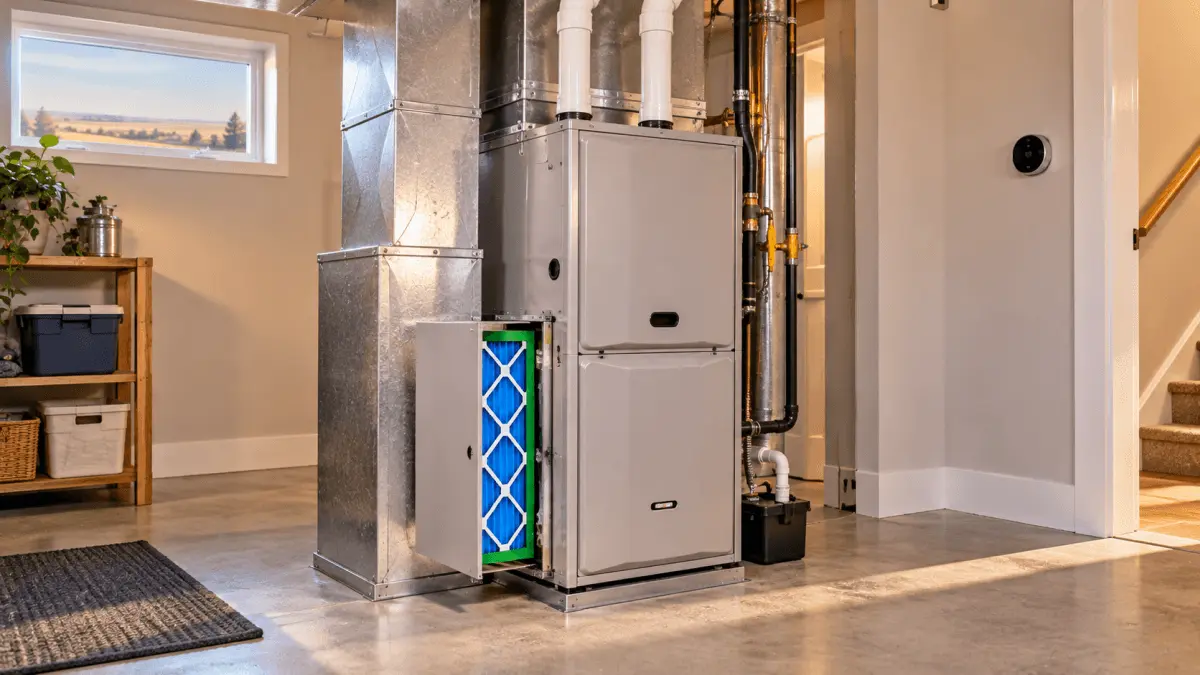
A new Carrier gas furnace costs about $3,800 to $12,000 installed. Comfort models sit at the low end, Performance models fill the middle, and the Infinity 98 tops the range. Your quote depends on the series, the size your home needs, and your dealer. Then take the quick quiz below to match your Carrier furnace to the right filter.
Bars show each series' price range on a $3,000 to $12,000 scale. HVAC Project Cost estimates (August 2026), equipment plus standard labor. AFUE from Carrier, October 2026.
Explore Winter Furnace Filter Guides
Find Your Furnace Filter Match
Answer a few quick questions and we'll match your Carrier furnace to the right filter.
The price of a Carrier gas furnace depends on the series, its AFUE rating (how much of its fuel becomes heat), the size your home needs, and your dealer. Filterbuy makes filters that fit Carrier furnace cabinets, so this guide covers models and warranty terms as well as the filter that fits.
TL;DR
A Carrier gas furnace costs $3,800 to $12,000 installed, according to Carrier's furnace cost guide. Comfort models sit at the low end, Performance models fill the middle, and the Infinity 98 (model 59MN7), a modulating furnace that fine-tunes its flame, tops the range at up to 98.5% AFUE. Register it within 90 days and you'll get 10 years of parts coverage instead of 5.
Key Takeaways
Carrier sells gas furnaces in three series: Comfort (entry level), Performance (mid-range), and Infinity (premium).
Current Carrier gas furnaces range from 80% to 98.5% AFUE.
Carrier's Consumer Choice Warranty gives registered owners 10 years of parts coverage, or 5 years of parts plus 3 years of labor, on most current models.
Most Carrier media cabinets (the filter box beside the furnace) take a 16x25, 20x25, or 24x25 filter about 4.4 inches deep, and Filterbuy makes filters that fit all three.
How Much Does A Carrier Furnace Cost?
Carrier furnace prices start near $3,800 installed for an 80% AFUE Comfort model and can pass $12,000 for an Infinity 98 in a large home. Independent estimates from HVAC Project Cost (August 2026) put Comfort at $3,800 to $7,200, Performance at $4,700 to $9,100, and Infinity at $5,400 to $12,000 installed.
Labor, permits, venting, and old unit removal can move a quote by thousands, so get three itemized bids. Filterbuy's furnace installation cost guide breaks down each line item, and our gas furnace cost and AFUE guide compares prices across brands. Ask for a Manual J load calculation, the standard method for sizing a furnace to your home, before you choose, and see our furnace sizing guide on BTU capacity.
Which Carrier Gas Furnace Models Are Available In 2026?
The flagship Infinity 98 (59MN7) is a modulating furnace rated up to 98.5% AFUE. In the mid-range, the Performance 96 (59TP6) and Comfort 96 (59SC6) share a 96%+ rating but differ in gas valve and blower design.
Table 1: Carrier Gas Furnace Models Compared
Specs from Carrier, October 2026. Prices are HVAC Project Cost estimates, August 2026.
Which Carrier Series Fits Your Home?
Mild winters or a tight budget: an 80% AFUE Comfort or Performance model.
Cold winters and plans to stay put: a 96%+ condensing model, so fuel savings can pay back.
Quiet, even heat and humidity control: the Infinity 96 or Infinity 98.
Venting limits: 80% models vent like most older furnaces, while condensing (90%+) models need PVC venting and a condensate drain.
How To Read A Carrier Furnace Model Number
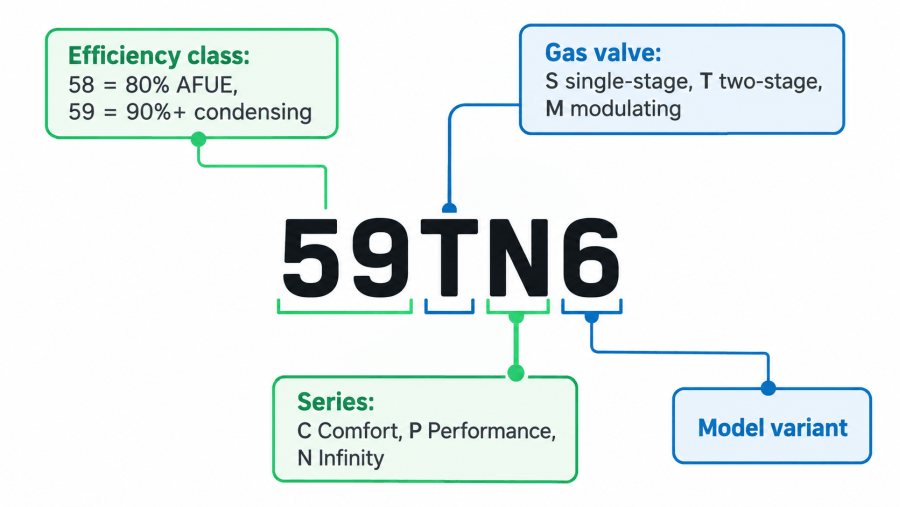
The first two digits of a Carrier model number give the efficiency class: 58 is an 80% AFUE non-condensing furnace, and 59 is a 90%+ condensing furnace. The third character is the gas valve (S single-stage, T two-stage, M modulating), and the fourth is the series (C Comfort, P Performance, N Infinity). A 59TN6 is a condensing, two-stage Infinity furnace. California low-NOx (lower-emission) models, built for limits such as South Coast AQMD Rule 1111, break this pattern.
Carrier Furnace Efficiency Ratings: What Do 80%, 96%, And 98.5% AFUE Mean?
AFUE (Annual Fuel Utilization Efficiency) is the share of fuel a furnace turns into usable heat over a season. A Carrier furnace rated 80% AFUE turns 80 cents of every gas dollar into heat, while the Infinity 98 at 98.5% AFUE turns about 98 cents into heat.
Our math: if an 80% AFUE furnace produced EIA's forecast $640 average gas heating bill this winter, a 96% model would cut it to about $533, saving roughly $107 a year. At midpoint estimates, a Comfort 96 costs about $1,400 more than a Comfort 80, so payback runs about 13 years in an average home and faster where winters are long.
A gas furnace needs at least 95% AFUE in the U.S. South and 97% in the U.S. North to meet the ENERGY STAR furnace criteria.
Is The 95% AFUE Furnace Rule Still Happening?
The DOE furnace efficiency standard requires indoor (non-weatherized) gas furnaces made after December 18, 2028 to reach 95% AFUE. In June 2026 the U.S. Supreme Court sent the legal challenge back to the appeals court, and the Air Conditioning Contractors of America reports the rule remains in effect while DOE weighs a delay to January 1, 2030. You can still buy an 80% Carrier furnace today.
What Does The Carrier Furnace Warranty Cover?
Carrier's Consumer Choice Warranty lets registered original owners pick a 10-year parts-only limited warranty or 5 years of parts plus 3 years of labor on most current gas furnaces. You have 90 days after installation to register, or lifetime heat exchanger coverage drops to 20 years and parts to 5.
Table 2: Carrier Furnace Warranty, Registered Vs. Not Registered
Within 90 Days means registered within 90 days of installation. Carrier terms, October 2026, for original owners in owner-occupied homes. Some states provide 10-year parts coverage without registration.
Our advice: ask your dealer to register the furnace before they leave, and get the confirmation in writing. The parts-only option leaves labor to you, so also ask about labor coverage. Our furnace brand comparison shows how Carrier's terms stack up against other brands.
Carrier Furnace Reviews: Strengths And Complaints
Carrier furnaces earn strong marks for quiet operation and broad model choice, and Modernize, a home services marketplace, rates the brand 4.4 out of 5 (August 2026). Common complaints involve Infinity pricing and uneven installation quality, which depends on the dealer more than the equipment. Bryant, a Carrier Global sister brand with its own dealer network, sells closely related furnaces, so its quotes make a fair comparison.
Steadier heat: the two-stage Infinity 96 and Performance 96 run in low stage up to 90% of the time.
Humidity control: fully matched Infinity systems can dehumidify through Carrier's Ideal Humidity System.
Which Air Filter Does A Carrier Furnace Use?
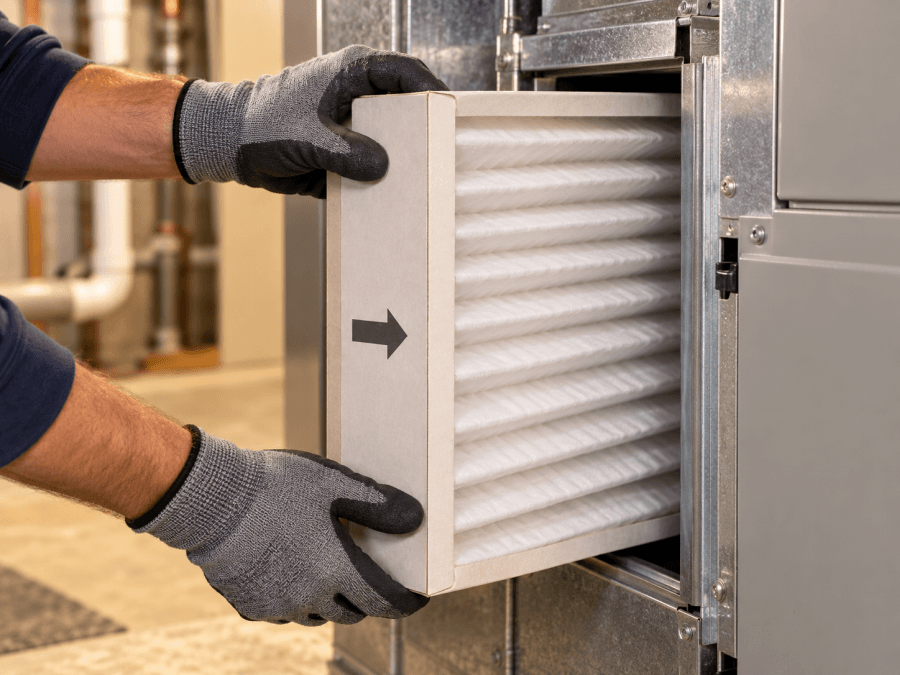
Finding your Carrier filter size is quick: read the size or part number printed on your old filter. Carrier furnaces take either a 1-inch filter behind a return grille or a thicker media cabinet filter. Those cabinets usually take 16x25, 20x25, or 24x25 5-inch air filters.
Common Carrier part numbers are FILXXCAR-0016 (16x25), FILXXCAR-0020 (20x25), and FILXXCAR-0024 (24x25). Filterbuy makes a 16x25x5 filter for Carrier cabinets, a 20x25x5 filter for Carrier cabinets, and a 24x25x5 filter for Carrier cabinets.
The size on the label is the ordering name. The actual filter is cut slightly smaller by design, and that clearance is what lets it slide into the cabinet. Filterbuy's 16x25x5 for Carrier cabinets measures 15.75 x 24.75 x 4.38 inches. Filterbuy filters are cut, pleated, and framed to order in our own US plants. Size not listed? Custom air filters are cut to the eighth of an inch.
MERV (Minimum Efficiency Reporting Value) rates how well a filter captures airborne particles. MERV 8 air filters capture 90% of airborne particles and are the standard choice for most homes. MERV 11 air filters capture 95% of airborne particles and suit allergy sufferers and homes with pets. MERV 13 air filters capture 98% of airborne particles. It's our pick for smoke season.
The EPA guidance on MERV ratings recommends at least MERV 13 when you upgrade. As with size, check your Carrier manual to confirm the MERV ratings your system supports. Filterbuy's MERV 8 vs MERV 11 vs MERV 13 guide compares all three.
Replace 1-inch filters every 30 to 90 days. Thicker media filters last longer, so check them every few months: hold the filter up to a light, and if light doesn't pass through the pleats, replace it. Our furnace filter replacement guide covers other signs, and a Filterbuy air filter subscription ships your size on schedule with fast and free 2-day delivery to most US states.
How We Researched This Guide
We checked the model specs and warranty terms in this guide against Carrier's product pages on October 27, 2026. Filter sizes and dimensions come from Filterbuy's Carrier-compatible filter line. Filterbuy isn't affiliated with or endorsed by Carrier.
Supporting Statistics
$640: EIA's forecast average gas heating bill for winter 2026–27, down 9%.
Our take: colder homes spend more, which shortens payback on a high-AFUE Carrier.
Source: Winter Fuels Outlook 2026–27
2,106,454: U.S. gas furnaces shipped January to August 2026, down 5.0% from 2025.
Our take: slower sales can give buyers leverage.
Source: AHRI Releases August 2026 U.S. Heating and Cooling Equipment Shipment Data
31%: share of 2021 non-fire consumer-product CO deaths linked to heating systems (63 of 204).
Our take: hire a licensed installer and put a CO alarm on every level.
Source: Non-Fire Carbon Monoxide Deaths Associated with the Use of Consumer Products, 2021 Annual Estimates
Frequently Asked Questions About Carrier Furnaces
Are Carrier Furnaces Good?
Yes. Carrier is a strong mid-to-premium brand, with 80% to 98.5% AFUE models and lifetime heat exchanger coverage on registered condensing units.
How Long Does A Carrier Furnace Last?
Carrier says a well-maintained gas furnace should last 15 years or more. See how long furnaces last.
Can I Install A Carrier Furnace Myself?
No. You'll need a licensed HVAC technician. Gas line work and venting carry carbon monoxide and fire risks, and most areas require a permit.
What Size Filter Does My Carrier Furnace Take?
Read the size printed on your old filter's frame. No filter in place? Measure the slot. Carrier media cabinets usually take 16x25x5, 20x25x5, or 24x25x5. See Filterbuy's furnace filter location guide and furnace filter size guide.
Is There A Federal Tax Credit For A Carrier Furnace In 2026?
No. The federal Section 25C credit covered furnaces installed through December 31, 2025, per the IRS energy efficient home improvement credit page. Our seasonal pricing and rebate guide covers utility rebates.
Find The Right Filter For Your Carrier Furnace
Read the size or part number on your Carrier filter cabinet, then shop Filterbuy's Carrier-compatible air filters in the MERV rating your system supports.
Glossary
AFUE: Annual Fuel Utilization Efficiency, the percentage of fuel a furnace converts into usable heat over a season.
Carrier Global: The U.S. HVAC manufacturer behind Carrier, Bryant, and Payne furnaces.
Condensing Furnace: A gas furnace rated 90% AFUE or higher that captures extra heat from exhaust gases.
Consumer Choice Warranty: Carrier's limited warranty offering registered owners parts-only or parts-plus-labor coverage.
ENERGY STAR: The EPA program certifying gas furnaces at 95% AFUE or higher (South) and 97% or higher (North).
Filterbuy: The US air filter manufacturer behind this guide, maker of Carrier-compatible MERV 8, 11, and 13 filters.
MERV: Minimum Efficiency Reporting Value, a 1 to 16 scale rating how well a filter captures airborne particles.
Modulating Furnace: A furnace that adjusts its flame in small steps to match heating demand.
Two-Stage Furnace: A furnace with low and high heat settings.