
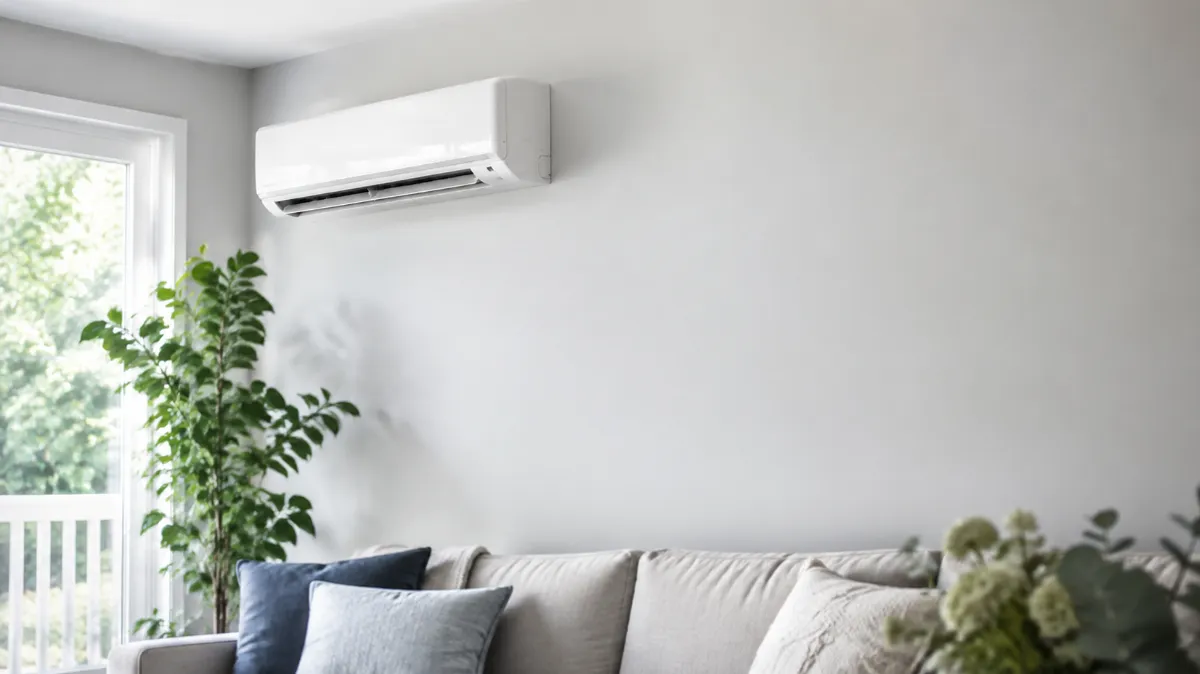
Pioneer Mini Split Review (2026): Budget Ductless Cooling Tested
Is A Pioneer Mini Split Worth Buying?
A Pioneer mini split is worth buying when a licensed contractor is already part of your plan and you want a specific efficiency rating for the price. Pioneer is not a self-install brand, and its 5-year parts and compressor coverage only applies if you register the system on time. Pioneer states that deadline three different ways, from 14 days after installation to 90 days after delivery, so file the week it goes in.
Here is how the three brands in this market differ.
- Pioneer rates 17 to 23 SEER2 depending on the Diamante series, needs professional installation, and covers parts and compressor 5 years after you register. Sizes run 9,000 to 36,000 BTU.
- MRCOOL DIY rates 19 to 20 SEER2, is designed for self-installation, and covers the compressor for life with no registration step. Sizes run 9,000 to 36,000 BTU.
- Filterbuy rates 17 SEER2, needs professional installation, and covers the compressor 7 years and parts 3 years with no registration step. WiFi, Alexa, and refrigerant leak detection are built in. Sizes are 12,000, 18,000, and 24,000 BTU.
Filterbuy makes its own ductless mini splits, so we compete with the brands compared here. Every point where Pioneer or MRCOOL beats our equipment is marked.

Not sure which size fits your room? Answer a few quick questions and we will match you to a mini split.
Prefer to browse first? Compare the 12,000, 18,000, and 24,000 BTU systems side by side.
By Michelle Wan, Brand Manager, Filterbuy. Reviewed by David Clark, Licensed HVAC Technician. Updated August 2026.
Disclosure: Filterbuy makes its own ductless mini splits, so we compete with the brands reviewed here. We have marked every point where Pioneer or MRCOOL beats our equipment.
TL;DR
Pioneer builds some of the lowest-priced ductless mini splits in the United States, and its Diamante series reaches 23 SEER2, the highest of the three brands here. The catch is installation: Pioneer needs a licensed technician, like Filterbuy and unlike MRCOOL. Register the warranty the week it goes in, and plan filtration separately.
Key Takeaways
Pioneer rates 17 to 23 SEER2, the highest here, but the rating depends on which Diamante series you buy.
Registration converts 1 year of parts coverage into 5 years on parts and compressor. Pioneer publishes conflicting deadlines, so file the week it goes in.
Filterbuy covers the compressor 7 years with no registration step, and includes WiFi, Alexa, and leak detection.
No mini split cleans your air, including Filterbuy’s. The EPA states ductless filters protect equipment, not lungs.
What We Found That the Spec Sheets Do Not Show
We built this review from primary documents rather than other reviews: warranty policies, AHRI and EPA guidance, and federal installation research. That produced three findings we have not seen stated together anywhere else.
1. Pioneer publishes three different registration deadlines. The help center says 90 days from delivery, the registration page 14 days from installation, the warranty form one week. The gap between them is five years of coverage versus one.
2. The installer matters more than the SEER2 rating. Moving from 17 to 23 SEER2 cuts cooling energy 26.1 percent; NIST measured that installation faults add roughly 30 percent. The penalty exceeds the entire efficiency spread here.
3. Ductless heads need a professional deep clean every one to three years. The Department of Energy documents dust and mold on the blower wheel of wall-hung units, caused by the same low-restriction mesh filter that makes ductless filtration weak. It applies to all three brands.
Is a Pioneer Mini Split Worth Buying?
A Pioneer mini split is a ductless heat pump made by Parker Davis HVAC International that competes on price rather than brand recognition. For a garage, sunroom, or addition it delivers efficiency numbers matching systems costing considerably more. It is the right buy when a licensed contractor is already in your plan.
Three brands dominate this market. Pioneer sells the highest efficiency rating, MRCOOL the only genuine self-install, and Filterbuy the longest compressor coverage.
How Efficient Are Pioneer Mini Splits?
Pioneer’s Diamante series rates between 17 and 23 SEER2 depending on model, competitive with mainstream ductless heat pumps and well above older central air conditioning. Efficiency varies more by series than by brand, so the model matters more than the badge, as the Diamante Pro specification sheet shows.
TABLE 1: Pioneer Diamante efficiency by series
SEER2 shown in green meets high-efficiency territory; amber marks standard efficiency. Figures are manufacturer-published specifications for representative 2026 models and vary by capacity and voltage.
That spread is itself a brand difference. Pioneer swings 17 to 23 by series, while Filterbuy rates every size at 17 and MRCOOL sits at 19 to 20. With Pioneer, picking the wrong series is how buyers pay for a reputation they did not get.
Check the refrigerant before buying. Diamante Pro ships with R-454B and Essenza with R-32, both replacing R-410A, so a steep discount often signals older inventory.
What Is the SEER2 Difference Actually Worth?
Moving from 17 to 23 SEER2 cuts cooling energy about 26 percent for the same output, because energy use scales inversely with the rating. That is the real gap between the least and most efficient systems here.
Filterbuy estimates $51 to $72 monthly for a 24,000 BTU 17 SEER2 system at eight hours daily and $0.15 per kWh. Applying the 26 percent reduction:
Monthly cooling saving at 23 SEER2: roughly $13 to $19
Across a five-month cooling season: roughly $67 to $94 per year
Treat the dollars as illustration; the percentage holds at any size. Set against NIST’s roughly 30 percent installation penalty, the contractor moves your bill more than the badge does.
Are Pioneer Mini Splits DIY-Installable?
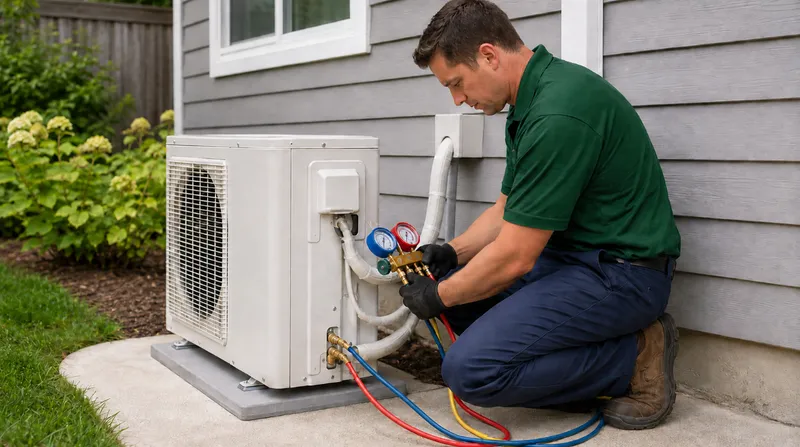
No. Pioneer is not a do-it-yourself brand the way MRCOOL DIY systems are. Installation requires flaring copper line sets, pulling a deep vacuum, and pressure testing, which means a licensed technician and a labor bill the sticker price excludes. This is where budget shoppers get caught out.
Pioneer’s installation guidance limits self-installation to mounting the units. What that means for a budget:
Tooling if you attempt it: vacuum pump, gauges, flaring tools, $500–$1,000.
Contractor installation: $1,500–$5,000. See what installation actually costs.
Equipment savings versus pre-charged brands: $200–$500, which labor or tooling erases.
Filterbuy carries the same restriction and voids the warranty if self-installed. MRCOOL DIY is the only different one.
Pioneer vs. MRCOOL vs. Filterbuy: Which Should You Buy?
Choose MRCOOL to install it yourself, Pioneer for the highest efficiency rating per dollar, and Filterbuy for the longest compressor coverage without a registration deadline. All three target different buyers, and the deciding factor is rarely the headline SEER2 number.
TABLE 2: Pioneer vs. MRCOOL DIY vs. Filterbuy
Disclosure: Filterbuy sells its own ductless mini split systems and is a competitor to the brands reviewed here. Green marks the strongest option in each row, including rows where Filterbuy is not the winner. Pioneer states its registration deadline inconsistently across its retail and manufacturer sites, from 14 days after installation to 90 days after delivery. Specifications verified August 2026.
A contractor who installs both frames it plainly: the Pioneer unit is reliable, just less feature-rich. You are not buying a worse machine. You are buying one that assumes a professional is standing in front of it.
Buy Pioneer if you need capacity or efficiency outside 12,000 to 24,000 BTU, or heat in a cold climate; it spans 9,000 to 36,000 BTU with multi-zone options. Buy MRCOOL to self-install. Buy Filterbuy for a mid-size room if seven years of compressor coverage beats a higher efficiency label.
How Does the Filterbuy Mini Split Compare?
The Filterbuy ductless mini split is a 17 SEER2 inverter heat pump built around ownership costs rather than headline efficiency. The 24,000 BTU system pairs a 7-year compressor warranty with no registration deadline, built-in WiFi and Alexa, and leak detection Pioneer does not publish. It loses on peak efficiency, cold-climate range, and size selection. Filterbuy HVAC Solutions performs ductless installation in Florida and Texas.
How Loud Is a Pioneer Mini Split?
Indoor noise on inverter-driven ductless heads is low, because the compressor sits outside and the fan runs at partial speed most of the time. Expect roughly 29 to 45 decibels indoors depending on fan speed, and 52 to 55 at the condenser. Pioneer markets low noise across the Diamante series but publishes no decibel figure.
Those figures come from Filterbuy, since Pioneer lists none. A window unit runs 50 to 70 dB. Heads are quietest holding temperature, loudest at startup and winter defrost. Condenser placement affects perceived noise more than the indoor rating, and that is decided on install day.
Do Pioneer Mini Splits Clean Your Air?
No. The washable mesh filter inside a ductless head is a screen that protects the equipment, not an air-quality filter. The EPA states in its guidance on ductless heat pumps and fine particles that these filters keep large debris off the coil rather than remove fine particles from the air you breathe. Whole-home filtration stays a separate purchase.
Where a manufacturer claims higher-efficiency filtration, the EPA advises verifying a MERV 13 rating. A head also filters only its own room, only while running. This applies to every brand here, Filterbuy included.
With central HVAC: a MERV 13 pleated filter, changed on schedule, does the particulate work.
Fully ductless: you have none by default. Use portable air cleaners sized per room, per the EPA’s guide to air cleaners.
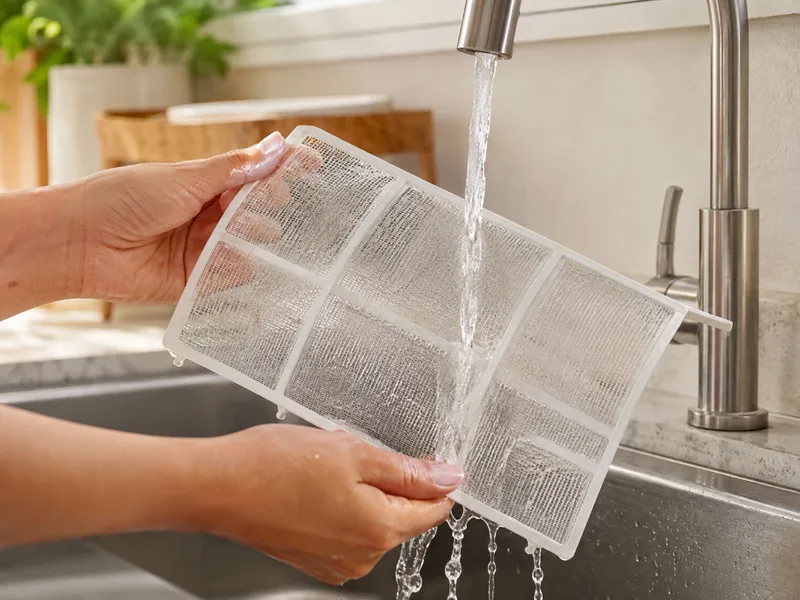
Either way: wash the mesh filter every two to four weeks. A clogged screen costs efficiency and compressor life.
Do not force a pleated MERV filter into a head not designed for one; the restriction causes coil icing and blower wear. Check which MERV rating your system handles and how mini splits affect indoor air quality.
How Long Do Pioneer Mini Splits Last, and What Is Covered?
Pioneer covers parts and the compressor for 5 years, but only for buyers who register, and only when installed to the manual. Skip registration and coverage falls to 1 year of parts. That one step is worth four extra years, the highest-value ten minutes a Pioneer buyer spends.
Under Pioneer’s Limited Warranty Policy the deadline appears three ways, so treat the earliest as binding. Three things to do the week it goes in:
Register immediately. Filing that week satisfies all three deadlines.
Keep the installer’s documentation: vacuum readings, pressure test, line set length. This is your evidence if a claim is contested.
Note the refrigerant on the data plate. R-454B and R-32 need a technician equipped for them.
What Should You Ask an Installer Before Signing?
Because installation quality outweighs the efficiency rating, these seven questions are worth more than any spec comparison. Each has a right answer drawn from federal guidance or manufacturer documentation. A contractor who cannot produce them is telling you something useful.
Will you run an ACCA Manual J load calculation, and can I see it?
What is the AHRI reference number for this pairing? Unmatched pairings carry no certified rating.
Which EPA Section 608 certification do you hold? A mini split needs Type II or Universal.
What micron reading did the vacuum test finish at? Below 500 and holding.
Did you torque the flare nuts to specification? Flares are where ductless systems most often fail.
How long is my line set? Both ship pre-charged to 25 feet; longer runs need refrigerant added.
Who files the warranty registration, and when? On a Pioneer this is the difference between one year and five.
Ask all seven of a shortlist. Our guide to finding a qualified installer covers vetting licenses.
Supporting Statistics
Three federal datasets back the main arguments here: installation outweighs the spec sheet, heating and cooling is where household energy goes, and filtration needs its own plan. Each figure comes from U.S. government research rather than an industry estimate.
Essential Resources
Seven primary sources cover what this review cannot: verifying an efficiency claim, sizing the system, vetting the installer, and protecting the warranty.
1. AHRI Directory of Certified Product Performance
https://www.ahrinet.org/certification/ahri-directory
Check manufacturer SEER2 claims against third-party testing. Ratings certify matched pairings only.
2. Building America Solution Center: Ductless Heat Pumps
https://basc.pnnl.gov/resource-guides/ductless-mini-split-heat-pumps
DOE guidance on zone layout, head placement, and cold-climate sizing.
3. Building America Code Compliance Brief
https://basc.pnnl.gov/code-compliance/ductless-mini-split-heat-pumps-code-compliance-brief
Code requirements: Manual J load calculation, Manual S equipment selection.
4. EPA Section 608 Technician Certification
https://www.epa.gov/section608/section-608-technician-certification
Required to open a refrigerant circuit. Ask your installer to produce it.
5. Parker Davis Product Registration
https://www.pdhvac.com/support/warranty/product-registration/
The highest-value link for a Pioneer buyer. Tightest deadline: 14 days from installation.
6. Parker Davis Document Library: Pioneer manuals
https://www.pdhvac.com/support/document-library/
Manuals, wiring diagrams, and specification sheets.
7. DSIRE: State and utility incentives
The federal 25C credit expired after December 31, 2025. State and utility rebates remain and often stack.
1. Improper installation raises household heating and cooling energy use by roughly 30%.
Three-year controlled study of seven common installation faults on a heat pump.
Leaky ducts dominated, then undercharge and restricted airflow.
In most field surveys, the majority of equipment underperformed its rating.
Source: NIST, Technical Note 1848, November 2014; page updated February 2025
2. Space heating and air conditioning account for 52% of annual household energy use.
Space heating and air conditioning: 52%
Water heating, lighting, refrigeration: 25%
Everything else: 23%
Source: U.S. Energy Information Administration, Residential Energy Consumption Survey 2020
3. Americans spend about 90% of their time indoors, where some pollutants run 2 to 5 times higher than outdoors.
Concentrations of some pollutants reach 2 to 5 times outdoor levels.
Levels have risen partly because tighter construction without adequate ventilation cuts air exchange.
Source: U.S. EPA, Report on the Environment: Indoor Air Quality, updated May 2026
Frequently Asked Questions
Glossary
SEER2: The federal cooling-efficiency metric. Higher numbers mean less electricity for the same cooling output.
MERV: The 1 to 16 scale for filter particle capture. The EPA treats MERV 13 as high-efficiency.
Flare connection: A refrigerant joint formed by flaring copper tubing, requiring vacuum evacuation and pressure testing.
R-454B and R-32: Lower-global-warming-potential refrigerants replacing R-410A in new residential heat pumps.
EPA Section 608: The federal certification required to handle refrigerants in stationary air conditioning equipment.
Comparing systems in this range? See the Filterbuy mini split lineup. Already own one? Set up filter auto-delivery.