
Pittsburgh, PA Live Wildfire Smoke Map
Get Alerts For Wildfires In Your Area
The moment a wildfire starts near you, you'll get an instant alert and simple tips to reduce your smoke exposure.
What's In The Smoke
30xSmaller than a human hair
Fine enough to reach deep into the lungs. A MERV 13 is built to capture it.
How Far It Travels


It Doesn't Stay Local
Smoke rides the wind far downwind — you can get smoky air with no fire nearby.
What To Do During A Smoke Event
Simple steps to reduce indoor exposure.
- Stay In, Close UpShut windows and doors to keep smoke out.
- Set Fan To "On"Keeps air cycling through your filter, not just when heating or cooling.
- Recirculate AirSwitch off fresh-air intake so you're not pulling smoke in.
- Run A MERV 13Built to capture the fine PM2.5 in smoke.
- Add A PurifierExtra filtration for the room you use most.
- Wear an N95 if OutsideFits snug to block fine particles — a cloth mask won't.


The Best Air Filter For Wildfire Smoke
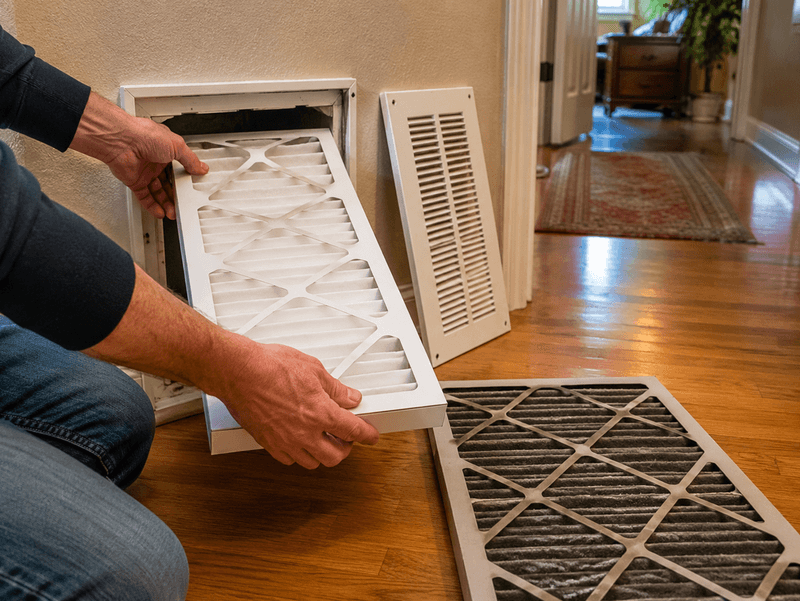
During smoke events, the EPA recommends upgrading to a MERV 13 filter — or the highest-rated filter your system can handle — to help reduce the fine particles smoke brings indoors. MERV 13 is the level most home HVAC systems can run while still capturing PM2.5, the fine particulate that makes up the bulk of wildfire smoke.
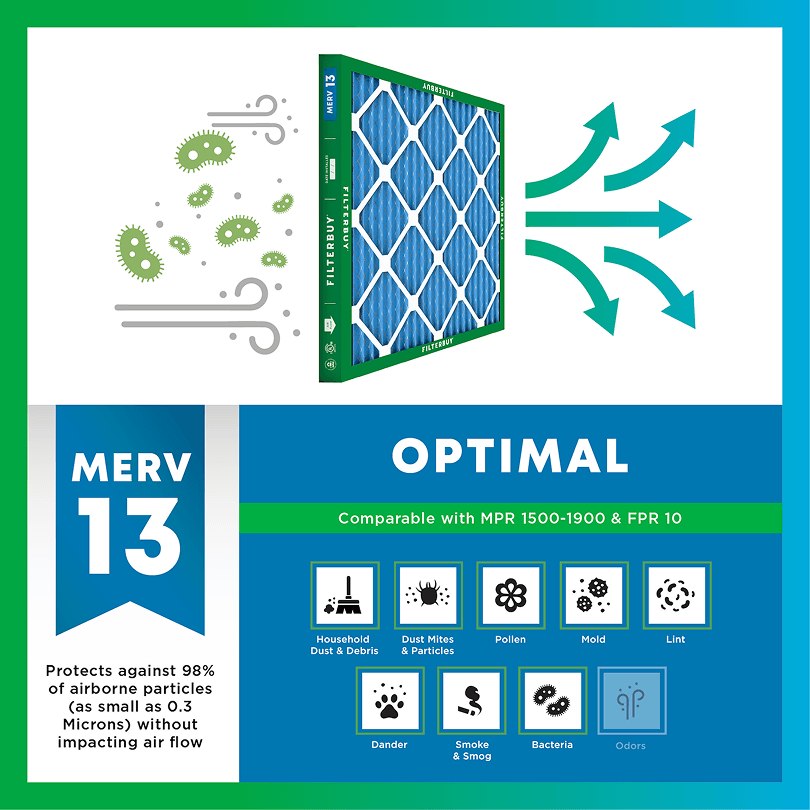
- Captures PM2.5 particles
- Blocks ash, soot, and smoke odor
- Keeps your indoor air safe—even when the outdoor air is dangerous
- Meets the EPA's recommended rating for filtering fine wildfire smoke particles.

Wildfire Smoke FAQs
Facts About Wildfires
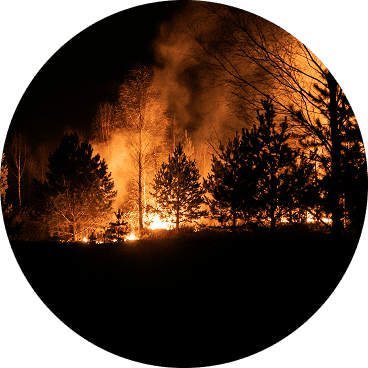
Over 70,000 wildfires burn in the U.S. every year.
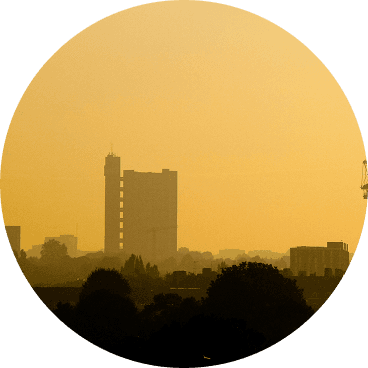
Wildfire smoke can travel 1,000+ miles, affecting states that aren't even near the blaze.
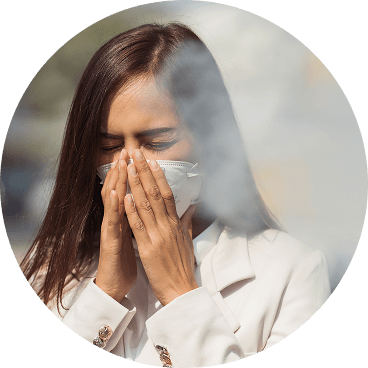
Exposure to wildfire smoke can worsen asthma, trigger heart issues, and lead to ER visits.
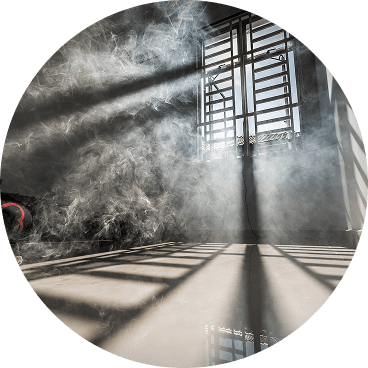
Indoor air can hold more fine particles during wildfire events unless it's properly filtered.
The EPA advises using MERV 13 filters or portable HEPA air cleaners during wildfire smoke events.
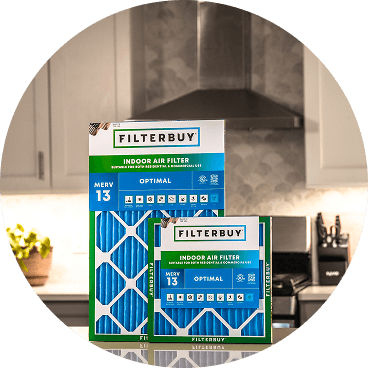
Don't Wait Until The Smoke's Inside.
Use the live wildfire smoke tracker and upgrade your air filters today to protect your lungs and your home.
Shop Filters For Smoke Protection
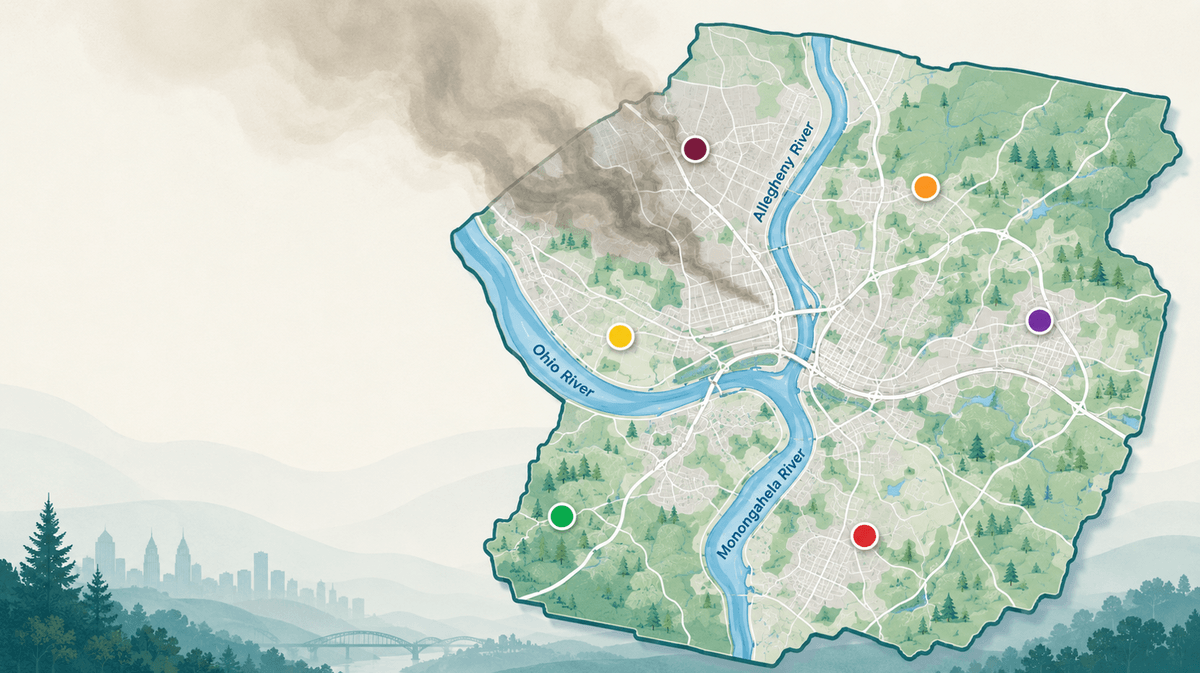
Live Pittsburgh, PA Forest Wildfire & Smoke Map Today: Local Air Quality Tracking & Indoor Protection Solutions from Filterbuy.com's Air Obsessed Experts
By Michelle Wan, Brand Manager & Air Quality Writer, Filterbuy · HVAC and filtration guidance reviewed by David Clark, Licensed HVAC Technician
Published August 2, 2026 · Updated August 2, 2026
The map below shows current wildfire smoke and fine particles across Pittsburgh. It also answers what a national map cannot: whether that orange dot is Canadian smoke or a Mon Valley inversion. The two look identical and clear on different timelines. Filterbuy builds air filters in Pennsylvania, so the rest of this page covers the part you control: the air inside your house.
TL;DR
The map above tracks wildfire smoke and PM2.5 across Pittsburgh and Allegheny County, updated hourly from EPA-connected monitors. If your ZIP code reads orange (AQI 101) or higher, close your windows, switch your HVAC fan from Auto to On, and put a clean MERV 13 filter in the slot. Those three moves cut the smoke already inside your house.
Key Takeaways
AQI 101 is the threshold. At 101 and above, the EPA advises at-risk groups, including children and people with lung or heart conditions, to cut back on time outdoors.
The EPA recommends MERV 13 or higher during smoky periods, noting most systems run one without equipment problems if it is replaced frequently.
Shutting the windows only gets you halfway. EPA data puts indoor smoke at roughly 55–60% of outdoor levels once a house is closed up, which is why the filter does the rest of the work.
Smoke lands on an already-high baseline here, and July 16–17, 2026 showed the ceiling: Allegheny County issued a rare Code Maroon, the top of the AQI scale
How to Read the Pittsburgh Smoke Map Right Now
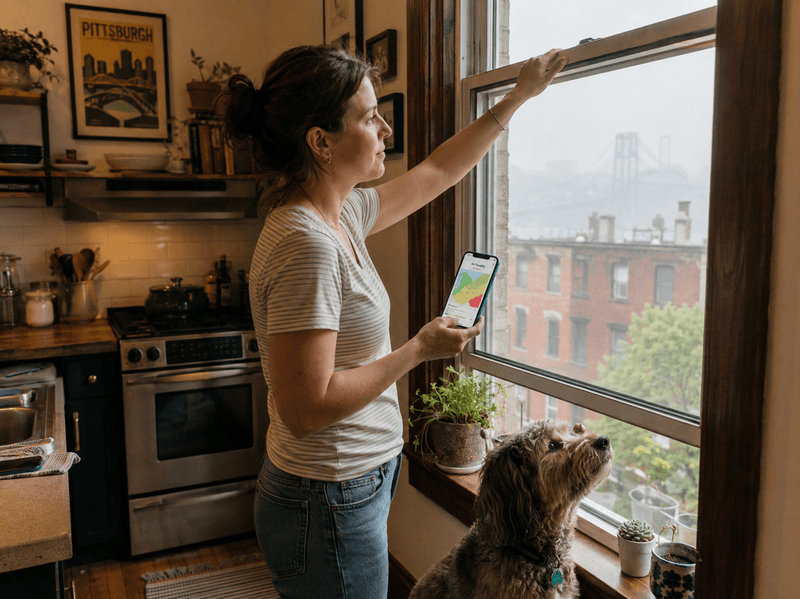
Find your neighborhood and read the color of the nearest monitor. That color is the current PM2.5 reading on the EPA's Air Quality Index, the same six-category scale ACHD uses for its alerts. Fire icons mark active burns; the shaded overlay shows smoke detected aloft by satellite, which may not match what you breathe at street level.
Table 1 — AQI levels and what they mean in Pittsburgh
Page section: How to read the Pittsburgh smoke map right now
Source: U.S. EPA Air Quality Index. Allegheny County Health Department issues Code alerts on the same six-category scale.
Check more than one monitor. ACHD's sites are not interchangeable. EPA's network assessment found that Liberty, in the Mon Valley, correlates least with every other site in southwestern Pennsylvania. Liberty is the site that behaves differently from the rest of the network. South Fayette and North Park read incoming background air, Parkway East is the near-road site, and Lawrenceville is the primary urban station.
That gives you a diagnostic no national map offers. When the whole network climbs together, it is regional smoke. When Liberty separates from the rest, the problem is local and will clear on the valley's schedule, not the weather's.
Is It Wildfire Smoke, or Is It the Valley?
Wildfire smoke appears as a broad regional wash of color arriving with the weather. Mon Valley pollution appears as a tight local cluster, worst in the still air of early morning. Both render as orange dots; the tell is the pattern, not the number.
This is where Filterbuy parts company with most smoke-map advice. A national map gives you a number. It cannot tell an Allegheny County household whether to plan for three hours or three days.
Terrain is why. Carnegie Mellon's Albert Presto, who directs its Center for Atmospheric Particle Studies, told Yale Environment 360 that stacks along the Monongahela do not clear the valley walls, and the valley is prone to inversions: cool air settles on the floor while warm air caps it like a lid.
Table 2 — Is it wildfire smoke, or is it the valley?
Page section: Is it wildfire smoke, or is it the valley?
Both sources render as orange dots on the live map. The pattern, not the number, tells them apart.
The indoor playbook is identical either way; the diagnosis changes your timeline. ACHD warns through Allegheny Alerts, and Smell PGH, a Carnegie Mellon app, maps resident odor reports.
What Happened Here on July 16–17, 2026
Allegheny County issued a rare Code Maroon as smoke from Canadian and northern Minnesota wildfires settled over western Pennsylvania; Pennsylvania issued its first statewide Code Purple the same week. Everyone was told to stay indoors, and Pittsburgh closed pools and cancelled outdoor programming.
Two lessons: forecasters flagged the smoke July 15, and it was hazardous by July 16, so a filter ordered on alert day arrives too late. Code Orange is no longer the worst case.
What to Do Indoors at Each AQI Level
Your indoor air, not the outdoor number, determines most of your exposure.
Table 3 — What to do indoors at each AQI level
Page section: What to do indoors at each AQI level
Guidance follows U.S. EPA recommendations for reducing indoor exposure during wildfire smoke events.
The filter is the part people get wrong. The EPA recommends MERV 13 or higher during smoky periods, noting most systems accommodate one without equipment problems provided it is replaced frequently. MERV 8 is built for dust and lint; smoke passes straight through.
Closing the house helps less than assumed. Per EPA, indoor PM2.5 lands at 55–60% of outdoor levels with windows shut and no air cleaner running; running the system continuously adds about 24% even with a low-efficiency filter. A MERV 13 closes that gap.
People assume shutting the windows is most of the job. It is the easy half. Once smoke is in the house, the only thing still working for you is whatever is sitting in the filter slot, and that is the part we can actually do something about.
Michelle Wan, Brand Manager, Filterbuy
Avoid single-hose portable air conditioners and swamp coolers while sealed up; both pull smoky air inside.
Check your system first. Older furnaces have weaker blowers and can struggle with a denser filter; your manual lists a maximum MERV rating. If yours caps out lower, a clean MERV 11 filter running continuously beats a MERV 13 your blower cannot handle.
The mistake I see most during a smoke event is someone jamming the highest-MERV filter they can find into a system that was never built to pull air through it. A clean MERV 11 that's actually moving air will out-filter a MERV 13 that's choking your blower, every time.
David Clark, Licensed HVAC Technician
Who Is Most at Risk in Allegheny County
The EPA and ACHD identify children and teens, adults over 65, pregnant people, and anyone with asthma, COPD, or heart disease as the groups that should treat Code Orange, not Code Red, as their threshold. Children breathe more air relative to body size, and their lungs are still developing. The American Lung Association counts 1,176,798 Pennsylvania children living with unhealthy air, and its 2026 report failed the Pittsburgh metro on all three measures, 11th worst nationally for short-term particle pollution.
Essential Resources: 7 Sources That Tell You What This Map Can't
Fires, plumes, and monitors on one map: AirNow Fire and Smoke Map (EPA/USFS).
The readings behind every Code alert: ACHD Air Quality monitor data. Trust these when maps disagree.
Why valley air turns bad without a fire: Mon Valley Episode Rule.
The filter rating the EPA recommends: EPA wildfire smoke and HVAC guidance.
Set up one room with cleaner air: EPA clean room instructions.
Build an air cleaner if you cannot buy one: EPA DIY box-fan designs.
Whether neighbors smell it too: Smell PGH, Carnegie Mellon's crowdsourced odor map.
Supporting Statistics
Asthma ER visits rose 17% on smoke days.
CDC recorded 17% more asthma-associated emergency visits than expected across 19 smoke days in 2023, the largest among ages 5–17 and 18–64. CDC counted a smoke day at AQI 101 or higher: the threshold this page tells you to act on. (CDC MMWR, 2023)
A MERV 13 alone let 55% of outdoor smoke inside.
In one instrumented home during the 2020 Pacific Northwest wildfires, a MERV 13 gave an indoor/outdoor PM2.5 ratio of 0.55; a portable air cleaner cut it to 0.22. Caveats: a single leaky 1928 house, and levels stayed above EPA's 24-hour threshold even with both. Filtration reduces exposure; it does not eliminate it. (NIH PMC, 2024)
Pennsylvania ranks fifth nationally for projected smoke deaths.
Stanford researchers model 1,600 additional annual deaths from wildfire smoke in Pennsylvania under a business-as-usual emissions scenario, behind only California, New York, Washington, and Texas. A projection, not an observed count, but it is why we treat smoke as recurring, not a 2026 anomaly. (Stanford, 2025)
Frequently Asked Questions
Track the Air Outside, Control the Air Inside
You cannot change what drifts in from Ontario, but you can change what your HVAC system does with it once it reaches Pittsburgh. Find your filter size, get a MERV 13 in the slot before the next Code Orange, and put it on auto-delivery so the spare is already in the closet.
Find your filter size → · Shop MERV 13 filters → · Set up auto-delivery →
About the Authors
Michelle Wan is Brand Manager and air quality writer at Filterbuy, working directly with its U.S. manufacturing teams in Alabama, Florida, Pennsylvania, and Utah.
David Clark is a Licensed HVAC Technician who reviewed the HVAC and filtration guidance on this page.
Related: Pittsburgh live AQI map · how to read a wildfire smoke map · MERV 13 vs HEPA · Pennsylvania AQI map
Glossary
AQI: The EPA's 0–500 daily air quality scale, driven by PM2.5 during smoke events.
PM2.5: Fine particles under 2.5 micrometers, about thirty times narrower than a human hair.
MERV / MERV 13: The ASHRAE 52.2 particle-capture scale (full MERV guide). MERV 13 is the EPA's wildfire-smoke recommendation.
Code Orange / Red / Purple / Maroon: ACHD and Pennsylvania DEP alert levels for AQI 101–150, 151–200, 201–300, and 301+.
Temperature inversion: Warm air above cooler surface air, trapping pollutants near the ground.
Subscribe to wildfire smoke alerts for Pittsburgh, PA, to get a heads-up before the next event reaches your area.