
Alexandria Real-Time AQI Tracker


Get Alerts For Unhealthy AQI In Your Area
When air quality in your area reaches unhealthy levels, we'll send you a quick alert, along with expert tips on how to reduce your exposure.
What's Actually In Alexandria Air Today?
What High AQI Means for Your Lungs in Alexandria
How to Read AQI
The Air Quality Index (AQI) measures how polluted the air is and how it may affect your health.
0–50 (Good): Air quality is satisfactory.
51–100 (Moderate): Acceptable, but some pollutants may pose minor concerns.
101–150 (Unhealthy for Sensitive Groups)
151–200 (Unhealthy)
201–300 (Very Unhealthy)
301+ (Hazardous)
Moderate
Still okay for most, but if you have asthma or allergies, take it easy and avoid long outdoor workouts.
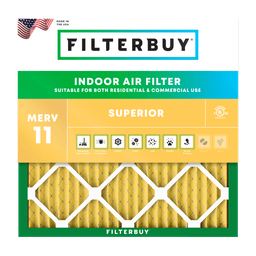
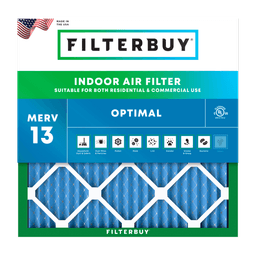
Shop MERV 11 filters→What's the Right Filter for Your AQI Level?



Check Today's Live Real Time Air Quality Index AQI Map in Alexandria, VA Now
By Michelle Wan, Brand Manager & Air Quality Writer at Filterbuy | Reviewed by David Clark, Licensed HVAC Technician | Published: August 18, 2026 | Updated: August 18, 2026
TL;DR
Alexandria, Virginia’s air quality is reported on the U.S. EPA Air Quality Index (AQI), where under 50 is Good and over 100 begins affecting sensitive groups. Use the live map above for the current reading, updated hourly. The number is usually driven by ground-level ozone on hot April-through-September afternoons, or by PM2.5 during wildfire smoke and winter wood smoke.
Key Takeaways
Alexandria has no regulatory ozone or PM2.5 monitor inside city limits. Its AQI is modeled from DEQ stations in Arlington and Fairfax. That is why two apps can disagree for the same ZIP code.
The only air monitor the City of Alexandria operates measures PM10, at Armistead Boothe Park in Cameron Station, and the city meets the National Ambient Air Quality Standard (NAAQS) for that pollutant.
The high-AQI season runs April through September, when ozone season overlaps the region’s hottest, stillest afternoons.
Alexandria runs Air Quality Action Days May 1 through September 30, with Code Red notice by 4 p.m. the prior day via EnviroFlash alerts.
The AQI only measures outdoor air. Past 100, what you breathe at home depends on your windows and filter.
What Is the Air Quality in Alexandria Today?
Alexandria’s current air quality appears on the live map above, updated hourly. The reading is almost always set by ground-level ozone in warm months, or by PM2.5 during smoke events.
The AQI reports your worst pollutant, not an average. If ozone is 88 and PM2.5 is 41, today’s AQI is 88. That is by design, in how the AQI is calculated. EPA sets the six official AQI categories behind the map colors.
One number worth knowing: in May 2024 the EPA tightened the PM2.5 breakpoints, dropping the top of the “Good” range from 12.0 to 9.0 micrograms per cubic meter. Articles still quoting 12.0 use a retired scale. A reading that was Green in 2023 can be Yellow today.
Why Alexandria’s AQI Looks Different on Different Apps
Alexandria does not have its own regulatory ozone or PM2.5 monitor. Our team at Filterbuy pulled Alexandria’s AQI from three services in the same hour and got three answers: 153, 58, and 54. Same ZIP code, same air. Virginia DEQ shut the city’s monitoring station at 3200 Colvin Street in May 2016, citing limited resources, as the City of Alexandria documents on its outdoor air quality page. Every “Alexandria AQI” is therefore interpolated from monitors outside the city, and providers weight them differently. That is the whole explanation, and almost no air quality page says so.
What feeds an Alexandria reading:
Source: Virginia DEQ air monitoring network; City of Alexandria Office of Environmental Quality.
How much does that matter? EPA’s latest attainment determination puts the 2021–2023 ozone design value at 0.067 ppm at both the Arlington and Fairfax monitors, against a 0.070 ppm standard. Alexandria’s number comes from instruments sitting just under the federal limit, so a hot week can push it across a line no in-city monitor measured.
How to Read a Number Your City Does Not Measure
Treat the AQI as reliable for the region and rough for your block. Three habits close the gap.
Pick the monitor that matches your side of town. Old Town, Del Ray, and Arlandria sit nearest Aurora Hills in Arlington. Cameron Station, Landmark, and the West End track Lee District Park in Fairfax.
Use the AirNow Fire and Smoke Map on smoke days. EPA and the U.S. Forest Service blend regulatory monitors with low-cost neighborhood sensors, corrected by an equation EPA built after testing PurpleAir units at 70-plus sites with 30-plus agency partners. Those sensors fill the gaps between monitors, which is exactly where Alexandria falls. Open the Fire and Smoke Map.
Know what those sensors cannot do. Most are privately owned, placement is unverified, and they overread smoke while underreading dust. A supplement, never a regulatory reading. For ozone, use the Virginia DEQ forecast or the Virginia statewide AQI map instead.
What Actually Drives Air Pollution in Alexandria
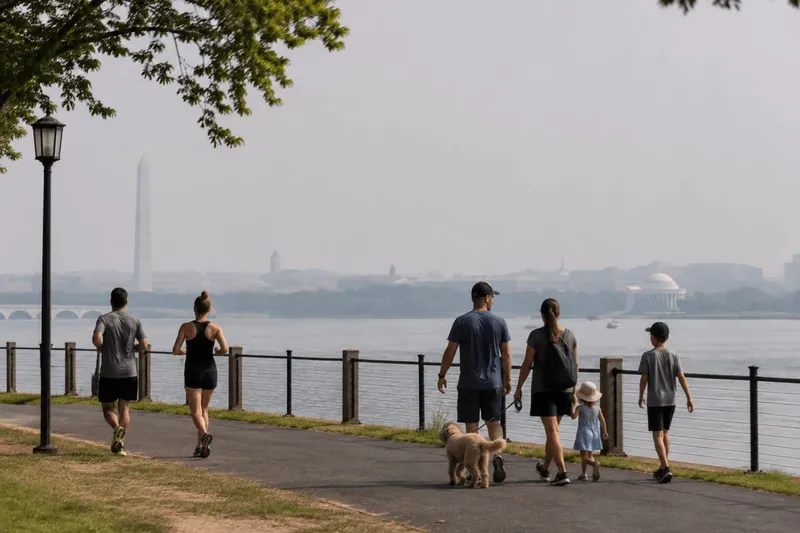
Ground-level ozone is Alexandria’s dominant warm-season pollutant. Ground-level ozone is not emitted directly. It forms when nitrogen oxides and VOCs from traffic, gas stations, and lawn equipment react in sunlight, peaking on hot, low-wind afternoons. Virginia’s ozone season runs April through September; an exceedance tops 70 ppb over 8 hours.
Alexandria sits in the DC-MD-VA ozone nonattainment area, classified Marginal in 2018 and Moderate in 2022, before EPA determined in April 2025 that the area had attained the standard on 2021–2023 data. It stays designated nonattainment until DC, Maryland, and Virginia request redesignation. Regional ozone is improving, not gone.
PM2.5 is the cold-weather and smoke-season pollutant. Fine particles come from wood stoves, diesel exhaust along I-95, I-395, and the Beltway, plus wildfire smoke that travels hundreds of miles into the Potomac basin. EPA notes that residential wood smoke can raise particle pollution to unhealthy levels.
Alexandria AQI Levels and What to Do at Each One
Alexandria’s AQI falls into six categories. Below 100 the air is acceptable for most residents. At 101 sensitive groups feel it first, and above 150 everyone should cut back outdoors. Most Alexandria summer days land in Moderate, driven by ozone.
AQI categories follow the U.S. EPA Air Quality Index. PM2.5 breakpoints were revised May 6, 2024.
The city asks residents to watch Code Alerts on its homepage or the Metropolitan Washington Council of Governments air quality forecast, which names Alexandria. On a Code Red day, the city tells residents to skip the drive-through, mow after dark, refuel at night, and take DASH or bike.
How to Protect Your Indoor Air When Alexandria’s AQI Climbs
The AQI measures outdoor air only. Indoors, your filter decides what your family breathes. That matters more here than most places. Old Town rowhouses, Del Ray bungalows, and Carlyle high-rises all pull outdoor air in through leaky envelopes and shared ventilation. At Filterbuy we have built filters in the U.S. for over a decade, and every smoke season the pattern repeats: households that check early act early.
Four steps, in order:
Close the windows when the AQI passes 100. Free, immediate, the biggest single cut in particle load.
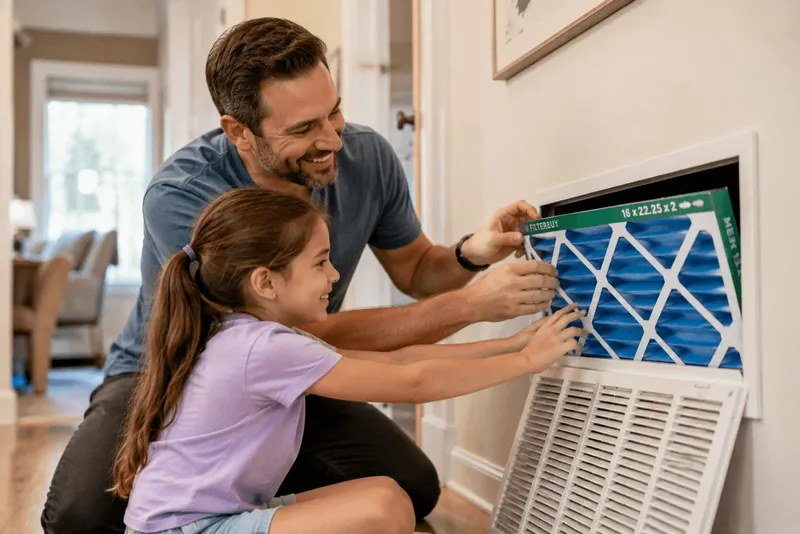
Run your HVAC fan continuously, not Auto. A filter only cleans air that moves through it. On a smoke day that makes your system a whole-home air cleaner.
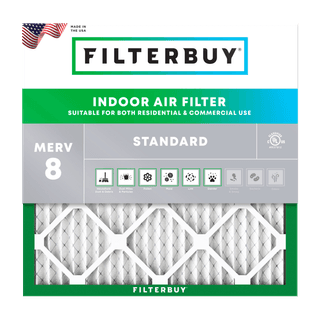
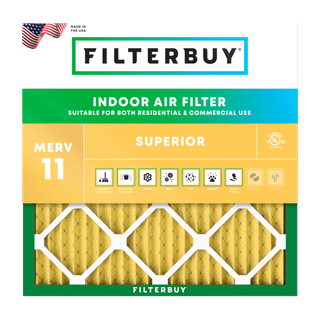
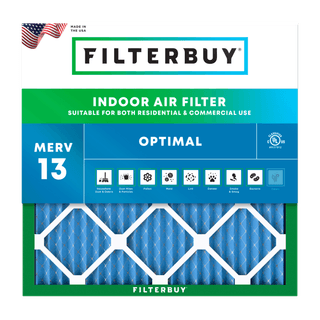
Match the filter to the threat. MERV 8 filters handle routine dust and pollen. MERV 11 filters add finer allergen capture for households with asthma. MERV 13 filters capture PM2.5, and EPA recommends MERV 13 on smoke days. Compare tiers in our guide to MERV ratings; confirm your blower handles the static pressure first.
Change it on schedule, especially in ozone and smoke season. A loaded filter restricts airflow and stops protecting you before it looks dirty. Measure your filter size so it seals without bypass, then set up auto-delivery.
The number on your phone describes the air outside your door. The moment that air comes indoors, the filter in your system decides how much of it your family breathes. In a city with no ozone monitor of its own, that is the decision you fully control.
The Filterbuy Team
Supporting Statistics
700,288 children in the Washington–Baltimore–Arlington metro breathe unhealthy air.
The region earns an F for ozone, 49th worst in the nation.
Grades reflect 2022–2024 data.
Alexandria sits inside it. Ozone drives the grade.
Americans spend about 90% of their time indoors.
Some pollutants run 2 to 5 times higher indoors.
The most vulnerable spend more time inside still: children, older adults, and anyone with heart or lung disease.
An outdoor AQI is only half your picture.
Source: U.S. EPA, Report on the Environment: Indoor Air Quality
A high-efficiency HVAC filter cuts indoor PM2.5 by about 50%.
That assumes the fan runs continuously.
A low-efficiency filter still cuts particles about 24% with the fan on.
Payoffs for steps 2 and 3 above.
Source: U.S. EPA, Wildfire Smoke and Your Patients’ Health (citing Fisk and Chan, 2017)
Frequently Asked Questions
Glossary
Air Quality Index (AQI): The U.S. EPA’s 0–500 scale turning pollutant concentrations into one color-coded number for outdoor air quality.
PM2.5 and PM10: Fine particles 2.5 micrometers or smaller, which reach deep into the lung. Coarse particles 10 micrometers or smaller cover dust, pollen, and construction, and are what Alexandria’s city monitor measures.
Ground-level ozone: A colorless gas formed when nitrogen oxides and VOCs react in sunlight. It is the main ingredient in smog and Alexandria’s dominant summer pollutant. An exceedance is a day a monitor’s 8-hour average tops 70 ppb.
NAAQS / nonattainment area: The health-based pollutant limits EPA sets under the Clean Air Act. A nonattainment area exceeds one; Alexandria is in the DC-MD-VA ozone area.
Air Quality Action Day: A voluntary Clean Air Partners program, May 1 to September 30, alerting residents to unhealthy air.
MERV: Minimum Efficiency Reporting Value, the 1–16 scale rating how well a filter captures airborne particles. MERV 13 is the threshold for PM2.5 capture.