
Provo Real-Time AQI Tracker

Get Alerts For Unhealthy AQI In Your Area
When air quality in your area reaches unhealthy levels, we'll send you a quick alert, along with expert tips on how to reduce your exposure.
What's Actually In Provo Air Today?
What High AQI Means for Your Lungs in Provo
How to Read AQI
The Air Quality Index (AQI) measures how polluted the air is and how it may affect your health.
0–50 (Good): Air quality is satisfactory.
51–100 (Moderate): Acceptable, but some pollutants may pose minor concerns.
101–150 (Unhealthy for Sensitive Groups)
151–200 (Unhealthy)
201–300 (Very Unhealthy)
301+ (Hazardous)
Moderate
Still okay for most, but if you have asthma or allergies, take it easy and avoid long outdoor workouts.
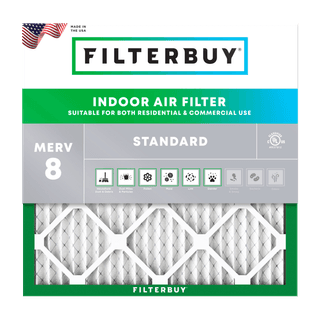
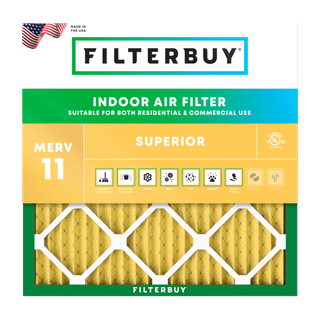
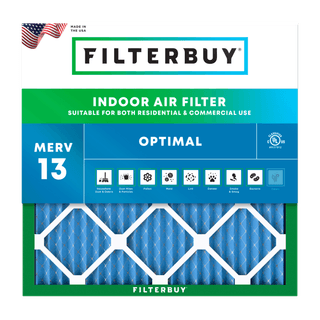
Shop MERV 11 filters→What's the Right Filter for Your AQI Level?


Check Today's Live Real Time Air Quality Index AQI Map in Provo, UT Now
TL;DR
The live map above shows Provo's air quality today in real time: the current Air Quality Index (AQI) and its leading pollutant. Provo's air turns bad mostly in winter, when inversions trap fine particles (PM2.5), and in summer, when ozone and wildfire smoke build. At AQI 100 and above, Filterbuy recommends a MERV 13 furnace filter, the thermostat fan set to On, and a portable HEPA air cleaner in each occupied room.
Key Takeaways
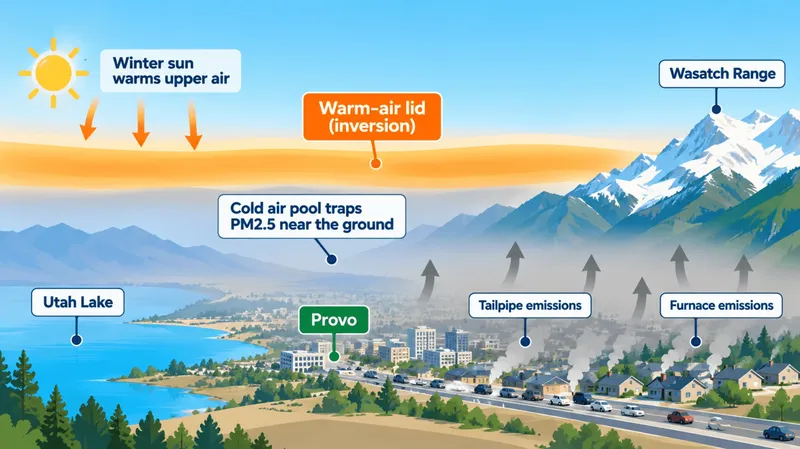
Winter inversions are Provo's signature air problem: cold air pools between the Wasatch Range and Utah Lake, trapping PM2.5 for days.
Ammonium nitrate, formed from combustion emissions, makes up as much as 70% of northern Utah's inversion PM2.5, per NOAA.
Filterbuy's action line is AQI 100: MERV 13 in the HVAC, fan On, a portable HEPA air cleaner in each occupied room, and the house closed up.
How to Read the Provo AQI Map Above
On the Provo air quality map, the number and color place Provo on the 0–500 AQI scale, with the leading pollutant and update time below. Compare it with Filterbuy's live Utah AQI map or Salt Lake City air quality page.
What Each AQI Range Means for Your Day in Provo
Categories and health actions follow EPA AirNow AQI guidance.
Filterbuy's Action Line: What to Do at AQI 100 and Above
Filterbuy tells customers to act at AQI 100, the top of the yellow Moderate range, rather than waiting for orange. That threshold is our own rule, not an EPA category. While the map reads yellow, get a MERV 13 in and a spare on hand. At 100 and above:
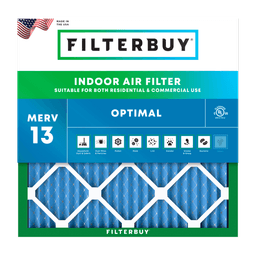
Put MERV 13 in the HVAC. It treats the whole house. EPA recommends a filter rated MERV 13 or higher for wildfire smoke.
Set the thermostat fan to On. On Auto, the system filters only while it heats or cools.
Run a portable HEPA air cleaner in each occupied room, bedrooms first. It treats that room harder than the central system can. This is Filterbuy's rule; EPA's clean-room guidance covers one room.
Close up the house. Keep windows and doors shut, and skip candles, frying, smoking, and vacuuming without a sealed unit.
At red (151–200), hold these steps, inspect the filter more often, and keep replacements on hand. At purple (201–300) and maroon (301+), follow AirNow and Utah County Health Department guidance first; filtration is only one layer.
Why Provo's AQI Can Look Delayed or Off
The official number often lags what you see. AirNow's NowCast averages recent hours, so a sudden plume or clearing storm registers slowly. The Utah County forecast also relies on the Utah Division of Air Quality (DAQ) station in Lindon, several miles north.
Is It Safe to Be Outside in Provo Today?
It depends on Provo's air pollution today, shown by the map's color. At orange, children, older adults, pregnant people, and anyone with heart or lung disease should scale back, and people with those conditions should follow their doctor's advice.
Where to Find Provo's Air Quality Forecast and Alerts
DAQ posts a three-day forecast for Utah County and alerts through its free UtahAir app. For a 7-day view, Filterbuy checks the National Weather Service Clearing Index, which forecasts how well valley air will mix. Click Provo on its map:
Below 500: Poor ventilation. Pollution will build; check your filter.
Above 1,000: Excellent mixing, often from a storm or cold front.
What's Actually in Provo's Air?
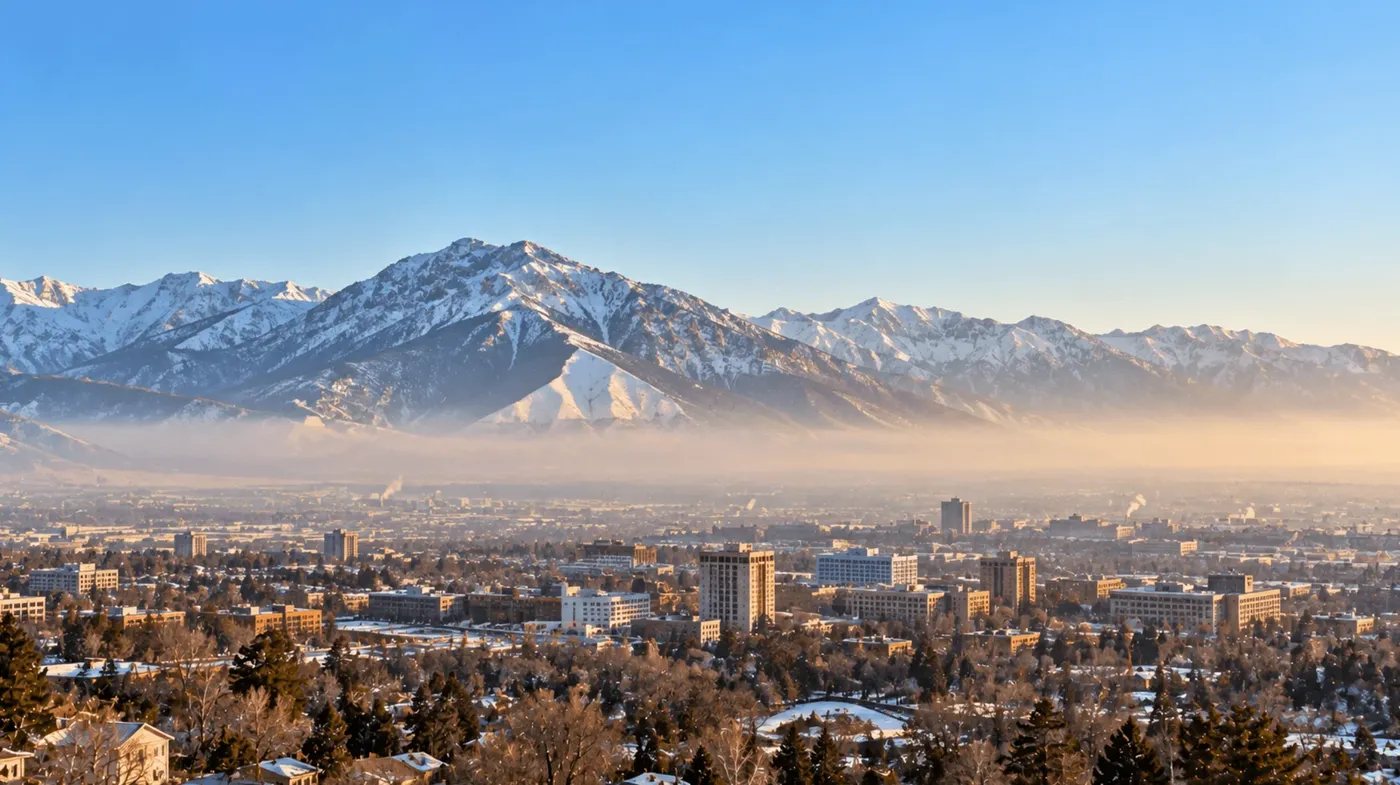
Winter PM2.5. Provo sits in a basin between the Wasatch Range and Utah Lake. On calm winter days, warm air settles over the colder valley like a lid, and trapped emissions react to form ammonium nitrate, which NOAA research found makes up as much as 70% of PM2.5 during northern Utah inversions. DAQ reports that a typical Utah winter brings five to six of these episodes. Still, in November 2025 the EPA redesignated the Provo area as meeting the 24-hour PM2.5 standard after 15 years of nonattainment.
Summer ozone. Summer brings ozone, formed when strong sun bakes traffic and industrial emissions. The American Lung Association's 2026 "State of the Air" report ranks the Salt Lake City-Provo-Orem metro 13th worst in the nation for ozone, though DAQ says the Utah County nonattainment area met the standard by 2021.
The two pollutants behave differently, so the Filterbuy team handles them differently:
Utah Valley also shaped particle research. A 1989 study by Brigham Young University (BYU) economist C. Arden Pope III found children's respiratory admissions ran two to three times higher in winters when the Geneva Steel mill operated, work BYU Magazine credits with changing how regulators view particles.
Wildfire Smoke: Provo's Late-Summer Wildcard
In September 2018, the Pole Creek and Bald Mountain fires sent smoke across BYU's campus. Fire season runs from summer into fall, so get a MERV 13 in before smoke arrives. When it does, check the AirNow Fire and Smoke Map and local health guidance first, then take the four AQI 100 steps above. Filterbuy's live Utah wildfire smoke map tracks active fires. Outdoors in heavy smoke, pediatric health experts recommend a NIOSH-approved N95; cloth masks don't stop smoke particles.
What a Utah DAQ Action Alert Means for Your Household
From November 1 through March 1, DAQ posts a daily burn alert for Utah County. Unrestricted allows careful burning; Voluntary Action asks you to skip the fireplace. Mandatory Action bans wood, pellet, and coal burning unless the device is registered as the home's only heat source, and DAQ enforces it with fines. At Filterbuy, a Mandatory alert is our cue to close windows and check the filter.
No Central Air? Tips for Provo Apartments and Swamp-Cooled Homes
Renters who can't change the building's filter, and homes with swamp coolers or window units, have no whole-home layer. For them, portable HEPA air cleaners are the primary defense. EPA advises a smoke CADR of at least two-thirds the room's square footage, so a 300-square-foot bedroom needs a smoke CADR of about 200. Choose a CARB-certified model and skip ionizers and ozone generators; EPA advises against ozone-producing cleaners. Turn off swamp coolers during smoke; they pull in outdoor air.
If a certified unit isn't available or affordable, a DIY box-fan cleaner with a MERV 13 filter is a reasonable stopgap. EPA's conditions: use a box fan built in 2012 or later with a UL or ETL mark, and never leave an older fan running unattended.
Our Take: What Making Filters in Utah Has Taught Us
Inversion PM2.5 slips indoors and, unlike ozone, doesn't break down there, so the furnace filter and portable air cleaners do the indoor work. Filterbuy has built filters in the U.S. since 2013 and now makes them in Utah. Three lessons from our production lines shape this page's advice:
Fit beats rating. The failure we see most is bypass: a filter that flexes in its track lets air slip around the edge. Order the size printed on your old filter's frame.
Smoke loads filters fast. In Utah's 2025 fire season, customers sent us photos of MERV 13 filters gone near-black well before their usual change date.
A loaded filter hides its damage.
In the field, the filter rarely gets blamed for the thing it actually caused. A frozen coil or a blower running long gets written up as a refrigerant or thermostat problem, when the real cause was a loaded filter nobody changed.
David Clark, Licensed HVAC Technician, Filterbuy HVAC Solutions
Supporting Statistics
782,846 Utah children breathe unhealthy air.
Why it matters: Kids breathe more air for their size, so trim their outdoor time on orange days.
Northern Utah valleys average 18 winter days above the federal PM2.5 standard, per DEQ's winter particulate study.
Home HVAC systems run under 25% of the time in heating and cooling season.
Why it matters: A filter cleans air only while the fan runs, so set it to On.
Which Furnace Filter Provo's AQI Calls For
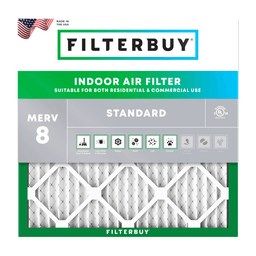
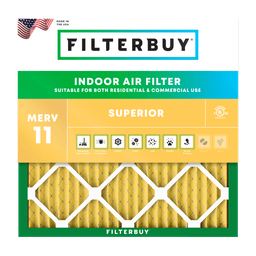
Shop MERV 8, MERV 11, or MERV 13 filters. EPA notes that most furnaces and HVAC systems can accommodate MERV 13 without equipment problems, provided the filter is replaced often. Confirm your size before ordering, the same fit check as for any filter.
Filterbuy's Provo filter calendar:
Late October: Put in a fresh MERV 13 before burn season starts November 1.
December–February: Check it monthly; swap early if it looks dirty.
Fire season, summer into fall: During smoke, check it often and replace it when it looks dirty or smells like smoke, which can be well before the normal interval. Keep spares on hand.
Clear-air months: Return to a 60- to 90-day schedule.
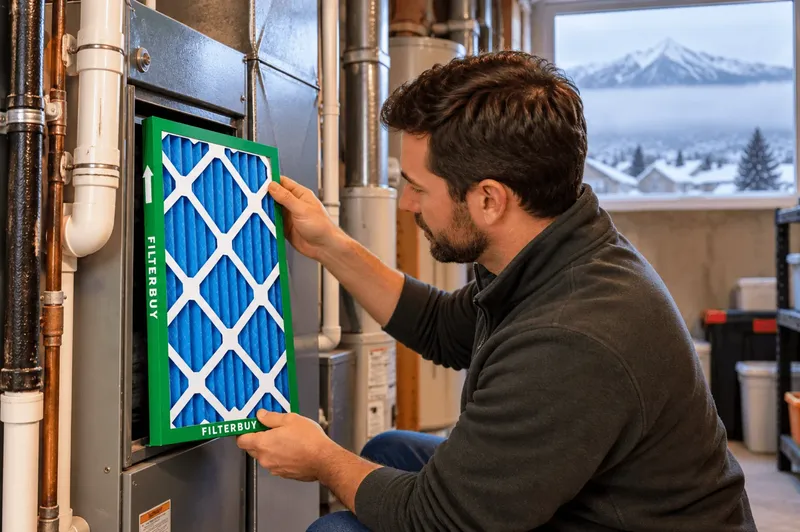
When you're ready, find your Filterbuy MERV 13 size among 600+ options, made in the USA, or set up auto-delivery so spares arrive before fire and inversion season.
Provo Air Quality FAQs
What Is the Air Quality in Provo Today?
Filterbuy's live map at the top of this page shows current air quality in Provo, updated through the EPA's AirNow feed.
Is the Air Quality Bad in Provo Today?
For sensitive groups, yes, at 101 or higher (orange); for everyone, at 151 (red). Filterbuy's action line starts at 100, with the four steps above.
What MERV Rating Do I Need for Wildfire Smoke in Provo?
MERV 13. It's Filterbuy's tier for smoke and inversion season, and EPA recommends MERV 13 or higher for wildfire smoke. Set the fan to On.
When Is Provo's Air Quality Worst?
Usually December through February, during multi-day inversions, and in summer, when afternoon ozone and wildfire smoke build.
Where Can I See Provo PM2.5 Today?
The live map lists PM2.5 whenever it leads. For readings by monitor, open the UtahAir app.
Glossary
Air Quality Index (AQI): The EPA's 0–500 scale, with six color-coded health categories.
PM2.5: Fine particles 2.5 micrometers or smaller. See Filterbuy's PM2.5 guide.
Ground-level ozone: Provo's main summer pollutant, formed by sunlight and emissions.
Temperature inversion: Warm air sitting over cold air, trapping pollution near the ground.
Utah Division of Air Quality (DAQ): Utah's state air agency.
MERV: Minimum Efficiency Reporting Value, a 1–16 filter rating.
Filterbuy: A U.S. maker of pleated HVAC filters, with a plant in Utah.
HEPA and CADR: HEPA is the high-efficiency filter standard for portable air cleaners; it doesn't go in a furnace slot. CADR (clean air delivery rate) rates a purifier's filtered airflow.