
Salem Real-Time AQI Tracker


Get Alerts For Unhealthy AQI In Your Area
When air quality in your area reaches unhealthy levels, we'll send you a quick alert, along with expert tips on how to reduce your exposure.
What's Actually In Salem Air Today?
What High AQI Means for Your Lungs in Salem
How to Read AQI
The Air Quality Index (AQI) measures how polluted the air is and how it may affect your health.
0–50 (Good): Air quality is satisfactory.
51–100 (Moderate): Acceptable, but some pollutants may pose minor concerns.
101–150 (Unhealthy for Sensitive Groups)
151–200 (Unhealthy)
201–300 (Very Unhealthy)
301+ (Hazardous)
Moderate
Still okay for most, but if you have asthma or allergies, take it easy and avoid long outdoor workouts.
Shop MERV 11 filters→What's the Right Filter for Your AQI Level?
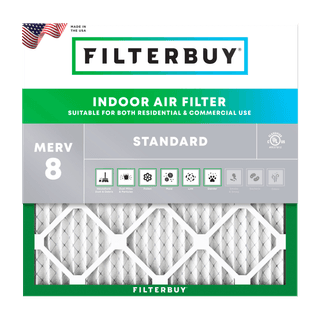
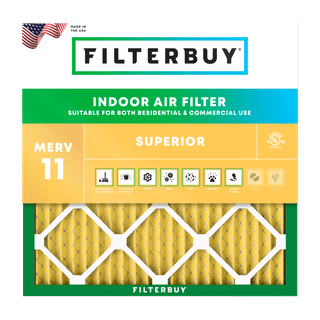
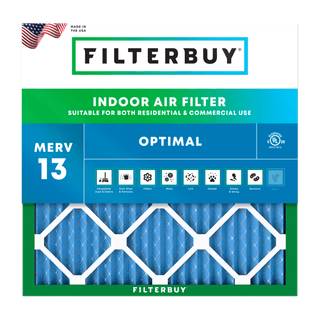


Check Today's Live Real Time Air Quality Index AQI Map in Salem, OR Now
By Michelle Wan, Brand Manager & Air Quality Writer, Filterbuy · Technically reviewed by David Clark, Licensed HVAC Technician · Published August 12, 2026 · Updated August 12, 2026
TL;DR
Salem, Oregon's air quality index (AQI) is live on Filterbuy's map above, from EPA AirNow and Oregon DEQ monitors. At or below 50 is Good; 51–100 Moderate; 101 and above Unhealthy for Sensitive Groups. Salem's air is usually clean, but degrades two ways: wildfire smoke and ozone in summer, trapped wood smoke on still winter nights.
What Filterbuy's map is telling you right now. The number above is Salem's current AQI, the 0-to-500 EPA scale turning pollutant concentrations into one health figure. Green and yellow mean go about your day. Orange means sensitive groups should ease up outside: children, adults over 65, pregnant people, anyone with asthma, COPD, or heart disease. Red or worse applies to everyone.
Key Takeaways
Salem's AQI updates continuously, from EPA AirNow and Oregon DEQ.
AQI 101 is the line. Above 150, the air is Unhealthy for everyone.
Two air quality seasons: wildfire smoke and ozone in summer, wood smoke under inversions in winter. Compare Portland's AQI map.
Salem's readings come from few monitors. Per DEQ's siting memo, the PM2.5 monitor sits in north Salem and the ozone monitor in Turner, so your neighbourhood can differ from the citywide figure.
The AQI does not measure pollen. The valley's spring irritant never appears in an AQI reading.
Indoor air is where you control the outcome. Windows closed, filtration running, and the filter bought before smoke season.
What Do the AQI Numbers Mean in Salem?
The U.S. EPA sets the 0–500 scale; Oregon DEQ reports Salem against it. When several pollutants are measured, the highest value becomes the reported AQI. Salem at 90 for ozone and 70 for particles reports as 90, ozone.
Source: U.S. EPA Air Quality Index. Oregon DEQ reports Salem readings against this scale. When several pollutants are measured, the highest individual value becomes the reported AQI.
Why Does Salem's Air Quality Change so Much?
Salem's air is clean most of the year, then breaks two ways by season. Once you know which one you're in, the response is obvious.
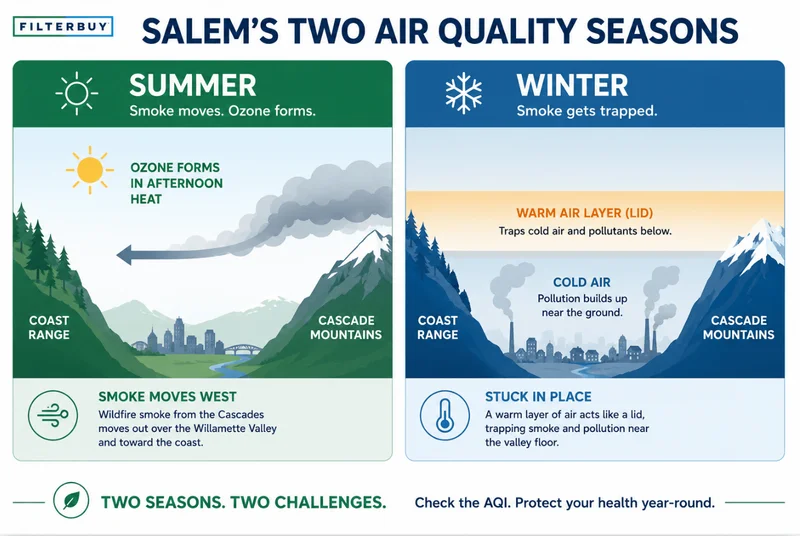
Source: Oregon Department of Environmental Quality advisory and monitoring guidance.
Summer: smoke and ozone. The North Santiam Canyon runs east of Salem, and east winds drive fire and smoke west onto the valley floor. The USDA Forest Service record of the Beachie Creek Fire documents it: a historic windstorm on September 7, 2020 drove rapid spread west toward Gates, Mill City, and Lyons. Salem’s daily average AQI hit 487 that month, with hourly readings above 500, the level EPA calls "beyond index." The 2026 season is Oregon’s largest on record at roughly 2 million acres, and DEQ advised Marion and Polk counties on August 4, 2026.
Heat brings a second problem. On hot, still days sunlight reacts with vehicle and solvent emissions to form ground-level ozone. DEQ issues ozone advisories during heat waves, and because ozone builds through the day, a morning reading can look fine and turn orange by 5 p.m.
Winter brings particulate advisories and burn restrictions when inversions pin wood smoke to the valley floor.
Spring: the complaint the AQI misses. The Willamette Valley is the centre of American grass seed production, and pollen is what most Salem residents notice in May and June. Pollen is not an AQI pollutant, so a green AQI on a high-pollen day is accurate and irrelevant to your allergies.
Where Do Salem's Air Quality Readings Actually Come From?
Before writing this page, Filterbuy's team wanted to know where Salem's number physically comes from. Most AQI pages never ask. DEQ's siting documents answer it, and the answer changes how you read the number.
DEQ's regulatory fine-particle monitor for Salem sits in north Salem, near the Oregon State Hospital. The ozone monitor is not in Salem at all. It sits downwind in Turner. In its memo on siting 30 new particulate monitors, DEQ wrote that Salem's metro had one monitor for roughly 400,000 people, versus four in similarly sized Eugene-Springfield, and named that gap as the reason to add South Salem and Keizer sites. DEQ now reports 37+ stations statewide.
Which is closest to you? DEQ's memo names the Salem-area sites:
Source: Oregon DEQ monitoring-site memo. DEQ marks these locations subject to change, so confirm which are reporting on the live map.
Why it matters: during a smoke event or inversion, South Salem, West Salem, Keizer, and downtown can differ. Read the dot nearest you, not the citywide headline. In fire season the AirNow Fire and Smoke Map adds temporary monitors the state network lacks.
How Do You Protect Your Indoor Air when Salem's AQI Climbs?
Here is the part you control. You can't change the Santiam Canyon, but you can change what your HVAC system does with the air already in your house. This is what Filterbuy knows best: we build air filters in the U.S. and have served more than two million households.
Close the envelope, then filter what's left. DEQ's smoke-event guidance: windows closed, heating and cooling recirculating rather than pulling outside air, filtration running.
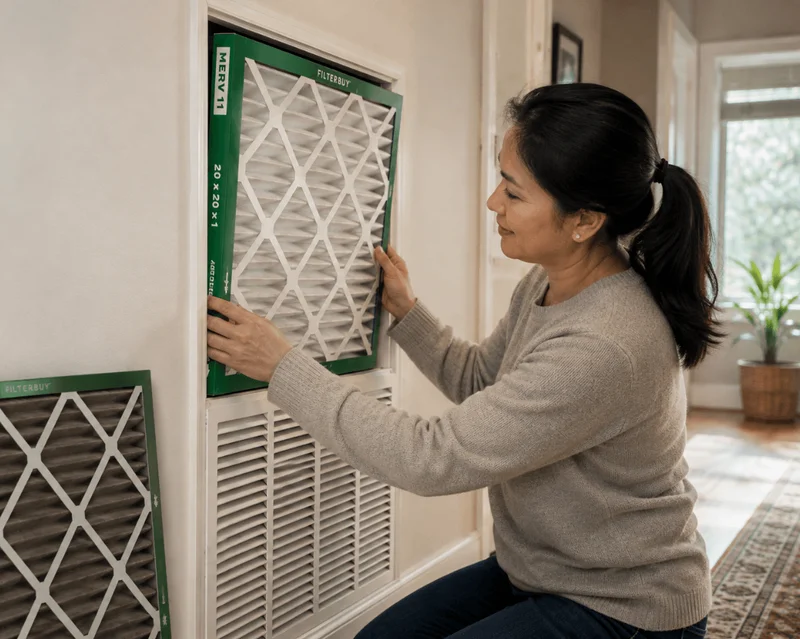
Filtration is a MERV question. The MERV rating measures how much of a given particle size a filter captures. Wildfire and wood smoke are both PM2.5, fine enough to slip past low-MERV filters. MERV 8 is built for dust and lint; catching smoke takes MERV 13. For the chemical odour afterward, an activated carbon Odor Eliminator filter adds what a fiber-only filter cannot.
During a smoke event, the calendar stops being the rule. A filter working through days of orange and red air loads far faster than in clean months. Pull it and look. A gray, packed filter has become a restriction, making your system work harder while cleaning less.
Salem families don’t need a fancier filter when smoke arrives. They need the right MERV rating already installed and a spare on the shelf. Once smoke is in the valley, the shipping window closes fast, and a MERV 13 that shows up next week protects nobody this week.
David Clark, Licensed HVAC Technician
Supporting Statistics
Three findings back the guidance above. All sources confirmed August 10, 2026.
1. Willamette Valley Smoke Days Went from Zero to Routine in Under a Decade
0 days at Unhealthy or worse from wildfire smoke, 1985 to 2014
15 such days, 2015 to 2022: seven Unhealthy, three Very Unhealthy, five Hazardous
DEQ expects more, naming the Willamette Valley specifically
Source: Oregon DEQ, Wildfire Smoke Trends and the Air Quality Index. Figures are Portland’s, the nearest valley city with a long record.
2. Salem's Metro Area Got Worse for Ozone Last Year, Not Better
84th worst in the nation for ozone. Grade: D
Down from 105th and a C the year before
149,534 Oregon children live where pollution reached unhealthy levels
Source: American Lung Association, State of the Air 2026. Salem sits inside this metro area.
3. A Loaded Filter Stops Working. EPA Measured It.
Air cleaners were almost completely ineffective with dirty filters
EPA recommends MERV 13 for wildfire smoke particles
Depth matters: a 4-inch MERV 13 raised clean air delivery rate 123%
Frequently Asked Questions
Glossary
Air Quality Index (AQI): A 0-to-500 EPA scale converting pollutant levels into one health number across six bands.
PM2.5: Fine particulate matter 2.5 micrometers or smaller. The main pollutant in wildfire and wood smoke, small enough to reach deep in the lungs.
Ground-level ozone: A lung-irritating gas, or smog, formed when sunlight reacts with vehicle and solvent emissions. Peaks on hot afternoons.
Temperature inversion: Warmer air settling above cooler ground-level air, trapping pollutants at the surface. Common on cold, calm nights.
Oregon DEQ: Oregon's Department of Environmental Quality, which runs the state air network and issues advisories.
AirNow: EPA's national air quality reporting system, aggregating state agency data including DEQ's.
MERV: Minimum Efficiency Reporting Value, a 1-to-16 scale for how well a filter captures particles. Higher catches smaller particles.
Sensitive groups: Per EPA and DEQ, children, adults over 65, pregnant people, and anyone with asthma, COPD, or heart disease.
Air stagnation advisory: A National Weather Service alert for calm conditions that stop pollutants dispersing, often paired with burn limits.
Beyond index: EPA's label for readings above 500, past the top of the scale. Salem exceeded it in 2020.
Author and Reviewer
Written by Michelle Wan. Reviewed by David Clark, Licensed HVAC Technician. Published and last updated August 12, 2026.