
Akron Real-Time AQI Tracker


Get Alerts For Unhealthy AQI In Your Area
When air quality in your area reaches unhealthy levels, we'll send you a quick alert, along with expert tips on how to reduce your exposure.
What's Actually In Akron Air Today?
What High AQI Means for Your Lungs in Akron
How to Read AQI
The Air Quality Index (AQI) measures how polluted the air is and how it may affect your health.
0–50 (Good): Air quality is satisfactory.
51–100 (Moderate): Acceptable, but some pollutants may pose minor concerns.
101–150 (Unhealthy for Sensitive Groups)
151–200 (Unhealthy)
201–300 (Very Unhealthy)
301+ (Hazardous)
Moderate
Still okay for most, but if you have asthma or allergies, take it easy and avoid long outdoor workouts.
Shop MERV 11 filters→What's the Right Filter for Your AQI Level?
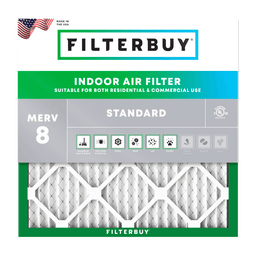
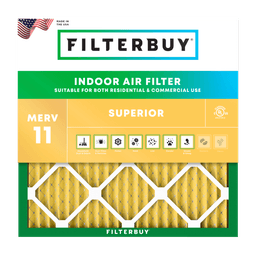
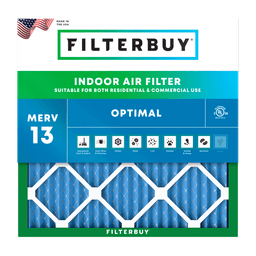


Check Today's Live Real Time Air Quality Index AQI Map in Akron, OH Now
By Michelle Wan, Brand Manager & Air Quality Writer | Filterbuy · Technically reviewed by David Clark, Licensed HVAC Technician · Published: July 17, 2026 · Last updated: July 17, 2026
Akron's air quality index is measured continuously by monitors in Summit County and updated on the Filterbuy AQI map above. On most days, Akron reads Good to Moderate. Fine particles (PM2.5) usually set the everyday number, while ground-level ozone drives most of Akron's genuinely unhealthy days. Anything above 100 means people with asthma, COPD, or heart conditions should ease up on outdoor exertion. Above 150, everyone should.
Author's Note
I pull AQI numbers for U.S. cities every morning. Akron's made me read twice this summer.
In June, EPA moved this area to ozone attainment. Getting there meant setting aside three wildfire smoke days from 2023, with EPA's approval and for a defensible reason. Quebec is not Ohio's fault.
But I write for a filter manufacturer. The days that came out of Akron's record are the exact days a filter earns its keep. Both things are true at once. The air here really is better than it was, and the number on your screen today does not know that.
That gap, between what passed on paper and what lands on your street, is what this page is built around.
Michelle Wan, Brand Manager & Air Quality Writer, Filterbuy
What's Actually in Akron Air Today?
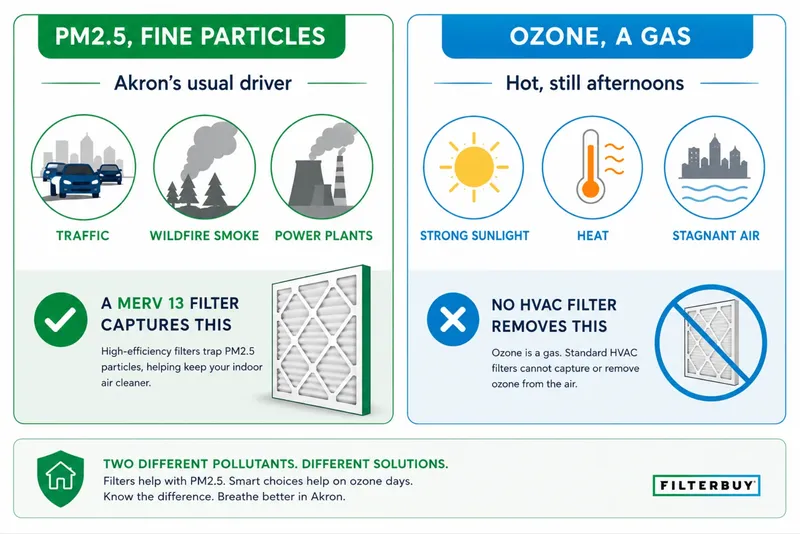
Akron's air is shaped by three things: traffic on the I-76 and I-77 corridors, pollution that blows in from power generation upwind, and, since 2023, Canadian wildfire smoke. Fine particle pollution (PM2.5) usually sets the everyday number. On hot, still, sunny afternoons, ground-level ozone takes over, and ozone is what earned Summit County a D.
Most of what shows up on the map above did not start in Akron.
The newer factor is the one nobody planned for. In June 2023, smoke from fires burning in Quebec crossed 600 miles of the Great Lakes and settled over northeast Ohio for days. Here is the part that did not make the news: Ohio EPA later asked the federal government to strike those days from the state's regulatory record, and in January 2026 the EPA agreed. The days were real. They just do not count against Akron's official score. That distinction turns out to matter a great deal, and we come back to it below.
Canadian smoke has since become a recurring feature of Great Lakes summers rather than a freak event. You can track wildfire smoke moving across Ohio on our smoke map when plumes are active.
Who Actually Measures Akron's Air
The monitors feeding the number above are run by the Akron Regional Air Quality Management District (ARAQMD), a service of Summit County Public Health. ARAQMD is Ohio EPA's local air agency for Summit, Medina, and Portage counties, and it publishes a daily AQI reading, a next-day forecast, and a pollen index. It also runs a recorded AQI line at (330) 375-2545, which is a genuinely useful thing that almost nobody in Akron knows exists.
Worth knowing: because ARAQMD reports for a three-county service area, its headline number and the reading you see on a map pinned to your street can differ by a few points. The Filterbuy map above draws on the same federal monitor feed. Neither is wrong. They are answering slightly different questions.
What High AQI Means for Your Lungs in Akron
In Akron, an AQI in the 51 to 100 range is a normal summer day and is fine for most people, though those with asthma should notice how they feel during long outdoor exertion. Between 101 and 150, sensitive groups should cut back. Above 150, everyone should shorten outdoor workouts and keep windows closed. Akron's unhealthy days cluster in summer: ozone on the hot, still afternoons, and PM2.5 during smoke events.
The AQI is a health scale, not a pollution scale. The number is built to answer one question: how much should you change your plans today?
Here is what each band tends to mean in Akron specifically.
One thing worth saying plainly, because it shapes how this page is written: the households Filterbuy hears from most directly are not the ones asking general questions. They are the ones with a kid who has asthma, or a parent with a heart condition, asking something very specific about a filter. That is who the orange band is for.
How Akron Actually Grades Out
The American Lung Association's 2026 State of the Air report, which covers 2022 through 2024, gave Summit County a D for ozone and a C for particle pollution. Neighboring Stark County did worse on soot. Here is the full picture.
Source: American Lung Association, State of the Air 2026, covering 2022–2024 monitoring data.
Not catastrophic. Not clean either. Akron is a middle-of-the-pack American city with real air quality problems that come and go with the season. That is a more useful thing to know than a scary headline.
Akron Just Passed Its Ozone Test. The Map Can Still Turn Orange.
On June 29, 2026, EPA redesignated the Cleveland area, which includes Summit County and Akron, to attainment for the 2015 ozone standard. Akron cleared it by a margin of zero: a design value of 0.070 ppm against a 0.070 ppm limit, with wildfire-influenced days excluded from the math. Attainment is a three-year regulatory average, not a promise about today. Both the good news and the orange dot on your map can be true at once.
If you saw the headlines in late June, you saw a real milestone. After being designated nonattainment in 2018, downgraded to moderate in 2022, and downgraded again to serious in 2024, the seven-county Cleveland area, Summit included, finally met the federal ozone standard. EPA signed off on June 29, 2026, along with a maintenance plan meant to hold the line through 2038.
So we read the rule. All nine pages of it.
That is not a flex. It is the whole difference between this page and every other AQI page you can pull up for Akron. The national sites will give you a number, and their number is fine. What none of them did was open 91 FR 39019 and check what the number cost. Akron did not clear the bar comfortably. It landed exactly on it, and the wildfire days had been taken out of the math first. See the supporting statistics below.
Then you check the map on a hot July afternoon and see orange, and reasonably wonder which one is lying to you. Neither. They measure different things.
Attainment is a statement about the average. You do not breathe the average.
That is also why the American Lung Association can hand Summit County a D for ozone in the same year EPA hands it a passing grade. ALA counts unhealthy days and weights the worse ones more heavily. EPA checks a three-year average against a threshold. Different question, different answer, no contradiction.
What it means for you: the trend in Akron is genuinely good, and it is the result of about two decades of real work on emissions. It does not mean you can stop looking at the map in July.
The One Thing Attainment Actually Changes for You
Akron sits in Summit County, one of seven Northeast Ohio counties where E-Check emissions testing is required. E-Check exists because the Cleveland-Akron area was in ozone nonattainment. Now that the area is in attainment, lawmakers are pushing to end it and Ohio EPA has sent a proposal to U.S. EPA. Nothing has changed yet. Ohio EPA has said plainly that redesignation does not eliminate E-Check on its own.
This section has nothing to do with air filters. We are answering it because if you live in Akron and you saw the headline that your air passed, this is probably the first question you actually had. The AQI sites are not going to answer it.
Why Akron Has E-Check and Columbus Does Not
E-Check started in 1996. It applies to seven Ohio counties and no others: Cuyahoga, Geauga, Lake, Lorain, Medina, Portage, and Summit.
That list is not arbitrary. It is the same seven counties as the Cleveland ozone nonattainment area. The Clean Air Act requires areas in moderate nonattainment or worse to run a vehicle inspection program. E-Check is Ohio's version. Columbus is bigger and has dirtier short-term particle numbers, and Columbus drivers have never taken an emissions test, because Franklin County was never in ozone nonattainment.
So when this area reached attainment on June 29, the legal reason E-Check exists went with it.
Where It Actually Stands
Ohio EPA has submitted a proposal to U.S. EPA to end the program. That is the last step before it can happen.
State Rep. Bill Roemer, whose district includes part of Summit County, has been trying to end E-Check for eight years and says attainment is what changes it.
Ohio's budget already contains language to eliminate the program, contingent on U.S. EPA approval.
Ohio EPA has also said, in plain terms, that redesignation "does not eliminate the E-Check program." That is the state's position, and it has not moved.
Cost to the state: roughly $12 to $13 million a year.
What it means for you today: nothing. Keep your certificate current. Even model year, you are due in 2026. And one thing already moved the other way: because the area was bumped to Serious nonattainment in January 2025, the minimum you must spend on repairs to qualify for a waiver rose from $300 to $450 on January 1, 2026. Attainment has not undone that yet.
The part worth sitting with. E-Check targets the pollutants that form ozone. Ozone is the thing Akron just passed. It is not the thing that drives most of Akron's unhealthy days. That is PM2.5, and no emissions test, no attainment ruling, and no bill in Columbus does anything about a plume arriving from Quebec. The rules we built are aimed at the pollution we used to have.
Sources: Ohio EPA E-Check program, epa.ohio.gov/divisions-and-offices/air-pollution-control/e-check. County list and program basis: Ohio EPA testing information. Legislative status as of July 2026.
Two Days Can Both Read 85 and Mean Opposite Things
The AQI is not an average of everything in the air. EPA calculates a separate index for each pollutant and reports only the highest one, called the main pollutant. So an Akron reading of 85 driven by ozone and a reading of 85 driven by PM2.5 are the same number and opposite days. One peaks in the afternoon and clears by evening. The other can sit for days. A filter helps with one and not the other. Check the main pollutant, not just the number.
This is the part almost nobody explains, and it is the most useful thing on this page.
The number above is a maximum, not a mixture. EPA runs the math separately for ozone, PM2.5, PM10, and the rest, then reports whichever index came out highest. That winner is called the main pollutant, and everything else that day is invisible. EPA's technical documentation walks through the arithmetic: an ozone index of 148 and a PM2.5 index of 126 on the same day produces a reported AQI of 148, with ozone named as the main pollutant. The 126 never appears.
Which means the single number you came here for is genuinely ambiguous. It tells you how bad. It does not tell you what, and in Akron the what changes everything you would do about it.
The AQI reports the highest single pollutant index, not a blend. Source: U.S. EPA AQI Technical Assistance Document.
Where to Find Akron's Main Pollutant
ARAQMD posts the day's primary pollutant alongside the AQI value, plus a next-day forecast. That is the local one, and it is free.
AirNow shows the main pollutant per monitor. Tomorrow's forecast is posted in most areas by 4 p.m. local time.
If it is ozone, the filter aisle has nothing for you. Move your run to 7 a.m.
If it is PM2.5, close the windows and read the next section.
Even a Bad Day Has Good Hours
EPA makes this point directly, and it deserves more attention than it gets: even on days when the daily forecast is poor, there are often hours when the air is fine for outdoor activity. The daily number is a maximum too. It is the worst the day got, not the day's weather.
For Akron this is practical. Ozone builds through the day with sunlight and heat, so an ozone-driven day is often at its best before 10 a.m. and its worst between mid-afternoon and early evening. Smoke does not respect the clock the same way. On a PM2.5 day, check the hour, not the headline.
When to Distrust This Map
We would rather say this ourselves than have you find it out the hard way.
EPA cautions that during smoky conditions, particle levels can vary considerably over short distances and short periods. Monitors in the same area can legitimately disagree. And the PM number is calculated as a NowCast, a weighted average of the previous twelve hours, which means a fast-moving plume is always partly in the past by the time it shows up on a map.
So: if it looks smoky, or smells smoky, and the map says yellow, believe your eyes and your nose. Close the windows first and check the number second. The Filterbuy AQI map is a good tool, drawing on the same EPA network everyone else uses. It is not a sensor in your backyard, and during a moving smoke plume that difference is real. EPA's Fire and Smoke Map adds low-cost sensor data specifically for those conditions, and it is worth a look when the sky goes orange.
What a Filter Can and Can’t Do About Akron’s Air
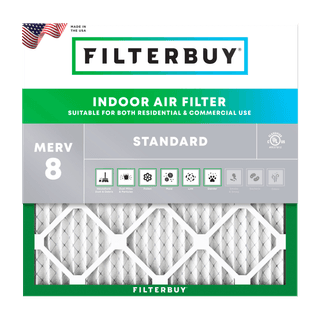
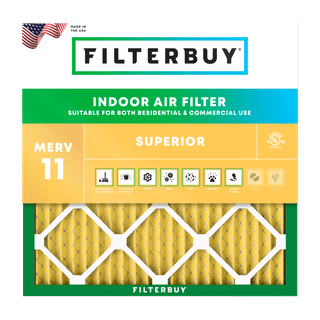
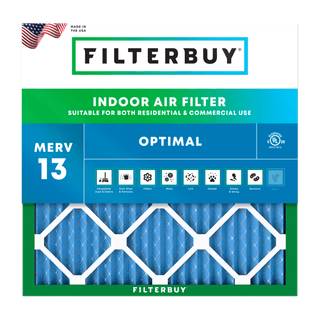
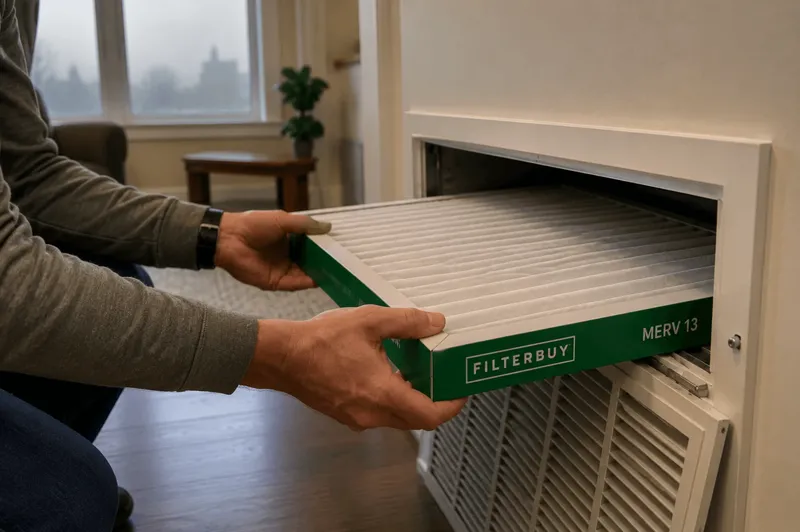
An HVAC filter captures particles, so it helps meaningfully with the PM2.5 that drives most of Akron's unhealthy days, including wildfire smoke. It does nothing for ozone, which is a gas. MERV ratings only describe particle capture. On high-PM2.5 days, EPA recommends MERV 13 or the highest rating your system safely handles. Filterbuy manufactures MERV 13 filters in the USA, and we will still tell you they are useless against an ozone day.
Filterbuy has manufactured air filters in the United States for over a decade, out of Talladega, Alabama, and shipped them factory-direct to millions of homes. That is exactly why we are going to tell you what a filter cannot do.
A filter will not fix an ozone day. Ozone is a gas. MERV is a particle-capture rating. A MERV 13 and a MERV 8 are equally useless against it. Anyone telling you otherwise is selling harder than we are.
We will go further, because the number matters. You will see it claimed around the internet that MERV 13 removes 95% of wildfire smoke. That figure describes how much a filter catches in a single pass in a lab, at one particle size. It is not what happens to the air in your house. EPA's figure for the air in your house is about 50%, and only if the fan is running. Fifty is a good number. It is worth the upgrade. It is not ninety-five, and we would rather you hear that from us than find it out during a smoke event.
On ozone days the honest advice is the boring advice. Stay in, keep the windows shut, don't idle in traffic, and wait for the afternoon to break.
Particles are a different story, and particles are what Akron mostly deals with.
MERV rates particle capture only. It tells you nothing about gases such as ozone.
PM2.5 is small enough to get past your body's defenses and deep into the lungs, and it is the pollutant in wildfire smoke that does the damage. It also walks straight through the MERV 8 filter sitting in most Akron homes right now. That is the gap worth closing. EPA recommends upgrading to MERV 13, or the highest rating your system can take without straining, during smoke events and high particulate days. Filterbuy MERV 13 filters capture the fine particulate that a standard filter passes through, in over 600 sizes, shipped factory-direct. If you are not sure what your system can handle, how MERV 8, 11, and 13 compare walks through the tradeoff.
Two things that cost nothing and help on a smoke day:
Run the HVAC fan continuously, not just on cooling cycles. A filter only cleans air that moves through it.
Close the windows early. Once smoke is in the house, you are filtering it back out the slow way.
If you want to see how Akron compares on any given day, Cleveland's live AQI is the closest read, since Summit and Cuyahoga sit inside the same ozone maintenance area. For the wider view, the live AQI map for the whole country covers every state.
Akron just got told its air passed. That is real, and the people who did the work deserve the credit. But a rule is a verdict on the last three years. It is not a forecast for Saturday. The filter in your furnace does not care what the paperwork says.
David Heacock, Founder and CEO, Filterbuy
Filterbuy insight: After manufacturing filters in the U.S. for over a decade and serving more than two million households, the pattern we see is the one Akron is living through right now. Outdoor air improves on a multi-year curve. Indoor air changes the afternoon a plume arrives. Orders and support calls climb in the days after a smoke event, which is usually the first time anyone thinks about the filter that has been sitting in the return since spring. Attainment does not change that sequence. It just means the good years are winning.
Supporting Statistics
Three numbers do most of the work on this page. Two from EPA. One from the American Lung Association. All primary sources. All checkable in one click.
1. 0.070 ppm: Akron Passed by Nothing
Akron cleared the federal ozone standard in June 2026. Here is the margin:
The standard: 0.070 ppm.
Akron's 2023 to 2025 design value: 0.070 ppm.
Margin: zero.
Three details in the rule matter:
It is a three-year average of each year's fourth-highest daily maximum. Built to absorb bad days.
Wildfire-influenced days were excluded from the record, with EPA approval.
EPA states the Clean Air Act does not require it to assess the margin of attainment.
Why it matters here. Attainment was measured at the line, on an average, with smoke days removed. The AQI on this page removes nothing. "Akron passed" and "my map is orange" were never measuring the same thing.
Source: U.S. EPA, 91 FR 39019, June 29, 2026. federalregister.gov/documents/2026/06/29/2026-13027/
2. 52%: How Much of America's PM2.5 Is Smoke
52% of total U.S. PM2.5 emissions came from wildland fires.
Source data: EPA's 2020 National Emissions Inventory.
More than half the country's fine particle pollution starts as something burning. Not a tailpipe. Not a smokestack.
Why it matters here. The section above says most of what lands on Akron's map did not start here. This is the number behind it. When half the country's PM2.5 starts as fire, distance stops protecting you. Akron sits 600 miles from Quebec. In June 2023, that did not help.
Source: U.S. EPA, Wildland Fire Research: Reducing Exposures, updated July 6, 2026. epa.gov/air-research/wildland-fire-research-reducing-exposures
3. 1,275,579: Ohio Kids Breathing Unhealthy Air
The American Lung Association counted them, county by county, for its 2026 State of the Air report:
1,275,579 children in Ohio live where the air is unhealthy to breathe.
46% of all U.S. children, 33.5 million, live in a county that failed at least one pollution measure.
Cleveland-Akron-Canton: 51st worst metro in the country for ozone, 39th worst for short-term particle pollution.
Why kids: lungs still developing. They breathe more air for their size than adults.
Why it matters here. Every other number here is a measurement. This one counts people. It is why the AQI bands on this page are written around sensitive groups, not averages. Got a kid with asthma in Akron? You are not an edge case. You are who the index is for.
Source: American Lung Association, State of the Air 2026, Ohio release, April 21, 2026. lung.org/media/press-releases/fy26-sota-ohio
Sources: U.S. EPA, Federal Register 91 FR 39019; U.S. EPA Wildland Fire Research; American Lung Association State of the Air 2026. All figures verified July 2026.
Where We Check Akron's Air: 7 Sources Worth Bookmarking
The map up top tells you the number. These seven tell you the rest: who measured it, what it means, what to do about it, and where Akron stands. We've made filters in the U.S. for over a decade, and these are the sources we check ourselves before answering an air quality question for someone in Akron. Every one is run by a government agency or a nonprofit, and not one of them is trying to sell you anything, including us.
1. Get Tomorrow's Akron Forecast from the Agency That Measures It
Akron Regional Air Quality Management District (ARAQMD), Summit County Public Health
ARAQMD is Ohio EPA's local air agency for Summit, Medina, and Portage counties, and it's the group that actually publishes Akron's daily AQI, tomorrow's forecast, and a pollen count. There's also a recorded line at (330) 375-2545, which is the quickest way to check when you're already heading out the door with the kids.
2. See Exactly Where the Smoke Is Before It Reaches You
AirNow Fire and Smoke Map, U.S. EPA and U.S. Forest Service
On Akron's worst days the pollutant is smoke, and this is the map built for it: fire locations, plume tracks, and PM2.5 pulled from permanent monitors, temporary ones near the fires, and thousands of backyard sensors. Worth a look before a summer weekend if anything's burning upwind of you.
3. Learn What the Number on Your Screen Actually Means
AQI Basics, U.S. EPA
The official plain-English definition of all six AQI categories, straight from the agency that sets the index. Give it two minutes and the colors stop being decoration.
www.airnow.gov/aqi/aqi-basics/
4. Find out What Actually Works Once the Air Is Already Bad
Strategies to Reduce Exposure Indoors, U.S. EPA
This is EPA's guidance for doctors advising patients during smoke events, which is why it's unusually specific and unusually honest about what actually helps. It's also where our numbers come from: a high-efficiency filter with the fan running continuously cuts indoor PM2.5 by roughly 50%, and a standard filter by roughly 24%.
www.epa.gov/wildfire-smoke-course/strategies-reduce-exposure-indoors
5. Build a Smoke Filter This Afternoon for the Price of a Box Fan
Research on DIY Air Cleaners, U.S. EPA
EPA tested box-fan-and-MERV-13 air cleaners, found they're a genuinely cost-effective way to cut indoor smoke, and published the designs. We make filters for a living and we're still telling you to go read this, because on a bad smoke day the cheapest thing that works is the thing you should do.
www.epa.gov/air-research/research-diy-air-cleaners-reduce-wildfire-smoke-indoors
6. See How Akron Stacks up Against the Rest of the Country
State of the Air, American Lung Association
The annual report card that grades Summit County on ozone and particle pollution, and ranks the Cleveland-Akron-Canton metro against every other metro in the country. It's the context a single day's reading can't give you.
www.lung.org/research/sota/city-rankings/msas/cleveland-akron-canton-oh
7. Read the Rule That Changed Akron's Ozone Status
Federal Register, 91 FR 39019, U.S. EPA
The rule that moved Summit County to ozone attainment on June 29, 2026. It's dry reading, but it's where the 0.070 ppm design value shows up, and where EPA spells out that the wildfire days were pulled out of the calculation first.
Key Takeaways
Akron's AQI is usually driven by PM2.5, not ozone, and most of it blows in rather than starting here.
Summit County: D for ozone, C for particle pollution in the ALA's 2026 State of the Air.
EPA redesignated the Akron area to ozone attainment on June 29, 2026, at a design value of 0.070 ppm against a 0.070 ppm limit. Real progress, but a margin of zero, and a three-year average rather than a forecast for today.
Your local air agency is ARAQMD, part of Summit County Public Health. Daily AQI line: (330) 375-2545.
The AQI is a maximum, not a mixture. It reports only the worst single pollutant. Two days can read 85 and mean opposite things, so check the main pollutant.
A filter helps with particles and does nothing for ozone. On PM2.5 days, MERV 13 is the upgrade that matters, and Filterbuy has made them in the USA for over a decade in more than 600 sizes.
If it looks smoky and the map says yellow, believe your nose. The PM number lags a moving plume by design.