
Greensboro Real-Time AQI Tracker


Get Alerts For Unhealthy AQI In Your Area
When air quality in your area reaches unhealthy levels, we'll send you a quick alert, along with expert tips on how to reduce your exposure.
What's Actually In Greensboro Air Today?
What High AQI Means for Your Lungs in Greensboro
How to Read AQI
The Air Quality Index (AQI) measures how polluted the air is and how it may affect your health.
0–50 (Good): Air quality is satisfactory.
51–100 (Moderate): Acceptable, but some pollutants may pose minor concerns.
101–150 (Unhealthy for Sensitive Groups)
151–200 (Unhealthy)
201–300 (Very Unhealthy)
301+ (Hazardous)
Moderate
Still okay for most, but if you have asthma or allergies, take it easy and avoid long outdoor workouts.
Shop MERV 11 filters→What's the Right Filter for Your AQI Level?


Check Today's Live Real Time Air Quality Index AQI Map in Greensboro, NC Now
TL;DR
The live map above shows Greensboro's current Air Quality Index (AQI). Ozone drives most summer alerts, while fine particles (PM2.5) from exhaust and smoke can raise the AQI any time. Filterbuy, an American air filter manufacturer, acts at AQI 100: when smoke or PM2.5 pushes the map there, use a MERV 13 filter, set the fan to On, and run a portable HEPA air cleaner in each occupied room.
Key Takeaways
Greensboro's AirNow reading covers a shared Triad reporting area.
The American Lung Association graded the Greensboro metro C for ozone and D for short-term particles in 2026.
Canadian wildfire smoke pushed the Triad to a Code Red in June 2023.
Pleated HVAC filters catch particles, not gases, so MERV 13 helps with smoke but little with ozone.
How to Read Greensboro's Live AQI Map
The live map gives you a number from 0 to 500, a matching color, and the pollutant behind the reading. Read the color first, then the pollutant: an orange ozone day and an orange PM2.5 day call for different moves at home. Compare the North Carolina live AQI map or the Winston-Salem live AQI map.
What Each AQI Color Means for Your Greensboro Plans
Triad forecasters call these U.S. Environmental Protection Agency (EPA) categories Code Green, Code Yellow, and so on.
Greensboro AQI Colors and What to Do
Categories follow EPA AQI guidance. Filterbuy's filter steps start at AQI 100.
Why Greensboro's AQI Can Look Off from What You See
The reporting area is shared. AirNow groups Greensboro with Winston-Salem, High Point, and Forsyth County, whose air quality office forecasts for all of them, so haze over Winston-Salem can raise the number first.
Monitors are few. The North Carolina Division of Air Quality (NC DAQ) runs Guilford County's monitors, including the long-running Mendenhall site; the nearby Bethany site closed at the end of 2025.
Readings are averaged. AirNow's NowCast method smooths hourly data, so sudden haze can take an hour or more to appear.
Is Greensboro's Air Safe to Breathe Today?
Green or yellow is fine for most people. At orange (101 or higher), children, older adults, pregnant people, and anyone with heart or lung disease should ease off hard outdoor exertion, and at red, everyone should. Always follow AirNow and local health guidance, and if you have asthma, COPD, or a heart condition, ask your doctor what to do.
Where to Find the Triad Air Quality Forecast
Forsyth County's air quality office writes Greensboro's daily Triad air quality forecast. Per NC DEQ, it covers ozone from March 1 through October 31 and PM2.5 all year. Get it through EnviroFlash emails, the North Carolina Air Quality Portal, or our alert sign-up above.
Air Quality Across Greensboro ZIP Codes and Neighborhoods
Greensboro's air varies more by distance to traffic than by ZIP code. Homes in 27401, 27405, 27407, or 27410 that sit near I-40, I-85, the I-73 corridor, or the Urban Loop (I-840) get more exhaust and nitrogen dioxide, which fade away from busy roads. So do areas near Piedmont Triad International Airport.
What's Actually in Greensboro's Air
Most readings come down to ground-level ozone, which forms when emissions react in hot sunshine, and PM2.5. The table shows when each peaks and whether a filter helps.
What Moves Greensboro's AQI
Filter guidance reflects EPA's Guide to Air Cleaners in the Home.
Pollen isn't in the AQI, so spring's yellow pine dust won't move the map.
Greensboro's Air Quality Calendar
Filterbuy built this calendar from North Carolina forecast seasons and our filter guidance.
Greensboro Air Quality Calendar
Sources: NC DEQ forecast and prescribed-burn guidance.
How the Triad's Air Compares with Other U.S. Metros
In the American Lung Association's "State of the Air" 2026 report, the Greensboro, Winston-Salem, and High Point metro ranks 100th worst for ozone (C), 76th for short-term particle pollution (D), and 62nd for year-round particles (passing). In Filterbuy's view, the D matters more here, since particles are what a home filter captures. EPA returned the Triad to ozone attainment in 1993 and redesignated Guilford County to PM2.5 attainment in 2011.
When Wildfire Smoke Drifts Into the Piedmont Triad
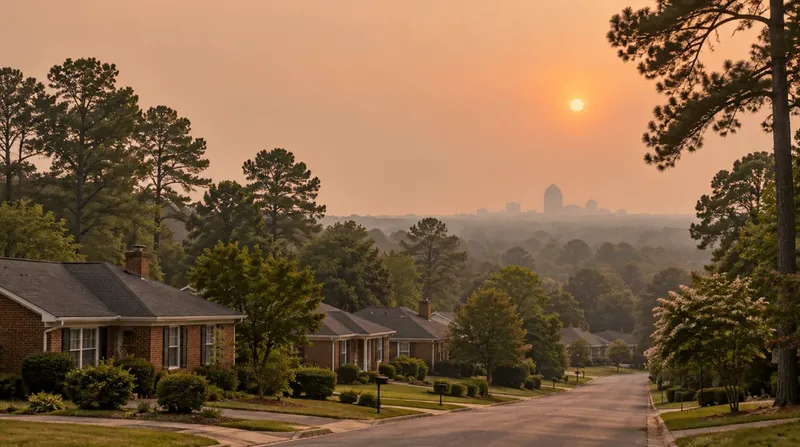
On June 7, 2023, smoke from eastern Canada put the Triad under a Code Red for particle pollution, which the Forsyth County air office called the first in 20 years. Later that month, the office warned of Code Red conditions across five Triad counties, including Guilford. Across more than two million households served, Filterbuy has found the AQI usually climbs hours before anyone notices smoke indoors, so check the map and our North Carolina wildfire and smoke map at the first haze.
What to Do When Greensboro's AQI Reaches 100
Filterbuy's action line is AQI 100, the top of the Moderate range. When smoke or PM2.5 pushes the map there, check AirNow and local guidance first, then follow these steps:
Put a MERV 13 filter in your HVAC system. It's the whole-home layer, since the central system moves far more air than a portable unit.
Set the thermostat fan to "On." "Auto" only filters while the system heats or cools. Running it nonstop is fine for most systems but uses more power.
Run a portable HEPA air cleaner in each occupied room, bedrooms first.
Close the house up. Keep windows shut, and skip candles, frying, smoking, and unsealed vacuums until the air clears.
EPA advises changing filters more often during heavy smoke. Check yours during the event, replace it when it looks dark brown or black, and keep spares; see Filterbuy's smoke-proofing guide. For ozone alerts, a filter helps little, so stay closed up through the afternoon.
No Central HVAC? Options for Greensboro Homes Without Ducts
No ducts, no filter slot. With window units or a mini split, portable HEPA air cleaners are your primary defense. EPA's air cleaner guide says to pick one whose smoke CADR (clean air delivery rate) is at least two-thirds of the room's square footage, so a 300-square-foot bedroom needs about 195. EPA also advises against cleaners that produce ozone, so skip ionizers and ozone generators.
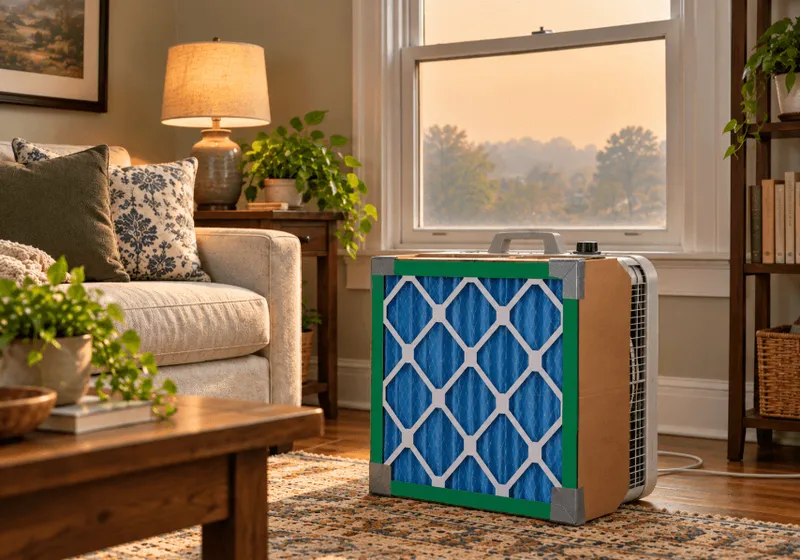
On a budget, EPA research found box-fan cleaners with MERV 13 filters reduce smoke; use a certified 2012 or newer fan and never leave it running unattended. Our Corsi-Rosenthal box guide shows the build, but treat it as a stopgap until you buy a certified cleaner. Filterbuy also sells mini split systems.
Our Take: What Filterbuy Would Do in a Greensboro Home
Filterbuy is a second-generation, family-owned American manufacturer that has made its own filters since 2013. Four lessons from that work:
Filter for the pollutant, not the color. A filter upgrade does little for ozone, which breaks down indoors. Smoke is mostly fine particles, so pair MERV 13 in the system with a HEPA cleaner in each occupied room (MERV 13 vs. HEPA).
Smoke loads filters fast. Filters customers return after heavy smoke are the most loaded we see all year, sometimes gray long before the usual 60 to 90 days.
Keep your size on hand. Smoke can arrive with little warning, so keep a spare MERV 13 before summer.
Let two checks set your normal schedule. Compare your filter with a new one at 30 days, and if it's clean, again at 60.
"I don't want anyone to feel like they need an HVAC license just to pick the right filter. My job is to give you the straight answer, explain why it matters, and let you get back to your day."
Michelle Wan, Brand Manager and Air Quality Writer, Filterbuy
Which Filter the Greensboro AQI Calls For
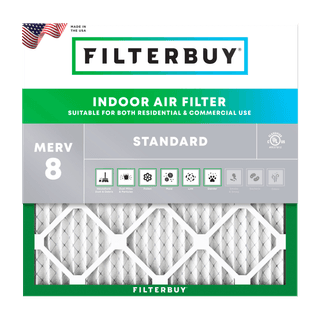
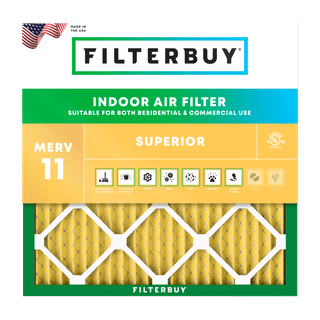
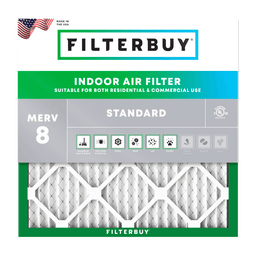
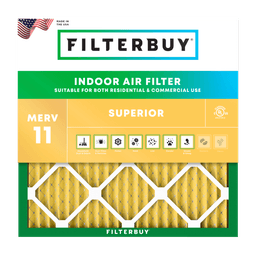
AQI 0 to 99, including pollen season: A MERV 8 air filter handles dust and lint, and a MERV 11 air filter, Filterbuy's allergy tier, adds pollen and pet dander.
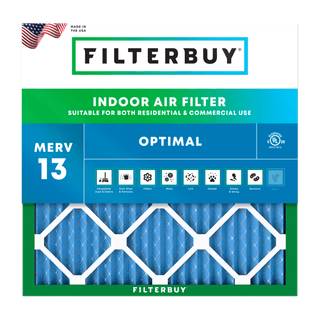
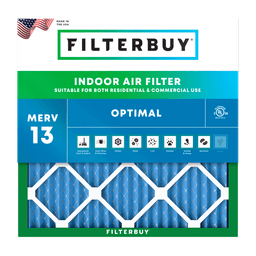
AQI 100 and up, or any smoke: Switch to a MERV 13 air filter, the tier Filterbuy recommends for smoke, plus a HEPA cleaner in each occupied room.
Fit check: EPA notes most furnaces and HVAC systems can use MERV 13 without equipment problems if the filter is replaced often. Confirm your size, and see our guide to upgrading to a MERV 13 filter. Filterbuy makes 600+ standard sizes plus custom air filters, and air filter auto-delivery keeps spares coming.
Supporting Statistics
2 vs. 83: North Carolina logged two Code Red or worse ozone days in 2015 to 2024, versus 83 the decade before (NC DEQ).
43% less clean air: A box-fan cleaner delivered 43% less clean air with a MERV 11 filter than a MERV 13 (EPA study).
55% to 21%: In heavy smoke, a home with a MERV 13 central filter held indoor PM2.5 at 55% of outdoor levels; adding a HEPA cleaner cut that to 21% (EPA-supported study).
Frequently Asked Questions
Glossary
Air Quality Index (AQI): EPA's 0 to 500 scale for daily air pollution, in six color-coded categories.
NC DAQ: The North Carolina Division of Air Quality, which runs Guilford County's monitors.
PM2.5: Particles 2.5 micrometers or smaller, found in smoke and exhaust.
AirNow: EPA's real-time air quality data system.
HEPA: High-efficiency particulate air filtration, used in portable air cleaners, not HVAC systems.
MERV: Minimum Efficiency Reporting Value, a filter's particle-capture rating.
Filterbuy: A second-generation, family-owned U.S. maker of pleated HVAC filters based in Talladega, Alabama.