
Grand Rapids Real-Time AQI Tracker


Get Alerts For Unhealthy AQI In Your Area
When air quality in your area reaches unhealthy levels, we'll send you a quick alert, along with expert tips on how to reduce your exposure.
What's Actually In Grand Rapids Air Today?
What High AQI Means for Your Lungs in Grand Rapids
How to Read AQI
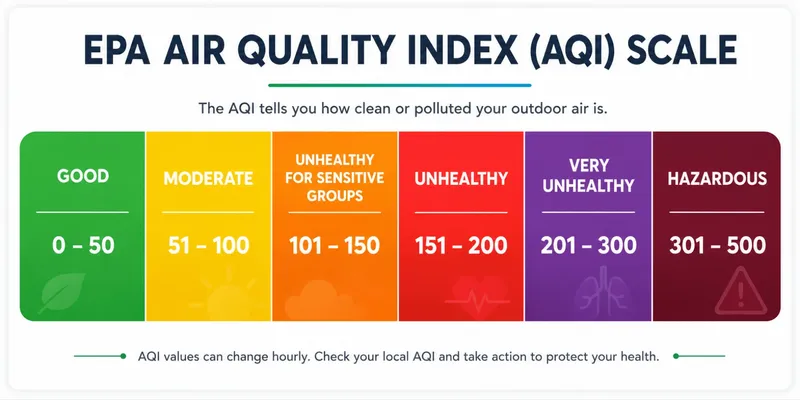
The Air Quality Index (AQI) measures how polluted the air is and how it may affect your health.
0–50 (Good): Air quality is satisfactory.
51–100 (Moderate): Acceptable, but some pollutants may pose minor concerns.
101–150 (Unhealthy for Sensitive Groups)
151–200 (Unhealthy)
201–300 (Very Unhealthy)
301+ (Hazardous)
Moderate
Still okay for most, but if you have asthma or allergies, take it easy and avoid long outdoor workouts.
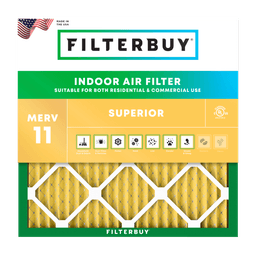
Shop MERV 11 filters→What's the Right Filter for Your AQI Level?



Check Today's Live Real Time Air Quality Index AQI Map in Grand Rapids, MI Now
Author: Michelle Wan | Reviewer: David Clark, Licensed HVAC Technician | Publish Date: July 21, 2026 | Updated Date: July 21, 2026
TL;DR
Grand Rapids' air quality changes throughout the day, so the live map above is the only reliable source for right now. In Filterbuy's experience tracking this market, Michigan's EGLE monitoring network and the EPA's AQI system point to the same two culprits behind nearly every unhealthy day here: ozone and wildfire smoke, often carried down from Canada. When the map shows Orange or worse, sensitive groups should limit outdoor time and consider closing windows.
Key Takeaways
The number on the live map is the only accurate “right now” reading.
Michigan's EGLE operates monitoring stations in Grand Rapids, Holland, Jenison, Evans, and Muskegon that feed both the state's MiAir dashboard and the national EPA AirNow system.
Ozone is monitored seasonally, April 1 through September 30, while PM2.5 monitoring runs year-round.
Canadian wildfire smoke is a recurring, non-local source of Grand Rapids PM2.5 spikes.
AQI values above 100 mean sensitive groups should start reducing outdoor exertion.
Indoor MERV-rated filtration and closed windows are the two fastest ways to reduce exposure once outdoor air turns unhealthy.
Author's Note
As Air Quality Writer for Filterbuy, a U.S. air filter manufacturer, I watch AQI patterns across dozens of Midwest cities. Grand Rapids has a habit that catches people off guard. The sky can look completely clear while the number quietly climbs into Orange, and that's almost always Canadian wildfire smoke arriving ahead of any visible haze, not local pollution. West Michigan's ozone season adds a second wrinkle homeowners rarely plan for, since it only runs April through September, so a “Good” ozone reading in January tells you nothing about how the air behaves come July. The households that handle this best check the map before they walk out the door, not after.
Live Air Quality Map
How To Read Today's Air Quality Index Map In Grand Rapids
The AQI is the EPA's nationwide scale for reporting how clean or polluted outdoor air is, running from 0 to 500. Most confusion doesn't come from the scale itself. It comes from treating every “Moderate” reading the same way. An AQI of 75 driven by afternoon ozone clears out by evening. An AQI of 75 driven by wildfire smoke can sit over West Michigan for days. Each color band on the live map corresponds to a specific health message, and the map updates as new monitor readings come in, so refreshing the page gives you the current picture rather than a cached one.
What Drives Grand Rapids Air Quality Right Now
Two pollutants explain nearly every unhealthy day this region sees. Ground-level ozone and fine particle pollution (PM2.5) are both tracked at West Michigan's monitoring stations in Evans, Grand Rapids, Holland, Jenison, and Muskegon. Ozone is monitored from April 1st through September 30th, with the Grand Rapids station additionally monitoring it year-round. PM2.5 monitoring runs continuously, which matters because this region's worst spikes are not always local in origin.
Wildfire smoke, frequently drifting south from Canadian fires, has repeatedly pushed Grand Rapids into Unhealthy or Hazardous territory in recent summers, sometimes with EGLE issuing a statewide Air Quality Alert for elevated PM2.5. Research from Aguilera et al. (2021) shows why smoke-driven particle pollution deserves extra caution. Wildfire-specific PM2.5 has been linked to increases in respiratory hospitalizations ranging from 1.3 percent to as much as 10 percent for every 10-microgram-per-cubic-meter rise, compared with a smaller 0.67 to 1.3 percent increase tied to non-wildfire PM2.5. For a deeper look at the causes behind any specific bad-air day, see why air quality turns bad in the first place.
Why Two AQI Apps Might Show You Different Numbers
Pull up two different air quality apps in Grand Rapids on the same afternoon, and don't be surprised if they disagree. Neither one is broken. They're built from different pieces.
Different source, different number. Government apps like AirNow pull directly from EGLE's physical monitoring stations. Many consumer apps blend that same government data with independent low-cost sensors and satellite-modeled estimates, which react faster to local changes but carry more noise.
Distance from the monitor matters. Grand Rapids has two official stations. If you live well outside the city core, the AQI you're shown is often interpolated from the nearest monitor, not measured at your actual address.
Update speed varies. Some apps refresh hourly. Others batch-update every few hours. During a fast-moving smoke event, that lag alone can explain a mismatch.
Treat the live map above as your anchor reading. Use a second app only to confirm a trend, not to referee a disagreement between two numbers.
Ozone Day Vs. Smoke Day, At A Glance
Before You Head Outside, Ask Three Questions
For the AQI range that isn't clearly Green or clearly Red, run through this check.
Is the sky hazy, or does it just feel muggy? Haze points toward smoke. Muggy with a clear sky points toward ozone.
Is anyone in the house in a sensitive group? Asthma, COPD, heart disease, pregnancy, or an age under 18 or over 65 lowers the threshold for caution, even at a “Moderate” reading.
How long is the exposure? A quick errand and a three-hour yard project are different decisions at the same AQI number.
Two or more answers pointing toward caution is the signal to move the activity indoors or shorten it. This is the same three-question check Filterbuy walks Michigan customers through during a wildfire smoke event.
Health Guidance By AQI Category
More than four in ten people in the U.S., 152.3 million people according to the American Lung Association's latest report, live in a county that received a failing grade for at least one measure of ozone or particle pollution. Filterbuy hears from Michigan households most often right after a smoke event, not before one, which is backward from how this should work. Air pollution is also directly tied to worsening asthma symptoms, since ozone irritates the lungs and airways. For a closer look at what each AQI band means for asthma and COPD specifically, see Filterbuy's guide for sensitive respiratory conditions.
Expert Quote
When the AQI climbs into Orange or Red here in West Michigan, the fastest thing a homeowner can do is close windows and let the HVAC system's filter do its job, rather than waiting to see if the number improves on its own.
David Clark, Licensed HVAC Technician
What To Do When Grand Rapids Air Quality Drops
Check the live map above before heading outside, not a number from earlier in the day.
Move outdoor plans indoors once the map shows Orange or higher, especially for kids, older adults, and anyone with asthma or heart or lung disease.
Close windows and doors to limit outdoor air infiltration during a spike.
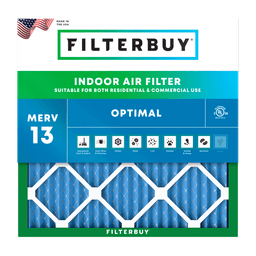
Run your HVAC system with a properly rated filter in place. Homes built to ENERGY STAR standards use a minimum MERV 6 filter as a baseline, but Filterbuy's MERV 13 filter captures more airborne fine particles during smoke events. It is not a substitute for a true HEPA unit and will not address mold or moisture problems in the home.
Recheck the map periodically. Michigan's air quality alerts and the MiAir dashboard both tend to flag a wildfire smoke event before the local AQI number itself moves.
Filterbuy is a Talladega, Alabama-based air filter manufacturer, and pages like this one exist for the same reason the filters do. Both aim to make the invisible parts of the air you breathe a little easier to see and act on.
Frequently Asked Questions
Essential Resources: Your Air Quality Toolkit
AQI Basics: Learn The Scale Behind The Number
AirNow breaks down the 0-to-500 AQI scale in plain language.
Particle Pollution Effects: See What PM2.5 Really Does
The EPA lays out how fine particles affect the lungs and heart.
About Air Quality: Get A Real Action Plan
The CDC turns the AQI into specific advice for runners, outdoor workers, and anyone managing asthma or COPD.
State Of The Air Key Findings: Know Where You Stand Nationally
152.3 million Americans live somewhere that failed this year's air quality grade.
Air Pollution And Asthma: Protect Sensitive Family Members
AAFA explains exactly when bad air crosses the line for asthma sufferers.
NWS Grand Rapids: Catch The Alert Before The Number Moves
Your local weather service issues Air Quality Alerts before conditions turn.
Michigan EGLE Air Quality: Meet The Monitors In Your Backyard
Two of Michigan's monitoring stations sit right here in Grand Rapids.
Supporting Statistics: The Research Behind This Page
Wildfire Smoke Hits Your Lungs Harder (Aguilera et al., 2021, Nature Communications, nih.gov)
A 10 microgram-per-cubic-meter rise in wildfire-specific PM2.5 raises respiratory hospitalizations by 1.3 to 10 percent.
Everyday PM2.5 raises that same risk by only 0.67 to 1.3 percent.
U.S. Wildfires Burned Over 5 Million Acres Last Year (National Interagency Fire Center, nifc.gov)
5,131,474 acres burned nationwide in 2025.
Smoke from those fires travels hundreds of miles, including from Canada.
Every ENERGY STAR Home Filters For A Reason (U.S. EPA ENERGY STAR Program, energystar.gov)
ENERGY STAR certified homes require a minimum MERV 6 filter.
That rating is the floor, not the ceiling.
Glossary
AQI (Air Quality Index): EPA's 0–500 scale for reporting outdoor air pollution and its health impact, distinct from Canada's AQHI scale used north of the border.
PM2.5: Fine particulate matter 2.5 micrometers or smaller in diameter, small enough to travel deep into the lungs.
Ozone: A ground-level pollutant monitored seasonally in West Michigan, distinct from the protective ozone layer higher in the atmosphere.
Sensitive Groups: People with asthma, COPD, or heart disease, along with older adults, children, and pregnant people, who face elevated risk at lower AQI levels.
EGLE: The Michigan Department of Environment, Great Lakes, and Energy, the state agency operating Grand Rapids' air monitoring stations.
MiAir: EGLE's public dashboard for real-time and historical Michigan air quality data.
Air Quality Alert: A notice issued by EGLE or the National Weather Service when pollution levels are expected to reach unhealthy thresholds.