
Air Quality in Louisiana
Air quality index (AQI⁺) and PM2.5 air pollution in Louisiana •


Get Alerts For Unhealthy AQI In Your Area
When air quality in your area reaches unhealthy levels, we'll send you a quick alert, along with expert tips on how to reduce your exposure.
Live Air Quality Ratings in Louisiana
Live Most Polluted City Ranking
Real-time most polluted cities in Louisiana
Live Cleanest City Ranking
Real-time cleanest cities in Louisiana
The Right Air Filter For High AQI Days
When outdoor air quality drops, the EPA recommends upgrading to a MERV 13 filter — or the highest-rated filter your HVAC system can handle — to help capture more of the fine particulate (PM2.5) that comes with poor air quality. MERV 13 is the highest rating most residential systems can run without restricting airflow.
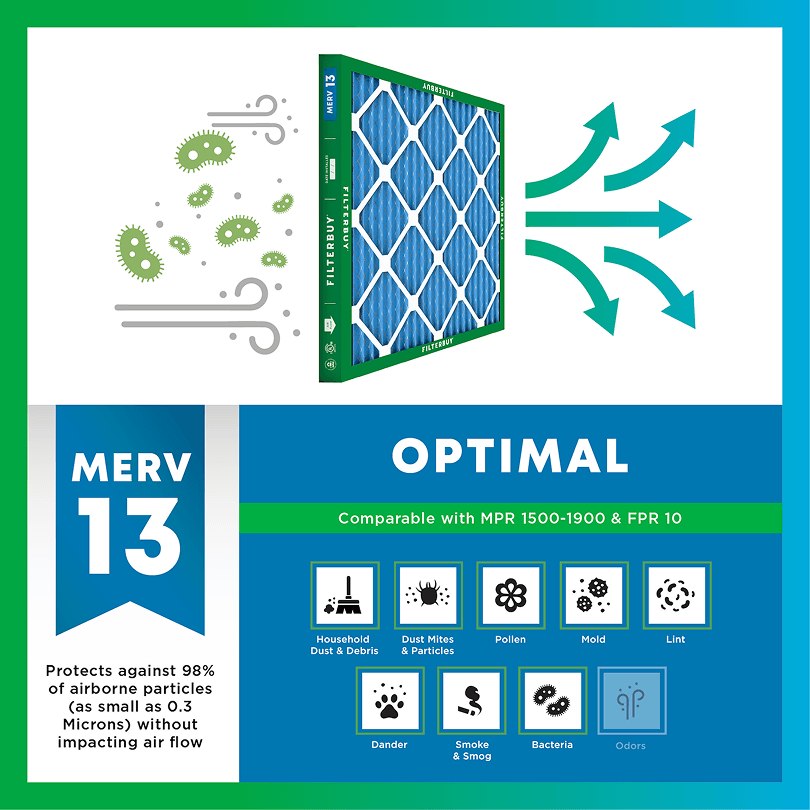

- Captures PM2.5 and other fine particulates
- Filters ash, soot, and smoke particles
- Rated to capture particles as small as 0.3 microns
- Matches the filter rating the EPA suggests during high-AQI and smoke events

AQI FAQs
What is AQI?
AQI stands for Air Quality Index, the EPA's scale for reporting daily air quality. It runs from 0 to 500. The higher the number, the greater the level of air pollution. Values at or below 100 are generally considered satisfactory; values above 100 mean air quality is unhealthy, first for sensitive groups, then for everyone as numbers climb.
What does AQI measure?
The AQI tracks five major pollutants regulated by the Clean Air Act: ground-level ozone, particle pollution (PM2.5 and PM10), carbon monoxide, sulfur dioxide, and nitrogen dioxide. The reported AQI value reflects whichever pollutant is highest at that time — most often ozone or fine particles (PM2.5).
How is AQI calculated?
Monitoring stations measure pollutant concentrations, and the EPA converts each into a standardized 0–500 score using set breakpoints. Each pollutant gets its own sub-index, and the highest sub-index becomes the reported AQI. That's why a single number can represent different pollutants on different days.
What is a good AQI?
An AQI of 0–50 is rated "Good" — air quality poses little or no risk. 51–100 is "Moderate," acceptable for most people though unusually sensitive individuals may want to limit prolonged outdoor exertion. Anything at or below 100 is generally considered satisfactory air quality.
What does an AQI of 100 (or 150) mean?
100 is the dividing line: at or below it, air quality is satisfactory for the general public. From 101–150, air is "Unhealthy for Sensitive Groups" — people with respiratory conditions, older adults, and children. From 151–200, it's "Unhealthy" and everyone may begin to feel effects.
Why is the AQI bad today?
Short-term AQI spikes usually come from wildfire smoke, temperature inversions that trap pollutants near the ground, high-ozone weather (hot, sunny, stagnant days), or heavy traffic and industrial activity. Check a real-time source like the map on this page to see which pollutant is driving today's reading in your area.
What AQI is bad for running or exercise?
Many runners follow the EPA category lines: below 50, no adjustment needed; 51–100, unusually sensitive people may shorten intense workouts; above 100, sensitive groups are advised to reduce prolonged or heavy outdoor exertion; above 150, that advice extends to everyone. Exercise increases how much air you breathe in, which is why thresholds matter more during workouts.
What AQI is safe to open windows?
A common rule of thumb is to keep windows open when the AQI is under 100 and close them when it climbs above, especially during wildfire smoke events when fine particles are elevated. When windows are closed, running your HVAC system with a fresh filter helps capture particles circulating indoors.
Should I wear a mask based on AQI?
Public health agencies generally suggest considering a well-fitted N95-style respirator outdoors when the AQI exceeds 150, particularly during smoke events. Cloth and surgical masks don't filter fine particles effectively. Follow guidance from your local health department, which may adjust recommendations during severe episodes.
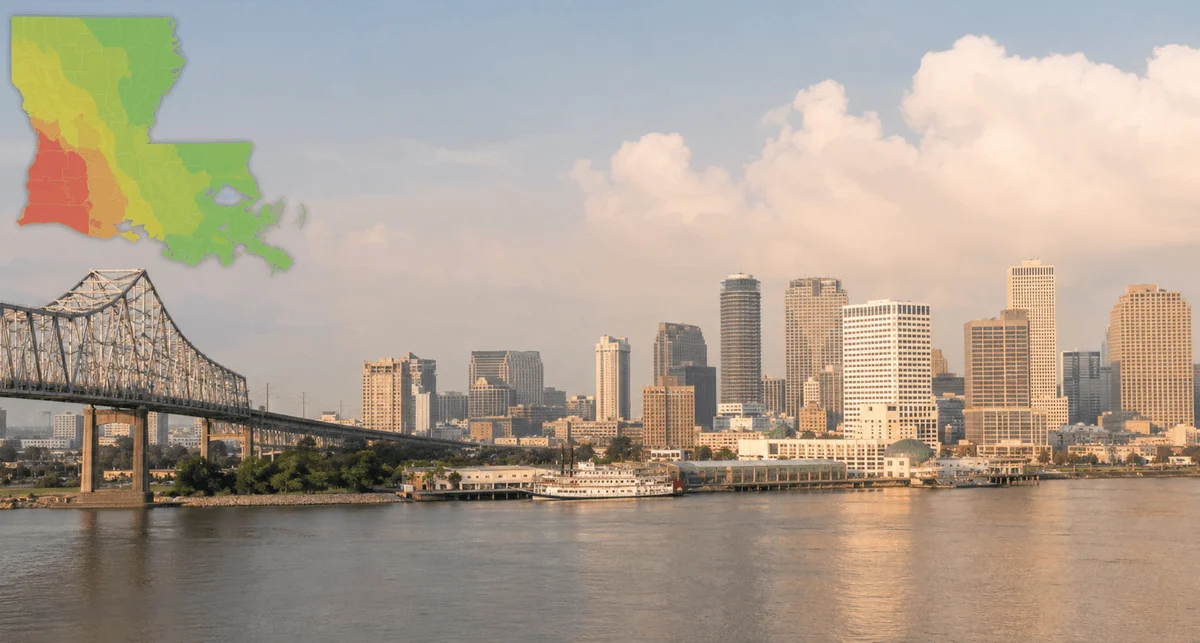
Check Today's Live Real Time Air Quality Index AQI Map in Louisiana Now
By Michelle Wan, Brand Manager & Air Quality Writer | Filterbuy | Reviewed by David Clark, Licensed HVAC Technician | Published: July 6, 2026 | Updated: July 6, 2026
Louisiana's Live Air Quality Index (AQI) Today
Louisiana's air usually sits in the Good to Moderate range, but it can climb fast on hot summer afternoons and on smoky days. The live map on this page reads your current AQI parish by parish, straight from the AirNow network and the Louisiana Department of Environmental Quality.
The scale runs 0 to 500. A reading of 0 to 50 is Good, and once the number passes 100 the air starts to affect sensitive groups like kids, older adults, and people with asthma. Most high-AQI days here trace back to one of two very different causes, and each one calls for a different move:
- Ozone day: builds on hot, sunny afternoons. A filter does little for it, so time hard exercise for early morning.
- Smoke or particle day (PM2.5): can arrive any hour and stay high. Seal the house and run a clean MERV 13 filter indoors.

Not sure which filter fits your home? Answer a few quick questions and we'll match you to the right one for your system.
Prefer to browse first? Shop air filters made to fit your home.
You walk outside in Baton Rouge on a July morning and the air already feels heavy enough to lean on. That thick, invisible weight is easy to shrug off until it turns into a scratchy throat, a wheezy kid, or a headache by noon. The Air Quality Index turns that guesswork into a single number you can actually act on, and Louisiana's number moves fast.
This page gives you a live, real-time look at Louisiana's air quality right now, parish by parish, pulled straight from the national monitoring network and state monitors. Louisiana's air rides a mix of forces most states never juggle at once. Gulf humidity and heat cook up ground-level ozone. Traffic and heavy industry along the Mississippi River corridor add fine particles. Spring pollen and drifting wildfire smoke pile on top. We built this so you can see what you're breathing today and decide, in seconds, whether it's a good morning for a run or a good day to filter the air inside instead.
Quick Answers About Louisiana's Live Air Quality Today
Is The Air Quality Bad In Louisiana Today?
Louisiana's air quality shifts hour by hour and parish by parish, so there's no single answer that stays true all day. The live map on this page reads current conditions from the U.S. AirNow network and the Louisiana Department of Environmental Quality, so you can check your exact AQI this minute. On most days the state lands in the Good to Moderate range, though summer heat, ozone, and smoke drifting in from distant fires can push sensitive areas higher.
New to the numbers? Our guide to what the Air Quality Index measures breaks down every color on the scale and what to do at each level.
Top Takeaways On Louisiana Air Quality Today
Louisiana's AQI runs on a 0 to 500 scale. A reading of 0 to 50 (green) is Good, and anything above 100 (orange and higher) starts to affect sensitive groups.
Two pollutants drive most of Louisiana's unhealthy air days: ground-level ozone and fine particle pollution, known as PM2.5.
Hot, humid, stagnant summer afternoons are prime conditions for ozone to build across South Louisiana.
Wildfire smoke that blows in from other states and Canada can spike PM2.5 sharply, even when no fire is burning anywhere near you.
The American Lung Association's 2026 "State of the Air" report graded the New Orleans metro area a C for ozone and ranked it 100th most polluted in the nation.
Public-health agencies point to a MERV 13 filter as the rating that captures the fine particles in smoke and haze inside your home.
How To Read And Use Louisiana's Live AQI Map
How To Read Louisiana's Live Air Quality Index Map
The live map colors each area by its current AQI, the same 0 to 500 scale the EPA uses nationwide. Green means Good and maroon means Hazardous, with orange, red, and purple in between. The map shows whichever pollutant is worst at that moment, usually ozone or PM2.5, so a green dot means both are low and an orange dot means at least one has climbed. To read your own conditions, find your parish or nearest city and check the color and number. AirNow and the Louisiana Department of Environmental Quality feed the same monitors, so the reading you see reflects real instruments on the ground, not a guess.
Where Louisiana's Live Map Has Blind Spots
Here's something we always tell people up front. Rural Louisiana has real gaps in monitor coverage. If your parish has no monitor, the map may show nothing or lean on a reading from miles away, and where a parish has several monitors, the worst one usually stands in for the whole area. Treat a blank or distant reading as a reason to check a neighboring parish and stay cautious, especially if you can see haze or smell smoke, rather than as an all-clear.
What Makes Louisiana's Air Quality Rise And Fall
Louisiana's air answers to weather and geography as much as to any single smokestack. On hot, sunny, low-wind days, sunlight bakes traffic and industrial emissions into ground-level ozone, which is why South Louisiana's worst readings tend to arrive on still summer afternoons. Fine particle pollution comes from a wider cast: vehicles and industry along the Mississippi River corridor, seasonal agricultural and land-clearing burns, and wildfire smoke that travels hundreds of miles on the wind. Spring layers pollen on top of all of it. Because these drivers rise and fall on their own schedules, your AQI can read Good at breakfast and Moderate by mid-afternoon.
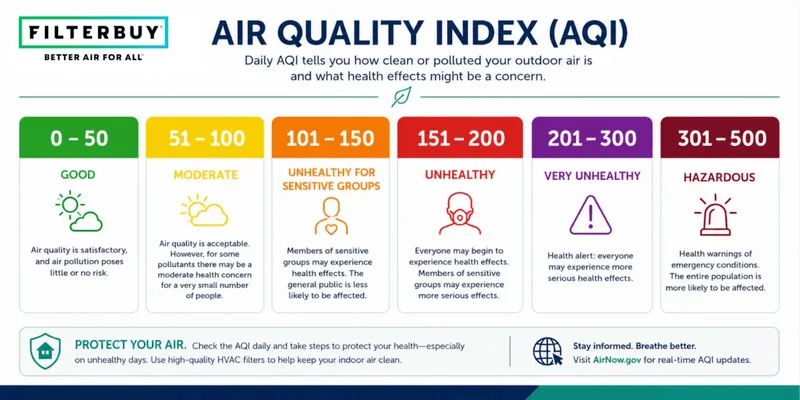
Each AQI category points to a different everyday decision.
| AQI Range | Category | What It Means For You |
|---|---|---|
| 0–50 | Good (Green) | Air quality is satisfactory and poses little or no risk. |
| 51–100 | Moderate (Yellow) | Acceptable, though unusually sensitive people may want to ease up outdoors. |
| 101–150 | Unhealthy for Sensitive Groups (Orange) | Kids, older adults, and people with asthma or heart conditions should limit exertion. |
| 151–200 | Unhealthy (Red) | Everyone may feel effects. Sensitive groups feel them more strongly. |
| 201–300 | Very Unhealthy (Purple) | A health alert. Everyone should reduce outdoor activity. |
| 301–500 | Hazardous (Maroon) | Emergency conditions. Stay indoors with filtered air. |
Ozone Day Or Smoke Day? Read What Louisiana's Air Is Really Doing
A high number in Louisiana almost always traces back to one of two very different culprits, and telling them apart changes what you should actually do about it. This is the call we help Louisiana homeowners make every fire season.
On An Ozone Day
It builds on hot, sunny, low-wind afternoons, mostly late spring through fall.
The reading often looks fine at dawn and climbs through midday.
Ozone is a gas, so an indoor filter does little for it. Your best move is timing, so exercise early and ease off in the afternoon.
Kids, older adults, and anyone with asthma feel it first.
On A Smoke Or Particle Day
It can arrive any hour, often with visible haze or a campfire smell, when wildfire smoke drifts in from far away.
The reading tends to stay high day and night.
This is where filtration earns its keep. Seal the house, set your HVAC to recirculate, and keep a clean MERV 13 filter working.
Change that filter sooner than usual, because smoke loads it fast.
So before you react to the number, ask which kind of day it is. Ozone rewards good timing and smoke rewards staying in and filtering, which means the same AQI can call for opposite responses.
What To Do When Louisiana's AQI Climbs
When the map turns orange or worse, small moves protect you. Check the number before you plan anything outdoors, and shift hard exercise to early morning when ozone is lowest. Keep windows and doors closed to hold outdoor particles out. Run your HVAC system with a clean set of MERV 13 air filters so the air moving through your home gets scrubbed of fine smoke particles. Set up one room you can keep cleanest, and give kids, older adults, and anyone with asthma or a heart condition extra room to rest indoors on high-AQI days.
Key Louisiana Air Quality Terms Defined
Air Quality Index (AQI)
A standardized 0 to 500 scale the U.S. EPA uses to report how clean or polluted outdoor air is on a given day, along with the health effects that may follow. Higher numbers mean more pollution and greater risk.
Ground-Level Ozone
A gas formed when sunlight reacts with pollutants from vehicles, power plants, and industry. Unlike the protective ozone high in the atmosphere, ground-level ozone irritates the lungs and is Louisiana's most common warm-season pollutant.
Fine Particle Pollution (PM2.5)
Airborne particles 2.5 micrometers wide or smaller, produced by combustion, industry, and smoke. They're small enough to travel deep into the lungs and even reach the bloodstream, which makes them the main health concern during smoke events.
MERV
Minimum Efficiency Reporting Value, the industry scale that rates how well a filter captures airborne particles. Higher MERV numbers trap smaller particles, and MERV 13 is the level agencies recommend for fine smoke particles at home. Our MERV rating chart compares what each level captures.
Air Filter
A device made of fibrous or porous material that removes solid particles such as dust, pollen, and smoke from the air passing through it. In a home, the air filter sits in your HVAC system and cleans the air on every cycle.
Action Day (Code Orange)
An advisory issued when forecasters expect the AQI to reach unhealthy levels, most often for ozone. On an Action Day, sensitive groups should cut back on outdoor exertion and everyone can help by driving and burning less.
Expert Insight From Filterbuy
After manufacturing filters for over a decade and serving more than two million households, we've learned that the families who handle poor air days best are the ones who check the number first and filter the air they can't avoid. When Louisiana's AQI climbs, a clean MERV 13 filter in your system is one of the simplest, most reliable ways to protect the air your family breathes indoors.
David Heacock, Founder & CEO, Filterbuy
7 Resources We Actually Reach For When Louisiana's Air Turns
At Filterbuy, we spend our days helping families turn invisible air into a decision they can act on, and these are the seven sources our team opens first when someone in Louisiana asks whether it's safe to go outside today. We've ordered them the way we actually use them, from the live number down to the bigger picture, so you're never left guessing.
Get Louisiana's Live AQI Straight From The Official Source
When you want the real number, go to the people who set the standard. AirNow is the EPA's own AQI system, and it's the first tab we open when smoke rolls in, so the live Louisiana reading you're seeing is one you can fully trust. Source: AirNow's Louisiana state AQI page.
See What's Happening In Your Own Parish Right Now
Louisiana runs its own network of air monitors, and the DEQ posts live readings alongside a next-day forecast. In our experience the air can swing from one parish to the next, so this local view is the one we lean on hardest. Source: Louisiana DEQ's current monitoring data and AQI.
Connect The Air Outside To Your Family's Health
The Louisiana Department of Health lines up ozone and PM2.5 right beside asthma and breathing data, so the health stakes stop being invisible. Come here when you want to know why the number matters, not just what it says. Source: the Louisiana Department of Health's outdoor air quality tracking.
Turn Today's Number Into A Simple Plan
The CDC takes every AQI level and turns it into plain-language steps you can act on the same day. It's the fastest way to decide whether today's air should change your family's plans. Source: the CDC's guide to air quality and your health.
Know Your Move The Moment An Alert Drops
The National Weather Service issues Air Quality Alerts and Action Days and spells out exactly what to do during each one. Check it the second an alert posts for your area so you're never left guessing. Source: the National Weather Service's air quality alert guidance.
Get New Orleans-Specific Steps For Smoky Days
NOLA Ready, the City of New Orleans preparedness program, hands local households a ready-to-use plan for smoke and high-pollution days, from sealing up the house to running the HVAC on recirculate. It's built for the air right outside your door in greater New Orleans. Source: NOLA Ready's air quality guidance.
See How Many Louisianans Breathe This Air With You
U.S. Census QuickFacts pulls Louisiana's population and household numbers into one place, putting real weight behind every statewide reading. Use it to see just how many people a bad-air day touches across the state. Source: U.S. Census QuickFacts for Louisiana.
Pro Tip from the Filterbuy team: The mistake we see most is checking the air once and calling it done. Louisiana's AQI can read Good at breakfast and climb by mid-afternoon, so we tell families to glance at the live map both morning and evening through ozone and smoke season.
3 Statistics That Prove Louisiana's Air Is Worth Watching
We don't ask you to take our word for it. The Filterbuy team leans on the research below when Louisiana families ask why cleaner indoor air is worth the effort, and every number means something real once it's inside your home.
1. 167,105 Louisiana kids breathe air graded for pollution.
New Orleans earned a C for ozone.
That ranks it 100th most polluted in the nation.
The grades cover 2022 to 2024.
Source: American Lung Association State of the Air, Louisiana.
2. Wildfire smoke hits your lungs harder than everyday pollution.
Wildfire PM2.5 raised respiratory hospitalizations 1.3% to 10%.
The same amount of other-source PM2.5 raised them just 0.67% to 1.3%.
Both measured per 10 micrograms per cubic meter of air.
3. The most harmful particles are too small to see.
PM2.5 measures 2.5 micrometers or less.
That's about 30 times smaller than a human hair.
Particles that small slip past your body's defenses and reach deep into the lungs.
Put those three findings together and one pattern stands out. The particles that do the most damage in Louisiana are the ones you'll never spot on your own, whether they blow in as wildfire smoke or drift off the interstate. The air outside sets the challenge, and the air inside your home is the part you can actually change. Helping Louisiana families change it is the whole reason Filterbuy exists.
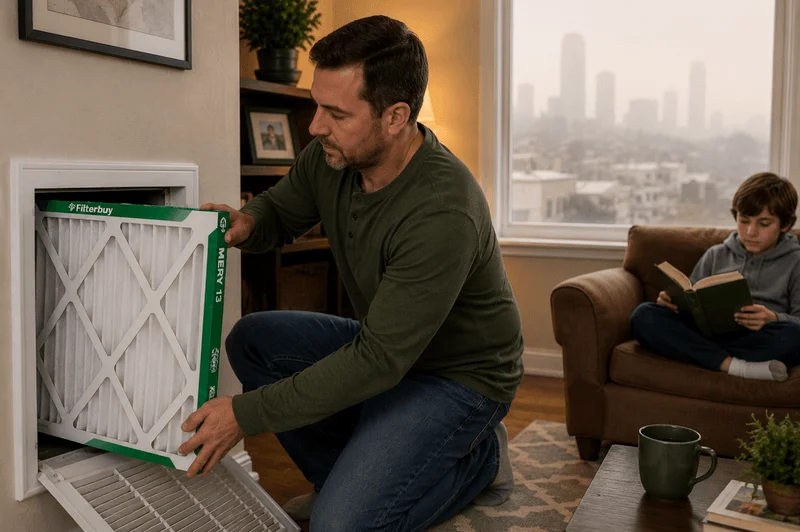
A clear sky and clean air aren't the same thing, and that trips people up all the time. I tell people to trust the number over the view out their window, then let a filter that's actually rated for smoke handle the air they can't avoid indoors.
Michelle Wan, Brand Manager & Air Quality Writer, Filterbuy
Final Thoughts On Checking Louisiana's Air Quality
Checking the AQI takes about five seconds, and after doing it for a week it becomes as automatic as glancing at the temperature. That's the habit worth building in Louisiana, where the air can look identical on a Good day and a Code Orange one. We'd rather you knew the number and made your own call than found out the hard way at mile three of a jog. Pair that quick check with a filter that's actually rated for smoke, and you've covered both halves of the problem: the air you move through outside and the air you live in at home. If you're unsure where your system lands, our guide to the MERV rating that fits your home makes the call easy.
Your Next Steps For Cleaner Air In Louisiana
1. Bookmark this page and check the live map each morning before you plan outdoor time.
2. Sign up for free air quality alerts through DEQ EnviroFlash and the AirNow app so a Code Orange day reaches you automatically.
3. Match your filter to the threat. Our guide to the best filter for smoke and fine particles walks through stepping up to a MERV 13 rating.
4. Set up one clean room with the windows sealed and the HVAC running for high-AQI and smoke days.
Frequently Asked Questions About Louisiana Air Quality
Breathe Easier At Home, Whatever Louisiana's Air Is Doing
You can't control the ozone over the river or the smoke on the wind, but you can control the air inside your four walls. Filterbuy makes American-built filters in over 600 sizes, so there's one cut to fit your system and rated to catch what Louisiana's air throws at it. When the map turns orange, a fresh filter is the easiest win in the house. Shop air filters made for your home.