
Shreveport Real-Time AQI Tracker


Get Alerts For Unhealthy AQI In Your Area
When air quality in your area reaches unhealthy levels, we'll send you a quick alert, along with expert tips on how to reduce your exposure.
What's Actually In Shreveport Air Today?
What High AQI Means for Your Lungs in Shreveport
How to Read AQI
The Air Quality Index (AQI) measures how polluted the air is and how it may affect your health.
0–50 (Good): Air quality is satisfactory.
51–100 (Moderate): Acceptable, but some pollutants may pose minor concerns.
101–150 (Unhealthy for Sensitive Groups)
151–200 (Unhealthy)
201–300 (Very Unhealthy)
301+ (Hazardous)
Moderate
Still okay for most, but if you have asthma or allergies, take it easy and avoid long outdoor workouts.
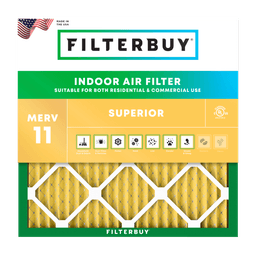
Shop MERV 11 filters→What's the Right Filter for Your AQI Level?


Check Today's Live Real Time Air Quality Index AQI Map in Shreveport, LA Now
TL;DR
The live map at the top of this page shows Shreveport's current air quality index from EPA AirNow and Louisiana Department of Environmental Quality (LDEQ) monitors. Because Filterbuy makes air filters, it reads Shreveport differently than most AQI pages. The city rarely spikes and earns top marks for short-term readings, yet Caddo Parish has run above the federal annual standard for PM2.5, the fine particles in smoke and haze.
Key Takeaways
In 2026, the American Lung Association graded the Shreveport-Bossier City metro A for short-term particles and F for annual particles.
Northwest Louisiana's ozone season runs March 1 through October 31.
Filters help with fine particles but not ozone, which breaks down indoors.
Filterbuy's action line is AQI 100 when smoke or particles drive it: MERV 13 in the HVAC, the fan set to On, a portable HEPA cleaner in each occupied room, and the house closed up.
How to Read the Live Shreveport AQI Map Above
The AQI is a 0 to 500 score that turns the worst pollutant in a given hour into one number and color. In Shreveport, that is usually ground-level ozone on hot afternoons and fine particulate (PM2.5) during smoke and haze or on still winter nights. Tap the pollutant label before the number. It tells you whether a filter can help at all, so Filterbuy checks it first.
Shreveport has few regulatory monitors. LDEQ's Shreveport Downtown Airport site reports ozone and continuous PM2.5, and a second ozone monitor sits at Dixie in north Caddo Parish. Readings for neighborhoods like Southern Hills or Cedar Grove are estimated from those stations, not measured on your street.
The number also lags. Hourly AQI uses NowCast, a weighted average of recent hours, so smoke can reach your nose before it reaches the map. If you smell smoke while the map reads green, close the windows anyway.
For PM2.5, AQI 50 matches the annual federal standard of 9.0 µg/m³, so a low-yellow reading just above 50 sits over that line. Orange days are rare in Shreveport, but a run of low-yellow days is the annual problem showing up in real time. It's Filterbuy's cue to keep MERV 11 or better in place and a spare MERV 13 on hand.
What Each AQI Range Means for a Shreveport Day
The action column below is Filterbuy guidance built on the EPA AQI guide.
Ranges and categories: EPA AQI. Actions: Filterbuy guidance, starting at AQI 100.
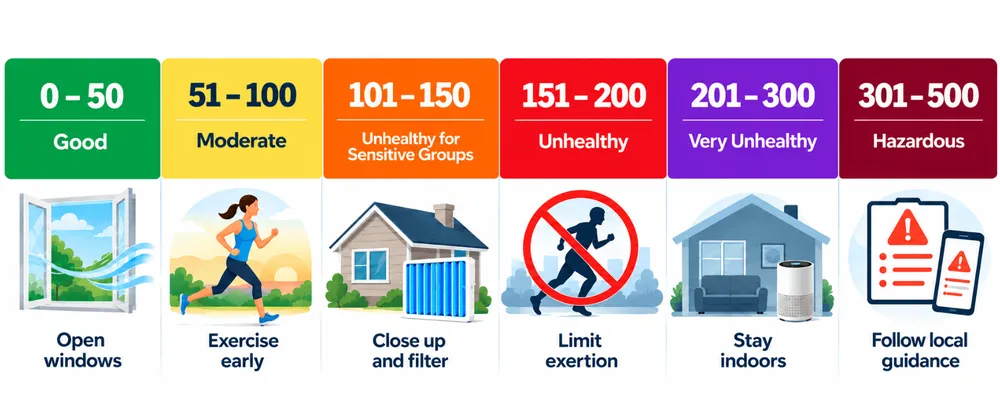
Ozone fades after sunset, so a 110 at 4 p.m. often turns into a comfortable evening. A particle reading of 110 can linger overnight.
Is Shreveport's Air Safe to Breathe Right Now?
Whether Shreveport's air is safe depends on the reading above and who's breathing it. Below 100, most healthy adults need no changes. Between 101 and 150, sensitive groups should ease off long outdoor exertion; above 150, everyone should. EPA's sensitive groups include children, older adults, and people with asthma, COPD, or heart disease, who should also follow their doctor's advice. See Filterbuy's guide on what AQI level means you should stay inside.
Where to Get the Shreveport Air Quality Forecast
Each day, LDEQ meteorologists publish an ozone and PM2.5 forecast for northwest Louisiana that names the weather behind it, such as stagnant high pressure or incoming smoke. When ozone looks likely to reach unhealthy levels, the forecast becomes an Ozone Action Day notice for the Shreveport-Bossier area.
The forecast matters most from March 1 through October 31, the ozone monitoring season EPA set for northwest Louisiana in a 2002 Federal Register rule. Compare the Louisiana live AQI map or the Bossier City air quality page across the river.
What's Actually in Shreveport-Bossier Air
Ground-level ozone forms when nitrogen oxides (NOx) and volatile organic compounds bake in sunlight. Locally, those come from traffic on I-20, I-49, and I-220, operations at Barksdale Air Force Base, and the riverfront rail yards.
The Haynesville Shale, a natural gas formation under the Texas-Louisiana border, adds regional emissions. Its compressor engines and processing plants release NOx, as do drilling rigs, and a 2010 peer-reviewed study modeled Haynesville development adding up to 5 ppb to regional ozone.
PM2.5 comes from vehicles, industry, yard and wood burning, prescribed fires, and long-range smoke.
How Shreveport's Air Stacks Up Against Other Cities
Shreveport's ozone and particle records point in different directions. Ozone has improved steadily, and the Shreveport-Bossier City Ozone Advance update filed with EPA reported an unofficial design value of 64 ppb at the end of 2019, below the 70 ppb federal standard.
On annual particles, Shreveport is the Louisiana outlier. The American Lung Association ranked the metro among the nation's cleanest for short-term particle pollution yet gave it an F for year-round levels, with Caddo Parish about 7.7 percent above the annual federal standard over 2022 to 2024. LDEQ has disputed the Lung Association's methods, which count every bad-air day, including smoke days regulators can exclude.
Smoke, Saharan Dust, and Burn Season in Northwest Louisiana
Saharan dust crosses the Gulf in early summer and can hold PM2.5 in the Moderate range for days. Smoke from prescribed burns and wildfires in East Texas and north Louisiana pine forests arrives mostly in late summer and late winter.
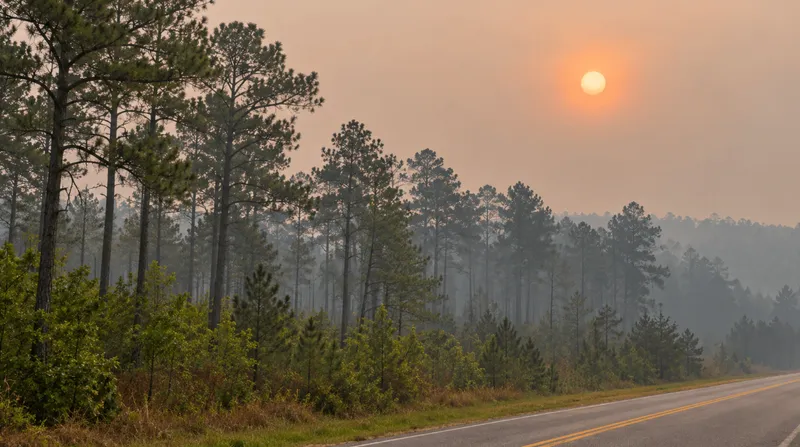
Smoke is fine particles plus gases. A pleated filter captures the particles, not the gases or the smell, and smoke loads it fast. EPA advises checking the filter during a smoke event and replacing it when it looks dark brown or black, which can be well before the usual interval, so keep spares on hand. The live USA wildfire and smoke map shows where plumes are coming from.
What an Ozone Action Day Means for Your Shreveport Household
An Ozone Action Day is a forecast that ozone will likely reach unhealthy levels for sensitive groups the next day. Move outdoor exercise before 10 a.m. To cut what feeds ozone, refuel and mow in the evening and avoid idling in pickup lines.
EnviroFlash, an EPA AirNow service, sends free Shreveport-area email alerts, and LDEQ posts current statewide monitor readings throughout the day.
Shreveport's Annual Number Matters More Than Today's
Filterbuy has built air filters in U.S. factories since 2013 and shipped them to more than two million households. Most AQI advice centers on bad days. In Shreveport, short-term readings grade well while the annual average does not, so most exposure comes from ordinary days that sit a little too high.
"Shreveport is the case I point to when people assume a green map means clean air all year. The daily readings can look fine for weeks while the annual particle average sits over the federal line. That is the air a return filter handles every day, whether anyone checks the map or not."
Michelle Wan, Brand Manager and Air Quality Writer, Filterbuy
Long Shreveport summers keep air conditioners running, so a central filter processes the home's air many times a day. Matched to the particle problem and changed on schedule, it works through all that run time. Filterbuy's standard guidance is 90 days for a pleated filter in normal conditions. During smoke, go by how the filter looks, not the calendar. Ozone is the exception: it breaks down on indoor surfaces, so closing windows does more than any filter.
Which Filter Shreveport's AQI Level Calls For
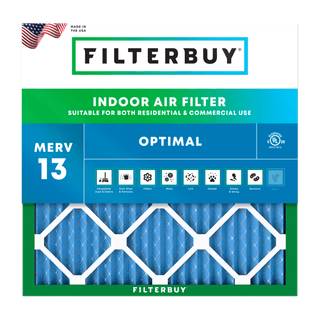
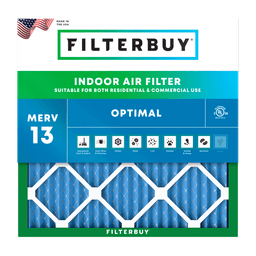
For wildfire smoke, the answer is MERV 13. Match the filter to the pollutant from there: MERV 11 for everyday particles, closed windows for ozone.
Most HVAC systems accommodate MERV 13 when the filter is replaced often (EPA). Confirm your size as usual.
When smoke or particles push the AQI to 100, Filterbuy's action line, follow AirNow and LDEQ guidance first, then take four steps. Put a MERV 13 filter in the HVAC. Set the thermostat fan to On so the system filters continuously. Run a portable HEPA air cleaner in each occupied room, bedrooms first. Close up the house and skip candles and frying. EPA recommends MERV 13 or higher during smoke events. The AQI 100 trigger and the room-by-room HEPA advice are Filterbuy's.
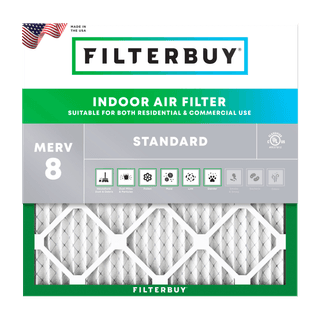
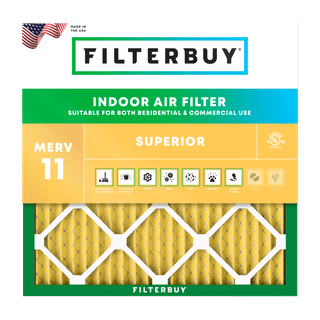
For everyday particles, Filterbuy recommends a MERV 11 filter as the default. Homes without particle concerns can stay with MERV 8. Filterbuy makes all three in 600+ sizes, and Filterbuy auto-delivery keeps spares arriving.
Most furnaces and HVAC systems can run MERV 13 without equipment problems if the filter is replaced often, according to EPA, so treat the upgrade as a normal size check. Homes with window units or no ducts have no whole-home layer, so a portable HEPA cleaner is their main defense. Size it by EPA's cleaner air room guidance: a smoke CADR of at least two-thirds the room's square footage, so a 300 sq ft bedroom needs roughly 200. Skip ionizers and ozone generators; EPA advises against them. The EPA guide to air cleaners covers the rest.
Supporting Statistics
1. 9.9 µg/m³ annual PM2.5 in Caddo Parish
The 2019–2021 design value, against a 9.0 federal standard.
Why it matters: it backs year-round filtration here.
Source: EPA county monitoring data
2. About 50% less indoor PM2.5
With a high-efficiency HVAC filter and the fan running continuously.
Why it matters: it is why Filterbuy pairs MERV 13 with the fan On.
Source: EPA wildfire smoke guidance
3. 17% more asthma emergency visits
Across 19 U.S. wildfire smoke days in 2023.
CDC counted smoke days starting at AQI 101.
Why it matters: it matches Filterbuy's AQI 100 action line.
Source: CDC's MMWR
Frequently Asked Questions
What is the air quality in Shreveport today?
The live map above shows Shreveport's current AQI and the pollutant driving it, updated hourly from EPA AirNow and LDEQ monitors.
Is the air quality bad in Shreveport today?
At 101 and above, sensitive groups should limit exertion, and at 151 everyone should. Afternoons run higher from March through October, when ozone is in season.
What is the PM2.5 level in Shreveport?
Tap the monitor on the live map to see PM2.5 in micrograms per cubic meter. LDEQ notes these continuous readings feed the AQI only and are not the regulatory measurement.
Why does Shreveport get a failing grade for particles if daily readings look fine?
Daily AQI flags short spikes, while the annual grade averages every day. Shreveport has few spikes, but its baseline has run above the federal annual standard.
What MERV rating should I use in Shreveport?
For wildfire smoke, use MERV 13. For everyday particles, Filterbuy's default for most Shreveport homes is MERV 11, stepping up to MERV 13 when smoke or particles push the AQI to 100.
Glossary
AQI (Air Quality Index): EPA's index for reporting daily air quality. It runs from 0 to 500 across six color-coded categories.
PM2.5: Fine particulate matter 2.5 micrometers or smaller, able to reach deep lung tissue. The main component of smoke.
Design value: The multi-year statistic EPA compares against a federal standard.
MERV: Minimum Efficiency Reporting Value, the 1 to 16 scale rating how well an HVAC filter captures particles.