
Mesa Real-Time AQI Tracker


Get Alerts For Unhealthy AQI In Your Area
When air quality in your area reaches unhealthy levels, we'll send you a quick alert, along with expert tips on how to reduce your exposure.
What's Actually In Mesa Air Today?
What High AQI Means for Your Lungs in Mesa
How to Read AQI
The Air Quality Index (AQI) measures how polluted the air is and how it may affect your health.
0–50 (Good): Air quality is satisfactory.
51–100 (Moderate): Acceptable, but some pollutants may pose minor concerns.
101–150 (Unhealthy for Sensitive Groups)
151–200 (Unhealthy)
201–300 (Very Unhealthy)
301+ (Hazardous)
Moderate
Still okay for most, but if you have asthma or allergies, take it easy and avoid long outdoor workouts.
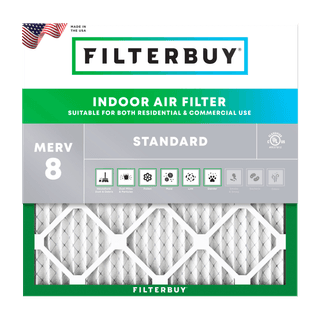
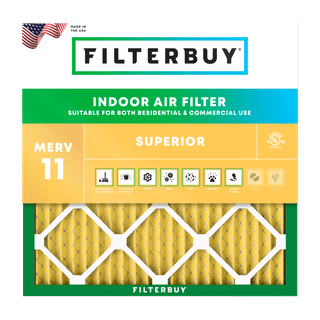
Shop MERV 11 filters→What's the Right Filter for Your AQI Level?


Check Today's Live Real Time Air Quality Index AQI Map in Mesa, AZ Now
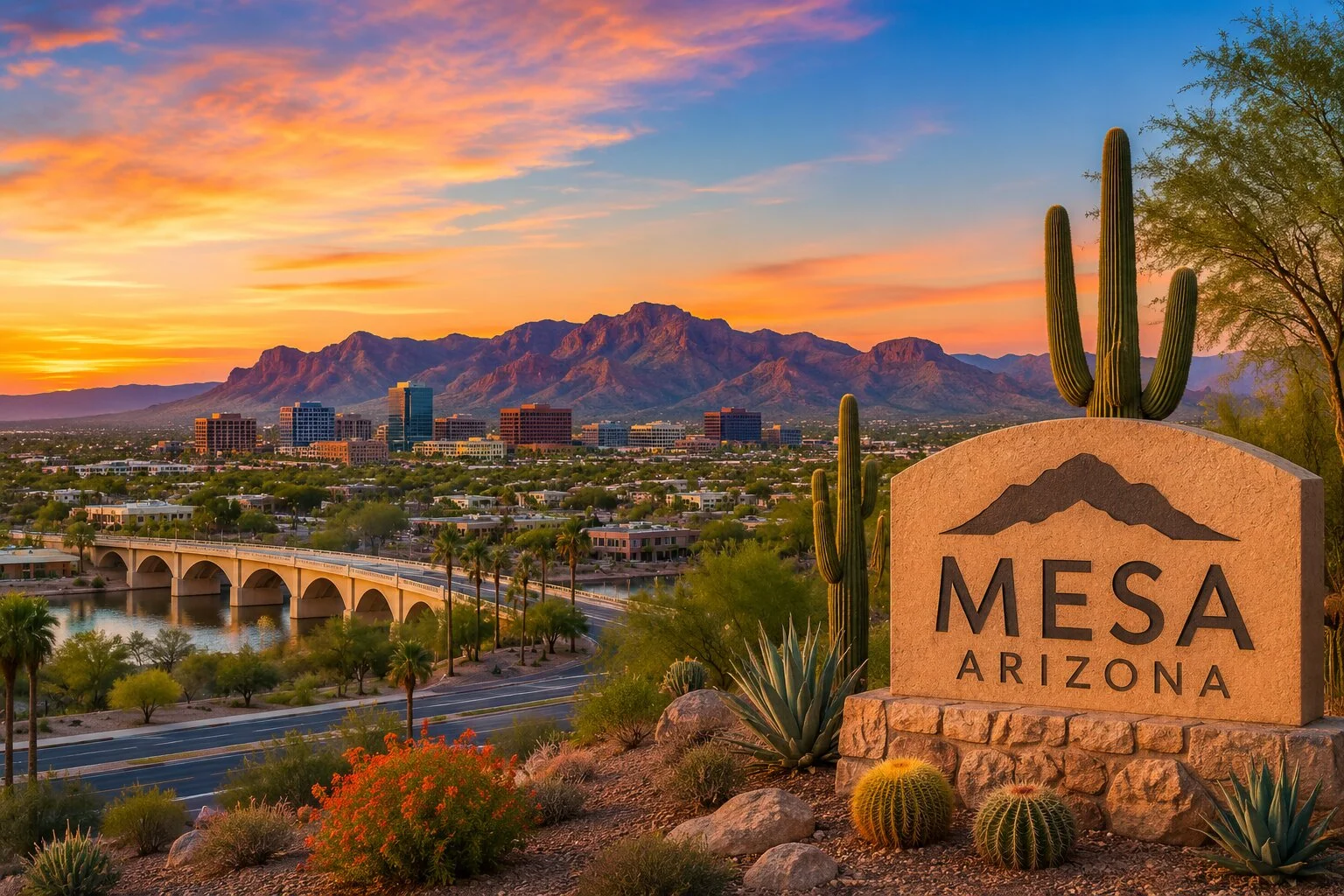
On a hot Mesa afternoon, the air can turn from clear to risky in the time it takes to water the yard. Ozone builds as the heat climbs. A monsoon haboob can bury the valley in dust within minutes. You can't see most of it, and that's exactly why a number helps. The live map at the top of this page shows what Mesa's air quality is doing right now, and the rest of this page shows you what to do about it.
TL;DR Quick Answers
Short on time? Here's the quick read on Mesa's air right now.
What is the air quality in Mesa today? Mesa's air quality today is shown by the live AQI number above. On a typical day, it sits in the good to moderate range, though ground-level ozone can push it higher on hot, sunny afternoons.
Is the air quality bad in Mesa today? Check the live reading. An AQI at or below one hundred is acceptable for most people. A reading above one hundred means the air is unhealthy for sensitive groups and worth taking seriously.
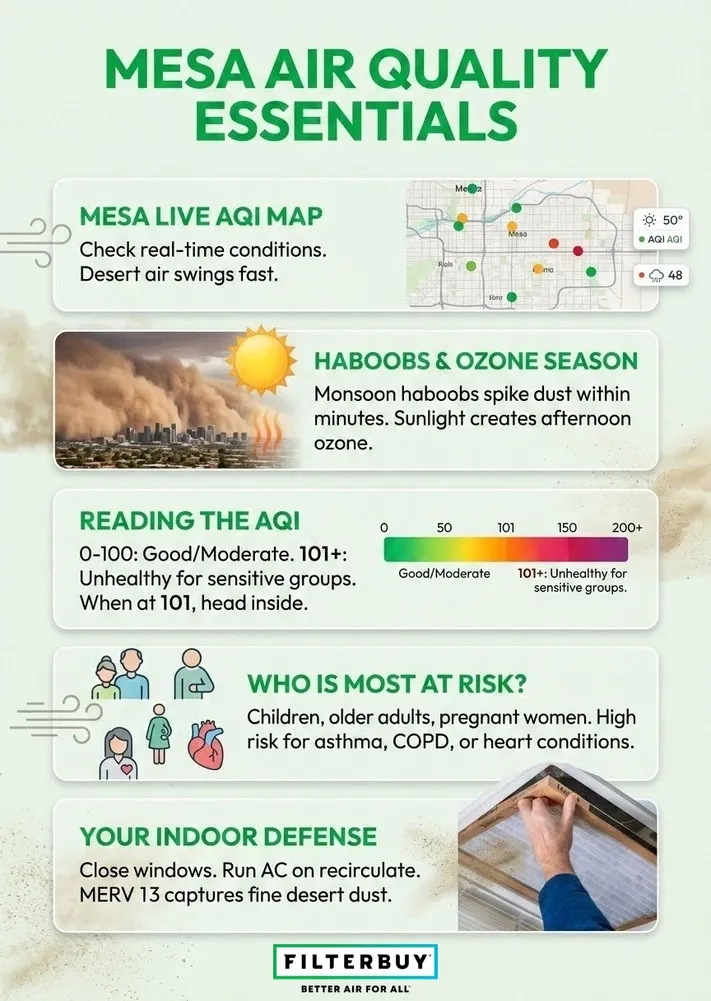
Mesa's air swings fast. Ozone builds on hot afternoons, and dust storms spike particle levels with little warning.
Green or yellow on the live map is fine for most people. Orange or higher means sensitive groups should take care.
On bad-air days, close the windows, run the AC on recirculate, and let a MERV 13 filter handle the fine particles and dust.
Top Takeaways
The live AQI map above gives you Mesa's real-time air quality, refreshed continuously.
Ozone is the warm-season threat, peaking on hot, sunny afternoons.
Dust and monsoon haboobs spike PM10 fast, from June through September.
Once the AQI reaches one hundred, sensitive groups should take real care.
Closed windows, recirculated air, and a MERV 13 filter are your strongest indoor defense.
What Shapes the Air Quality in Mesa, AZ
Start with the number itself. The air quality index, or AQI, runs from zero to five hundred and sorts into six color-coded bands. Zero to fifty is green and good. Fifty-one to one hundred is yellow and moderate. Hit one hundred one, and you're into orange, where sensitive groups feel it first. Red, purple, and maroon climb from there into air that's unhealthy for everyone.
Two forces drive most of Mesa's bad-air days. Ozone is the first. Arizona gets more sun than any state in the country, and that sun cooks tailpipe and industrial emissions into ozone on hot afternoons, so summer is our ozone season. The EPA classifies the Phoenix-Mesa area as a Moderate ozone nonattainment area for the 2015 federal standard, which makes this a measured problem rather than a guess. Dust is the second force. Between June and September, monsoon winds can throw up a haboob, a wall of dust thousands of feet high that spikes PM10 within minutes.
Some people feel it before anyone else. Children, older adults, pregnant women, and anyone with asthma, COPD, or a heart condition carries the most risk. When the AQI reaches orange or higher, those groups should ease off hard outdoor activity, and the rest of us breathe easier indoors with the windows shut.
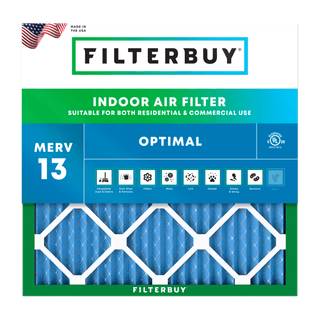
This is where your home earns its keep. We'll be honest about the limits. No household filter strips ozone gas out of the air you pull in from outside. Against the fine particles and desert dust behind Mesa's particle pollution, though, a MERV 13 filter on your HVAC system is one of the best tools you have. Shut the windows, run the system on recirculate, and let the filter do the quiet work of protecting the people inside.
After more than a decade of building filters, I can tell you the desert plays by its own rules. Here you change a filter by the weather, not the calendar, because one bad haboob week loads it faster than a quiet month ever will, and a good filter is what decides how much of Mesa’s air your family actually breathes.
— Filterbuy Indoor Air Quality Team
Seven Resources Every Mesa Resident Should Bookmark
How to Read an AQI Number in Ten Seconds. AirNow, the EPA's public air quality service, lays out the six color bands and what each one means for your day.
Maricopa County's Live NowCast Air Map. County monitors refresh PM10 and PM2.5 every five minutes, and you can sign up for Rapid Response alerts before dust arrives.
Arizona's Five-Day Phoenix-Mesa Air Forecast. ADEQ forecasts ozone, PM10, and PM2.5 across the metro so you can plan the week ahead.
What Ozone Does to Your Lungs. The EPA explains why hot, sunny days push ozone up and which groups it hits hardest.
How Dust and Fine Particles Reach Deep Into Your Lungs. The CDC breaks down PM10 from roads and dry land, and the smaller PM2.5 that slips past the body's defenses.
What to Do When a Dust Storm Hits the Road. The National Weather Service spells out the steps that keep drivers safe when a haboob drops visibility to near zero.
Build Your Family's Severe-Weather Plan. Ready.gov walks you through a household plan and kit before the next monsoon storm rolls through.
Three Numbers That Tell You How Mesa Breathes
Phoenix-Mesa Ranks 4th Worst in the Country for Ozone. The American Lung Association's State of the Air 2026 report ranks the Phoenix-Mesa metro 4th worst in the nation for ozone, with Maricopa County logging 58.2 unhealthy ozone days a year and an F grade.
About 80 Percent of Mesa's Ozone Blows In From Outside the Valley. Modeling by the Maricopa Association of Governments and the EPA estimates that roughly 80 percent of the ozone reaching the area comes from natural sources or from outside the region.
513,656 People Breathe Mesa's Air. Mesa is Arizona's third-largest city, home to 513,656 residents as of the Census Bureau's July 2025 estimate, all sharing the same desert air.
Final Thoughts: The Two-Minute Habit Worth Keeping
Here's our honest opinion after years of obsessing over indoor air. The most underrated health habit in a city like Mesa is the two-minute AQI check. It costs nothing, and it turns a guess into a real decision about whether to run outside, when to close the windows, and how hard to push the kids at practice. The ozone drifting across the valley isn't yours to control. Neither is the dust the monsoon kicks up. The air inside your own four walls is. That's the part you own, and owning it is what makes you the hero of your household, one clean breath at a time.
Your Next Steps Toward Cleaner Air in Mesa
Bookmark this page and glance at the live AQI each morning before you plan anything outdoors.
Zoom out to statewide conditions with our Arizona live air quality index map.
Match a MERV 13 filter to your system and change it on schedule so it's ready when the AQI climbs.
Sign up for Maricopa County dust alerts so a haboob never catches you off guard.
Frequently Asked Questions About Mesa Air Quality
Take Charge of the Air Your Family Breathes
You're the one who keeps your household breathing easier, and the right filter makes that job far simpler. Find your exact MERV 13 filter size at Filterbuy, install it, and set a reminder to check Mesa's AQI each morning. Little effort, big impact.