
Mobile Real-Time AQI Tracker


Get Alerts For Unhealthy AQI In Your Area
When air quality in your area reaches unhealthy levels, we'll send you a quick alert, along with expert tips on how to reduce your exposure.
What's Actually In Mobile Air Today?
What High AQI Means for Your Lungs in Mobile
How to Read AQI
The Air Quality Index (AQI) measures how polluted the air is and how it may affect your health.
0–50 (Good): Air quality is satisfactory.
51–100 (Moderate): Acceptable, but some pollutants may pose minor concerns.
101–150 (Unhealthy for Sensitive Groups)
151–200 (Unhealthy)
201–300 (Very Unhealthy)
301+ (Hazardous)
Moderate
Still okay for most, but if you have asthma or allergies, take it easy and avoid long outdoor workouts.
Shop MERV 11 filters→What's the Right Filter for Your AQI Level?
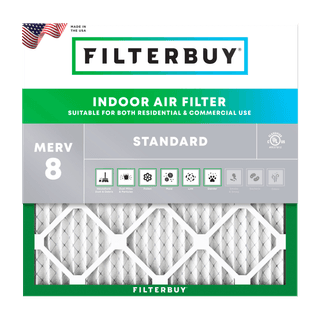
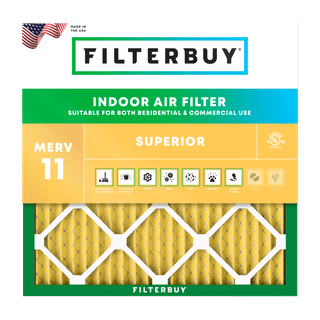
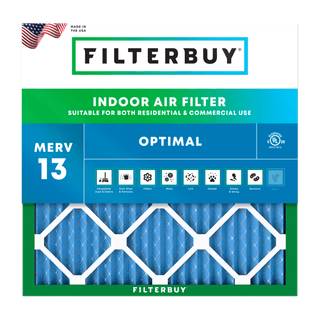



Check Today's Live Real Time Air Quality Index AQI Map in Mobile, AL Now
Author: Michelle Wan · Reviewer: David Clark, Licensed HVAC Technician · Publish Date: July 21, 2026 · Updated Date: July 21, 2026
Filterbuy's live map above shows Mobile's real-time Air Quality Index (AQI) right now, pulled from EPA AirNow monitors around the Mobile-Daphne-Fairhope area. Most days, Mobile sits in the Good-to-Moderate range (AQI 0 to 100, green to yellow). Ground-level ozone on hot summer afternoons is the pollutant most likely to push it higher, so check the color on the map, then plan your day.
TL;DR:
Mobile, AL usually has good-to-moderate air quality. Its metro area earns an "A" grade for short-term particle pollution and a "B" for ozone in the American Lung Association's 2026 State of the Air report. The biggest local concern is ground-level ozone (smog) on hot, sunny summer afternoons. Use the live AQI map above to see conditions now, and keep a clean HVAC filter running to protect the air inside your home.
Key Takeaways
Mobile's live AQI updates continuously from EPA AirNow monitoring stations. Check the color first; green (Good) and yellow (Moderate) are typical here.
The Mobile-Daphne-Fairhope metro earned an "A" for short-term particle pollution and a "B" for ozone in the American Lung Association's 2026 report.
Ground-level ozone is Mobile's most common trouble spot, peaking on hot summer afternoons, roughly May through September, 2 to 7 p.m.
Fine particle pollution (PM2.5) is usually low in Mobile, though drifting wildfire smoke can occasionally raise it.
A MERV 13 HVAC filter captures fine particles like PM2.5 and smoke, helping keep indoor air cleaner when outdoor AQI climbs.
What Is the Air Quality in Mobile, AL Right Now?
The fastest way to know Mobile's air quality right now is the live AQI map at the top of this page. It reads real-time data from EPA AirNow monitors near Mobile and turns it into a single number from 0 to 500 plus a color. Lower is better: 0 to 50 (green) is Good and 51 to 100 (yellow) is Moderate, where Mobile lands most days. If the number climbs into orange or higher, sensitive groups should ease up outdoors. This page is the Mobile view of Filterbuy's live U.S. air quality map.
One Mobile-specific quirk worth knowing: the afternoon Gulf breeze scrubs pollutants unevenly along the coast, so a neighborhood near the water can read cleaner than one a few miles inland on the very same afternoon. That is exactly why the map lets you search your own ZIP code instead of trusting a single citywide number.
How to Read the Mobile AQI Map and Color Scale
The AQI uses six color-coded categories set by the U.S. EPA. Each color tells you, at a glance, how clean the air is and who should be careful.
Source: U.S. EPA AirNow AQI categories. Colors follow the official AQI scale.
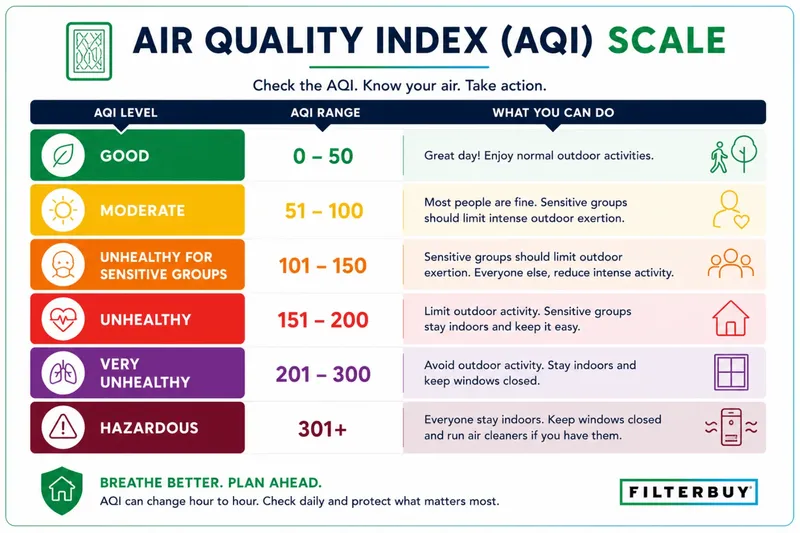
Match the color on the map to this scale and you'll know what today's reading means for your family.
What Affects Mobile's Air Quality? Ozone, PM2.5 and Gulf Coast Factors
Mobile's air quality is shaped by its Gulf Coast location, and after more than a decade of shipping filters into homes across the Gulf South from our Alabama factories, we see the same pattern repeat. Mobile is a humid, subtropical port city, and two pollutants are worth watching: ground-level ozone and fine particle pollution.
Ground-level ozone is Mobile's most frequent concern. Ozone forms when sunlight reacts with emissions from vehicles, the port, and local industry, so it peaks on hot, sunny summer afternoons, generally May through September, and highest between about 2 and 7 p.m. The Mobile-Daphne-Fairhope metro earned a "B" grade for ozone in the American Lung Association's 2026 State of the Air report.
Fine particle pollution (PM2.5) is usually low here. That same metro area earned an "A" grade for short-term particle pollution, among the cleanest in the nation two years running. Mobile's frequent rain and afternoon Gulf breeze help disperse pollutants near the coast. The main exception is drifting wildfire smoke, which can raise PM2.5 for a few days at a time.
Humidity is the wild card. Mobile's moist coastal air encourages mold and can trap dust and everyday pollutants indoors, which is why the air inside your home matters just as much as the outdoor reading.
We build our filters here in Alabama, up in Talladega, so Gulf Coast air is close to home for us. What people miss about Mobile is that the worst air days usually aren't the smoke days. They're the hot, still summer afternoons when ozone builds, and the humid stretches when mold and dust never fully clear indoors. A filter won't touch ozone, but closing up the house and running a clean MERV 13 is how you take the particle side off the table.
Michelle Wan, Brand Manager & Air Quality Writer, Filterbuy
Mobile's Air Quality Through the Year
Mobile's air runs on a seasonal rhythm most AQI pages skip. Here is what tends to drive each stretch of the year on the Gulf Coast, and the one move that helps most in each.
Seasonal pattern based on Gulf Coast climate, EPA AirNow ozone trends, and NOAA hurricane-season dates (June 1 to November 30).
Is the Air Quality Bad in Mobile Today? When to Take Action
For most Mobile days, the answer is no. The air is Good or Moderate and safe for normal activity. Use today's live reading to decide what to do. For the bigger picture of what drives a bad-air day, see why air quality goes bad.
Guidance follows U.S. EPA AirNow activity recommendations by AQI category.
When ozone or smoke is high outside, keeping windows shut and your air conditioner running with a clean filter is one of the simplest ways to breathe easier indoors.
How to Protect Your Indoor Air in Mobile
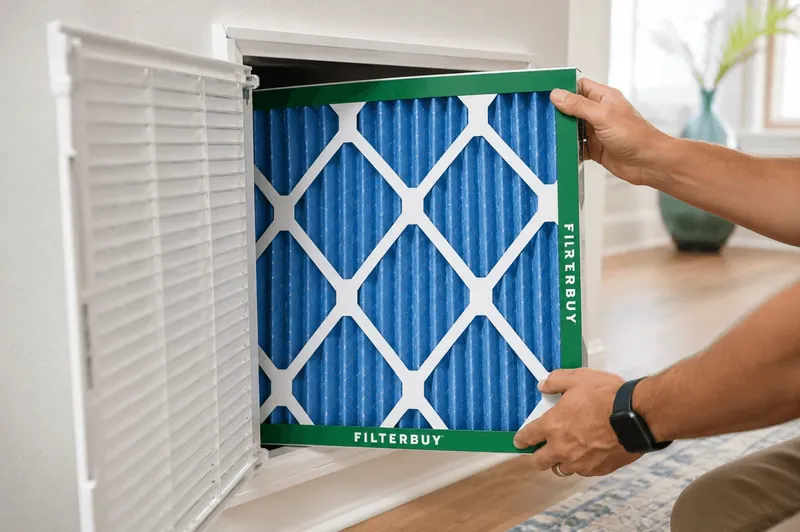
You can't control Mobile's outdoor AQI, but you can control the air inside your home. The single easiest step is a fresh, high-quality HVAC filter.
Upgrade to a Filterbuy MERV 13 filter to capture fine particles like PM2.5 and wildfire smoke that a basic filter lets through. Not sure which rating fits your system? Compare MERV ratings.
Change it on schedule, every 60 to 90 days for many homes, sooner during smoke events or heavy pollen.
Run your system's fan on high-AQI days so more air passes through the filter.
Tame the humidity, keeping indoor levels around 30% to 50% with your AC or a dehumidifier, since Mobile's damp air is what feeds mold and dust mites in the first place.
Never miss a change with auto-delivery. Your exact size ships free to your door, right on schedule.
Mobile, AL Air Quality FAQ
About the author:
Michelle Wan is Filterbuy's Brand Manager and Air Quality Writer. She works directly with Filterbuy's U.S. manufacturing team across its Alabama, Florida, Pennsylvania, and Utah factories, so her guidance comes from how filters are actually built, tested, and used in real homes, not from spec sheets alone. Reviewed by David Clark, Licensed HVAC Technician, for technical accuracy. Published July 19, 2026. Last updated July 19, 2026.
Sources:
American Lung Association, State of the Air 2026 (Mobile-Daphne-Fairhope metro grades); U.S. EPA AirNow (live AQI data); EPA AQI Basics (the AQI scale and categories).
Glossary
Every key term on this page, defined so each stands alone.