
Birmingham Real-Time AQI Tracker


Get Alerts For Unhealthy AQI In Your Area
When air quality in your area reaches unhealthy levels, we'll send you a quick alert, along with expert tips on how to reduce your exposure.
What's Actually In Birmingham Air Today?
What High AQI Means for Your Lungs in Birmingham
How to Read AQI
The Air Quality Index (AQI) measures how polluted the air is and how it may affect your health.
0–50 (Good): Air quality is satisfactory.
51–100 (Moderate): Acceptable, but some pollutants may pose minor concerns.
101–150 (Unhealthy for Sensitive Groups)
151–200 (Unhealthy)
201–300 (Very Unhealthy)
301+ (Hazardous)
Moderate
Still okay for most, but if you have asthma or allergies, take it easy and avoid long outdoor workouts.
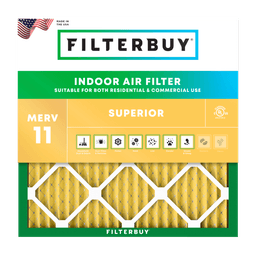
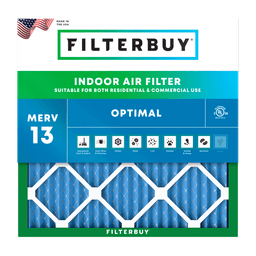
Shop MERV 11 filters→What's the Right Filter for Your AQI Level?
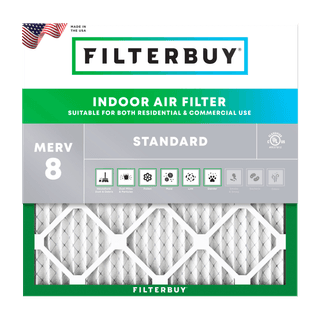
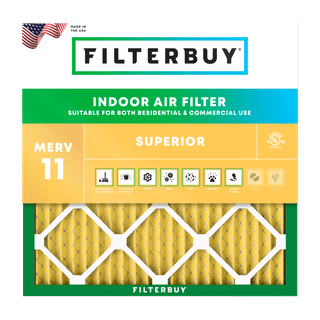
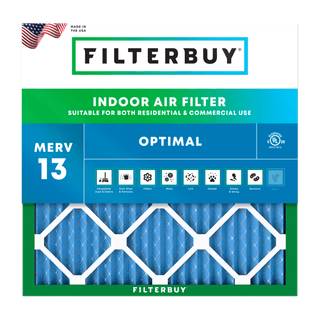



Check Today's Live Real Time Air Quality Index AQI Map in Birmingham, AL Now
TL;DR
Filterbuy's live AQI map above shows Birmingham's current air quality from Jefferson County Department of Health and EPA AirNow monitors. Most readings come down to two pollutants: ozone on hot summer afternoons, and fine particles (PM2.5) that can climb year-round, especially when an overnight inversion traps smoke in Jones Valley. Check which one is leading, because it changes what you should do.
Key Takeaways
Filterbuy's action line is AQI 100: MERV 13, the fan set to On, a portable HEPA cleaner in each occupied room, and a closed house.
Birmingham's air runs on a two-shift clock: particles peak on calm mornings, and ozone from about 2 to 7 p.m., May through September.
In 2026, the American Lung Association gave Jefferson County failing grades for ozone and year-round particles.
Ozone breaks down indoors but particles do not, so filtration matters most on smoke and inversion days.
Reading Birmingham's Live AQI Map, Monitor by Monitor
The Birmingham air quality map above turns real-time monitor data into a 0 to 500 score set by whichever pollutant measures highest. In Birmingham, that is usually ozone on summer afternoons and PM2.5 the rest of the time. Tap the monitor nearest you, because the Jones Valley industrial corridor, from North Birmingham through Wylam to Bessemer, often reads differently from Hoover or Leeds.
The Jefferson County Department of Health (JCDH), not the state, runs Birmingham's regulatory monitors and posts hourly readings on its near real-time air quality map. If you live over Red Mountain, the Hoover live AQI map is the better comparison.
Our rule of thumb: if North Birmingham reads worse than Hoover in the morning, suspect an inversion; if they match in the afternoon, it is regional ozone. And if you smell smoke while the map reads Good, trust your nose and close up.
What Birmingham AQI Readings Mean for Your Plans
Each of the six EPA AQI categories calls for a different response at home, shown here with its usual Birmingham cause.
Categories per EPA AirNow. Filterbuy's action line starts at 100, the top of Moderate.
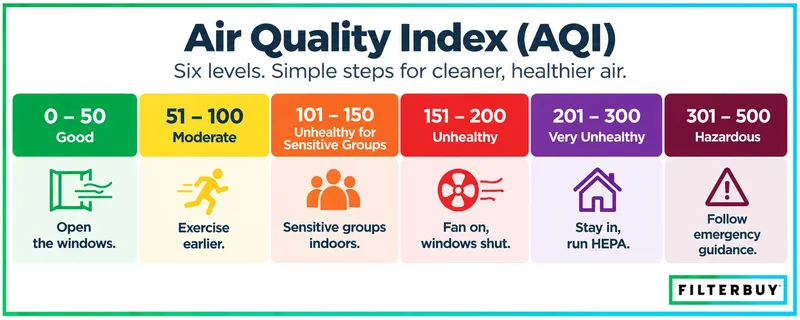
Filterbuy's action line is AQI 100, the top of Moderate, whatever the pollutant. Check AirNow and JCDH guidance first, because official guidance always outranks this page. Then take four steps:
MERV 13 in the HVAC. The central system is the whole-home layer, because it moves far more air than any portable unit.
Thermostat fan to On. Auto filters only while heating or cooling; On filters continuously.
A portable HEPA air cleaner in each occupied room, bedrooms first. It treats that room harder than the central system can.
Close the house up. Keep windows and doors shut, and skip candles, frying, and smoking until the air clears.
Is Birmingham Air Safe to Breathe Right Now?
Whether the air is safe depends on the reading and who is home. Run this 60-second check, and at 100 or higher, take the four steps above:
Read the number. Below 100, most people can carry on as normal.
Read the pollutant. Ozone peaks in the afternoon and PM2.5 often in the morning, which tells you when to stay closed up.
Read the room. At 101 or higher, children, older adults, pregnant people, and anyone with asthma, COPD, or heart disease should limit outdoor exertion; above 150, everyone should. Those categories come from the EPA Air Quality Index; anyone with a condition should also follow their doctor.
Birmingham Air Quality Forecasts and Alert Days
JCDH forecasts fine particles year-round and the Alabama Department of Environmental Management forecasts ozone in summer, both on the daily Birmingham air quality forecast. When either reaches 101 or higher, JCDH issues an Air Quality Alert, and Alabama Partners for Clean Air asks residents to limit outdoor time. Get alerts through free EnviroFlash emails, the recorded line at (205) 933-0583, or the Filterbuy sign-up above.
The Pollutants Behind Birmingham's AQI
Birmingham air pollution has two main culprits. Ground-level ozone forms when nitrogen oxides from vehicle and industrial exhaust react with volatile organic compounds in sunlight. The pine forests around the metro add natural VOCs to that mix.
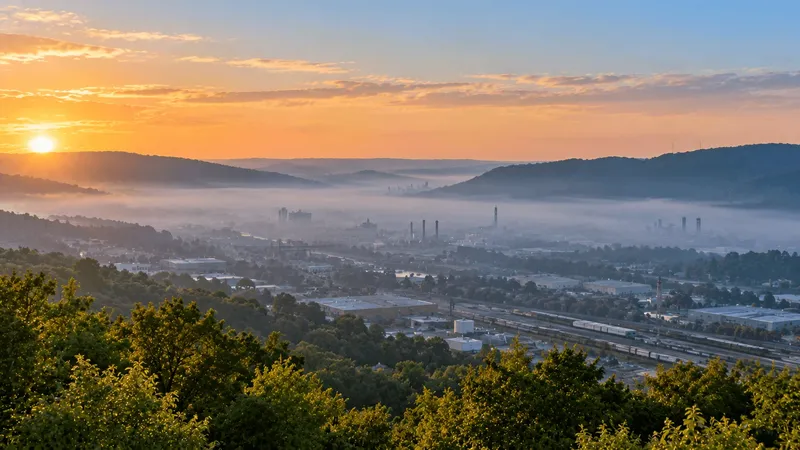
PM2.5 comes from diesel traffic on I-20/59, I-65, and I-459, coke and metals industry, wood burning, and smoke. Geography does the rest. JCDH's meteorologist has called Jones Valley a "perfect storm," because on still nights an inversion lids the valley and holds particles near the ground until morning.
How Air Quality Changes Across Birmingham Neighborhoods
The heaviest particle burden falls on the valley floor, where homes sit closest to industry and interstates, and North Birmingham carries the clearest legacy. The EPA's 35th Avenue Superfund site covers parts of Collegeville, Fairmont, and Harriman Park, where EPA has cleaned up more than 650 properties. Its Bluestone Coke plant has been idle since late 2021.
Moving over the mountain helps less than many assume. Ozone forms region-wide, so Hoover and Trussville see downtown's summer peaks.
How Birmingham Ranks Against Other Metro Areas
Birmingham's air still trails most of Alabama, and EPA designations under the tighter 2024 annual PM2.5 standard were pending at publication. The Tuscaloosa live AQI map covers one of the nation's cleanest metros, and the Alabama statewide AQI map shows every monitored city side by side.
Birmingham's Air Year: What Each Season Brings
Each season carries a different risk, and most smoke drifts in from outside the county.
Winter: long, calm nights favor inversions, and wood smoke adds particles, so mornings tend to read worst.
Late winter to spring: prescribed burn season, when tree pollen also peaks (pollen does not count toward the AQI).
Summer: ozone alerts on hot, still afternoons, and the air conditioner runs hardest, so check the filter often.
Fall: drought years bring wildfire smoke, as in autumn 2016 and November 2025, so get MERV 13 and a spare in place by early fall.
The clearest example came on March 11, 2025, when JCDH issued a Code Red particle alert after smoke from a large prescribed burn northwest of Jefferson County settled under an overnight inversion. The AirNow Fire and Smoke Map tracks fires and plumes.
Our Take: Birmingham's Air Problem Lives in the Particles
Filterbuy is an Alabama company, headquartered in Talladega inside the same metro the American Lung Association grades, so these alert days are our air too. The pattern we keep seeing is that Birmingham's air runs on a two-shift clock:
Morning shift, particles: on calm nights, an inversion traps smoke and exhaust until it breaks mid-morning.
Afternoon shift, ozone: on warm days, ozone builds from about 2 to 7 p.m. and fades after sunset.
The gap between them: late morning is often the cleanest window to air out the house.
That split explains our steps. Closing up handles most ozone, which breaks down indoors, and pleated filters are not built to remove ozone. Particles leak in and linger, and catching them is a filter's job.
I hear the same assumption from homeowners near highways and industrial parks: they think changing their filter more often will fix a high pollution problem. The rating matters far more than the schedule. A fresh MERV 8 filter still lets most fine particles through, while a MERV 13 filter catches far more of them.
Michelle Wan, Brand Manager and Air Quality Writer, Filterbuy, in PM10 vs. PM2.5: Which Filter Do You Need?
Matching Your Filter to Birmingham's AQI
For smoke, the answer is MERV 13. EPA recommends a filter rated MERV 13 or higher in the central system, and most furnaces and HVAC systems can use one without equipment problems when the filter is replaced often. Filterbuy has made pleated filters in the USA since 2013, in MERV 8, 11, and 13 and more than 600 sizes.
Pleated filters capture particles, not ozone gas; on ozone-driven days, closing up does most of the work.
The mistake we see most often at Filterbuy is not the rating but the fit. A filter even slightly too small lets air slip past it, so check the size on your current one; for unusual sizes, Filterbuy custom filters fit exactly. During smoke, inspect the filter and replace it when it looks dirty, dark brown or black, which can be well before its normal interval. Spares on hand, or a Filterbuy filter subscription, make that easy.
Homes cooled by window units or ductless mini splits have no whole-house layer, so a portable HEPA cleaner in each occupied room is the primary defense there, not a supplement. EPA's sizing rule calls for a smoke CADR of at least two-thirds of the floor area, so a 12-by-14-foot bedroom (168 square feet) needs 112 or more. Choose a CARB-certified model and skip ionizers and ozone generators. A DIY box fan with a MERV 13 filter is a fair stopgap if the fan is certified, made in 2012 or later, and never runs unattended.
Supporting Statistics
F grades for ozone and year-round particles
Ozone: 46th worst of 226 metros.
Unhealthy ozone days: 6 a year, up from 5.
Year-round particles: 38th worst of 211.
Source: American Lung Association, State of the Air 2026
Alabama's highest annual PM2.5: 11.0 µg/m³
About 22% above the 9.0 federal standard.
Next-highest county: Russell, at 9.3.
Source: U.S. EPA, county PM2.5 design values
30+ years to meet all six federal air standards
Ozone peaks from 2 to 7 p.m.
Ozone season runs May through September.
Source: Alabama Partners for Clean Air
Frequently Asked Questions
What Is the Air Quality in Birmingham Today?
The live map at the top of this page shows Birmingham's current AQI and leading pollutant, updated through the day.
Is the Air Quality Bad in Birmingham Today?
In Birmingham, readings of 101 or higher are unhealthy for sensitive groups, and 151 or higher for everyone. JCDH issues an Air Quality Alert whenever Code Orange or Code Red is forecast.
What Is the PM2.5 Level in Birmingham Today?
Tap any monitor on the live map to see its PM2.5 reading next to its AQI value.
Why Is Birmingham's Air Sometimes Worse in the Morning?
Calm nights let an inversion trap smoke and exhaust in Jones Valley until it breaks mid-morning.
What MERV Filter Should I Use in Birmingham?
MERV 13 for smoke and any day the live AQI reaches 100. For everyday dust and pollen, a Filterbuy MERV 8 or MERV 11 filter is enough.
Glossary
AQI (Air Quality Index): A 0 to 500 scale for daily air quality, with six color-coded categories.
PM2.5: Fine particles 2.5 micrometers or smaller; the main component of smoke.
Ground-level ozone: A lung-irritating gas formed from pollution in sunlight.
Temperature inversion: Warm air over cooler air, trapping pollution near the ground. Common in Jones Valley on calm nights.
JCDH: The Jefferson County Department of Health, Birmingham's local air agency.
MERV: Minimum Efficiency Reporting Value, a 1 to 16 filter capture rating.