
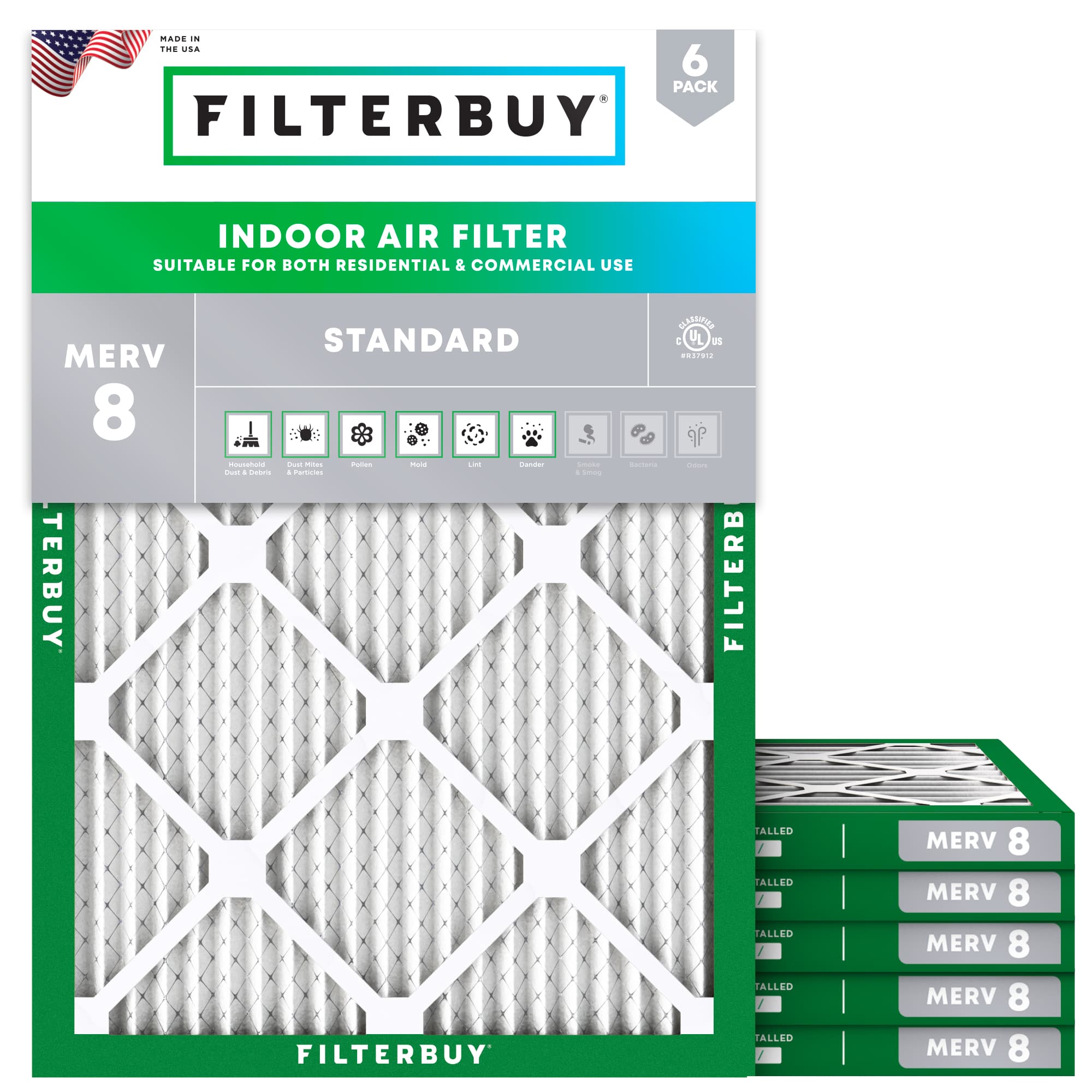
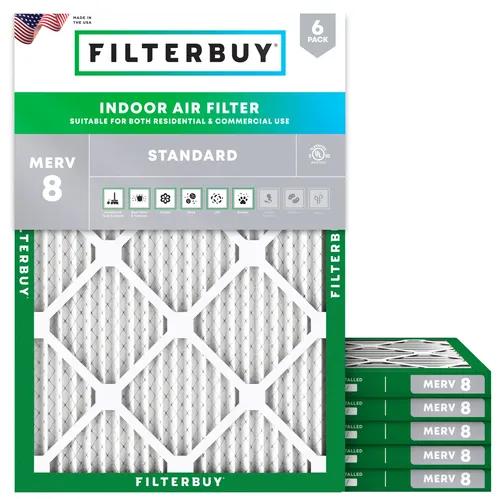
18.25x22x1 MERV 8 Pleated Air Filter
Actual Size: 18.25x22.0x0.75
 Free Delivery
  Factory-Direct Low Prices, Made in the USA
 Hassle-Free Returns & Free Exchanges
RESIDENTIAL AND/OR COMMERCIAL USE
Change Every 3 Months
18.25x22x1 MERV 8 Pleated Air Filter
Actual Size: 18.25x22.0x0.75
Free Delivery Factory-Direct Low Prices, Made in the USAHassle-Free Returns & Free ExchangesRESIDENTIAL AND/OR COMMERCIAL USE
Change Every 3 Months
18.25x22x1 MERV 8 Pleated Air Filter
Actual Size: 18.25x22.0x0.75
Free Delivery Factory-Direct Low Prices, Made in the USAHassle-Free Returns & Free ExchangesRESIDENTIAL AND/OR COMMERCIAL USE
Change Every 3 Months
About
- This is a list 18.25x22x1 MERV 8 air filter replacement for your furnace, air conditioner, heat pump, or HVAC system
- Actual air filter size: 18.25x22.0x0.75
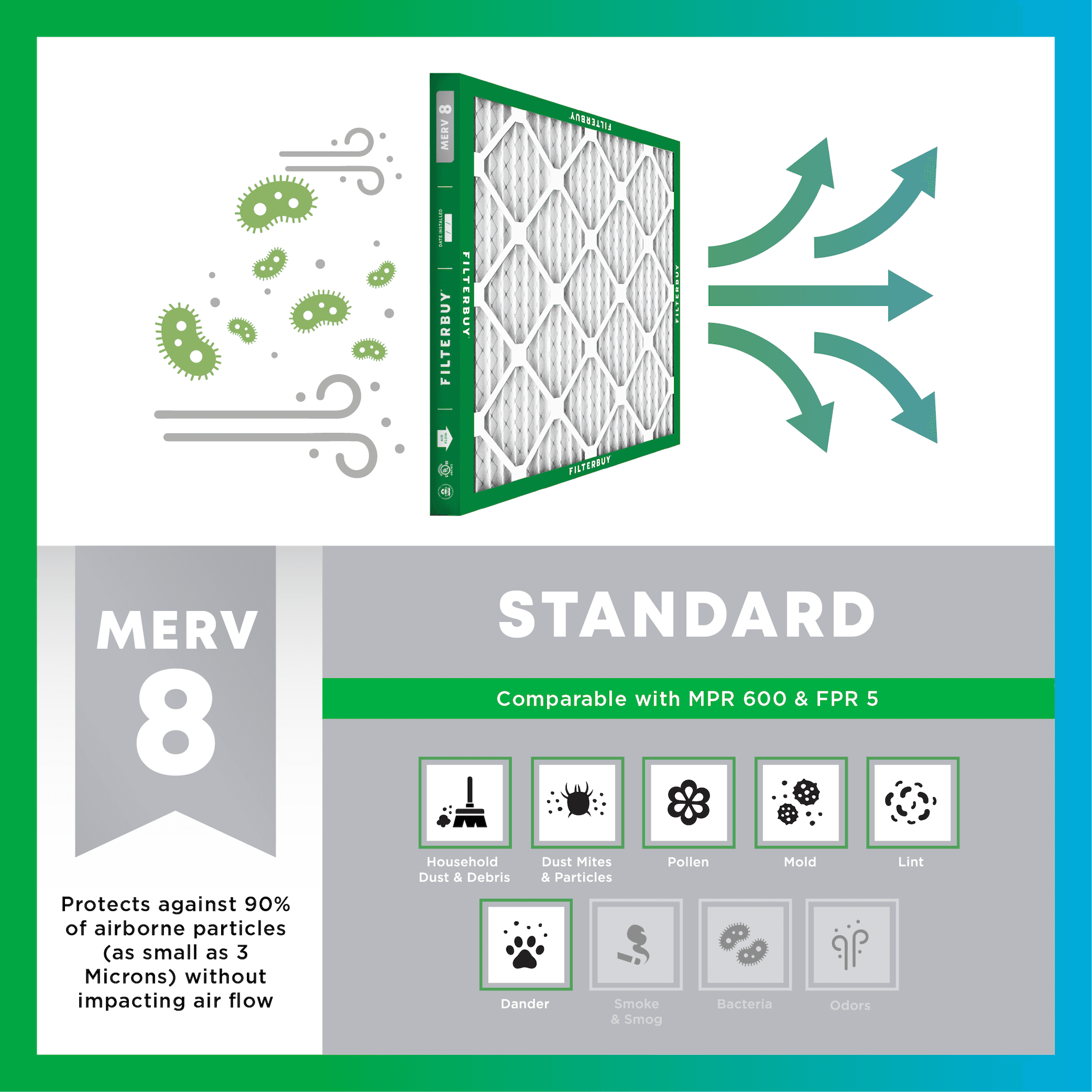
- MERV 8 synthetic media (comparable with MPR 600 & FPR 5) offers standard protection from dust, pollen, and more by trapping 90% of airborne particles without impacting air flow.
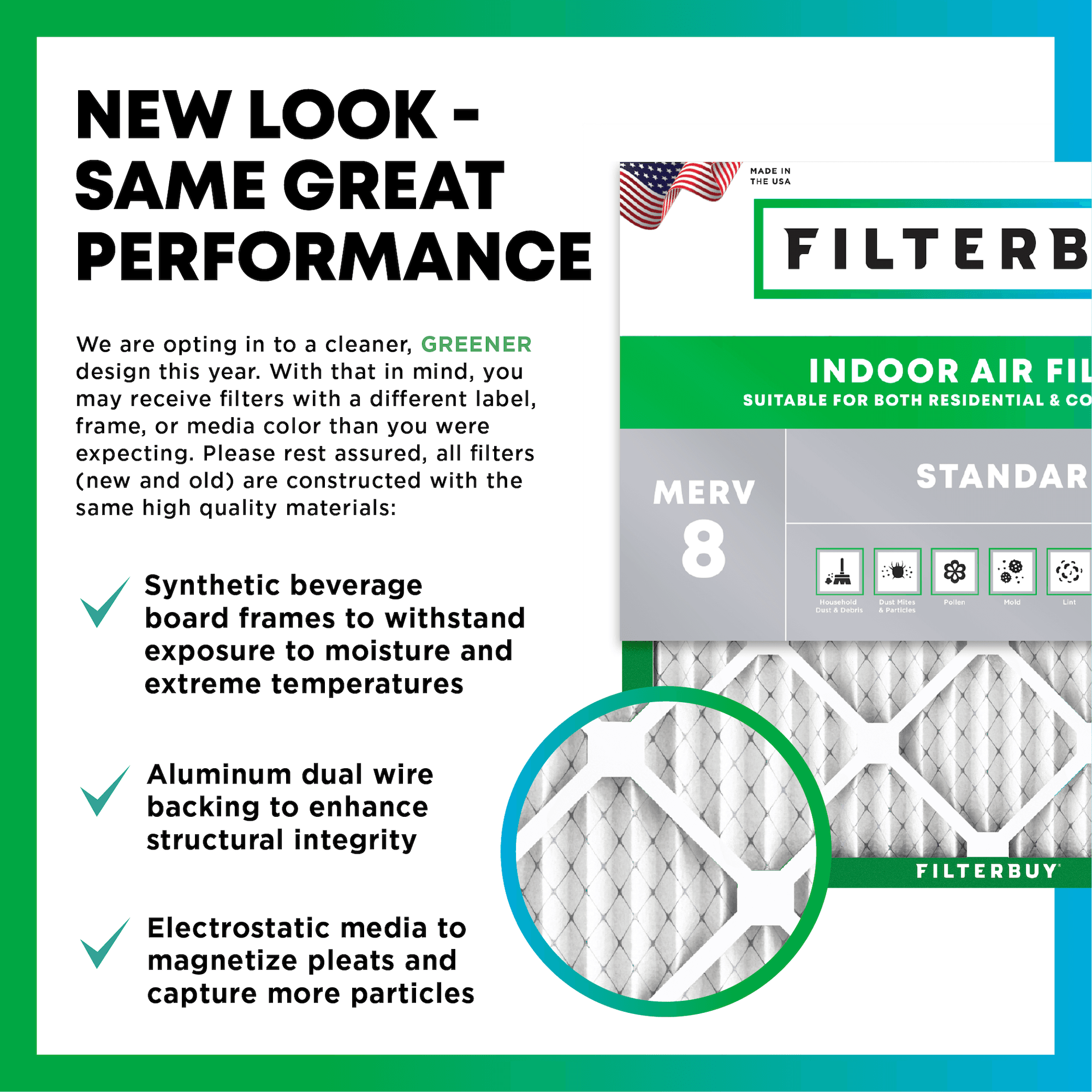
- High-quality construction means electrostatically charged pleated filter media, reinforced wire backing for structural integrity, and a durable frame to resist heat and humidity
- Built to last 3 months. 300% longer than fiberglass models
- 100% manufactured in the United States and designed with recyclable materials
- Learn more about 18.25x22x1 Air Filters
Top-Rated Filters. American Made. Delivered Free.
At Filterbuy, we don't cut corners—we craft high-quality air filters right here in the USA and ship them to your doorstep for free. No delays, no gimmicks—just clean air, made easy. With thousands of five-star reviews and filters built for real life & every HVAC system, it's no wonder why over 4 million families trust Filterbuy.

Proudly Made In The USA

Fast, Free Shipping on Every Order

Premium Materials That Go The Distance

85,000+ 5-Star Reviews From Happy Customers

Save Up to 70% Per Filter with Packs
Things to Know About Filter Sizes

Nominal Size
- The rounded size printed on your filter or HVAC unit (e.g., 18.25x22x1).
- Usually whole numbers to make identifying and ordering easier.
- A label for compatibility—not the exact measurement.

Actual Size
- The true, trimmed dimensions of the filter (e.g., 18.25x22.0x0.75 inches).
- Filters are manufactured slightly smaller so they slide into the filter slot without forcing.
- If you don't know your nominal size, measure your filter to get the actual size, then round up to find the nominal size to search on our site.

Why the difference?
- Nominal sizes simplify shopping and standardize categories.
- Actual sizes ensure the filter fits properly inside your HVAC's filter rack.
How To Find Your Nominal Size When You Don't Know It


Measure length × width × depth with a tape measure to find the actual size.

Round up each dimension to the nearest whole number to get the nominal size. Example: 18.25x22.0x0.75 in → 18.25x22x1 nominal.

Search by nominal size on our site for the best fit.

Why Getting the Right Size Matters
- Too small? Air can bypass the filter, reducing air quality and efficiency.
- Too big? It won't fit—risking bent frames and airflow issues.
- Just right? You get maximum performance, better filtration, and cleaner air.

Free Exchange Policy
If the filter you buy doesn't fit, we'll send you a better size.

What's a MERV Rating?
MERV stands for Minimum Efficiency Reporting Value—but don't let the technical name fool you. It's just a way to rate how well an air filter traps stuff like dust, pollen, pet dander, and smoke. The higher the MERV number, the more particles it catches—and the cleaner your air will be.

Merv 8
Comparable to:FPR: 4-7
MPR: 600-1000
 Dust & Debris
 Dust Mites & Particles
 Pollen
 Mold
Mold Lint
Lint Dander
Merv 11
Comparable to:FPR: 6-9
MPR: 1200-1550
Dust & DebrisDust Mites & ParticlesPollenMoldLintDander Smoke & Smog
Merv 13
Comparable to:FPR: 10
MPR: 1900-2800
Dust & DebrisDust Mites & ParticlesPollenMoldLintDanderSmoke & Smog Bacteria
MERV 8
Comparable to:FPR: 4-7MPR: 600-1000


MERV 11
Comparable to:FPR: 6-9MPR: 1200-1550

MERV 13
Comparable to:FPR: 10MPR: 1900-2800
What Makes Our Filters Last 90 Days? Quality, From the Inside Out
We build every Filterbuy filter to deliver reliable 90-day performance—thanks to smart design and premium materials that do the heavy lifting. Here's what makes the difference:
Pleated Design
More pleats = more surface area to capture dust and debris, keeping your air cleaner longer.
Electrostatically Charged Media
Pleats are magnetized to attract and trap microscopic particles—like pet dander, pollen, and smoke.
Synthetic Beverage Board Frame
Engineered to resist warping in extreme temperatures and high humidity.

Aluminum Dual Wire Backing
A layer of metal reinforcement keeps pleats evenly spaced and structurally sound—no sagging, even at high airflow.
Made in the USA
Assembled with care. Built to perform. Ships fast, free, and reliably from our U.S. facilities.
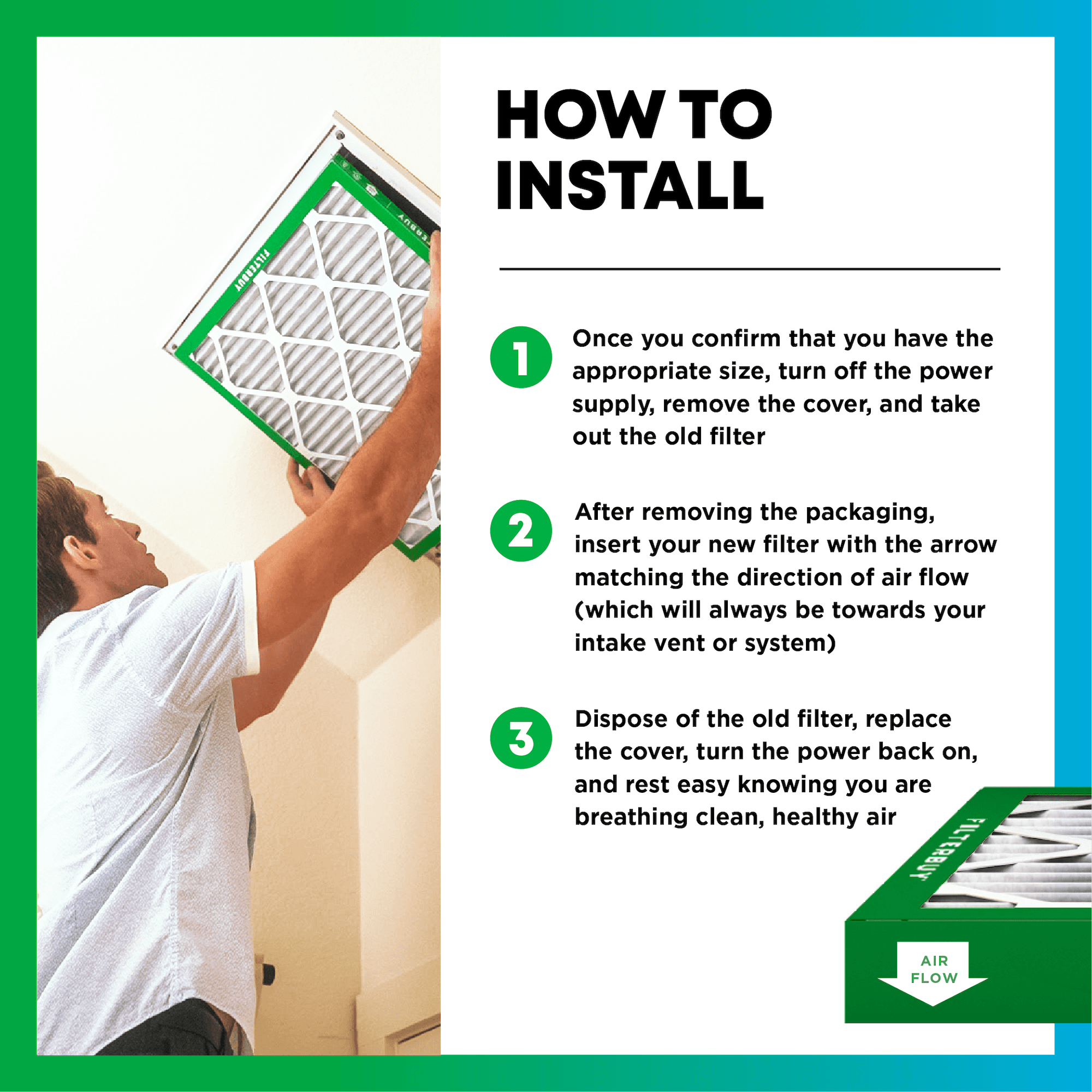
How to Install Your Filter in 4 Simple Steps

Turn Off Your HVAC SystemSafety first.

Remove The Old FilterLook for the airflow arrow and make note of the direction.

Slide In Your New FilterArrow should point toward the system (same direction as before).

Turn Your System Back OnAnd enjoy the fresh, clean air.

Never forget to replace your air filter again.
- Save 5% on every order
- Choose Your Delivery Schedule
- Edit, Skip, or Cancel Anytime.
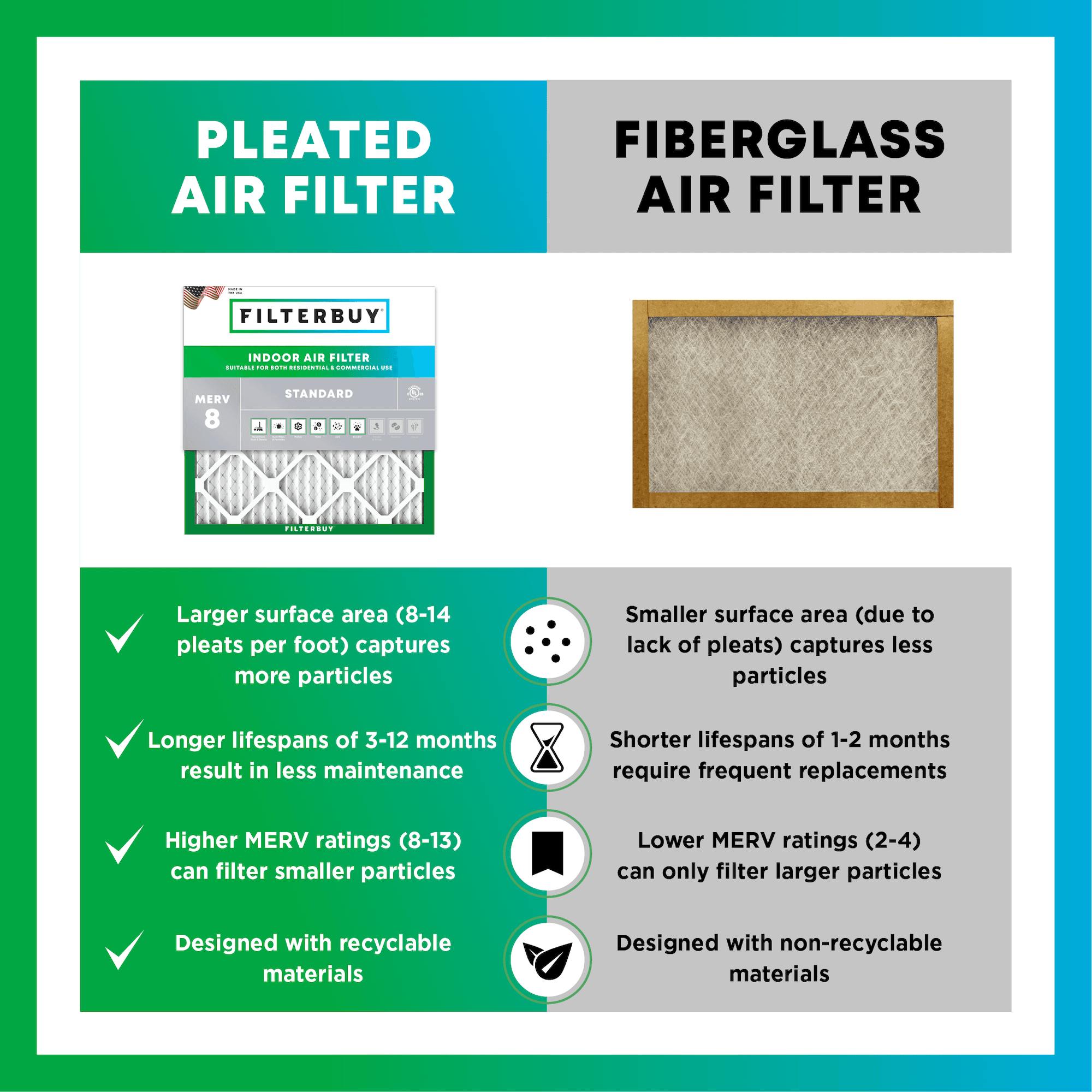
Pleated Filters vs. Fiberglass—What's the Difference?
Not all air filters are created equal. Pleated filters don't just last longer—they actually clean your air better. Here's how they stack up:

Pleated Filters
Efficiency:
High (MERV 8–13) – Traps more particles
Lifespan:
90 days – Long-lasting performance
Air Quality:
Excellent – Cleaner, healthier air
Materials:
Recyclable and durable

Fiberglass Filters
Efficiency:
Low (MERV 4 or less) – Misses small stuff
Lifespan:
30 days or less – Replace often
Air Quality:
Minimal – Basic protection only
Materials:
Thin, flimsy, and not recyclable
Pleated filters are a no-brainer—more protection, less hassle, and better air for your home.
How Often Should You Change Your Filter?
Changing your filter on time keeps your HVAC system running efficiently—and helps protect your lungs from dust, allergens, and airborne irritants. Here's how often to swap it out based on your needs:

Every 90 Days
Standard ScheduleFor most homes without pets or special air quality concerns. Great for general upkeep and energy efficiency.

Every 60 Days
If You Have Pets or AllergiesShedding fur, dander, and allergy triggers can build up fast. Changing your filter every two months helps keep the air fresher and symptoms at bay.

Every 30 Days
If You Have Respiratory Concerns or Live in Smog/Wildfire ZonesFor households affected by smoke, pollution, or respiratory conditions, monthly changes ensure maximum protection.

Want to stay on track? Set a reminder—or skip the stress with auto-delivery so fresh filters show up right when you need them.
Don't Just Take Our Word For It...
Got More Questions? We've Got Answers.
Product Specifications
| Nominal Size | 18.25 x 22 x 1 inches |
| Actual Size | 18.25 x 22.0 x 0.75 inches |
| Filter Type | Pleated |
| Media | Electrostatically Charged |
| Frame | Beverage Board |
| MERV Ratings Available | 8, 11, 13 |
| Lifespan | Up to 90 Days |
| Origin | Made in USA |
Do You Need an 18.25x22x1 MERV 8 Air Filter? How to Know for Sure
If you’re unsure whether an 18.25x22x1 MERV 8 air filter is truly the right fit for your system, you’re asking the exact question we hear from homeowners every day. After manufacturing millions of filters in dozens of hard-to-find and custom sizes, we’ve seen firsthand how often sizing labels are misleading—and how the wrong fit can quietly reduce airflow, strain your HVAC, and leave more dust circulating in your home. In this guide, we’ll walk you through the same simple sizing checks our team uses in production, explain what a MERV 8 filter is designed to capture, and show you how to confirm the right filter with confidence. This is the practical, real-world method our experts rely on—so you can protect your air and your HVAC system with the right filter every time.
Quick Answers
Do You Need an 18.25 "x 22" x 1 "Air Filter? How to Know for Sure
Measure the filter slot, not the old filter.
If the slot measures close to 18.25×22×1, that’s your exact size.
A precise fit prevents air leaks, dust bypass, and HVAC strain.
In our experience, manufacturing custom sizes, even a ¼-inch off, makes a noticeable difference.
When in doubt, choose the exact measurement for the best airflow and cleanest indoor air.
Top Takeaways
Measure the filter slot to confirm if 18.25 × 22 × 11 is the correct size.
Even small sizing errors cause air leaks, dust bypass, and system strain.
The exact size ensures the best fit, clean air, and HVAC efficiency.
How to Know If You Need an 18.25x22x1 MERV 8 Air Filter
An 18.25x22x1 MERV 8 filter is a precise size, so confirming it’s the right one for your system is essential for proper airflow and effective filtration.
1. Measure the Filter Slot
Don’t rely on the label on your old filter—many are mislabeled or forced to fit. Measure the actual filter slot. If it’s close to 18.25x22x1, that’s your true size.
2. Understand MERV 8
MERV 8 offers strong everyday protection against dust, pollen, and pet dander without restricting airflow—based on years of customer use and in-house testing.
3. Spot Incorrect Fit Issues
Whistling, dust buildup, or a filter that slides too easily often means the wrong size is installed.
4. Match Your Measurements
If your measurements align with 18.25x22x1, choose the exact size for the best performance and system lifespan.
“After building millions of filters—including thousands in uncommon sizes like 18.25x22x1—we’ve seen how even a quarter-inch mismatch can quietly reduce airflow and leave more dust circulating in your home. The right filter size isn’t a guess; it’s a measurable difference in your air quality and your HVAC system’s lifespan.”
Essential Resources to Help You Confirm Your 18.25×22×1 Filter Size With Confidence
1. Measure Like a Pro: How to Find Your Real Filter Size
URL: https://questionsabouthvac.com/what-size-air-filter-do-i-need/ Sizing confusion is more common than you think. This guide breaks down how to measure your filter slot the right way—so you’re not relying on a mislabeled or poorly fitted filter.
2. Double-Check Dimensions: See the Exact Specs for 18.25×22×1 Filters
URL: https://filterking.com/air-filter-sizes/18.25x22x1a If you’re working with a hard-to-find size like 18.25×22×1, reviewing accurate specs can help you confirm whether it’s your perfect match before you order.
3. Use the Sizing Methods HVAC Techs Rely On Every Day
URL: https://actuneuppros.com/choosing-the-right-hvac-air-filter-sizing-calculations/ These are the measurement steps technicians use in the field—ideal if you want to double-check your numbers and make sure you’re choosing the right fit the first time.
4. Decode Air Filter Dimensions (and Why Yours Might Not Be “Standard”)
URL: https://bobsrepair.com/air-filter-sizes-guide/ Not all HVAC systems take standard sizes—and that’s okay. This guide helps explain why some filters (like 18.25×22×1) exist in the first place and how to verify yours.
5. Make Sure Your Filter Supports Efficiency and Clean Air
URL: https://shaferhvac.com/how-to-choose-the-right-filter-size-for-your-hvac-system/ A filter that’s even slightly off can reduce airflow, raise energy bills, and leave more dust behind. This resource helps you understand why the “perfect fit” matters so much.
6. Compare Hundreds of Sizes (Including the Hard-to-Find Ones)
URL: https://filterbuy.com/resources/air-filter-basics/air-filter-sizes/ If your system’s size looks uncommon, this Filterbuy chart helps you check your measurement against hundreds of standard and custom dimensions—even ones big-box stores don’t carry.
7. Match Nominal vs. Actual Sizes Across Brands
URL: https://atomicfilters.com/pages/nominal-vs-actual-sizes-finding-the-right-air-filter-size Nominal vs. actual size confusion is one of the biggest issues homeowners run into. This chart helps you match your exact measurement to the industry standard so you know you're choosing correctly.
Supporting Statistics: Why the Right 18.25×22×1 Filter Matters
1. Indoor Air Is Often More Polluted Than Outdoor Air
Americans spend ~90% of their time indoors.
Indoor air pollutants can be 2–5× higher than outdoor levels (EPA).
We see this daily—homeowners rely heavily on their HVAC filter as their main indoor air defense. Source: https://www.epa.gov/indoor-air-quality-iaq/inside-story-guide-indoor-air-quality
2. Fine Particles Can Penetrate Deep into the Lungs
PM10 and smaller particles can reach the lungs and bloodstream (CDC).
Our team often hears from families battling dust and allergies—tight-sealing filters make a measurable difference. Source: https://www.cdc.gov/air/particulate_matter.html
3. Millions Live in Areas With Failing Air Quality Grades
156+ million Americans live in counties with poor ozone or particle pollution.
We see higher filter demand in these regions because outdoor air issues amplify indoor filtration needs. Source: https://www.lung.org/research/sota
4. HVAC Systems Use Nearly Half of a Home’s Energy
Heating and cooling account for ~50% of residential energy use (DOE).
Incorrect or poorly fitted filters make systems work harder—something we’ve observed repeatedly in customer reports.
Final Thought & Opinion
Choosing the correct filter size is not a small thing—it is one of the biggest factors that determine the quality of air and the efficient operation of the HVAC system in your home. We have seen this over and over after producing millions of filters in all kinds of sizes, even very unusual ones like 18.25×22×1.
What We’ve Seen Directly
Properly sized creates a close seal and the filtration level increases.
The air flow gets quieter, and the HVAC unit is less stressed and noisy.
The amount of dust in the house is reduced, the temperature is stable, and the indoor air is fresh and comfortable.
The use of energy is very likely to be at the same level as befor,e but more efficient if the filter is exact.
The Reason Why Homeowners Sense The Changes Right Away
In most cases, the “wrong size” of the filter means that the label of the old filter is taken for granted.
Taking good measurements of the filter slot will bring you to a better outcome.
Many customers’ testimonials say that they enjoy cleaner air and better performance of their HVAC system after only a few days.
Our Take
If your measurements confirm 18.25×22×1, choosing the exact size is one of the simplest—and most effective—steps you can take to protect both your air and your HVAC system. Small detail. Big impact.
Next Steps
1. Re-measure Your Filter Slot
Measure the width, height, and thickness of the slot.
Don’t rely on the old filter’s label.
2. Confirm Your Filtration Needs
Need better dust control?
Have pets or allergies?
Want stronger airflow? MERV 8 is ideal for most homes.
3. Choose the Exact Size
If your measurements match 18.25×22×1, select that precise size.
Avoid “close enough” substitutes.
4. Check Your Current Filter Fit
Look for whistling, bending, or loose movement.
These signs mean it’s the wrong size.
5. Set a Replacement Reminder
Change your filter every 90 days.
Replace more often with pets or allergies.
6. Consider Auto-Delivery
Keep clean filters on schedule.
Avoid store trips and last-minute swaps.
7. Install Correctly
Follow the airflow arrow.
A snug, smooth fit confirms proper sizing.
Frequently Asked Questions
Q: How do I confirm 18.25×22×1 is my correct filter size?
A:
Measure the filter slot (width × height × thickness).
Don’t trust the old filter—many are mislabeled or forced in.
Slot measurements tell you the real size.
Q: Can I use a similar size instead?
A:
No. “Close enough” won’t seal correctly.
Even small gaps cause dust bypass and HVAC strain.
Always choose the exact size.
Q: Is MERV 8 right for most homes?
A:
Maintains good airflow.
Proven balance from years of Filterbuy testing.
Q: What are the signs that my current filter is the wrong size?
A:
Whistling or air leaks
Bending or crumpling
Loose fit in the slot
Fast dust buildup on surfaces
Q: How often should I replace an 18.25×22×1 MERV 8 filter?
A:
Every 90 days.
Sooner if you have pets, allergies, or high pollution.
Frequent changes = cleaner air and better system performance.