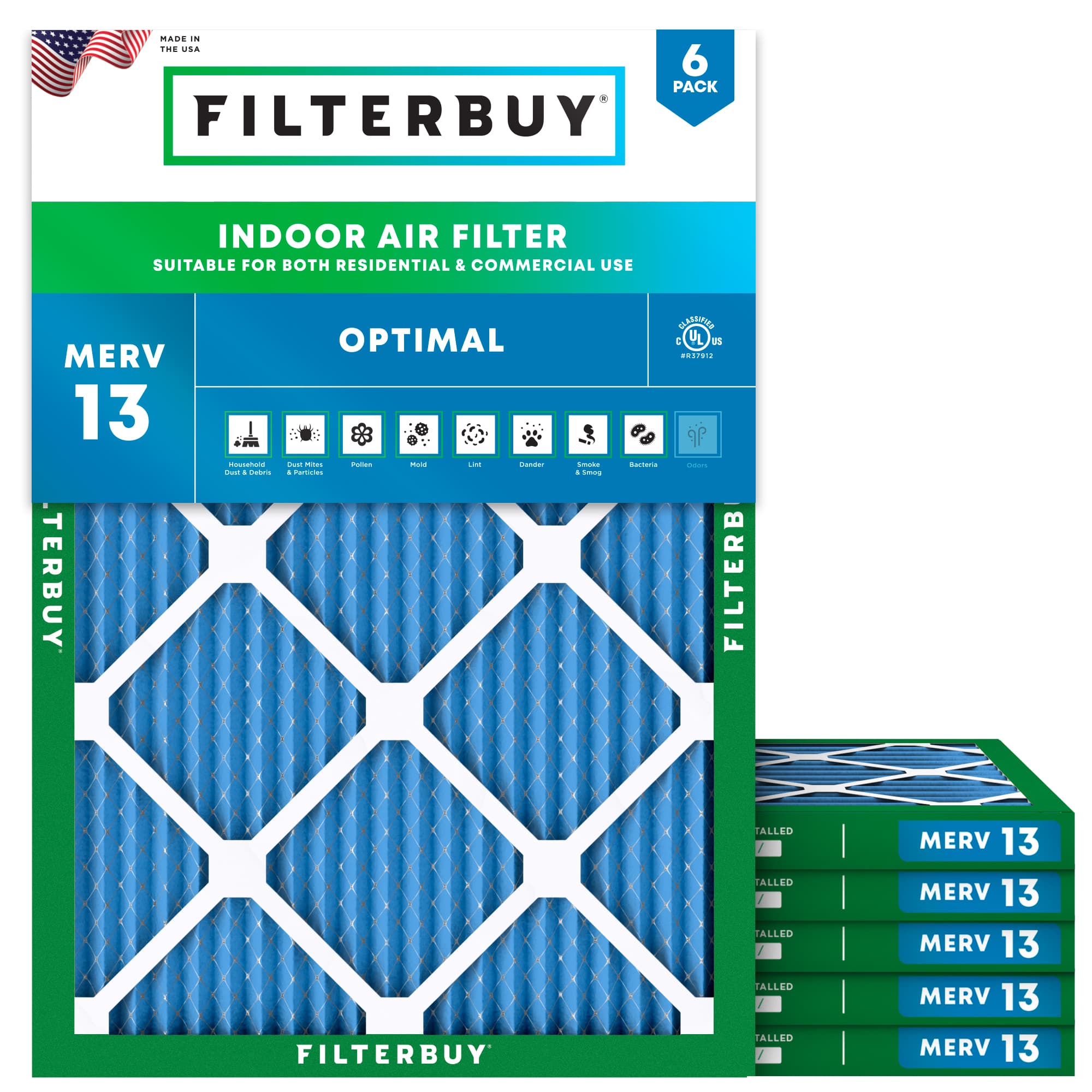
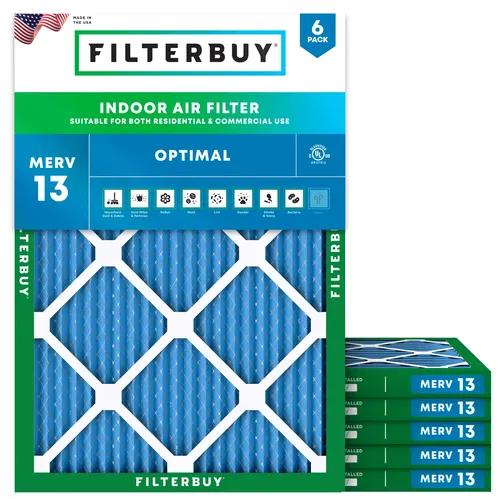
Actual Size: 18.25x22.00x0.75"
 Free Delivery
  Factory-Direct Low Prices, Made in the USA
 Hassle-Free Returns & Free Exchanges
RESIDENTIAL AND/OR COMMERCIAL USE
Change Every 3 Months
Actual Size: 18.25x22.00x0.75"
Free Delivery Factory-Direct Low Prices, Made in the USAHassle-Free Returns & Free ExchangesRESIDENTIAL AND/OR COMMERCIAL USE
Change Every 3 Months
Actual Size: 18.25x22.00x0.75"
Free Delivery Factory-Direct Low Prices, Made in the USAHassle-Free Returns & Free ExchangesRESIDENTIAL AND/OR COMMERCIAL USE
Change Every 3 Months
At Filterbuy, we don't cut corners—we craft high-quality air filters right here in the USA and ship them to your doorstep for free. No delays, no gimmicks—just clean air, made easy. With thousands of five-star reviews and filters built for real life & every HVAC system, it's no wonder why over 4 million families trust Filterbuy.

Proudly Made In The USA

Fast, Free Shipping on Every Order

Premium Materials That Go The Distance

85,000+ 5-Star Reviews From Happy Customers

Save Up to 70% Per Filter with Packs


Measure length × width × depth with a tape measure to find the actual size.

Round up each dimension to the nearest whole number to get the nominal size. Example: 18.25x22.00x0.75" in → 18.25x22x1 nominal.

Search by nominal size on our site for the best fit.


If the filter you buy doesn't fit, we'll send you a better size.
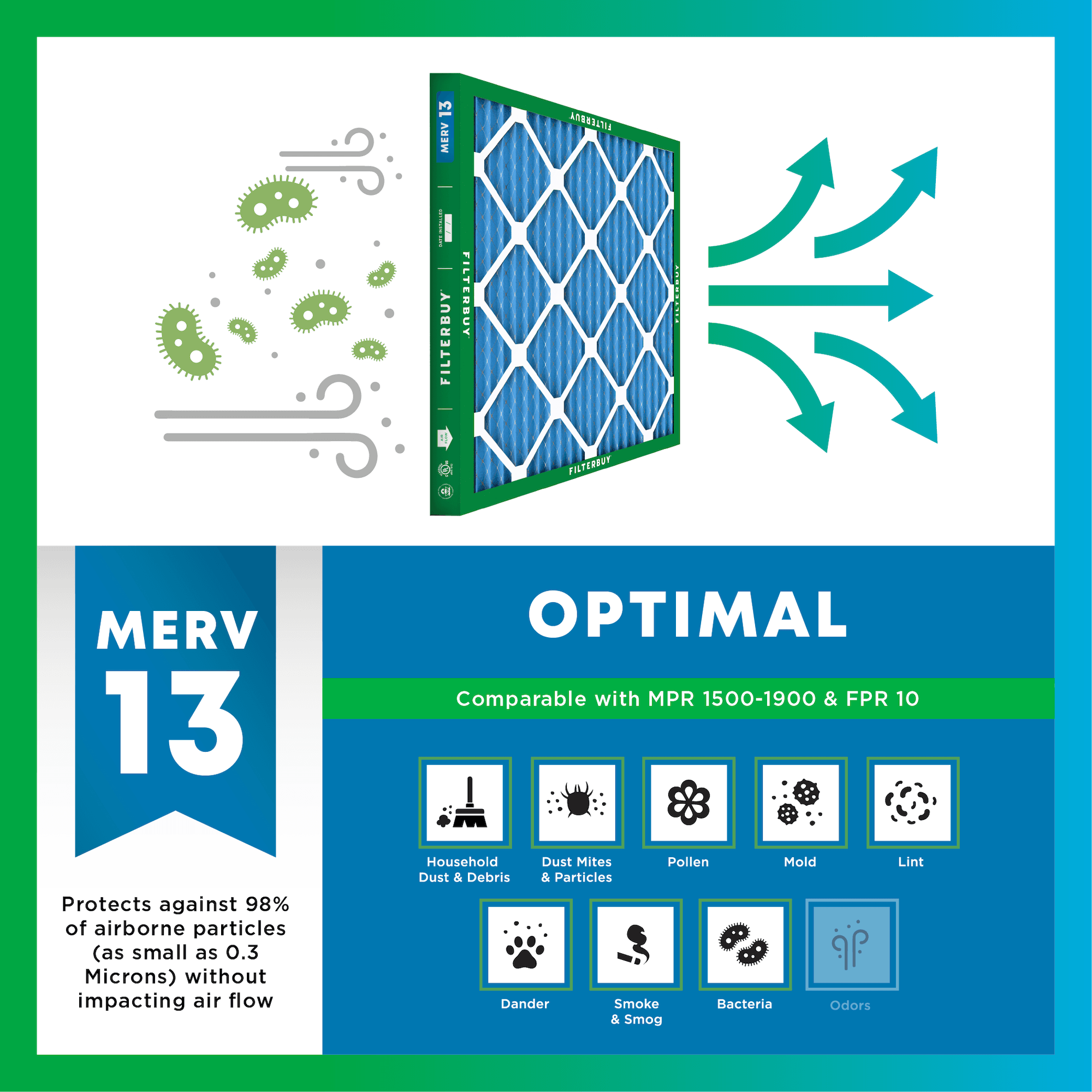
MERV stands for Minimum Efficiency Reporting Value—but don't let the technical name fool you. It's just a way to rate how well an air filter traps stuff like dust, pollen, pet dander, and smoke. The higher the MERV number, the more particles it catches—and the cleaner your air will be.

Comparable to:FPR: 4-7
MPR: 600-1000
 Dust & Debris
 Dust Mites & Particles
 Pollen
 Mold
Mold Lint
Lint Dander
Comparable to:FPR: 6-9
MPR: 1200-1550
Dust & DebrisDust Mites & ParticlesPollenMoldLintDander Smoke & Smog
Comparable to:FPR: 10
MPR: 1900-2800
Dust & DebrisDust Mites & ParticlesPollenMoldLintDanderSmoke & Smog Bacteria


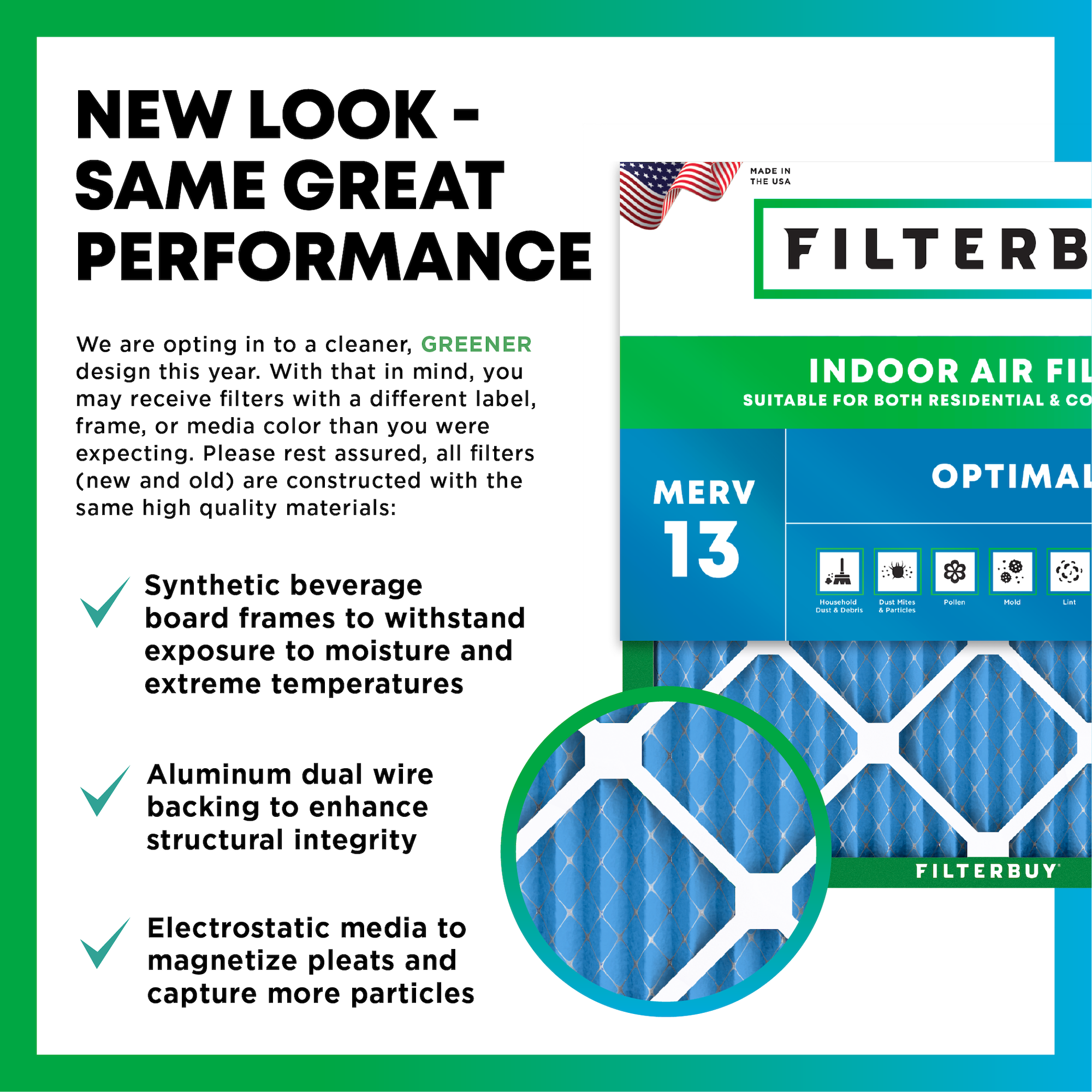
We build every Filterbuy filter to deliver reliable 90-day performance—thanks to smart design and premium materials that do the heavy lifting. Here's what makes the difference:
More pleats = more surface area to capture dust and debris, keeping your air cleaner longer.
Pleats are magnetized to attract and trap microscopic particles—like pet dander, pollen, and smoke.
Engineered to resist warping in extreme temperatures and high humidity.

A layer of metal reinforcement keeps pleats evenly spaced and structurally sound—no sagging, even at high airflow.
Assembled with care. Built to perform. Ships fast, free, and reliably from our U.S. facilities.

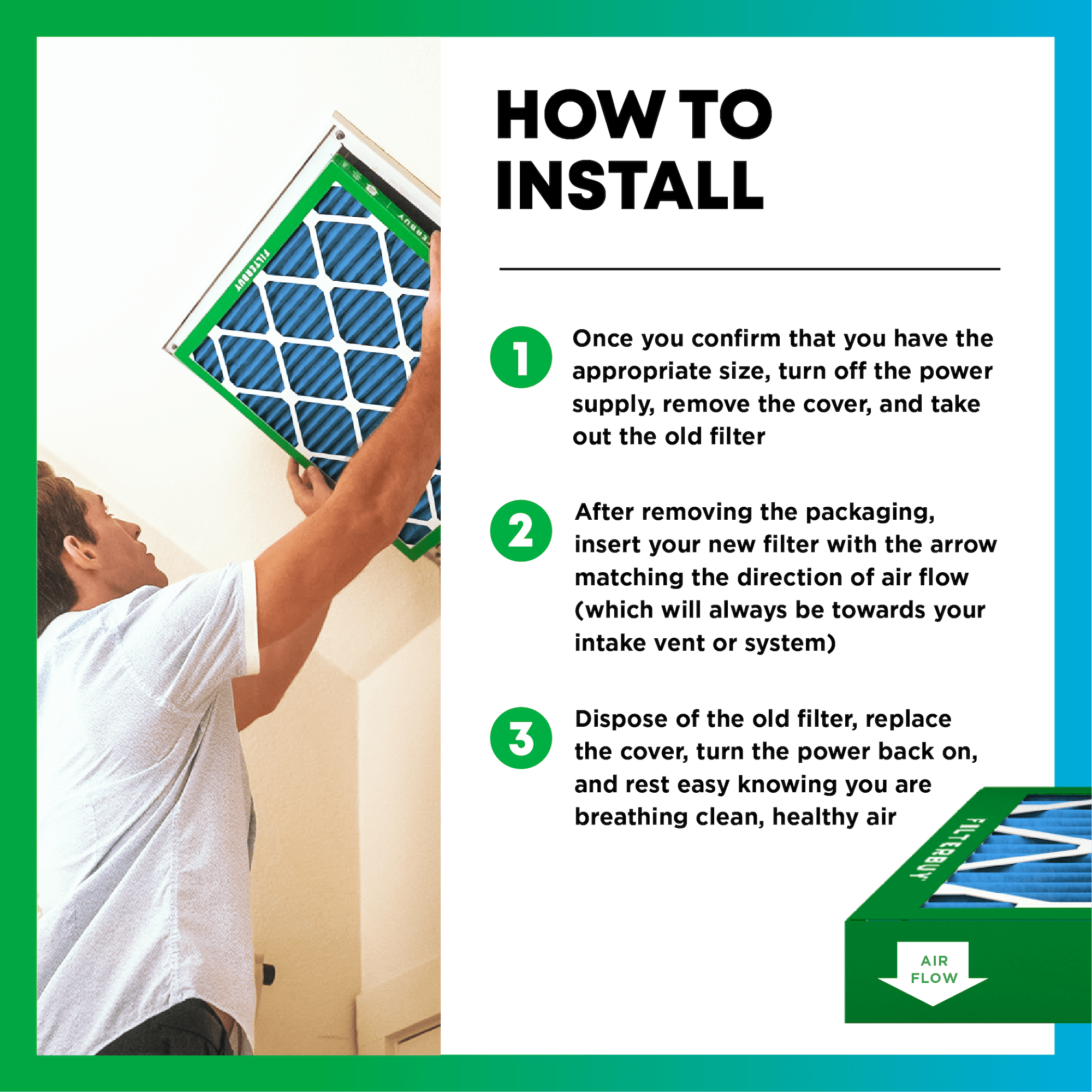
Turn Off Your HVAC SystemSafety first.

Remove The Old FilterLook for the airflow arrow and make note of the direction.

Slide In Your New FilterArrow should point toward the system (same direction as before).

Turn Your System Back OnAnd enjoy the fresh, clean air.

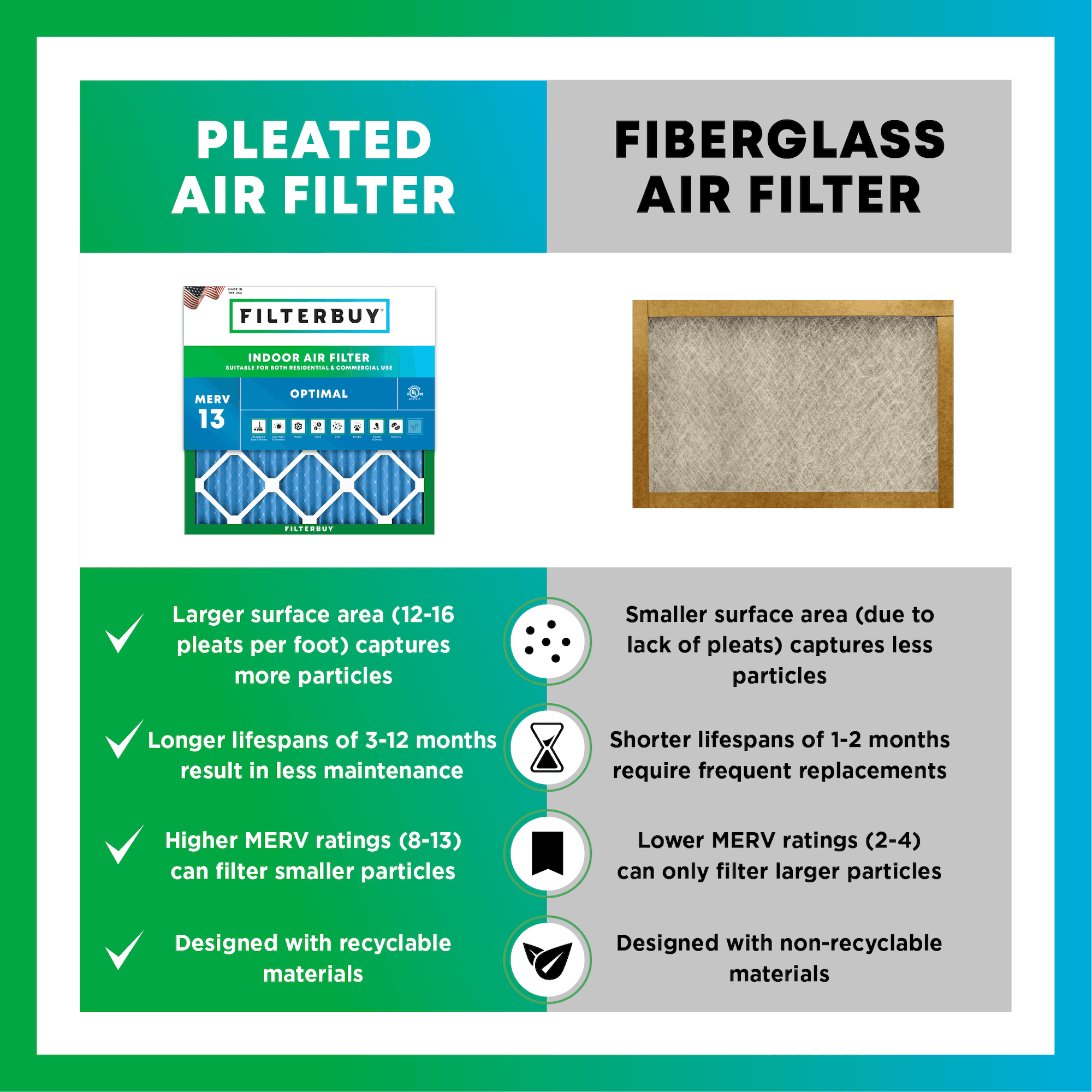
Not all air filters are created equal. Pleated filters don't just last longer—they actually clean your air better. Here's how they stack up:

Efficiency:
High (MERV 8–13) – Traps more particles
Lifespan:
90 days – Long-lasting performance
Air Quality:
Excellent – Cleaner, healthier air
Materials:
Recyclable and durable

Efficiency:
Low (MERV 4 or less) – Misses small stuff
Lifespan:
30 days or less – Replace often
Air Quality:
Minimal – Basic protection only
Materials:
Thin, flimsy, and not recyclable
Pleated filters are a no-brainer—more protection, less hassle, and better air for your home.
Changing your filter on time keeps your HVAC system running efficiently—and helps protect your lungs from dust, allergens, and airborne irritants. Here's how often to swap it out based on your needs:

For most homes without pets or special air quality concerns. Great for general upkeep and energy efficiency.

Shedding fur, dander, and allergy triggers can build up fast. Changing your filter every two months helps keep the air fresher and symptoms at bay.

For households affected by smoke, pollution, or respiratory conditions, monthly changes ensure maximum protection.

| Nominal Size | 18.25 x 22 x 1 inches |
| Actual Size | 18.25 x 22.00 x 0.75" inches |
| Filter Type | Pleated |
| Media | Electrostatically Charged |
| Frame | Beverage Board |
| MERV Ratings Available | 8, 11, 13 |
| Lifespan | Up to 90 Days |
| Origin | Made in USA |
If you’ve been hunting for an 18.25x22x1 MERV 13 air filter and coming up empty, we see this more than you might think. After manufacturing millions of filters—including thousands of unusual, hard-to-find sizes—we’ve learned exactly why sizes like this disappear from store shelves and what homeowners can safely use instead. The truth is, non-standard dimensions aren’t a mistake — they’re the result of real-world HVAC setups that need real solutions, not one-size-fits-all compromises.
That’s why this guide goes beyond generic “try another size” advice. Drawing on what we’ve learned in our U.S. manufacturing facility and from helping customers with this exact dimension, we’ll walk you through the best-fitting alternatives, what actually works in the field, and how to get a custom filter made without delays or guesswork. You’ll get clear, expert-backed options to keep your air clean and your system protected—no settling, no unsafe shortcuts, and no more dead ends in the filter aisle.
Quick Answers
Can’t Find an 18.25x22x1 MERV 13 Filter Size? Best Fixes and Options
Measure the filter slot, not the old filter—this size is often a mislabeled nominal dimension.
Check for near-size fits like 18x22x1 or 18.5×22×1; many housings allow a ⅛–¼ inch tolerance.
Use MERV 13 if your system supports it; it offers top protection against smoke, allergens, and fine particles.
Order a custom filter if the slot truly requires an exact 18.25x22x1 to seal properly.
Tight fit = best performance. Even a high-MERV filter underperforms if air can bypass it.
Measure the filter slot, not the old filter.
Fit and seal are just as important as MERV rating.
MERV 13 is ideal for smoke, allergens, and fine particles.
A near-size filter can work if the tolerance is ⅛–¼ inch.
Choose a custom 18.25x22x1 filter if your system needs a precise fit.
One of the common problems is searching for an 18.25x22x1 MERV 13 filter—a size that is not made for the general public, and that's the reason why it is hardly ever found in stores measuring 18.25x22x1. However, your system is still in need of a suitable fit, and thus, it is necessary to indicate that air can leak from your ductwork when the right size of the filter is not used, dust accumulates, and the efficiency of the system decreases. These are the most dependable solutions:
1. Make sure of the size.
Firstly, labels of many “18.25x22x1” filters are sized by name only. Take the measurements of the place where the filter will be installed—most of them will fit standard sizes such as 18×22, 18.5×22, or 17.75×22.
2. Employ a safe size.
In case your accommodation is of a small tolerance (⅛–¼ inch), a regular 18x22x1 might fit tightly, especially if the slot is framed or gasketed.
3. Get a customized filter to fit exactly.
When your system is demanding the exact 18.25x22x1 dimensions, the most dependable way is a custom-made filter. Filterbuy makes these exact sizes right at their factory with a quick U.S. delivery.
4. Keep the MERV 13 for firm protection.
MERV 13 provides great protection against allergens, smoke, and ultrafine particles without causing a heavy load to most residential HVAC systems, so do not forget to stay at MERV 13 once you have the correct size.
“Hard-to-find sizes like 18.25x22x1 aren’t accidents—we see them every week in our manufacturing facility. After producing millions of filters, we’ve learned that the safest solution isn’t guessing a close size, but understanding how your specific housing was built. Once you know the true dimensions, you can choose a filter that seals properly, protects your system, and delivers the clean air your home deserves.”
1. Measure Your Filter the Right Way — No Guesswork Needed (Filterbuy)
Why It Helps: Get crystal-clear on what size your system actually needs. Sizing confusion is one of the biggest reasons homeowners struggle with non-standard filters. This quick guide shows you exactly how to measure your filter slot so you can avoid air leaks, wasted money, and sizing surprises. URL: https://filterbuy.com/resources/air-filter-basics/measure-air-filter/
2. Understand Nominal vs. Actual Size — The Secret Behind “Weird” Filter Dimensions (FilterKnowHow)
Why It Helps: Stop relying on labels that don’t tell the whole story. Most odd-sized filters trace back to mismatched nominal sizing. This resource breaks down how manufacturers label filters—and why the number printed on your old filter may not reflect the real fit your system needs. URL: https://filterknowhow.com/choosing-the-correct-nominal-size-vs-the-actual-size-air-filter-sizing/
3. What MERV 13 Really Delivers Inside Your Home (Clean-Link)
Why It Helps: Know the protection level you’re choosing before you commit. MERV 13 is a powerhouse rating—great for families battling allergies, wildfire smoke, or fine particle pollution. This guide breaks down exactly what MERV 13 captures so you can decide if this level is right for your home. URL: https://www.clean-link.com/what-is-a-merv-13-filter-everything-you-need-to-know/
4. Compare MERV Ratings at a Glance — Choose the Right Balance of Protection & Airflow (AllFilters)
Why It Helps: See how each rating performs without digging through technical charts. This easy comparison chart shows how different MERV levels handle dust, pollen, smoke, and fine particles—perfect for homeowners deciding whether stepping up or down a rating makes sense. URL: https://www.allfilters.com/airfilter/mervchart
5. Check Airflow Impact Before Choosing MERV 13 — Keep Your HVAC Running Smoothly (ACUpkeep)
Why It Helps: Make sure your system can handle the resistance of a high-efficiency filter. Higher filtration can affect airflow if the filter doesn’t fit or seal properly. This guide explains pressure drop and why choosing the right size is essential for both clean air and HVAC health. URL: https://acupkeep.com/merv-13-filter-pressure-drop-chart/
6. Explore Standard Filter Sizes — You May Already Have a Safe Fit Option (PickHVAC)
Why It Helps: Find out whether a common size will work before ordering custom. Many homes with “non-standard” filters actually fit a common dimension once the slot is measured correctly. This list of popular furnace filter sizes helps you compare your measurements with what’s widely available. URL: https://www.pickhvac.com/most-common-furnace-filter-sizes-dimensions-merv-replacement/
7. Choose the Right MERV Level for Your Home’s Needs & Lifestyle (BobVila)
Why It Helps: Feel confident you’re picking the right level of protection for your family. This straightforward guide explains how each MERV level performs in real-world homes, helping you match your filter to your family’s air quality priorities and your HVAC system’s capabilities. URL: https://www.bobvila.com/articles/merv-ratings/
These trusted U.S. agency findings align with what we see every day in our manufacturing facilities and from thousands of real homeowners.
1. Indoor Air Pollution Is Often Worse Indoors (EPA)
Americans spend 90% of their time indoors.
Indoor pollutant levels are often 2–5× higher than outdoor air.
What we see: Homeowners who switch to a correctly sized, tightly sealed filter report immediate improvements in dust and allergy symptoms. Source: https://www.epa.gov/report-environment/indoor-air-quality
2. MERV 13 Is the Recommended Level for Fine Particle Protection (EPA + ASHRAE)
EPA guidance notes MERV 13+ effectively removes PM2.5 (smoke, fine particles, airborne pollutants).
Considered a strong choice for wildfire smoke, pollution, and respiratory protection.
What we see: During smoke events, MERV 13 filters consistently outperform lower-MERV options in customer feedback. Source: https://www.epa.gov/indoor-air-quality-iaq/guide-air-cleaners-home
3. High-Efficiency Filters Reduce Harmful Particles Linked to Health Risks (EPA Indoor airPLUS)
High-efficiency HVAC filters reduce airborne irritants and key respiratory triggers.
What we see: MERV 13 filters deliver the best improvements when they fit precisely with no air bypass. Source: https://www.epa.gov/indoorairplus/indoor-airplus-filtration
4. Asthma Affects Millions of Americans (CDC)
25 million U.S. residents have asthma.
Includes 4.6 million children.
Nearly 1 million ER visits per year are asthma-related.
What we see: Households managing asthma often experience fewer indoor triggers after upgrading to a properly fitted MERV 13 filter.
Finding an 18.25x22x1 MERV 13 filter isn’t really the problem—knowing what your system truly needs is. After helping thousands of homeowners and manufacturing millions of filters, we’ve seen the same pattern over and over: uncertainty leads to wrong sizes, poor fit, and filters that don’t deliver the protection families expect.
What We’ve Learned Firsthand
The printed size on the old filter is often misleading.
A proper seal matters as much as the MERV rating.
MERV 13 performs exceptionally well when the fit is exact.
Guessing a “close enough” size leads to air leaks and poor filtration.
Our Recommendation
Measure the filter slot—not the old filter.
Confirm the true fit before choosing a size.
Use MERV 13 if your system supports it—it’s one of the most impactful upgrades for indoor air quality.
Choose a custom filter if your system needs precise dimensions.
Why This Matters
A correctly fitted filter improves airflow and HVAC efficiency.
Better fit = fewer allergens, less dust, and fewer indoor triggers.
Homeowners tell us they notice improvements within one replacement cycle.
Bottom Line
Clean air shouldn’t be complicated. When you start with accurate sizing and the right MERV rating, your system runs better, your home stays cleaner, and your family breathes easier—every single day.
Follow these quick steps to confidently solve your 18.25x22x1 MERV 13 filter issue:
1. Measure Your Filter Slot
Measure the slot, not the old filter.
Record width, height, and depth.
2. Identify Nominal vs. Actual Size
Compare your measurements to standard sizes.
If nothing matches, you likely need a true custom size.
3. Check for Near-Size Fit
Some housings allow a ⅛–¼ inch tolerance.
Confirm the filter seats are securely with no gaps.
.
4. Choose Your MERV Rating
MERV 13 = best protection for smoke, allergens, and fine particles.
Verify your HVAC system can support higher filtration.
5. Order a Custom Filter (If Needed)
Choose custom sizing if your system requires the exact 18.25x22x1 fit.
Ensures proper sealing and full filtration performance.
6. Install With Care
Check for a snug, even fit.
Make sure no air can bypass the filter.
7. Set a Replacement Reminder
Replace every 90 days (or 60 days for pets, allergies, or heavy use).
A:
It’s a non-standard retail size.
Many labeled sizes are nominal, not true measurements.
Slot measurement—not the old filter—reveals the real size.
A:
Sometimes, yes.
Many housings allow ⅛–¼ inch tolerance.
Fit must be tight with no air gaps.
A:
Yes—if the filter fits securely.
MERV 13 catches smoke, allergens, and fine particles.
Loose fit = lower protection, even with high MERV.
A:
When your slot measure is exact or close to 18.25x22x1.
When no standard size seals properly.
Custom ensures best airflow + full filtration.
A:
Yes.
Poor fit allows dust to bypass.
Leads to dirty coils, reduced efficiency, and system strain.

