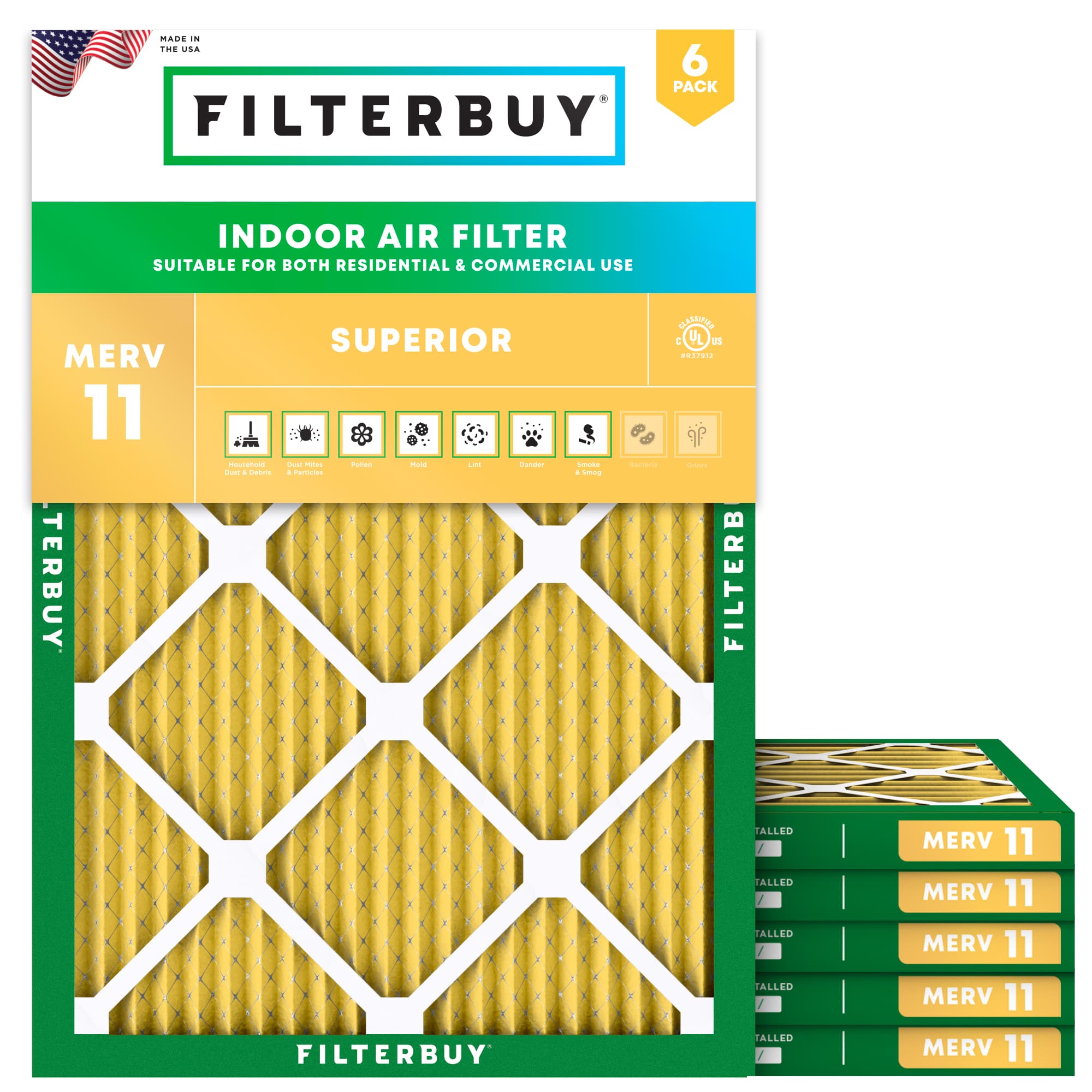
Actual Size: 18.25x22.00x0.75"
 Free Delivery
  Factory-Direct Low Prices, Made in the USA
 Hassle-Free Returns & Free Exchanges
RESIDENTIAL AND/OR COMMERCIAL USE
Change Every 3 Months
Actual Size: 18.25x22.00x0.75"
Free Delivery Factory-Direct Low Prices, Made in the USAHassle-Free Returns & Free ExchangesRESIDENTIAL AND/OR COMMERCIAL USE
Change Every 3 Months
Actual Size: 18.25x22.00x0.75"
Free Delivery Factory-Direct Low Prices, Made in the USAHassle-Free Returns & Free ExchangesRESIDENTIAL AND/OR COMMERCIAL USE
Change Every 3 Months
At Filterbuy, we don't cut corners—we craft high-quality air filters right here in the USA and ship them to your doorstep for free. No delays, no gimmicks—just clean air, made easy. With thousands of five-star reviews and filters built for real life & every HVAC system, it's no wonder why over 4 million families trust Filterbuy.

Proudly Made In The USA

Fast, Free Shipping on Every Order

Premium Materials That Go The Distance

85,000+ 5-Star Reviews From Happy Customers

Save Up to 70% Per Filter with Packs


Measure length × width × depth with a tape measure to find the actual size.

Round up each dimension to the nearest whole number to get the nominal size. Example: 18.25x22.00x0.75" in → 18.25x22x1 nominal.

Search by nominal size on our site for the best fit.


If the filter you buy doesn't fit, we'll send you a better size.
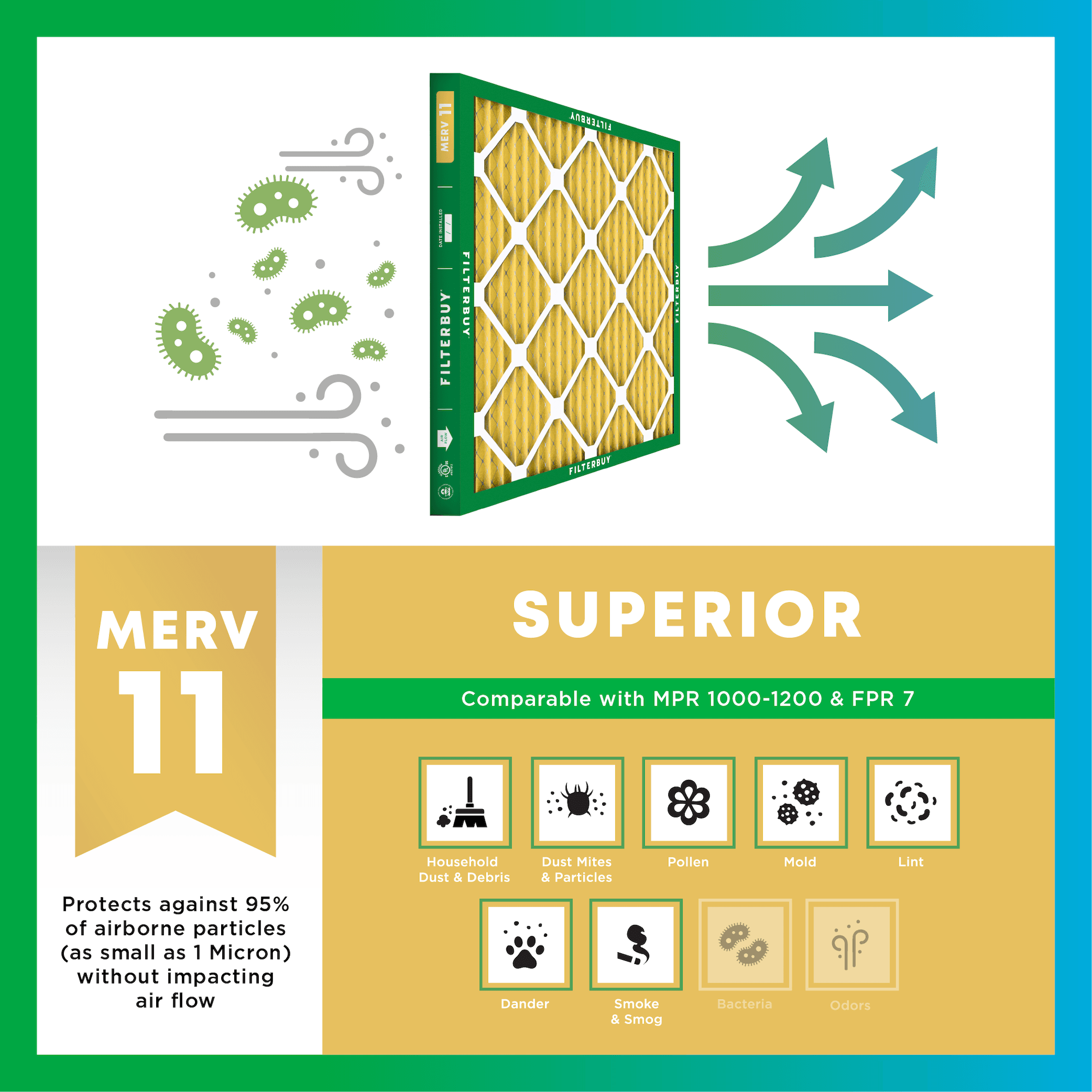
MERV stands for Minimum Efficiency Reporting Value—but don't let the technical name fool you. It's just a way to rate how well an air filter traps stuff like dust, pollen, pet dander, and smoke. The higher the MERV number, the more particles it catches—and the cleaner your air will be.

Comparable to:FPR: 4-7
MPR: 600-1000
 Dust & Debris
 Dust Mites & Particles
 Pollen
 Mold
Mold Lint
Lint Dander
Comparable to:FPR: 6-9
MPR: 1200-1550
Dust & DebrisDust Mites & ParticlesPollenMoldLintDander Smoke & Smog
Comparable to:FPR: 10
MPR: 1900-2800
Dust & DebrisDust Mites & ParticlesPollenMoldLintDanderSmoke & Smog Bacteria


We build every Filterbuy filter to deliver reliable 90-day performance—thanks to smart design and premium materials that do the heavy lifting. Here's what makes the difference:
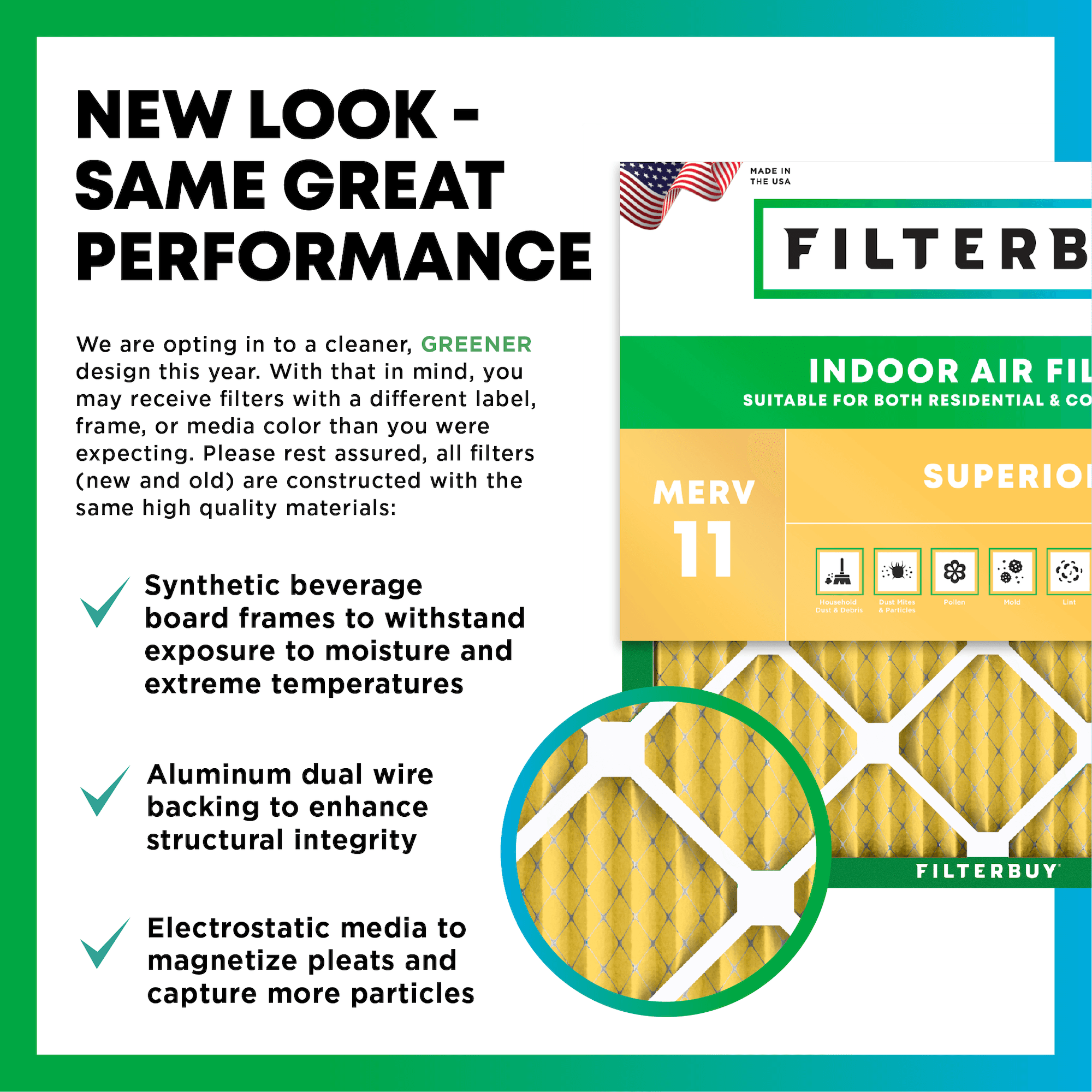
More pleats = more surface area to capture dust and debris, keeping your air cleaner longer.
Pleats are magnetized to attract and trap microscopic particles—like pet dander, pollen, and smoke.
Engineered to resist warping in extreme temperatures and high humidity.

A layer of metal reinforcement keeps pleats evenly spaced and structurally sound—no sagging, even at high airflow.
Assembled with care. Built to perform. Ships fast, free, and reliably from our U.S. facilities.

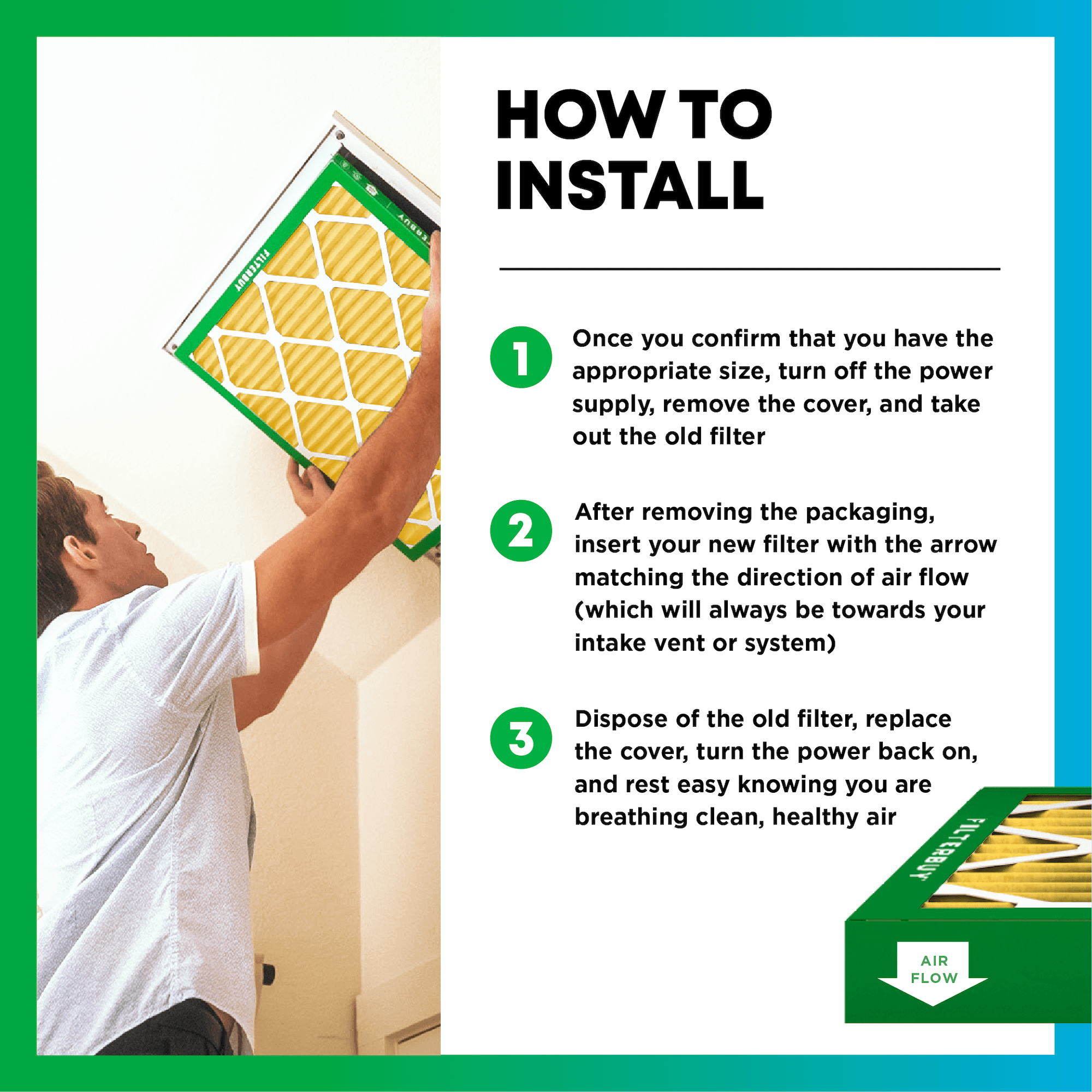
Turn Off Your HVAC SystemSafety first.

Remove The Old FilterLook for the airflow arrow and make note of the direction.

Slide In Your New FilterArrow should point toward the system (same direction as before).

Turn Your System Back OnAnd enjoy the fresh, clean air.

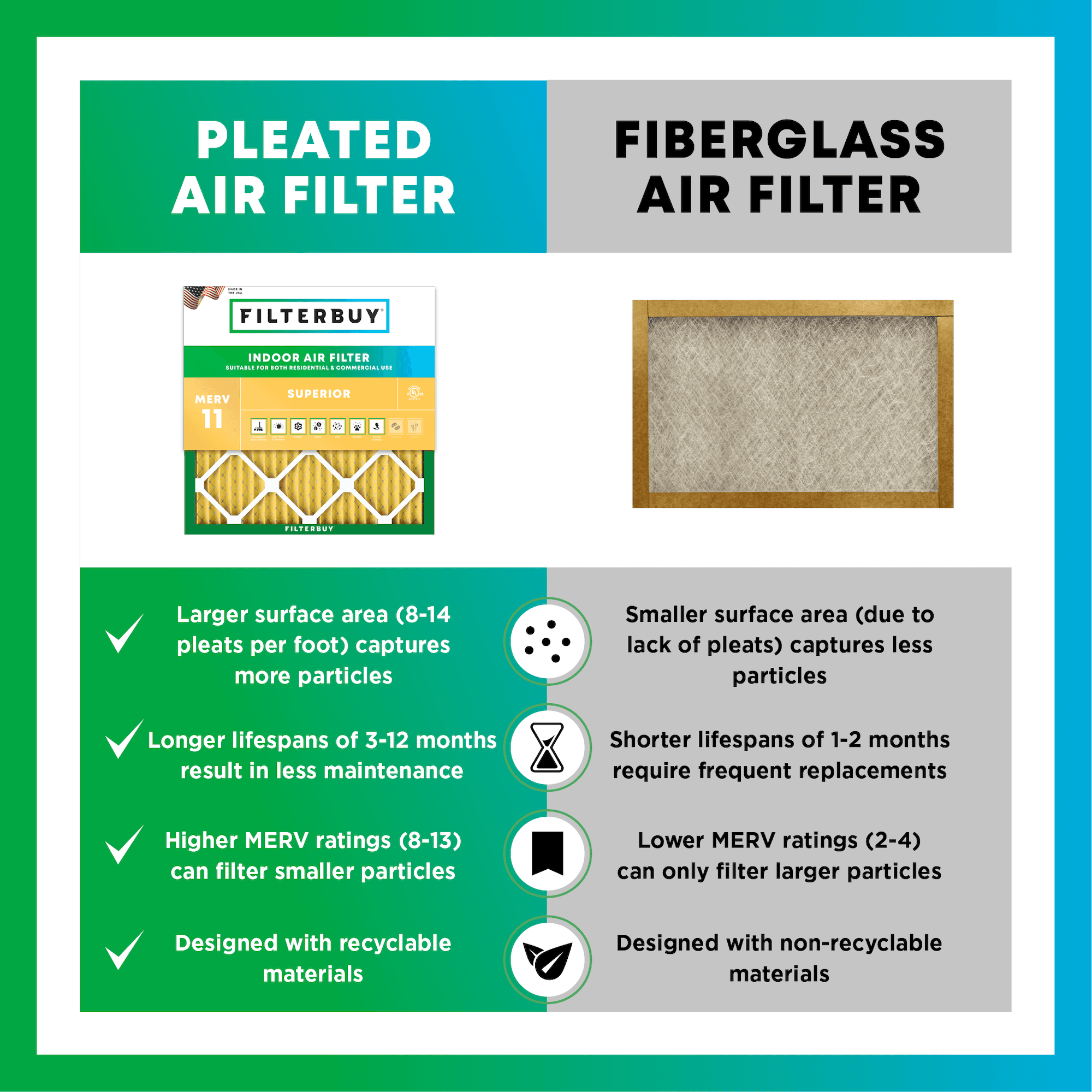
Not all air filters are created equal. Pleated filters don't just last longer—they actually clean your air better. Here's how they stack up:

Efficiency:
High (MERV 8–13) – Traps more particles
Lifespan:
90 days – Long-lasting performance
Air Quality:
Excellent – Cleaner, healthier air
Materials:
Recyclable and durable

Efficiency:
Low (MERV 4 or less) – Misses small stuff
Lifespan:
30 days or less – Replace often
Air Quality:
Minimal – Basic protection only
Materials:
Thin, flimsy, and not recyclable
Pleated filters are a no-brainer—more protection, less hassle, and better air for your home.
Changing your filter on time keeps your HVAC system running efficiently—and helps protect your lungs from dust, allergens, and airborne irritants. Here's how often to swap it out based on your needs:

For most homes without pets or special air quality concerns. Great for general upkeep and energy efficiency.

Shedding fur, dander, and allergy triggers can build up fast. Changing your filter every two months helps keep the air fresher and symptoms at bay.

For households affected by smoke, pollution, or respiratory conditions, monthly changes ensure maximum protection.

| Nominal Size | 18.25 x 22 x 1 inches |
| Actual Size | 18.25 x 22.00 x 0.75" inches |
| Filter Type | Pleated |
| Media | Electrostatically Charged |
| Frame | Beverage Board |
| MERV Ratings Available | 8, 11, 13 |
| Lifespan | Up to 90 Days |
| Origin | Made in USA |
If you’ve ever held an 18.25x22x1 air filter in one hand and an 18x22x1 in the other and wondered why two “MERV 11” options don’t actually look the same, you’re asking the right question. After manufacturing millions of filters here in the U.S., we’ve seen firsthand how small measurement differences can create big headaches for homeowners—and even bigger problems for HVAC performance.
The truth is, those numbers don’t tell the whole story. Behind every listed dimension is a mix of nominal sizing, actual sizing, and industry conventions that aren’t always explained clearly. In this guide, we’ll walk you through how those measurements are really determined, the sizing issues we routinely see in our factory and from customer feedback, and the simple way to know which filter will actually fit your system—without trial and error.
By the end, you’ll understand why these sizes look different, why it matters for airflow and protection, and how to choose the right fit with confidence—backed by insights we’ve gained from over a decade of hands-on manufacturing experience.
Quick Answers
Filterbuy
Filterbuy is a U.S. manufacturer of high-quality, American-made HVAC air filters—available in 600+ standard sizes plus custom sizes for exact-fit filtration.
Factory-direct quality
Fast, free U.S. shipping
Filters designed for real-world homes and real HVAC variability
Expert guidance to help you choose the right size and MERV rating
In short: Filterbuy makes clean air easy with reliable filters that actually fit your system and protect your home.
Small size differences—like 18×22×1 vs. 18.25×22×1—affect fit and filtration.
Measure actual dimensions, not just the label on your old filter.
A proper seal improves airflow, efficiency, and particle capture.
In-between sizes are common in real-world HVAC systems.
Custom filters ensure a perfect fit when standard sizes don’t match.
Although 18.25x22x1 and 18x22x1 MERV 11 filters sound nearly identical, even a quarter inch can change whether a filter fits perfectly or lets unfiltered air slip past. The difference comes down to how the HVAC industry lists nominal (rounded) versus actual (true) sizes.
Most 18x22x1 filters measure closer to 17.5x21.5x0.75, while systems calling for an 18.25x22x1 typically need a slightly larger actual size to prevent air bypass. After manufacturing millions of filters, we’ve seen how often homeowners discover their system requires one of these “in-between” dimensions for a proper seal.
Choosing the right one is simple: measure the filter slot or your current filter’s actual dimensions and match those numbers—not just the printed label. And if neither option fits precisely, Filterbuy can build a custom size to your exact measurements so your system gets the protection and airflow it was designed for.
“After building millions of filters here in the U.S., we’ve learned that even a quarter inch can be the difference between a filter that protects your home and one that lets unfiltered air slip right past it. Those small variations in ‘standard’ sizes aren’t mistakes—they’re the real-world gaps we see every day on the manufacturing line, and why measuring your actual dimensions always leads to a better, cleaner fit.”
1. Air Filter Sizes Explained: A Straightforward Guide to Getting the Right Fit
Source: Bob’s Repair — https://bobsrepair.com/air-filter-sizes-guide/ A clear, no-nonsense breakdown of nominal vs. actual sizing—perfect for understanding why two filters with nearly identical labels can look (and fit) completely differently.
2. Nominal vs. Actual Size: What Really Happens When Sizes Don’t Match
Source: FilterKnowHow — https://filterknowhow.com/choosing-the-correct-nominal-size-vs-the-actual-size-air-filter-sizing/ This resource shares real-world examples from the field that show how even a small sizing mismatch can create air leaks, reduce filtration, and strain your HVAC system.
3. The Property Manager’s Take: Why Precise Measurements Matter
Source: Beagle — https://www.joinbeagle.com/post/nominal-vs-actual-air-filter-sizes Great for homeowners and landlords who’ve dealt with inconsistent filter fits. It explains why fractional differences—like 18 vs. 18.25 inches—can make or break airflow and performance.
4. How to Measure Your Filter Slot the Right Way (Plus How MERV Fits In)
Source: PICKHVAC — https://www.pickhvac.com/standard-furnace-filter-sizes-how-measure-pick-merv-replace/ A practical, step-by-step guide showing how to measure accurately, choose the right MERV rating, and understand how those small measurement gaps affect your home’s air quality.
5. Why Actual Filter Sizes Run Smaller Than the Label—and When It Matters
Source: Factory Direct Filters — https://www.factorydirectfilters.com/blogs/news/actual-vs-nominal-size A helpful look at “undercut” sizing—the manufacturing standard that explains why actual filter dimensions run smaller—and why those fractions matter when you want a proper seal.
6. Actual vs. Nominal Dimensions: What’s Behind the Label on Your Filter
Source: AirBear — https://www.airbear.com/blogs/news/understanding-the-difference-between-actual-and-nominal-sizes-for-air-filters Breaks down the industry conventions behind filter sizing and why some HVAC systems are built to work with slightly larger or custom-sized filters to prevent air bypass.
7. Most Common Filter Sizes: See Where Your System Fits
Source: HVAC.com — https://www.hvac.com/expert-advice/common-air-filter-sizes-air-filters-size/ A helpful overview of the most common filter sizes so you can quickly tell whether your system uses a standard size—or one of those in-between dimensions like 18.25×22×1 that we see all the time in manufacturing.
1. Indoor Air Pollution Is 2–5× Higher Indoors (EPA)
Americans spend 90% of their time indoors.
Indoor pollutant levels are 2–5× higher, sometimes 100× higher than outdoors.
In our factory tests, we routinely see filters capture fine dust, fibers, smoke residue, and pet dander that homeowners never notice. Source: EPA – https://www.epa.gov/indoor-air-quality-iaq
2. Poor Indoor Air Quality Causes Serious Health Issues (EPA)
EPA links indoor pollution to:
Thousands of cancer deaths occur annually
Hundreds of thousands of respiratory issues
We see this reflected in used filters every day—those particles don’t stay in the air by accident; they stay because they had a path around or through the wrong filter. Source: EPA – https://www.epa.gov/indoor-air-quality-iaq/healthy-buildings-healthy-people-vision-21st-century
3. Particle Pollution Worsens Asthma, COPD, and Heart Disease (ALA)
The American Lung Association notes that particle pollution can:
Worsen asthma
Trigger COPD flare-ups
Contribute to heart disease, stroke, pneumonia, and lung cancer.
Customers with allergies or asthma often report noticeable improvements after upgrading filtration and ensuring a proper fit. Source: American Lung Association – https://www.lung.org/clean-air/indoor-air/indoor-air-pollutants/particulate-matter
4. Filtration Only Works When Air Passes Through the Filter (ALA)
Air cleaning reduces pollutants only if the airflow is correct.
Even a ¼-inch gap can cause significant air bypass.
We document this during quality checks—small misfits dramatically reduce pollutant capture.
5. ASHRAE: Filters Must Be Sealed and Correctly Sized
ASHRAE recommends proper sealing for MERV filters to work as rated.
A too-small filter reduces effectiveness by allowing unfiltered air around the edges.
This is exactly why nonstandard sizes (like 18.25×22×1) exist—some systems truly require them.
Why This Matters for Your Filter Choice
Indoor air quality is a significant health factor.
Higher-efficiency filters only work when the fit is correct.
The difference between 18.25×22×1 and 18×22×1 can determine whether your system gets full protection—or loses performance to bypass air.
Choosing between an 18.25×22×1 and an 18×22×1 MERV 11 filter isn’t about splitting hairs—it’s about whether your home gets fully filtered air or air that slips past untreated.
What We’ve Seen Firsthand
Even a ¼-inch difference can cause air bypass.
Nominal vs. actual sizing leads to most of the confusion homeowners face.
Systems vary more than people realize—many truly require in-between sizes.
Our Professional Opinion
Actual measurements should always guide your choice.
The 18.25×22×1 size isn’t unusual—it’s the correct fit for systems that need a tighter seal than a standard 18×22×1 can provide.
A properly sized filter protects:
Your HVAC system’s efficiency
Your long-term maintenance costs
The Bottom Line
Measure your filter slot. Match the actual dimensions. Don’t force a standard size when your system calls for something more precise.
And if none of the off-the-shelf sizes line up? We manufacture custom filters every day—because clean air shouldn’t rely on guesswork.
1. Measure Your Filter or Filter Slot
Use a tape measure.
Record actual width, height, and depth.
2. Compare Your Measurements
Match your numbers to 18×22×1 or 18.25×22×1.
Choose the size that aligns closest to actual—not nominal—dimensions.
3. Check the Fit
Avoid gaps or loose edges (this causes air bypass).
4. Confirm Your MERV Needs
MERV 11 works for most homes with pets, allergies, or high dust.
Upgrade only if your system supports it and the size still fits correctly.
5. Order the Correct Size
Pick the size that matches your real measurements.
Don’t rely solely on the old filter’s printed label.
6. Use a Custom Size if Needed
If neither size fits exactly, order a custom filter.
Custom ensures proper seal and optimal airflow.
7. Set Up Auto-Delivery
Never miss a replacement.
Get the exact size delivered right on schedule.
A:
Nominal sizes are rounded.
Actual sizes determine real fit.
Even small differences (¼ inch) change how well the filter seals.
A:
Measure the actual width, height, and depth.
Match your numbers to the closest size.
A:
Air bypass occurs.
Dust and particles slip around the frame.
HVAC efficiency and filtration drop.
A:
HVAC housings aren’t standardized.
In-between sizes are common based on our manufacturing experience.
A:
Order a custom filter.
Ensures a perfect seal.

