
National Weather Alerts Map: How to Read Today's U.S. Warnings and Protect Your Home's Air
October 14, 2026
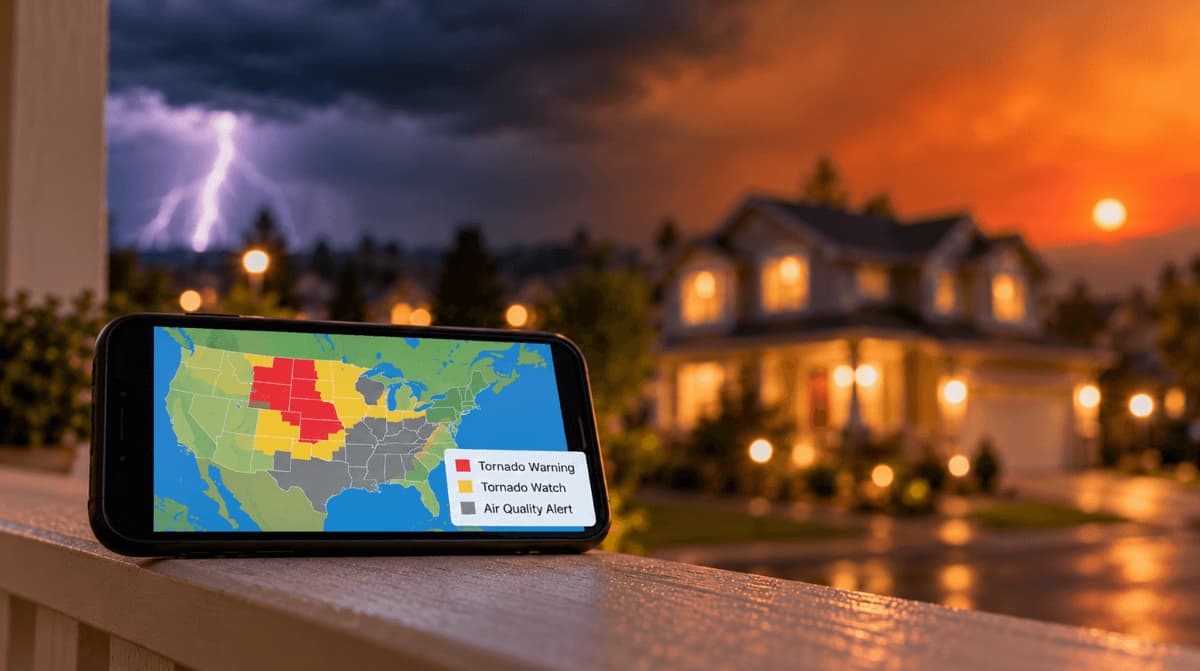
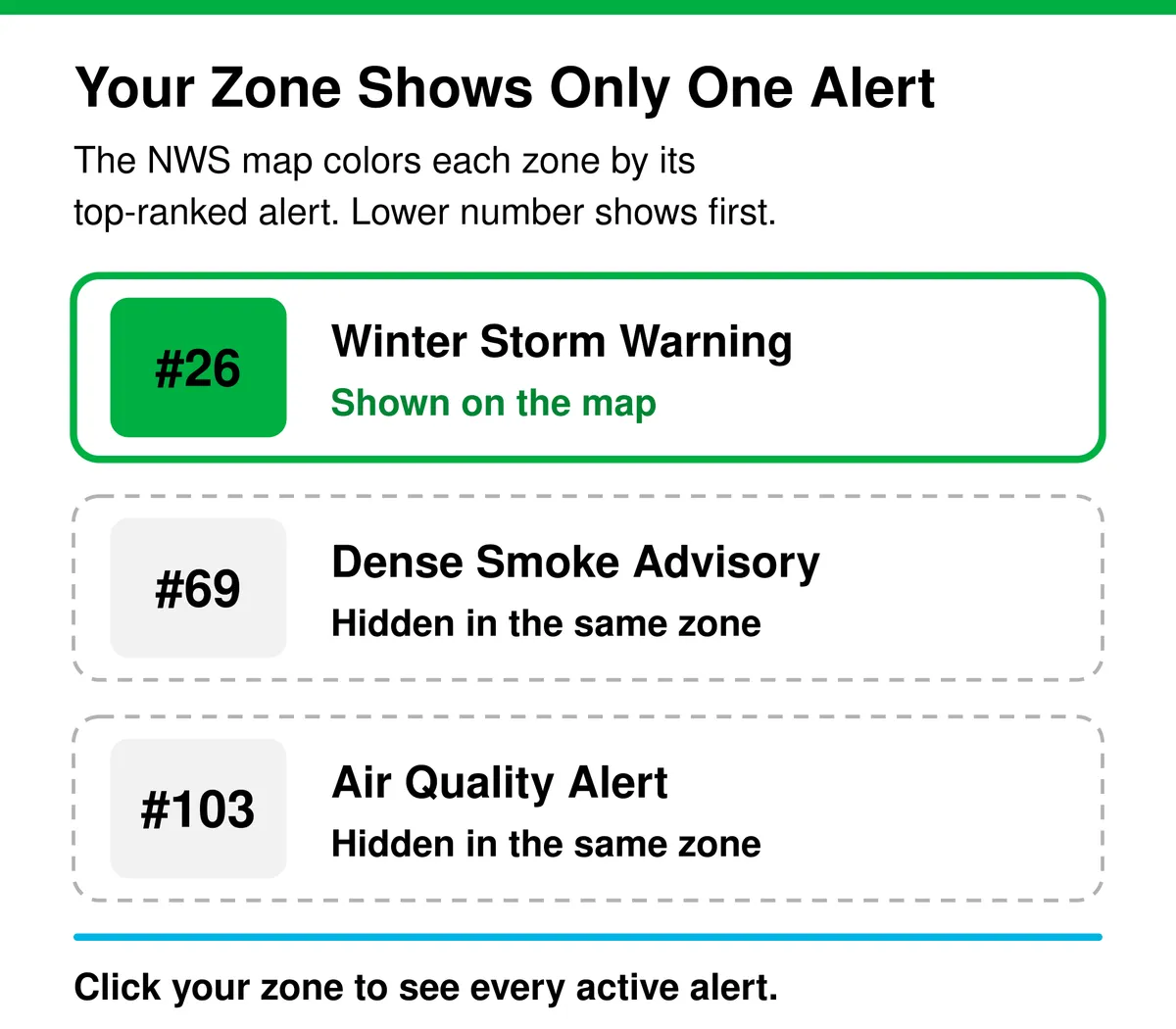
Check the National Weather Service hazards map at weather.gov for live U.S. alerts. It refreshes about every 5 minutes. Each zone shows only its top-ranked alert, so a Winter Storm Warning can cover an Air Quality Alert in the same zone. Click your zone to see every active alert and when it expires.
Warning: act now. Follow official instructions first. For smoke or dust, close the house and set the fan to On.
Watch: prepare. Confirm your filter size and keep a spare on hand.
Advisory: use caution. Limit time outdoors. For smoke or dust, take the same indoor steps as a warning.
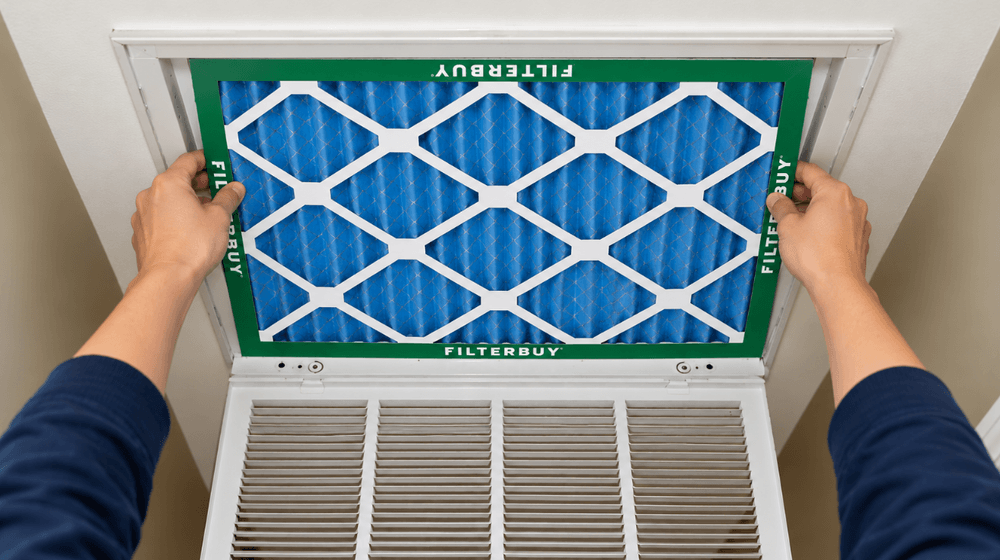
Winter storms and extreme cold keep homes closed up, which traps indoor pollutants. A fresh filter at the highest MERV rating your system's manual allows helps your HVAC system capture more airborne particles. Filterbuy makes MERV 8, 11 and 13 filters in the USA, with fast and free 2-day delivery to most US states.
Not sure which filter fits your system? Answer a few quick questions and we'll match you to the right one.
TL;DR
The official national weather alerts map is the National Weather Service (NWS) hazards map at weather.gov. It shades every U.S. zone with an active alert and refreshes roughly every 5 minutes. The catch: each zone shows only its highest-priority alert, so lower-ranked alerts like Air Quality Alerts often stay hidden. Click your area to see everything in effect, then use Filterbuy's action table below.
Key Takeaways
The NWS hazards map at weather.gov is the official live source for U.S. weather alerts, and it updates roughly every 5 minutes.
A warning means act now, a watch means get ready and an advisory means use caution.
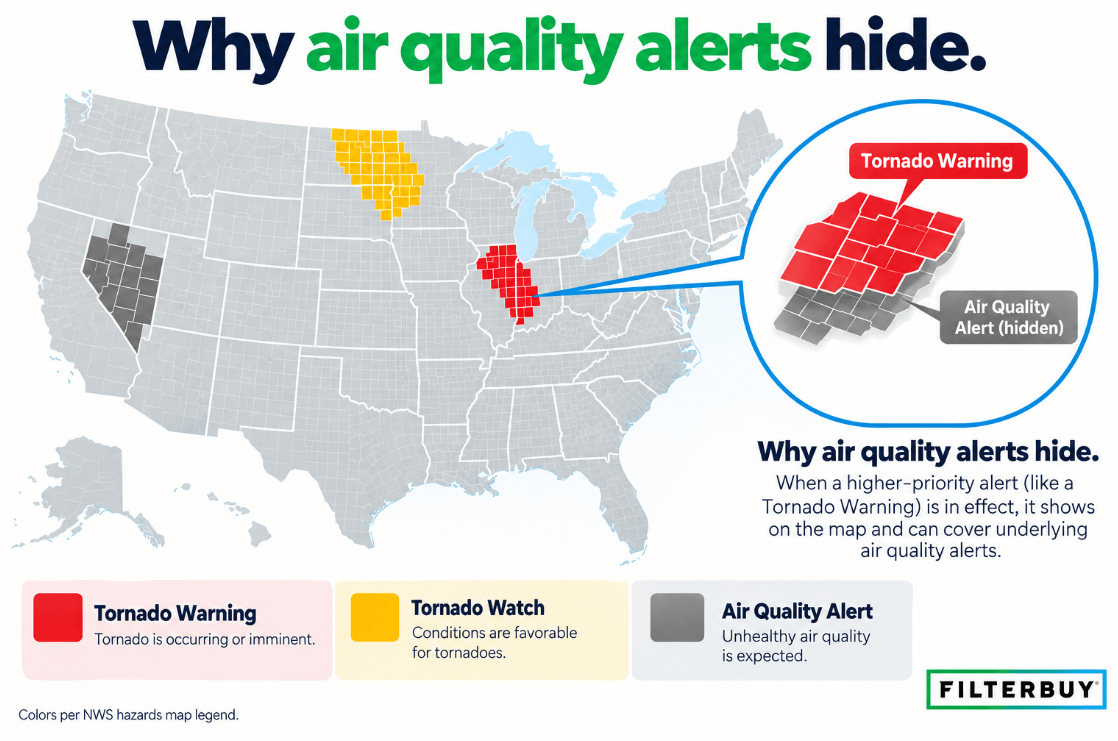
Each zone displays only its most serious alert, so Air Quality Alerts, ranked 103rd of 111 and shown in gray, are easily hidden.
Smoke, heat, dust and air quality alerts all reach indoor air, and during smoke the EPA recommends a MERV 13 or higher filter if your system can handle it.
Where Can I See the Live National Weather Alerts Map?
You'll find the live national weather alerts map on the National Weather Service homepage, weather.gov. NWS, part of NOAA, issues every official U.S. weather alert, and its real-time hazards map refreshes every 5 minutes or so (NWS hazards map help).
For alerts that come to you, add two push sources:
Wireless Emergency Alerts (WEA): free warnings that appear on your phone automatically for the most dangerous hazards.
NOAA Weather Radio: a 24/7 broadcast that can sound an alarm when your county gets a warning.
For air quality, check Filterbuy's live AQI map for city and state readings. Filterbuy's guide to the Air Quality Index explains each color.
How Do You Read the National Weather Alerts Map?
The interactive national weather alerts map takes four quick steps to read: find your zone, match its color, click for every active alert and check the timing. Each color marks a type of alert, not a level of severity, so click before judging today's alerts.
Find your zone, usually your county.
Match the color against the legend below.
Click to read everything. Your zone may have several alerts at once, and clicking shows them all.
Check the timing. Every alert lists when it was issued and when it expires.
The most common colors and their NWS display priority (1 is shown first):
What Is the Difference Between a Warning, a Watch and an Advisory?
A warning means act now, because the hazard is happening or about to. A watch means prepare, because conditions favor a hazard but the timing or location is still uncertain. An advisory means use caution: the hazard is less serious.
Definitions follow NWS watch, warning and advisory guidance. In a tornado, hurricane or flash flood warning, safety comes first.
Why Don't Air Quality Alerts Show Up on the National Weather Alerts Map?
Air Quality Alerts often vanish from the national weather alerts map because they rank 103rd of 111 alert types in NWS's display order. Any heat, storm or even wind alert in the same zone covers its gray. The Dense Smoke Advisory (69th), the Air Quality Alert (103rd) and the Air Stagnation Advisory (104th) all land in the bottom 40%, and an Air Quality Alert outranks only eight entries, including NWS test messages.
NWS issues these alerts for state and local air agencies, which send readers to AirNow.gov for current readings. To make sure you see them:
Click your zone rather than trusting its color.
Check Filterbuy's live AQI map whenever heat or fire alerts are active.
Once an alert is in effect, work through Filterbuy's Air Quality Alert checklist for your home.
What Should You Do for Your Home's Air During Each Weather Alert?
Most weather alerts change the air inside your home, even the outdoor-sounding ones. Smoke pushes fine particles indoors, storms bring generator fumes and floods bring mold. Filterbuy built this table from EPA and CDC guidance, pairing each severe weather alert with its indoor risk and the fix.
For smoke, the EPA's wildfire and indoor air quality guidance recommends a MERV 13 filter, or the highest rating your system can handle. Filterbuy's guide to the best MERV filter for wildfire smoke shows how to upgrade without hurting airflow. Floods are different: EPA flood cleanup guidance says not to run any part of an HVAC system that floodwater has reached.
Pro tip from the Filterbuy team: Pick up two or three spare filters before smoke season, since shipping slows during regional events. Know your filter size first, or set up Filterbuy auto-delivery so fresh filters arrive before alert season.
"The best filter is the highest rating your system can move air through, changed on schedule. A MERV 11 you actually replace beats a MERV 13 you leave in for six months."
— David Clark, Licensed HVAC Technician, Filterbuy HVAC Solutions
“The question I get most is which MERV to buy. The one to ask first is whether the filter you are holding actually fills the slot. A rating describes the media, not the gap around it."
— Michelle Wan, Brand Manager and Air Quality Writer, Filterbuy
Why Does an Air Filter Maker Track Weather Alerts?
Weather alerts tell us what Filterbuy filters are about to face. We cut every filter to order in our own plants in Alabama, Florida, Pennsylvania and Utah, and alert days are when those filters work hardest. So our team matched all 111 NWS alert types to their effect on indoor air. One gap stood out: the alert most tied to your air sits near the bottom.
Supporting Statistics
1. Weather killed 645 people in the U.S. in 2025, and 209 of those deaths came from flash floods. The NWS 2025 Summary of Natural Hazard Statistics also counts 100 heat deaths and 61 fire-weather deaths. Act on flood, heat and fire alerts first.
2. 61.5 million people live in U.S. counties graded F for short-term spikes in particle pollution. The American Lung Association's State of the Air 2026 report draws on 2022–2024 data, including the 2023 Canadian wildfire smoke, when hidden Air Quality Alerts mattered most.
3. More than 400 Americans die from unintentional carbon monoxide poisoning each year, and more than 14,000 are hospitalized. According to the CDC, portable generators and furnaces are common sources, which is why Filterbuy's winter storm row starts with generator and CO alarm safety.
Frequently Asked Questions
Is There a Live National Weather Alerts Map?
Yes. The National Weather Service hazards map at weather.gov is the official live map, and it updates roughly every 5 minutes.
Why Did I Get an Air Quality Alert That Isn't on the Map?
Because the NWS map shows only one alert per zone, and Air Quality Alerts rank 103rd of 111. Click your zone or check an AQI map.
Can I See the National Weather Alerts Map by State?
Yes. Enter a city, state or ZIP code at weather.gov, or click any state on the map.
Can Filterbuy Alert Me When My Air Turns Unhealthy?
Yes. Filterbuy's city AQI pages let you sign up for alerts when local air quality turns unhealthy.
Should I Run My HVAC Fan During an Air Quality Alert?
Yes, with a good filter. The EPA advises setting the fan to On instead of Auto and closing any fresh-air intake, so indoor air keeps passing through it.
Protect Your Home Before the Next Alert
The national weather alerts map tells you what's coming; your HVAC filter decides how much of it your family breathes. The Filterbuy team has seen how much calmer alert days feel when a family already has a plan. Find your filter size and keep a Filterbuy MERV 13 filter ready for smoke season.
Glossary
Filterbuy: A family-owned U.S. air filter manufacturer, founded in 2013, making HVAC filters in 600+ sizes.
National Weather Service (NWS): The federal agency, part of NOAA, that issues official U.S. weather alerts.
NOAA: The National Oceanic and Atmospheric Administration, parent agency of the NWS.
Warning: An NWS alert for an occurring or imminent hazard to life or property.
Watch: An NWS alert for a likelier hazard with uncertain timing or location.
Advisory: An NWS alert for a hazard less serious than a warning.
Forecast zone: The area an NWS alert covers, usually one county or part of one.