
What Air Purifier Filters Capture: Dust, Pollen, Pet Dander & Smoke
July 16, 2026
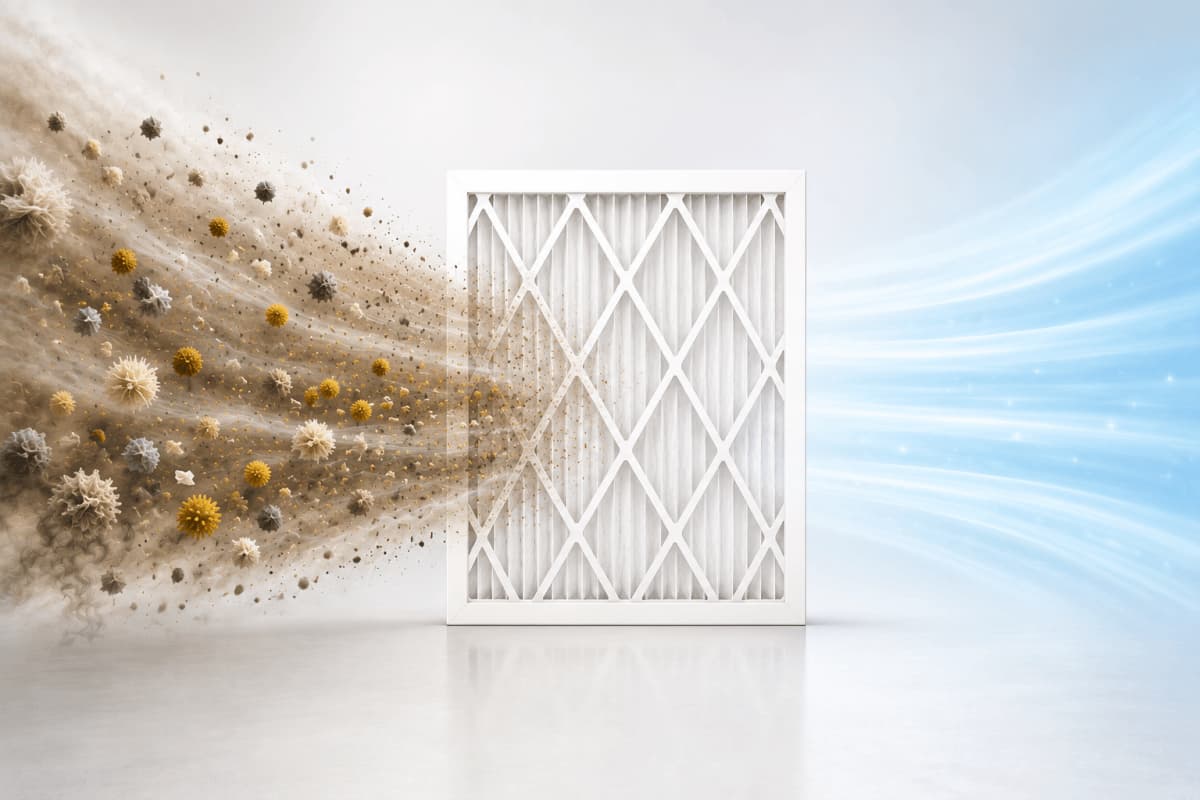
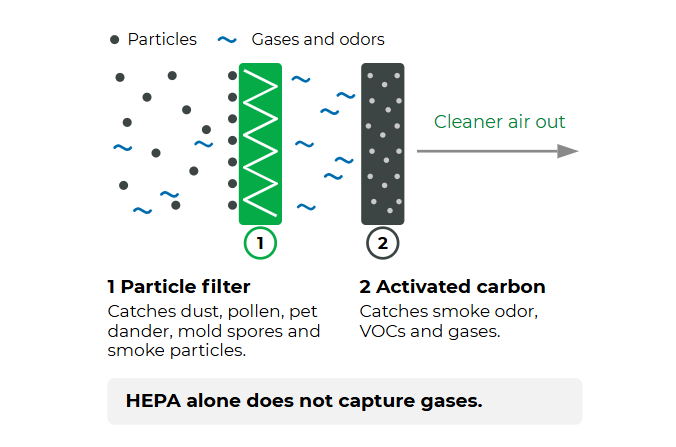
Air purifier filters capture dust, pollen, pet dander, mold spores and smoke particles — but only while those particles are still floating in the air. Gases and odors are a separate job, and they need an activated carbon filter. Settled dust on your shelves and floors still needs cleaning. So what you need comes down to what is actually bothering you.
Particle filter (HEPA-style): dust, pollen, pet dander, mold spores and smoke particles.
Activated carbon: smoke odor, VOCs and other gases.
Both together: particles plus odors and gases.
Not sure which one your home needs? The quick match below will point you to the right filter.
Your HVAC filter handles the same particles for the whole house. Answer a few quick questions and we will match you to a MERV rating.
Prefer to browse? Shop air filters by size at Filterbuy.
Air purifiers improve indoor air quality by capturing various airborne pollutants. Their filters are designed to trap particles such as dust, pollen, pet dander, mold spores, and smoke. While high-efficiency particulate air (HEPA) filters are the standard for capturing these solid particles, they are not effective against gases, chemical fumes, and odors. To remove these non-particulate pollutants, an air purifier must also include an activated carbon filter.
Key Takeaways
HEPA filters are highly effective at capturing solid airborne particles such as dust, pollen, pet dander, mold spores, and smoke.
To address gases, chemical fumes, and odors, an activated carbon filter is required in addition to HEPA filtration.
Combining both HEPA and activated carbon filters ensures comprehensive air purification for a healthier indoor environment.
What Do Air Purifier Filters Capture?
Here is a simple breakdown of common indoor pollutants and the best filter types to capture them.
| Pollutant | Can an Air Purifier Capture It? | Best Filter Type | Important Note |
|---|---|---|---|
| Dust | Yes, when airborne | HEPA or high-efficiency particle filter | Settled dust still needs cleaning |
| Pollen | Yes | HEPA or high-efficiency particle filter | Keep windows closed on high-pollen days |
| Pet dander | Yes, when airborne | HEPA or high-efficiency particle filter | Pet hair is larger and often caught by pre-filters |
| Smoke particles | Yes | HEPA or high-efficiency particle filter | Choose a purifier with a strong smoke CADR |
| Smoke odor | Partly | Activated carbon | Carbon amount matters |
| VOCs/gases | Sometimes | Activated carbon or gas-phase filter | HEPA alone does not capture gases |
| Mold spores | Yes, when airborne | HEPA or high-efficiency particle filter | Purifiers do not fix moisture or mold growth |
The EPA specifically separates particle filtration from gas filtration. They recommend using an activated carbon filter or another gas-specific filter to reduce volatile organic compounds (VOCs) and odors.
How Air Purifier Filters Work in Simple Terms
Air purifier filters do not work exactly like a kitchen strainer. Instead, the machine pulls air through a dense web of filter material. As particles pass through, they stick to the filter fibers. Large particles, like pollen, easily crash into the fibers and get trapped. Tiny particles, like smoke, move in unpredictable paths and eventually collide with the filter fibers, where they stick.
HEPA and High-Efficiency Filters Capture Particles
HEPA filters are designed specifically for airborne solid particles. These filters excel at trapping dust, pollen, mold spores, bacteria, and other microscopic particles that cause respiratory irritation.
Activated Carbon Helps With Odors and Gases
Carbon filters adsorb certain gases and odors. Their performance depends on how much activated carbon is actually in the filter and what specific gases are present in your home. The EPA notes that no widely used performance rating system for portable air cleaners measures gas removal, unlike the clean air delivery rate (CADR) used for particles.
Pre-Filters Catch Larger Debris
Many air purifiers use a pre-filter as the first line of defense. Pre-filters catch larger particles, such as lint, pet hair, and larger dust clumps, before they reach the main high-efficiency filter. This helps your main filter last longer.
Do Air Purifier Filters Capture Dust?
Yes, air purifier filters capture dust, but mostly the dust that is actively floating in the air.
Dust is a complex mix of skin cells, clothing fibers, soil, pollen, pet material, and other particles. The EPA lists indoor dust, cleaning activities, cooking, combustion, pets, and outdoor particles as common sources of indoor particulate matter. Air purifiers can significantly reduce dust suspended in the air.
Why You May Still See Dust on Surfaces
Heavier dust settles onto surfaces very quickly. Air purifiers help most when dust is still airborne. They will not pull dust off your shelves, floors, blinds, or furniture. For the best results, pair air filtration with regular dusting and vacuuming.
Best Filter for Dust
To combat dust, choose a high-efficiency particle filter. Ensure your air purifier has an appropriate dust CADR rating for your room size.
Do Air Purifier Filters Capture Pollen?
Yes, air purifier filters capture pollen very effectively. Pollen is generally larger than smoke particles and many fine dust particles. This makes it one of the easier particles for a good filter to trap while airborne.
How Pollen Gets Indoors
Pollen easily drifts indoors through open windows and doors. You also track it inside on your pets, shoes, and clothing. Outdoor air pollution and pollen levels vary heavily by location.
Best Filter for Pollen
Use a high-efficiency air purifier filter. The EPA recommends keeping windows closed on high-pollen days and running portable air cleaners to reduce indoor particulate matter. Make sure to replace your filter routinely during pollen-heavy seasons.
Do Air Purifier Filters Capture Pet Dander?
Yes, air purifiers capture pet dander when the dander is airborne.
It helps to understand the difference between pet hair and pet dander. Pet hair is visible and relatively large. Pet dander consists of microscopic skin flakes and proteins. These tiny particles become airborne easily and eventually settle into fabrics, carpets, and bedding.
Pet Hair vs. Pet Dander
Your air purifier's pre-filter will catch most airborne pet hair. Pet dander is much smaller and requires a high-efficiency particle filter to trap effectively.
Best Filter for Homes With Pets
Choose a purifier that uses a high-efficiency particle filter for dander and a pre-filter for hair. If pet odors are also a concern, look for filters that remove pet dander and include an activated carbon layer.
Do Air Purifier Filters Capture Smoke?
Yes, air purifier filters can capture smoke particles. However, smoke odor and toxic gases require carbon filtration.
Smoke is tricky because it contains both fine solid particles and chemical gases. A high-efficiency particle filter can remove the physical smoke particles from the air. An activated carbon filter is required to reduce the accompanying smoke odors and gases.
Smoke From Wildfires, Cooking, Tobacco, and Candles
Common household smoke sources include wildfire smoke, cooking smoke, tobacco smoke, fireplaces, candles, and incense. The EPA lists unvented heaters, smoking products, and candles as major sources of indoor particulate matter.
Best Filter for Smoke
For smoke, choose filters that combine a high-efficiency particle filter with activated carbon to remove smoke and odors. The Association of Home Appliance Manufacturers (AHAM) recommends choosing a purifier with a smoke CADR equal to your room's square footage, especially during wildfire events.
What Air Purifier Filters Do Not Fully Remove
Air filters can be a helpful way to improve indoor air quality, but they work best when paired with source control, regular cleaning, proper ventilation, and timely filter replacement. Air purifiers do not remove every pollutant. They only clean the air that actually passes through the unit.
Mold Problems
Air purifiers may capture airborne mold spores, but they absolutely do not fix mold growth. The EPA warns that air cleaners do not address the root cause of mold and musty odors. You must fix the underlying moisture source.
Odors and VOCs
HEPA-style filters alone cannot capture gases or odors. If you want to remove smells, you must use an activated carbon filter.
Ozone-Producing Devices
Avoid devices that intentionally produce ozone. The EPA states that ozone is a known lung irritant and warns that some electronic air-cleaning technologies emit ozone. Stick to safe, mechanical filtration.
Why Filter Replacement Matters
A dirty filter cannot clean your air forever. As the filter accumulates dust, dander, pollen, and smoke particles, it clogs. This causes airflow to drop. Less airflow means less air gets cleaned.
The EPA recommends routinely changing HVAC and portable air cleaner filters according to the manufacturer's directions. Learning how often to change your air filter is critical for healthy indoor air.
Signs Your Air Purifier Filter May Need Replacing
You should replace your filter if you notice:
Visible dust buildup on the filter media
A darker filter color
Weaker airflow from the machine
Lingering smoke or pet odors
Increased allergy irritation indoors
The purifier's filter replacement light is turning on
Can You Wash an Air Purifier Filter?
Only wash a filter if the manufacturer explicitly says it is washable. Most HEPA-style replacement filters are not designed to be washed. Washing a disposable filter destroys the delicate filter media and ruins its performance.
How to Choose the Right Replacement Air Purifier Filter
Choosing the correct filter ensures your air purifier works exactly as intended. Always check your purifier model number and find the right filter size before buying.
For Dust and Pollen
Choose a high-efficiency particle filter. This is the standard, highly effective choice for common allergens.
For Pets
Choose a particle filter paired with a pre-filter to catch hair. Add an activated carbon filter if pet odors bother you.
For Smoke
Choose a high-efficiency particle filter plus a thick activated carbon filter. Prioritize a machine with a high smoke CADR.
For Odors and VOCs
Choose an activated carbon or gas-phase filter. Keep in mind that gas filtration success depends heavily on the specific filter design and the total amount of carbon it contains.
Bottom Line: Breathe Easier With the Right Filter
Air purifier filters can capture many of the microscopic particles that make indoor air feel dirty or irritating. This includes airborne dust, pollen, pet dander, and smoke particles. The right filter truly matters. HEPA-style filters handle the solid particles, while activated carbon helps manage odors and gases.
Regular filter replacement keeps clean air moving properly through your home. For the absolute best results, use your air purifier alongside regular house cleaning, smart source control, and good outdoor ventilation.
Not sure which replacement filter fits your air purifier? Shop replacement air purifier filters by size, brand, or model number today to keep cleaner air moving through your home.
Frequently Asked Questions
Do air purifiers remove dust?
Yes, air purifiers can capture dust as it floats in the air. They will not remove dust that has already settled on furniture, floors, or shelves, so regular cleaning still matters.
Do air purifiers help with pollen?
Yes. Pollen is usually large enough for a high-efficiency particle filter to capture while airborne. For best results, keep windows closed on high-pollen days and replace filters on schedule.
Do air purifiers remove pet dander?
Yes, air purifiers can capture airborne pet dander. Pet dander is different from pet hair; dander is made of tiny skin flakes and proteins, while hair is larger and often caught by a pre-filter.
Do air purifiers remove smoke?
Air purifiers can capture smoke particles, especially with a high-efficiency particulate air (HEPA) filter. Smoke, odors, and gases require an activated carbon or other gas-focused filter.
Is a HEPA filter enough for smoke?
A HEPA-style filter can help with smoke particles, but it will not fully handle smoke odors or gases on its own. For smoke, pair strong particle filtration with activated carbon and choose a purifier with a strong smoke CADR.
Do air purifiers remove odors?
Some air purifiers can help reduce odors if they include activated carbon. A particle-only filter is not designed to remove gases or smells.
Can air purifiers remove mold?
Air purifiers can capture some airborne mold spores, but they do not fix mold growth. Mold problems require moisture control and proper cleanup.
How often should you replace an air purifier filter?
Follow the purifier manufacturer's instructions. Replace sooner if the filter looks dirty, airflow drops, odors linger, or the purifier runs often in areas with pets, smoke, dust, or high pollen.
Can I wash and reuse my air purifier filter?
Only if the manufacturer says the filter is washable. Many high-efficiency replacement filters are not washable and should be replaced instead.
What is the best air purifier filter for allergies?
For common airborne allergens like pollen, dust, and pet dander, use a high-efficiency particle filter that fits your purifier properly. For odors, choose a filter that also includes activated carbon.