
Grass Pollen: Season, Common Grasses, and How to Spot Them
October 2, 2026
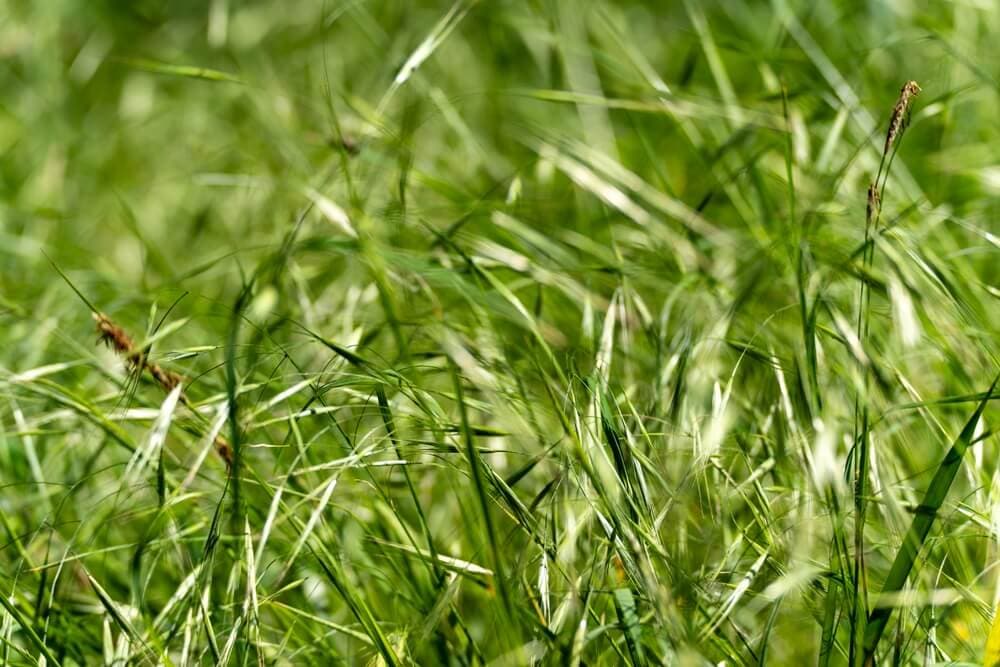
Grasses belong to Poaceae, one of the largest plant families, and they flower just like other plants. Their flowers are just tiny and easy to miss. Most grasses are wind-pollinated and produce large amounts of pollen (Pollen.com), and across 31 National Allergy Bureau stations, grass pollen seasons ranged anywhere from March to November (Lo et al., Aerobiologia, 2019).
Here is the surprise: your own lawn can produce pollen if its flowering stems are allowed to develop, even though it never grows showy petals. Timing shifts with geography, too. In the northern U.S., grass pollen is largely a late-spring and summer story, while lower latitudes see seasons that start earlier and end later (Lo et al., 2019).
Grass Pollen Quick Facts
| Field | Detail |
|---|---|
| Plant type | Flowering plants used in lawns and pastures, also growing in fields and roadsides |
| Family | Poaceae. This page covers Poa, Phleum, Dactylis, Lolium, Anthoxanthum, Cynodon, Sorghum, and Paspalum. |
| Typical season | North: late spring to summer. South: longer, roughly March to November at some stations (Lo et al., 2019). |
| Time of day | Varies by species and weather. ACAAI notes grass pollen levels tend to be highest in the evening during spring and summer (ACAAI). |
| U.S. regions | Nationwide. Timothy alone grows in all 50 states (USDA Forest Service FEIS). |
| Pollination | Mostly wind. Johnson grass is primarily self-pollinated, with some wind pollination (USDA Forest Service FEIS). |
| Share of U.S. pollen | Grass ranked ninth among 11 key allergenic pollen types across 31 NAB stations (Lo et al., 2019) |
| Common cross-reactions | Strong among cool-season grasses; Bermuda grass is more distinct (see Cross-Reactions) |
Is Grass Pollen High Near You Today?
Grass pollen won't show up in your local Air Quality Index. Intact pollen grains run about 10 to 100 microns, too large for the PM2.5 and PM10 monitors the AQI relies on, which we explain in How Pollen Affects Air Quality Readings. For daily grass pollen counts, check the certified station nearest you on the AAAAI National Allergy Bureau pollen map. To see air quality where you live, use Filterbuy's Live Air Quality Index Map.
How to Identify Flowering Grass
Grasses share a few clear features: narrow leaves, jointed stems, and clusters of small flowers held above the foliage. What people call a "seed head" may still be a flower head at first. During flowering, you can see anthers hanging out from the tiny florets. Those are the parts that produce pollen (UF/IFAS Extension). Later, the same head holds developing or mature seeds, so a head's presence alone does not prove pollen is being released today.
Grass pollen can't be identified from a dusty windowsill or car. The bright yellow film common in the Southeast each spring is mostly pine, not grass (Clemson Extension). Identifying individual grains takes magnification and expertise.
Kentucky Bluegrass (Poa pratensis)
A cool-season grass and one of the world's most popular turfgrasses. NC State lists its flowers from May to July. Look for boat-shaped leaf tips and a branching flower cluster 2 to 8 inches long with purplish-green spikelets (NC State Extension). Despite the name, it is native to Europe and northern Asia, not Kentucky (NC State Extension).
Timothy (Phleum pratense)
A hay and pasture grass rather than lawn turf, found in all 50 states. It flowers from June to September depending on altitude and latitude, including June to July in North Dakota and Ohio (USDA Forest Service FEIS). The cylindrical, spike-like head, about 6 inches long, looks like a narrow bottlebrush (USDA Forest Service FEIS).
Orchard Grass (Dactylis glomerata)
A widely planted pasture grass found from Nova Scotia to the Carolinas and west to California. It flowers from May to September or October across most regions. Its spikelets cluster tightly on one side of each branch, forming dense, distinctive tufts (USDA Forest Service FEIS).
Perennial Ryegrass (Lolium perenne)
A cool-season turf grass often used for winter overseeding on Southern bermudagrass lawns and athletic fields (NC State Extension). When it is allowed to flower, look for an unbranched spike with spikelets arranged alternately along the stem (Thermo Fisher Scientific).
Sweet Vernal Grass (Anthoxanthum odoratum)
A naturalized cool-season grass of meadows and woodland margins, not a lawn grass. It produces slender spikes in spring that dry to golden brown. Crushed leaves smell like newly cut hay because the plant contains coumarin (NC State Extension).
Bermuda Grass (Cynodon dactylon)
A warm-season grass of lawns, fields, and disturbed ground. Look for three to eight finger-like spikes radiating from a single point, plus creeping runners above and below ground (UC IPM). It flowers from June through September in California (UC IPM), and Thermo Fisher gives a typical U.S. window of May to September (Thermo Fisher Scientific).
Johnson Grass (Sorghum halepense)
A tall warm-season grass of fields and roadsides, reaching 6 to 7 feet. Look for a thick white midvein on the leaf and a large, open, pyramid-shaped flower head (Virginia Tech Weed ID). In Mississippi, plants began flowering 46 days after emergence (USDA Forest Service FEIS), and Virginia Tech lists blooming from May through October (Virginia Tech Weed ID).
Bahia Grass (Paspalum notatum)
A warm-season pasture and lawn grass planted on more than 2 million acres in Florida. Its Y-shaped, two-branched seedhead has protruding anthers for pollen production. Argentine bahiagrass flowers only when days are longer than 13.8 hours, with first flowering in early June in Florida (UF/IFAS Extension; UF/IFAS Turfgrass ID).
Grass Pollen Look-Alikes: A Seed Head Is Not Always Releasing Pollen
The same grass head looks very different across its life. A pre-flowering head is closed and tidy. A flowering head shows exposed anthers dangling from the florets, which is the pollen-releasing stage. Later, a mature head holds developing or ripe seeds. So not every upright head you see is shedding pollen that day.
It also helps to separate grass from cottonwood. The white fluff from cottonwood trees is seed material, not pollen, and it drifts from May through mid-July in the South and June through mid-July in the North (USDA Silvics of North America). That overlaps with grass season, but two things happening at once isn't proof of cause. Ohio State University Extension notes there is no evidence the cotton itself triggers allergic reactions (Ohio State University Extension).
When Is Grass Pollen Season? Timing by Species and Region
Flowering records are not the same as measured regional airborne peaks, so the tables below keep each source's geography and wording.
By Species: Cool-Season vs. Warm-Season Grasses
| Group | Species | Common Settings | Sourced Flowering Timing |
|---|---|---|---|
| Cool-season | Kentucky bluegrass | Lawns and pasture | May to July (NC State Extension) |
| Cool-season | Timothy | Hayfields and pasture | June to September by altitude and latitude (USDA FEIS) |
| Cool-season | Orchard grass | Pasture and roadsides | May to September or October (USDA FEIS) |
| Cool-season | Perennial ryegrass | Turf; Southern winter overseeding | Late spring to early summer when allowed to flower (Thermo Fisher) |
| Cool-season | Sweet vernal grass | Meadows and woodland margins | Spring (NC State Extension) |
| Warm-season | Bermuda grass | Lawns, fields, disturbed ground | May to September (Thermo Fisher); June to September in California (UC IPM) |
| Warm-season | Johnson grass | Fields and roadsides | May to October (Virginia Tech) |
| Warm-season | Bahia grass | Southeast pasture and lawns, especially Florida | From early June for Argentine bahia in Florida (UF/IFAS) |
By Region
| Region | Typical Grass Pollen Window |
|---|---|
| Northeast | Late spring and early summer; most pollination June to July |
| Midwest | Around May and June |
| Pacific Northwest | May to July; one short season at Eugene, Oregon |
| Southern Plains | One long season at Oklahoma City |
| Texas | Counts climb in March in Houston and peak by early May; Austin records two distinct seasons a year |
| Florida | Late spring into summer, with bahia, Bermuda, and Johnson grasses |
| Southwest | Grasses and weeds can cause problems year-round |
Check your nearest National Allergy Bureau station for current counts.
Find your city on Filterbuy's Live Air Quality Index Map, and see our seasonal allergy calendar for how grass fits between spring trees and fall ragweed.
What Grass Pollen Does in the Air
Mowing and Flowering
Regular mowing removes flowering stems before they bloom. University of Maryland Extension notes that regularly mowed turfgrass shouldn't produce much pollen, if it blooms at all, but pollen can still drift in from surrounding areas (University of Maryland Extension). Mowing doesn't create new pollen, though cutting grass that is already in flower can stir existing particles into the air.
Time of Day
ACAAI notes that during spring and summer tree and grass season, pollen levels are highest in the evening (ACAAI). That describes measured air levels, not a single release hour for every grass species. Rain washes pollen out of the air, but counts can climb again after rainfall (ACAAI).
Thunderstorms and Smaller Particles
Under certain conditions, grass pollen can rupture into sub-pollen particles about 0.6 to 2.5 microns across, with around 700 particles per grain in lab tests. A 2021 modeling study of the November 21, 2016 Melbourne, Australia "thunderstorm asthma" event found that lightning was the only mechanism tested that produced a particle pattern following the storm's path (Emmerson et al., PLOS ONE, 2021). Not every storm does this, and the effect depends on specific conditions.
Grass Pollen Myths vs. Facts
MYTHMy lawn has no flowers, so it can't make pollen.
FACTGrass flowers are small and lack showy petals. Protruding anthers on a flowering head are the sign that pollen is being produced (UF/IFAS Extension).
MYTHCottonwood fluff proves cottonwood is the problem.
FACTThe fluff carries seeds, not pollen (USDA Silvics of North America). Grass pollen can be airborne during the same weeks, so visible fluff can't tell you the source.
MYTHMowing makes my yard pollen-free.
FACTRegular mowing limits flowering in your own lawn, but pollen can still drift in from fields and neighboring yards (University of Maryland Extension).
MYTHAll grasses are wind-pollinated.
FACTMost are, but Johnson grass is primarily self-pollinated, with some wind pollination when plants grow close together (USDA Forest Service FEIS).
Grass Pollen Cross-Reactions
This section is descriptive only. It does not advise avoiding foods or predict any individual's reaction.
Among grasses. Cool-season grasses in the Pooideae subfamily share closely related proteins. Thermo Fisher Scientific reports nearly 90% sequence identity among their group 1 allergens and extensive cross-reactivity between timothy and perennial ryegrass, orchard grass, sweet vernal grass, and others (Thermo Fisher Scientific: timothy; ryegrass).
Bermuda grass is more distinct: it shares some cross-reactivity with timothy and Johnson grass, but its major allergen, Cyn d 1, is a marker for genuine Bermuda grass sensitization (Thermo Fisher Scientific). So the eight grasses on this page aren't interchangeable.
Foods. The American College of Allergy, Asthma and Immunology lists celery, melons, oranges, peaches, and tomato as foods commonly associated with grass pollen in pollen food allergy syndrome. ACAAI also notes that not everyone with a pollen allergy reacts to these foods (ACAAI).
For questions about symptoms or diagnosis, speak with a board-certified allergist.
How to Keep Grass Pollen Out of Your Home
Grass season overlaps with air conditioning season, which means your HVAC system is running more often while grass pollen is in the air. A few steps help:
- Keep windows closed when outdoor pollen is high, especially in the evening (ACAAI).
- Take shoes off at the door and change clothes after mowing or yard work.
- Clean with a damp cloth or mop rather than dry sweeping, which can stir settled particles back into the air.
- Match your HVAC filter to your household. MERV ratings measure how well a filter captures particles between 0.3 and 10 micrometers. A MERV 8 filter must capture at least 70% of particles in the 3 to 10 micrometer range, and a MERV 11 filter at least 85% (EPA). Intact pollen grains are larger than anything in that test. For most homes, MERV 8 is the standard choice. For households with allergies or pets, step up to MERV 11. Our MERV 8 vs. MERV 11 guide breaks down the difference.
- Change filters on schedule. Standard 1-inch filters are typically replaced about every 90 days. Filterbuy 4-inch filters last 6 to 12 months.
These steps reduce how much pollen circulates indoors. They are not a substitute for medical care, and no specific symptom outcome is claimed.
With grass season running months in the South, it pays to keep a spare filter on hand. Filterbuy makes MERV 8 and MERV 11 filters in more than 600 standard sizes, plus custom sizes, so it's easy to find one that fits your system before your AC starts working overtime.
Shop MERV 8 Filters Shop MERV 11 FiltersFrequently Asked Questions
When is grass pollen season where I live?
In the northern U.S., it typically runs from late spring into summer (ACAAI). Farther south, seasons start earlier and end later, ranging from March to November at some stations (Lo et al., 2019). A local pollen count gives the most accurate answer for today.
Which grasses produce the most allergenic pollen?
Common culprits include Kentucky bluegrass, timothy, orchard grass, perennial ryegrass, sweet vernal grass, Bermuda grass, Johnson grass, and bahia grass. They differ by region, from cool-season lawns and hayfields to warm-season Southern turf (Allergy & ENT Associates; Lo et al., 2019).
When does Bermuda grass release pollen?
Bermuda grass typically flowers from May to September in the U.S. (Thermo Fisher Scientific), and from June through September in California (UC IPM). Warm weather and moisture drive its growth.
When is timothy grass pollen season?
Timothy flowers from June to September depending on altitude and latitude, including June to July in North Dakota and Ohio (USDA Forest Service FEIS).
Does mowing release grass pollen?
Regular mowing keeps lawn grass from flowering, so a mowed lawn shouldn't produce much pollen (University of Maryland Extension). Mowing doesn't create pollen, but cutting grass already in flower can stir existing particles into the air, and pollen still drifts in from elsewhere.
How can I tell whether grass is flowering?
Look for anthers hanging from the tiny florets on heads held above the leaves (UF/IFAS Extension). A head with developing or mature seeds isn't actively shedding pollen.
What time of day is grass pollen highest?
ACAAI notes that during spring and summer, pollen levels are highest in the evening (ACAAI). Weather can change that pattern from day to day.
Is St. Augustine grass a pollen problem?
A Houston allergy practice notes that St. Augustine, the most common lawn grass there, is non-allergenic (Allergy & ENT Associates).
What air filter should I use during grass season?
It depends on your household. MERV 8 is the standard choice for most homes. For households with allergies or pets, MERV 11 captures a higher share of larger airborne particles (EPA). See our MERV 8 vs. MERV 11 guide to compare.