
Winter Energy-Saving Checklist: Lower Your Heating Bills Without Sacrificing Comfort
November 5, 2026
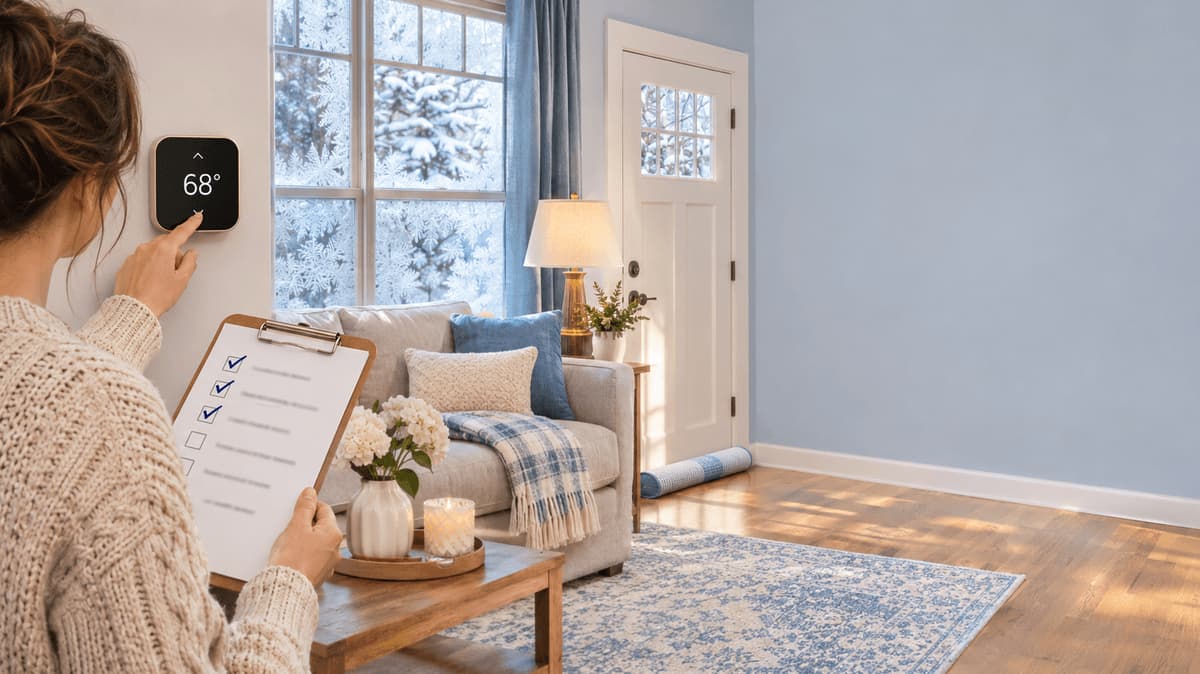
To lower winter heating bills, start with free changes like thermostat setbacks and sunlight use, then check your furnace filter, seal drafts, and schedule professional maintenance before considering major upgrades. Nearly half of a home's energy use goes to heating and cooling, so small, consistent habits combined with basic HVAC care can make a real difference.
To lower your heating bill this winter, start with free habits like a thermostat setback, then check your furnace filter and seal drafts before paying for bigger upgrades. A clogged filter restricts airflow, so your system has to work harder to heat your home. ENERGY STAR recommends checking your filter every month in winter and replacing it at least every three months. Not sure which filter your system needs? Take the quick match quiz below.
Lower your heating bill in this order
Start free. Spend money last.
-
1Free
Free daily habits
Thermostat setback, sunlight, clear vents
-
2Low cost
Check your furnace filter
Look monthly. Replace at least every 3 months.
-
3Low cost
Seal drafts and air leaks
Weatherstrip, caulk, and cover windows
-
4Moderate+
Pro tune-up, then upgrades
Furnace service, duct sealing, energy audit
Cost and effort go up as you move down the list.
Answer a few quick questions and we'll match you to the right filter for your home.
Already know your filter size? Shop filters at Filterbuy
Your Quick Winter Energy-Saving Checklist
Here's the full winter energy-saving checklist at a glance. Each item links to a detailed explanation below.
Set your thermostat to an energy-saving temperature
Use sunlight to warm your home naturally
Keep supply and return vents clear
Use ceiling fans correctly in winter
Review your heating usage and energy bills
Inspect your furnace filter for dirt and airflow restrictions
Choose the correct filter size and MERV rating
Weatherstrip drafty doors and windows
Seal small air leaks
Improve window insulation and coverings
Schedule a professional furnace or heating system tune-up
Check for leaky or poorly insulated ductwork
Check attic insulation and major sources of heat loss
Evaluate smart thermostats and heating controls
Consider a home energy audit before major upgrades
Start With These Free Ways to Lower Winter Heating Bills
Before spending any money, there are several no-cost habits that can meaningfully reduce how hard your heating system has to work.
1. Set Your Thermostat to an Energy-Saving Temperature
Your thermostat setting is one of the biggest levers you control. According to the U.S. Department of Energy (DOE), lowering your thermostat by 7–10 degrees for 8 hours a day (for example, while you're asleep or away at work) can save as much as 10% per year on heating bills.
This advice applies well to homes with a traditional furnace, boiler, or baseboard heating. If you have a heat pump, the math changes. According to ENERGY STAR, heat pumps do not save energy through setback the same way furnaces do; because they work best at a steady temperature, picking a comfortable setting and leaving it there is generally the more efficient approach.
If you're unsure which type of system you have, check your owner's manual or ask a licensed HVAC contractor before changing your routine.
2. Use Sunlight to Warm Your Home Naturally
Sunlight is free heat. Opening curtains and blinds on south-facing windows during the day lets natural warmth into your home, while closing them at night helps trap that heat inside and reduces the chill from cold glass.
This is a simple daily habit, not a one-time fix. Pair it with closing window coverings each evening for the best results.
3. Keep Supply and Return Vents Clear
Furniture, rugs, curtains, and boxes blocking your heating vents can restrict airflow and make your system work harder than necessary. Walk through your home and make sure every supply and return vent is unobstructed.
It's worth noting that closing or blocking vents in unused rooms to "save money" is a common myth. Doing so can increase pressure in your duct system and reduce overall efficiency rather than improve it, so keep all vents open and clear instead.
4. Use Ceiling Fans Correctly in Winter
Most people associate ceiling fans with summer cooling, but they can help in winter too. Reversing your ceiling fan's direction so it runs clockwise at a low speed creates an updraft that pushes warm air pooling near the ceiling back down into the room.
The fan won't change your thermostat reading, but it can make a room feel warmer, which may let you comfortably keep the temperature a degree or two lower. Just remember to turn the fan off when no one is in the room.
5. Review Your Heating Usage and Energy Bills
Before making any changes, take a few minutes to look at your last few utility bills. Note your usage trends and compare them to outdoor temperatures during those billing periods. This gives you a baseline to measure future improvements against, and it can help you spot unusual spikes that might point to a bigger problem, like a failing filter or a heating system that's running longer than it should.
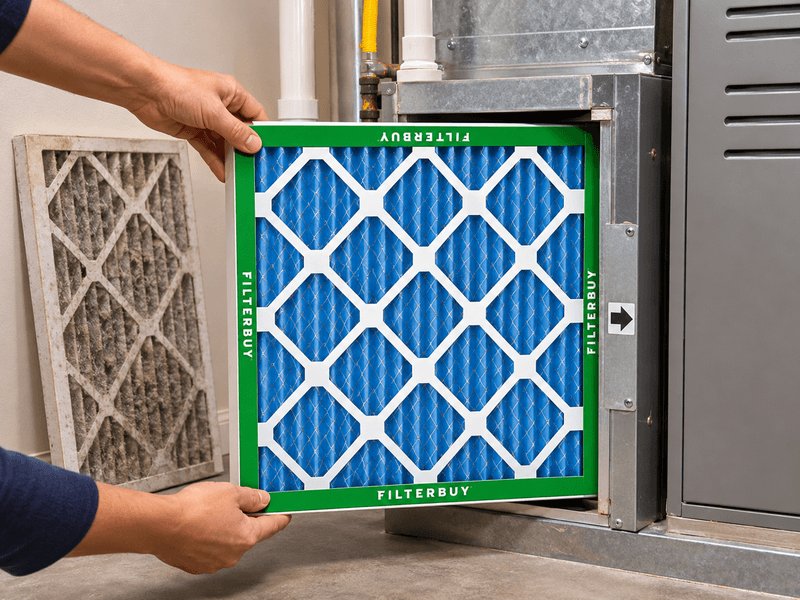
Check Your Furnace Filter Before Spending Money on HVAC Upgrades
Before you consider any paid upgrade, start with the cheapest and most overlooked maintenance task in your home: the furnace filter.
6. Inspect Your Furnace Filter for Dirt and Airflow Restrictions
ENERGY STAR recommends checking your filter every month, especially during heavy-use months like winter and summer, and changing it at least every three months even if it still looks clean.
A dirty filter restricts airflow, which forces your system to work harder to push air through your home. Over time, this can increase energy use and contribute to early system failure. To be clear: changing a clogged filter can restore normal airflow and may reduce strain on your system, but it does not guarantee a specific reduction in your heating bill. Your results will depend on how dirty the filter was and your home's overall HVAC condition.
Hold your filter up to a light source. If you can't see light coming through it, it's time for a replacement.
7. Choose the Correct Filter Size and MERV Rating
Not every filter is right for every system. Filters are rated using the Minimum Efficiency Reporting Value (MERV) scale, which measures how effectively a filter captures particles. Higher MERV ratings capture smaller particles, but they can also restrict airflow more than your specific furnace or air handler is designed to handle.
There is no single MERV rating that's correct for every home. The right choice depends on your HVAC system's specifications, your household's air quality needs (such as allergies or pets), and your manufacturer's guidelines. Check your system's manual or ask your HVAC contractor before upgrading to a higher-rated filter.
Getting the size right matters just as much as the rating. A filter that's too small lets unfiltered air bypass it entirely, while one that's too large won't fit properly. If you're unsure of your exact replacement size, find your correct filter size at Filterbuy to make sure your next filter fits and performs as intended.
Stop Heat From Escaping Your Home
Once your filter and basic habits are handled, the next place to focus is where your home is losing heat to the outdoors.
8. Weatherstrip Drafty Doors and Windows
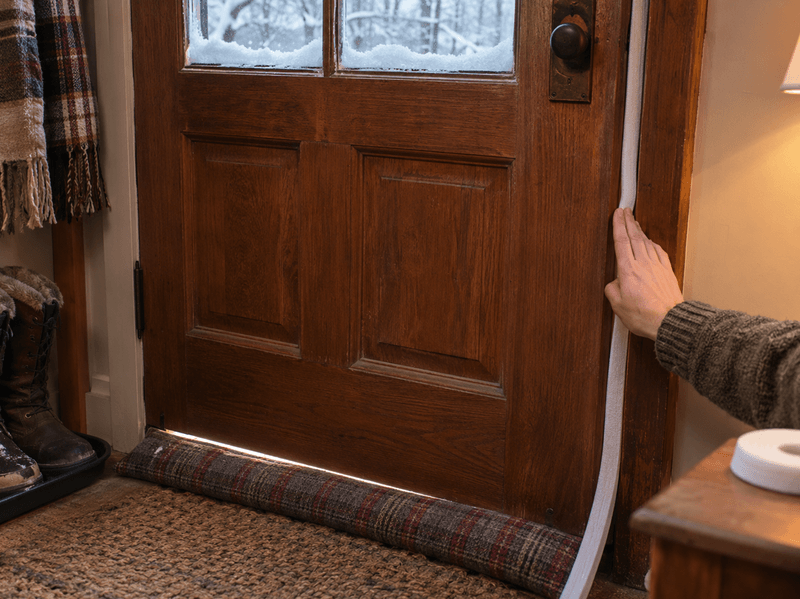
Gaps around doors and movable window parts let warm air escape and cold air seep in. Applying weatherstripping to these moving components is a low-cost project most homeowners can complete in an afternoon.
Check for drafts by holding your hand near the edges of doors and windows on a cold day, or by watching a lit candle for flickering near these areas (extinguish it immediately if you smell gas or see any sign of a combustion issue, and call a professional).
9. Seal Small Air Leaks
Caulking is the companion project to weatherstripping. While weatherstripping handles moving parts like door and window frames, caulk seals small, fixed gaps around trim, baseboards, and places where pipes or wiring pass through exterior walls.
According to the DOE's whole-house weatherization guidance, air sealing is one of the core building-shell measures used to reduce energy waste in a home. These are accessible, DIY-friendly projects for most homeowners. If you have a gas furnace, water heater, or other combustion appliance, avoid sealing any vents or openings related to that equipment, since proper ventilation is a safety requirement, not just an efficiency consideration.
10. Improve Window Insulation and Coverings
Windows are a major source of heat loss. The DOE notes that about 30% of a home's heating energy can be lost through windows.
You don't need new windows to address this. Options include:
Heavy curtains or thermal shades that you close at night
Plastic window film kits that create an extra insulating layer over the glass
Draft snakes or foam tape around window frames
These are realistic, budget-friendly steps for renters and homeowners alike. Full window replacement is a much larger investment and is best evaluated later, alongside other major upgrades.
Make Your Heating System Work More Efficiently
The next tier of improvements involves your heating equipment itself. Some of these are tasks you can check yourself, but several require a qualified professional.
11. Schedule a Professional Furnace or Heating System Tune-Up
ENERGY STAR recommends an annual professional tune-up for your heating and cooling system, similar to how a car benefits from regular service. A typical maintenance visit includes checking thermostat settings, tightening electrical connections, lubricating moving parts, inspecting the condensate drain, and testing system controls.
For gas or oil furnaces specifically, a technician should inspect gas connections, burner combustion, and the heat exchanger. This is not a DIY task. Improperly operating combustion components are a fire and health hazard, and only a licensed professional should service them.
12. Check for Leaky or Poorly Insulated Ductwork
If your home uses a forced-air furnace, your ductwork may be losing a significant amount of heated air before it ever reaches your rooms. ENERGY STAR states that sealing and insulating ducts can improve the efficiency of your heating and cooling system by as much as 20%, particularly in ducts that run through attics, crawlspaces, unheated basements, or garages.
Homeowners can sometimes seal accessible ducts with mastic sealant or metal-backed tape, but ducts hidden inside walls or ceilings typically require a professional. An efficiency improvement of this kind reflects how well your system performs, not a guaranteed dollar amount off your bill, since actual savings depend on your home's size, insulation, and climate.
13. Check Attic Insulation and Major Sources of Heat Loss
Heat rises, and an under-insulated attic can let a substantial amount of it escape through the roof. If you can safely access your attic, look for insulation that appears thin, compressed, or unevenly distributed.
This is one area where DIY inspection makes sense, but adding insulation, especially around recessed lighting, vents, or chimneys, is often best handled by a professional familiar with local building codes and proper clearances. The DOE's Weatherization Assistance Program treats attic insulation as part of a broader "house as a system" approach, since insulating alone won't help if there's an unresolved roof leak or ventilation issue nearby.
Plan Smarter Heating Upgrades for Long-Term Savings
Once you've addressed the lower-cost fixes, you can consider larger investments that typically require more planning and higher upfront costs.
14. Evaluate Smart Thermostats and Heating Controls
A smart thermostat lets you control your home's temperature remotely and can learn your schedule over time. According to ENERGY STAR, homes with high heating and cooling bills, or homes that are unoccupied for much of the day, can save approximately $100 a year with an ENERGY STAR certified smart thermostat.
Choose a smart thermostat if your household has an irregular schedule or if you consistently forget to adjust the temperature manually. If you already have a heat pump and understand that steady temperatures work best for that system, a smart thermostat can still help by maintaining consistency rather than by enabling setbacks.
15. Consider a Home Energy Audit Before Major Upgrades
Before committing to a new furnace, replacement windows, or a whole-home insulation project, a professional home energy audit can help you prioritize. An audit assesses your building envelope, heating and cooling systems, and electric baseload appliances to identify where your home is actually losing the most energy.
This step matters because the right upgrade for one home may be the wrong one for another. A home with excellent insulation but an aging furnace has very different priorities than a home with a newer furnace but poor attic insulation. An audit replaces guesswork with a clear, home-specific action plan.
Which Winter Energy-Saving Improvements Should You Prioritize?
Use this table as a starting point for deciding where to focus your time and budget. Exact costs will vary based on your home, location, and contractor, so treat the cost and effort columns as general guidance rather than firm estimates.
| Improvement | Cost, Effort, and Timing |
|---|---|
| Thermostat setback (furnace/boiler homes) |
Relative Cost: Free Effort Required: Low When to Prioritize: Immediately |
| Using sunlight and window coverings |
Relative Cost: Free Effort Required: Low When to Prioritize: Immediately |
| Clearing vents |
Relative Cost: Free Effort Required: Low When to Prioritize: Immediately |
| Ceiling fan reversal |
Relative Cost: Free Effort Required: Low When to Prioritize: Immediately |
| Reviewing energy bills |
Relative Cost: Free Effort Required: Low When to Prioritize: Immediately |
| Filter inspection and replacement |
Relative Cost: Low Effort Required: Low When to Prioritize: Monthly, year-round |
| Weatherstripping and caulking |
Relative Cost: Low Effort Required: Low to Moderate When to Prioritize: Before cold weather sets in |
| Window film or heavy curtains |
Relative Cost: Low to Moderate Effort Required: Low to Moderate When to Prioritize: Before cold weather sets in |
| Professional furnace tune-up |
Relative Cost: Moderate Effort Required: Low (homeowner), scheduled with a pro When to Prioritize: Annually, ideally in fall |
| Duct sealing |
Relative Cost: Moderate Effort Required: Moderate, often needs a pro When to Prioritize: After confirming leaks exist |
| Attic insulation check |
Relative Cost: Low (inspection) to High (adding insulation) Effort Required: Moderate to High When to Prioritize: After an audit or visible gaps |
| Smart thermostat |
Relative Cost: Moderate Effort Required: Low to Moderate When to Prioritize: If schedule is irregular or home is often empty |
| Home energy audit |
Relative Cost: Moderate Effort Required: Low (homeowner), scheduled with a pro When to Prioritize: Before any major upgrade |
How Much Could These Winter Energy-Saving Steps Save?
It helps to understand the difference between an efficiency improvement and an actual reduction in your utility bill. When a source says duct sealing "can improve efficiency by up to 20%," that refers to how well your heating system converts energy into usable heat, not a guaranteed 20% drop in your bill. Your actual savings depend on your climate, your home's size and condition, your utility rates, and how you use your heating system.
Here's a simplified, explicitly hypothetical example to illustrate the concept. Say a household spends $150 a month on heating during peak winter months. If that household already has a reasonably efficient furnace and makes a single change, like consistently applying the DOE's recommended thermostat setback, it's reasonable to expect some reduction, since the DOE cites potential savings of up to 10% annually from that single habit.
But stacking several estimated percentages together (10% from setback, plus 20% from duct sealing, plus more from a new filter) does not mean a homeowner should expect a 30%, 40%, or 50% drop in their bill. These figures come from different studies, under different conditions, and don't simply add together in a real home.
The most reliable way to measure your actual savings is to track your own energy bills before and after making changes, ideally comparing similar weather conditions year over year.
Keep Your Home Energy-Efficient All Winter
Winter energy efficiency isn't a one-time project. It's a routine. Here's a simple schedule to help you stay on track.
Weekly:
Glance at vents to confirm nothing is blocking airflow
Open curtains on sunny days, close them at night
Monthly:
Inspect your furnace filter and replace it if dirty
Check your thermostat settings still match your schedule
Seasonally (start of fall/winter):
Schedule a professional furnace tune-up
Inspect weatherstripping and caulking around doors and windows
Check your attic insulation and look for signs of heat loss
Review your energy bills from the previous winter to spot trends
Staying consistent with small tasks, especially filter checks, is one of the easiest ways to avoid larger HVAC problems down the road. If you're not sure what filter size your system needs, find the correct replacement furnace filter at Filterbuy and keep your home running efficiently all season long.
Frequently Asked Questions
What is the best way to lower heating bills in winter?
There's no single fix. The most effective approach combines free habits, like thermostat setbacks and using sunlight, with basic maintenance like regular filter checks, and then addresses heat loss through drafts, insulation, and ductwork. Start with the free and low-cost steps before considering major upgrades.
What thermostat setting saves the most energy in winter?
For homes with a furnace or boiler, the DOE states that lowering your thermostat by 7–10 degrees for 8 hours a day can save up to 10% per year on heating costs. Heat pump owners should generally maintain a steady temperature instead, since heat pumps don't benefit from setback the same way.
Can a dirty furnace filter make my heating bill higher?
A dirty filter restricts airflow, which can force your system to work harder and use more energy. While replacing a dirty filter can help restore normal airflow, it does not guarantee a specific reduction in your bill, since many other factors also affect energy use.
How often should I change my furnace filter in winter?
ENERGY STAR recommends checking your filter monthly during heavy-use seasons like winter and replacing it if it looks dirty, with a minimum replacement schedule of every three months.
Should I turn my heat down at night?
If you have a furnace or boiler, yes. The DOE's setback guidance specifically supports lowering the temperature while you sleep. If you have a heat pump, it's generally better to keep the temperature steady rather than adjusting it up and down.
Is it cheaper to keep the heat on all day or turn it down?
For furnace and boiler systems, turning the heat down during unoccupied hours is generally more efficient than holding a constant higher temperature. Heat pumps work differently and are typically more efficient when left at a steady setting rather than cycled up and down.
Why is my winter electricity bill so high?
Heating and cooling account for nearly half of a typical home's energy use, according to ENERGY STAR, so winter heating demand is often the biggest driver of a higher bill. Contributing factors can include a dirty filter, drafts, poor insulation, an aging or poorly maintained system, or a thermostat that's set higher than necessary.
Do smart thermostats actually save money?
They can, particularly in homes with high heating and cooling bills or homes that are frequently empty during the day. ENERGY STAR estimates savings of approximately $100 a year with a certified smart thermostat, though actual results vary by household.