
NOAA Winter Forecast 2026–2027: What a Strong El Niño Winter Means for Your Home
November 4, 2026

NOAA’s 2026–2027 winter forecast favors a warmer-than-average north and a wetter-than-average South. A very strong El Niño is steering storms across the southern tier, from California to Florida and up the East Coast.
Either way, your furnace still runs for months, so start the season with a fresh air filter. Take the quick quiz below to find your match.
Winter 2026–2027 at a glance
NOAA U.S. Winter Outlook, December to February
Northern U.S.
Warmer than average favored
Much of the north, the East and Alaska
El Niño pushes the jet stream south
Southern tier and East Coast
Wetter than average favored
California to Florida, up the East Coast
Every region
Furnaces still run for months
Start the season with a fresh air filter
Find your winter filter match
Answer a few quick questions about your home and system, and we’ll match you to the right MERV rating.
Already know your filter size? Shop filters at Filterbuy
TL;DR
NOAA expects a very strong El Niño to shape winter 2026–2027. From December through February, that most likely means a warmer-than-average north and a wetter-than-average southern tier, from California to Florida and up the East Coast. Furnaces still run for months, so Filterbuy recommends a fresh air filter and balanced indoor humidity.
Key Takeaways
NOAA released its December–February 2026–2027 U.S. Winter Outlook on October 15, 2026.
A very strong El Niño is driving the forecast. It pushes the jet stream south and east, which tilts the odds toward a stormier South.
Warmer-than-average temperatures are favored across much of the northern U.S., much of the East and Alaska.
The southern tier and East Coast lean wetter than average, while parts of the northern Rockies and Great Lakes lean drier.
Why Does Filterbuy Follow NOAA's Winter Forecast?
Filterbuy makes air filters, not weather forecasts, but the weather shapes how hard those filters work. We've made filters to order in our U.S. plants since 2013. In winter, furnaces run longer, and with the windows shut, the same air keeps cycling through the filter.
NOAA's outlook shows us which homes may face damp air, dry air or storm outages, so we can point you to what to check first.
What Is NOAA's Winter Forecast for 2026–2027?
NOAA's 2026–2027 winter forecast leans warm in the north and wet in the south. The National Oceanic and Atmospheric Administration (NOAA), the federal agency behind the National Weather Service, released its U.S. Winter Outlook on October 15, 2026. It favors warmer-than-average temperatures across the northern U.S. and wetter-than-average conditions from California to Florida and along the Eastern Seaboard.
NOAA expects drought to ease across much of the South and Southwest, though it may worsen in parts of the northern Rockies and Pacific Northwest.
Why Does El Niño Matter for This Winter?
El Niño matters because it steers the jet stream, the fast-moving air that carries winter storms across the country. In a strong El Niño year, the jet stream tends to dip south and east. That sends more storms across the southern U.S. and keeps much of the north milder.
NOAA Winter Forecast by Region
NOAA's outlook varies by region: warmer up north, wetter across the South and East Coast, and drier in parts of the northern Rockies. The last column is Filterbuy's take for your home.
Source: NOAA Climate Prediction Center, 2026–2027 U.S. Winter Outlook (December–February), released October 15, 2026.
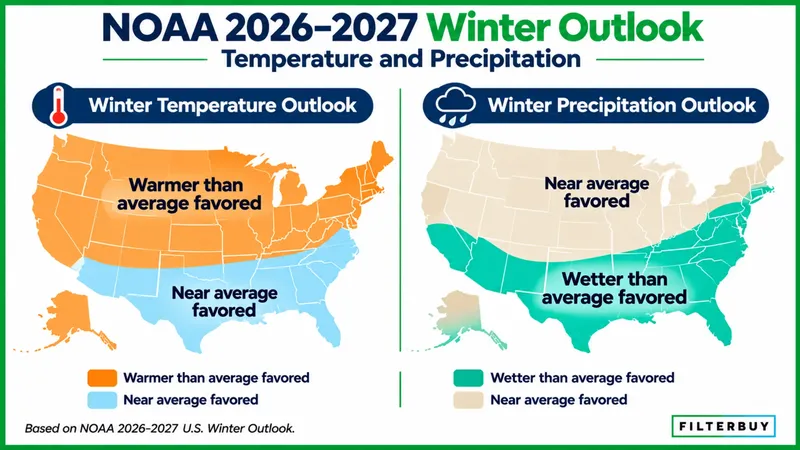
How to Read the NOAA Winter Forecast Map
NOAA's official outlook maps show odds rather than amounts. The National Weather Service's guide explains how to read them:
Three categories. Each map shows the chance of above-, near- or below-normal conditions.
EC means no lean. In "equal chances" areas, each outcome has a 33.3% chance.
Shading shows confidence. In the NWS guide's example, a 40% chance of above-normal leaves 33.3% for near-normal and 26.7% for below-normal.
Favored isn't guaranteed. As University of Arizona climate researchers explain, a 40% chance of above-normal still leaves a 60% chance of near- or below-normal temperatures.
No snow totals. For storm snowfall, check NWS probabilistic snowfall forecasts or Filterbuy's Winter Storm Tracker.
Filterbuy's take: plan for every outcome on the map, including the less likely ones.
What Does a Warm, Wet El Niño Winter Mean for Your Indoor Air?
A milder winter still keeps most windows closed for months, so dust and pet dander stay indoors until the filter catches them. That's a big part of why indoor air quality gets worse in winter. At Filterbuy, we see three parts of this forecast that matter most at home:
Wetter regions can mean higher indoor humidity. Damp weather in the South and along the East Coast tends to push indoor humidity up. The U.S. Environmental Protection Agency (EPA) recommends keeping indoor relative humidity below 60%, ideally between 30% and 50%, to help prevent mold.
Drier regions can mean dry indoor air. In the drier northern Rockies and Great Lakes areas, heated air can dry out sinuses and skin. A humidifier set to 30% to 50% helps.
Stormy weather can mean power outages. A stormier South raises the odds of losing power. If you use a generator, never run it indoors or in a garage. The CDC advises keeping it at least 20 feet from doors, windows and vents, with a working carbon monoxide (CO) detector inside. Filterbuy's guide to heating your home during a winter power outage walks through the rest.
How to Prepare Your Home for This Winter
No matter which region you're in, start the heating season with a clean filter and a checked system:
Replace your air filter before steady heating begins. It's the first thing Filterbuy recommends every fall, because, as ENERGY STAR notes, a dirty filter slows airflow and makes the system work harder. See when to change your furnace filter in winter.
Check the filter monthly, on forecast day. NOAA updates its outlook near the middle of each month, which makes a handy reminder to pull the filter and take a look. ENERGY STAR advises changing it if it looks dirty after a month, and at least every three months. See how often to change your air filter.
Schedule a furnace or heat pump tune-up. ENERGY STAR recommends a yearly tune-up for efficiency and comfort.
Test CO and smoke alarms. Swap in fresh batteries and keep a battery-operated or battery-backup CO alarm near sleeping areas.
Set humidity between 30% and 50%. A hygrometer shows where you stand, and a humidifier or dehumidifier closes the gap.
Clear outdoor vents and seal drafts. Keep furnace and dryer vents free of snow and leaves, and weatherstrip leaky doors and windows.
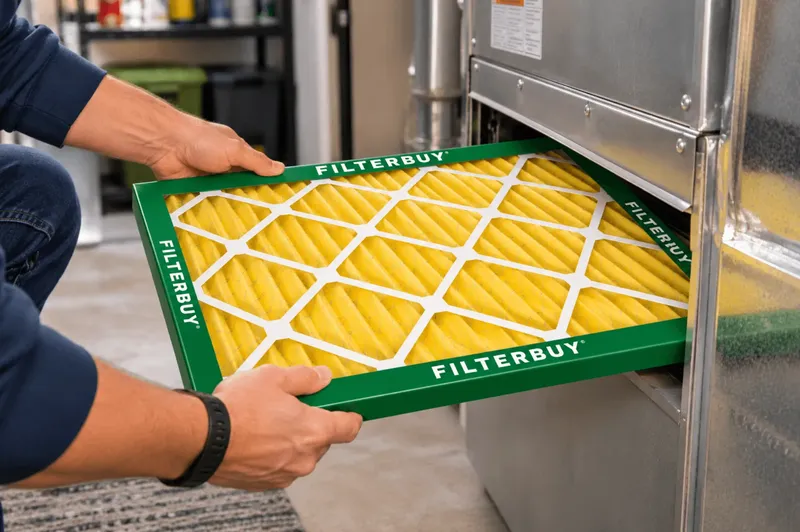
Which Air Filter Is Best for Winter?
The best winter air filter is the highest MERV rating your HVAC system can handle. The EPA recommends at least MERV 13, or as high a rating as your system fan and filter slot can accommodate.
Source: U.S. EPA, What is a MERV rating? Minimums from the ASHRAE test method. Check your system before upgrading.
Filterbuy makes MERV 8, 11 and 13 filters on the same production lines, so we have no reason to push you toward the highest number. The right filter is the highest rating your system can handle, changed on schedule. The EPA suggests asking an HVAC technician if you're unsure. Compare Filterbuy's MERV rating chart or shop MERV 8, MERV 11 and MERV 13 filters.
"I read NOAA's winter outlook every fall because it changes the advice I give homeowners. A wet forecast means watching humidity. A stormy one means keeping a spare filter and a working CO alarm before the first storm. Whatever your region gets, a fresh filter at the start of the season is the easiest place to begin."
Michelle Wan, Brand Manager and Air Quality Writer, Filterbuy
Supporting Statistics
Three U.S. government findings shape Filterbuy's winter advice.
Indoor air: Americans spend about 90% of their time inside.
Some indoor pollutants run 2 to 5 times higher than outdoor levels.
Why it matters: your HVAC filter cleans the air you breathe most.
Source: U.S. EPA, Indoor Air Quality
Carbon monoxide: more than 400 deaths a year.
CO poisoning also leads to more than 100,000 ER visits and 14,000 hospital stays each year.
Why it matters: furnaces and generators both produce CO, so yearly service and working alarms matter.
Power outages: 11 hours per customer in 2024.
That's nearly double the prior decade's yearly average.
Major storms caused 80% of those hours.
Why it matters: plan safe backup heat early.
Frequently Asked Questions
Will Winter 2026–2027 Be Cold?
NOAA favors a warmer-than-average winter across much of the northern U.S., Alaska and much of the East. Cold snaps still happen, so plan for a full heating season.
Does the NOAA Winter Forecast Predict Snow?
No. NOAA's seasonal outlook shows the odds of above- or below-normal precipitation, not snowfall totals. For snow amounts, check the NWS forecast a few days before a storm.
When Does NOAA Update Its Winter Forecast?
NOAA updates its outlooks every month, near mid-month. The next update is due November 19, 2026.
What Is the NOAA Winter Forecast for California?
NOAA favors above-average temperatures in northern California and wetter-than-average conditions across the southern tier, which stretches from California to Florida. Wet spells could ease drought but raise flood risk.
What Is the NOAA Winter Forecast for the Northeast?
NOAA favors a warmer and wetter winter than average along much of the East Coast, including the Northeast. Expect a mix of rain and snow.
What Is the NOAA Winter Forecast for the Midwest?
NOAA favors above-average temperatures across the Midwest. Some Great Lakes areas lean drier than average, while the Ohio Valley shows equal chances for precipitation.
Glossary
NOAA (National Oceanic and Atmospheric Administration): The U.S. federal agency that monitors weather, oceans and climate and runs the National Weather Service.
Climate Prediction Center (CPC): The NOAA National Weather Service branch that issues monthly and seasonal outlooks, including the U.S. Winter Outlook.
El Niño: A periodic warming of ocean water in the central and eastern tropical Pacific that shifts weather patterns worldwide.
National Weather Service (NWS): The NOAA agency that issues U.S. weather forecasts, watches and warnings.
Equal chances (EC): A NOAA map label giving above-, near- and below-normal outcomes 33.3% each.
MERV (Minimum Efficiency Reporting Value): A 1-to-16 rating of how well an air filter captures airborne particles.
Carbon monoxide (CO): An odorless, colorless gas from burning fuel that can be deadly indoors.