
Dry Air in House in Winter: Causes, Symptoms & How to Fix It
October 28, 2026
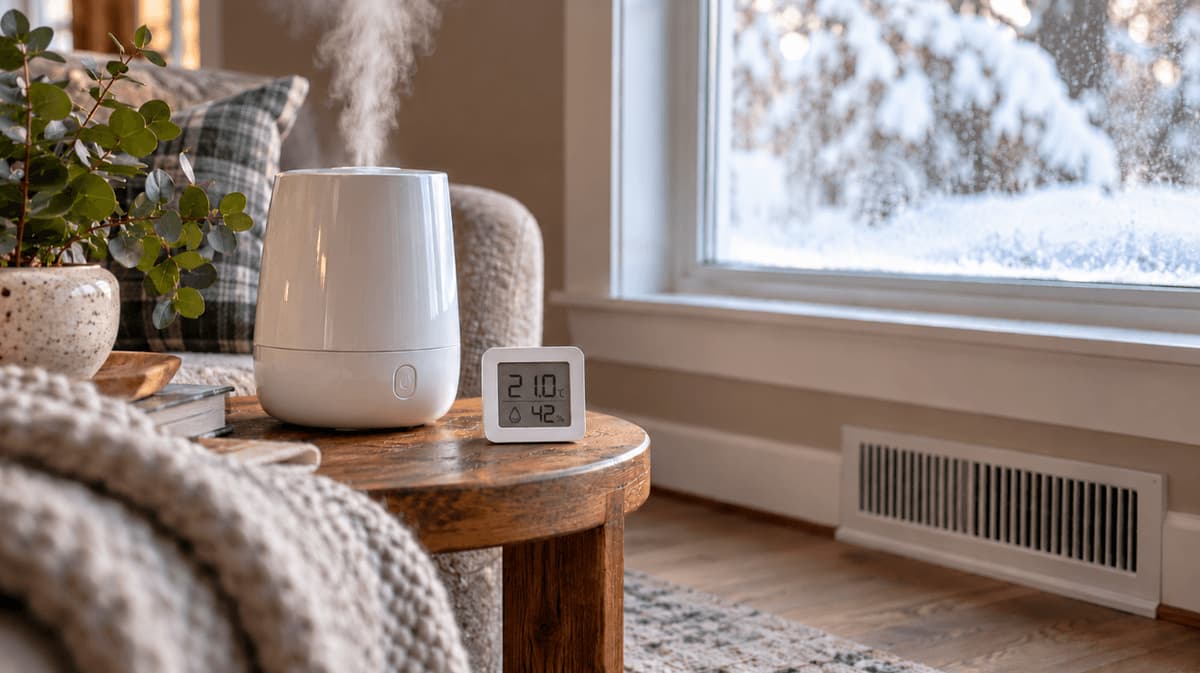
Why Is the Air So Dry in Your House in Winter?
Your house gets dry in winter because cold outdoor air holds little moisture, and heating it makes its relative humidity drop. At 0°F outside, that air can fall to about 5% humidity once it’s warmed to 70°F.
To fix it, measure with a hygrometer, seal the drafts letting dry air in, then add moisture. Aim for the EPA’s 30% to 50% range, and stay lower when it’s very cold outside.
While you’re prepping for winter, check your furnace filter too. Take the quick quiz below to find your filter match.
Find the Right Furnace Filter for Winter
Answer a few quick questions and we’ll match you to your filter.
Already know your size? Shop Filterbuy air filters
TL;DR
Dry air in a house in winter starts with cold outdoor air, which holds little moisture and often falls below 30% relative humidity once it’s heated. To fix it, measure with a hygrometer, seal the leaks letting dry air in, and then add moisture until you reach the EPA’s 30% to 50% range.
Key Takeaways
University of Wisconsin–Madison extension specialist Gene Wengert reports that 0°F outdoor air heated to 70°F drops to about 5% relative humidity.
The EPA recommends keeping indoor relative humidity between 30% and 50%, and below 60% to prevent mold.
Static shocks, dry skin, nosebleeds, irritated sinuses, and gapping hardwood floors are the most common signs.
Aim lower when it’s very cold outside. Condensation on the inside of your windows means the air is too humid for the weather.
Seal air leaks first. Canada’s National Research Council found that each hourly air change can take about 9.6 gallons of water a day per 10,000 cubic feet of home to hold 40% humidity when it’s 20°F outside.
What Causes Dry Air in a House in Winter?
The main cause of dry air in a house in winter is physics, not a faulty furnace. Cold air holds far less water vapor than warm air, so when outdoor air leaks in and your heating system warms it, the amount of moisture stays the same while the air’s capacity grows. The result is a sharp drop in relative humidity (RH).
Gene Wengert, a University of Wisconsin–Madison extension specialist, published what happens when near-saturated outdoor air is warmed to 70°F with no moisture added.
| Outdoor Morning Low | Indoor RH After Heating to 70°F |
|---|---|
| 40°F | About 34% |
| 20°F | About 14% |
| 0°F | About 5% |
Source: Gene Wengert, extension specialist emeritus, University of Wisconsin–Madison (Woodworking Network). Cooking, showers, and other household moisture raise real indoor levels.
What the research shows: Because leaked-in air reaches near-desert humidity once it’s heated, how drafty your home is largely decides how much water you need to add back. Canada’s National Research Council (NRC) quantified this in its building research:
| Home | Air Changes Per Hour | What NRC Found |
|---|---|---|
| Tight | About 0.25 | A family’s normal activities can hold about 40% humidity at 10°F outside |
| Drafty | 1.0 or more | About 9.6 gallons of water a day per 10,000 cubic feet to hold 40% at 20°F outside |
Source: National Research Council Canada, Canadian Building Digest 1, Humidity in Canadian Buildings. Figures assume a 75°F home; an average family of four adds about 0.7 pounds of water vapor an hour.
The takeaway: the tighter your home, the more moisture from cooking, showers, and breathing it keeps. NRC concluded that many tightly built homes stay adequately humidified by those everyday sources alone. That’s why we suggest sealing leaks first; otherwise, your humidifier is refilling a bucket with a hole in it.
“On winter service calls, the dry house usually has a whole-home humidifier nobody has touched since last year. I check three things first: a scaled-up water panel, a bypass damper still set to summer, and a humidistat that’s switched off,” says David Clark, Licensed HVAC Technician.
What Are the Symptoms of Dry Air in a House?
You’ll usually feel dry air before you see it: itchy skin, cracked lips, nosebleeds, irritated sinuses, a scratchy morning throat, and static shocks. Mayo Clinic staff note that dry sinuses, nosebleeds, and cracked lips are familiar problems linked to dry indoor air.
| Where You Notice It | Sign of Dry Indoor Air |
|---|---|
| Nose and sinuses | Dryness, congestion, nosebleeds |
| Throat | Scratchy or sore throat in the morning |
| Skin and lips | Itchy skin, flaking, chapped lips |
| Around the house | Static shocks, clingy laundry |
| Wood and finishes | Gaps between floorboards, cracking trim or furniture |
Is Dry Air in the House Bad for Your Health?
For most people, dry air is a comfort problem, but it can make existing conditions worse. Cleveland Clinic explains that dry air can dry out your sinuses and worsen asthma, eczema, and seasonal allergies. Too much humidity, on the other hand, invites dust mites and winter mold problems, so the goal is balance, not “as humid as possible.”
If you have frequent nosebleeds, trouble breathing, or symptoms that linger after humidity improves, see a doctor, since dry air isn’t always the cause.
What Is the Best Humidity Level for a House in Winter?
For most homes, the best indoor humidity is 30% to 50%. The U.S. Environmental Protection Agency (EPA) advises keeping indoor RH below 60%, and ideally between 30% and 50%, to limit mold growth. During winter, Filterbuy recommends staying between 35% and 45%.
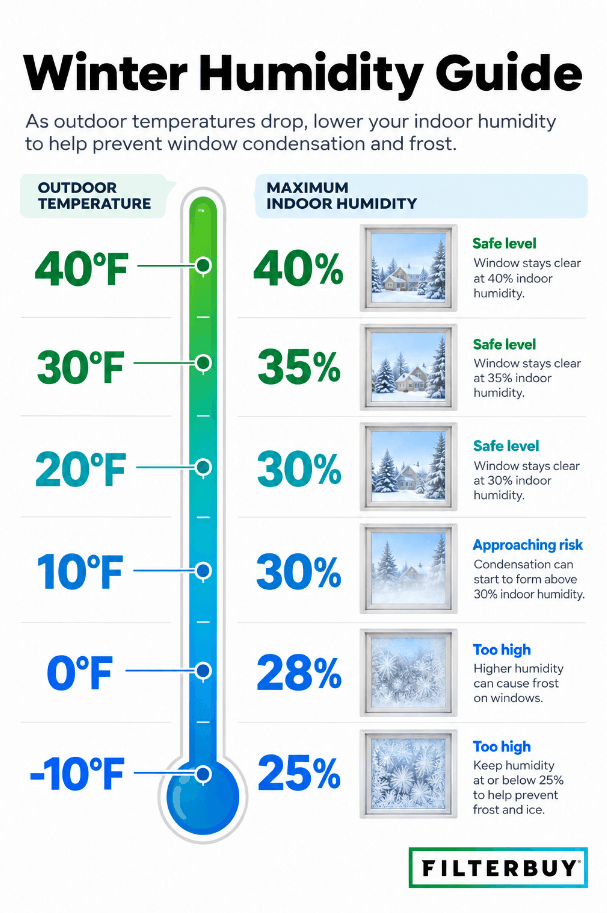
Stay lower when it’s cold, because windows are the coldest surfaces in a heated home. That’s where overly humid air condenses or frosts first, leading to water damage and mold. The Fenestration and Glazing Industry Alliance (FGIA), a window and door industry association, publishes maximum indoor humidity levels by outdoor temperature, based on a 70°F indoor temperature.
| Outdoor Temperature | Maximum Recommended Indoor RH |
|---|---|
| 20°F–40°F | 40% |
| 10°F–20°F | 35% |
| 0°F–10°F | 30% |
| -10°F–0°F | 25% |
Pro Tip: Let your windows act as a humidity gauge. If you have static and dry skin but clear glass, add moisture. If fog or frost forms on the inside of the glass, turn the humidifier down.
How to measure: Place an inexpensive digital hygrometer in two or three rooms, including the one farthest from the furnace. For more on target ranges, see Filterbuy’s guide to what humidity your house should be in winter.
“Looking at the research for this guide, the surprise wasn’t how dry winter air gets. It was how fast a drafty house undoes a humidifier’s work. Measure first, seal second, then add moisture,” says Michelle Wan of Filterbuy.
How Do You Fix Dry Air in a House in Winter?
To fix dry air in a house in winter, start by sealing the leaks that let dry air in, then add moisture with a humidifier. Stop once you reach 35% to 45%, or lower in very cold weather.
Option 1: Use a Humidifier
| Humidifier Type | Best For | Things to Know |
|---|---|---|
| Cool-mist ultrasonic (portable) | Bedrooms, nurseries, single rooms | Quiet. Use distilled water to avoid mineral “white dust” |
| Evaporative (portable) | Single rooms or open areas | Fan blows air through a wet wick. Rarely over-humidifies. Replace wicks |
| Warm-mist or steam vaporizer (portable) | Single rooms | Boils water. Hot water poses a burn risk around kids and pets |
| Whole-home (installed on your HVAC system) | Entire house | Needs professional installation and a yearly water panel change |
Whichever type you choose, keep it clean, because a dirty tank can spread mold and bacteria. Mayo Clinic recommends using distilled or demineralized water, changing the water daily, and cleaning portable humidifiers every three days, and the EPA’s guide to the use and care of home humidifiers advises never humidifying above 50%. For more on balancing moisture and filtration, see our winter balance guide to humidifiers, dehumidifiers, and HVAC filters.
Option 2: Fix Dry Air Without a Humidifier
Without a humidifier, these steps add smaller amounts of moisture:
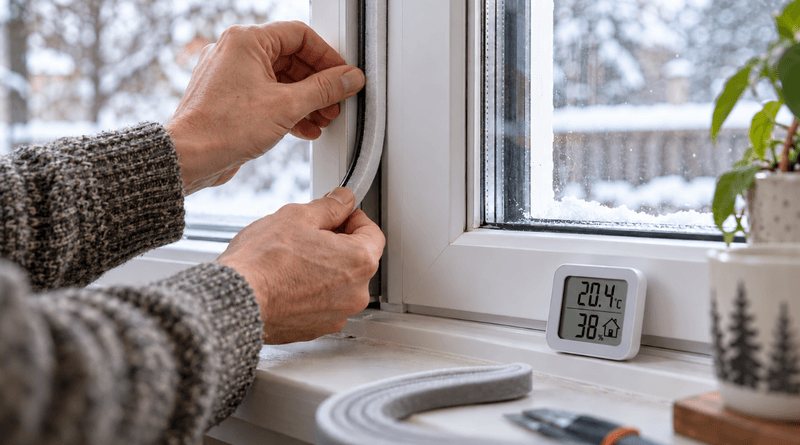
Seal air leaks. Caulk and weatherstrip drafty windows and doors, and seal the attic hatch. According to ENERGY STAR, sealing air leaks and adding insulation improves humidity control and can lower heating and cooling costs.
Air-dry laundry indoors. Clothes drying on a rack release moisture.
Leave the bathroom door open after showers. Spreading the steam through the house helps, as long as you don’t already see condensation.
Lower the thermostat a degree or two. Cooler air reaches a higher relative humidity with the same amount of moisture, and you’ll save energy too.
Option 3: Maintain Your HVAC System
As an air filter maker, Filterbuy would add one step. A humidifier adds moisture, but it doesn’t remove the dust and dander that a sealed winter home recirculates. That’s the air filter’s job. Check your furnace filter in winter every 30 days and replace it when it looks gray. A clogged filter makes your system run longer and can let more dust reach sinuses that are already dry.
Don’t take your indoor air for granted! Filterbuy has built HVAC air filters in our own U.S. factories since 2013, so we pay close attention to what heating season does to indoor air. This guide combines that perspective with published building research and expert health guidance.
Supporting Statistics
About 5 times more flu virus stayed infectious in dry air. In a CDC and NIOSH laboratory study, flu virus coughed into a simulated exam room kept 70.6–77.3% of its infectivity after an hour at 23% relative humidity or lower, but only 14.6–22.2% at 43% or higher. The researchers concluded that keeping indoor humidity above 40% significantly reduces the infectivity of airborne flu virus.
Space heating is 42% of home energy use. The U.S. Energy Information Administration’s 2020 Residential Energy Consumption Survey found that heating is the largest energy use in American homes, costing the average household $519 in 2020. Every hour of heating warms more cold outdoor air, which is why winter homes dry out.
4 in 5 U.S. homes have dust mite allergens in at least one bed. The American Lung Association calls humidity the most important factor in dust mite levels and recommends keeping homes below 50%.
Frequently Asked Questions
Does a furnace dry out the air in a house?
Not directly. A furnace doesn’t remove moisture from the air. It warms the cold, low-moisture outdoor air that leaks in, and that warming lowers relative humidity.
Can dry air in the house cause sinus problems?
It can. Dry indoor air dries out and irritates the nasal lining, which may lead to congestion, sinus discomfort, or nosebleeds. Keeping humidity between 30% and 50% often helps, but see a doctor for sinus pain, fever, or symptoms that don’t go away.
Is 25% humidity too low for a house in winter?
For most people, yes. Twenty-five percent is below the EPA’s ideal range of 30% to 50%. When it’s 0°F or colder outside, though, 25% may be the highest level your windows can handle without condensation.
How do I know if the air in my house is too dry?
The easiest way is a digital hygrometer, since a reading below 30% means the air is too dry. Without one, look for static shocks, dry skin, nosebleeds, or gaps opening between floorboards.
Where should I put a humidifier?
Put a portable humidifier in the room you use most, usually the bedroom. Set it on a flat, water-resistant surface a few feet from walls and electronics.
Breathe Easier This Winter
Dry air in a house in winter is normal, and it’s easy to correct. Measure with a hygrometer, seal the leaks that let dry air in, add moisture safely, and aim for 30% to 50% humidity.
Find your air filter size and get Filterbuy’s Made-in-the-USA filters delivered to your door. For more winter tips, read why indoor air quality gets worse in winter. And if your home swings the other way into excess moisture, see our guide to winter mold problems.
How We Built This Guide
Michelle Wan wrote this guide using published building research from the University of Wisconsin–Madison and National Research Council Canada, plus guidance from the EPA, CDC, Mayo Clinic, and FGIA. Licensed HVAC technician David Clark reviewed the HVAC and humidifier guidance.
Glossary
Relative humidity (RH): Water vapor in the air as a percentage of the most it could hold at that temperature.
Hygrometer: A device that measures relative humidity.
Air changes per hour (ACH): How many times per hour outdoor air replaces a home’s indoor air.
Humidifier: A device that adds water vapor to indoor air, either portable or attached to the HVAC system.
Condensation: Water that forms on a cold surface, like window glass, when air cools below its dew point.
Dew point: The temperature at which air becomes saturated and water vapor begins to condense.
HVAC: Heating, ventilation, and air conditioning.
EPA: The U.S. Environmental Protection Agency, which publishes indoor air and mold guidance.
CDC / NIOSH: The Centers for Disease Control and Prevention and its National Institute for Occupational Safety and Health.
EIA: The U.S. Energy Information Administration.
FGIA: The Fenestration and Glazing Industry Alliance, a window and door industry group.
NRC: National Research Council Canada, the Canadian government’s research agency.
ENERGY STAR: The EPA’s energy efficiency program.
Sources
U.S. EPA, A Brief Guide to Mold, Moisture and Your Home (indoor RH below 60%, ideally 30–50%).
U.S. EPA, Use and Care of Home Humidifiers (cleaning schedule; do not exceed 50% RH).
Mayo Clinic Staff, Humidifiers: Ease skin, breathing symptoms (updated July 12, 2026).
Noti JD, et al. (CDC/NIOSH), High Humidity Leads to Loss of Infectious Influenza Virus from Simulated Coughs, PLOS ONE, 2013.
U.S. Energy Information Administration, Space heating consumed the most energy of any end use in homes, June 15, 2023 (2020 RECS).
American Lung Association, Dust Mites, updated April 22, 2025.
Cleveland Clinic, Dry Air Can Negatively Impact Your Health.
ENERGY STAR, Why Seal and Insulate?.
Fenestration and Glazing Industry Alliance, Understanding Indoor Condensation (maximum RH by outdoor temperature).
Gene Wengert, University of Wisconsin–Madison extension specialist emeritus, Controlling moisture content in shop and storage (RH of outdoor air heated to 70°F).
N. B. Hutcheon, National Research Council Canada, Canadian Building Digest 1, Humidity in Canadian Buildings (archived copy; water needed per air change, household moisture, and ventilation rates).