
40000 BTU Furnace Guide: Gas and Propane Options, Small Home Sizing, Efficiency Comparisons, and Filter Recommendations
October 6, 2026
How Much Home Can A 40000 BTU Furnace Heat?
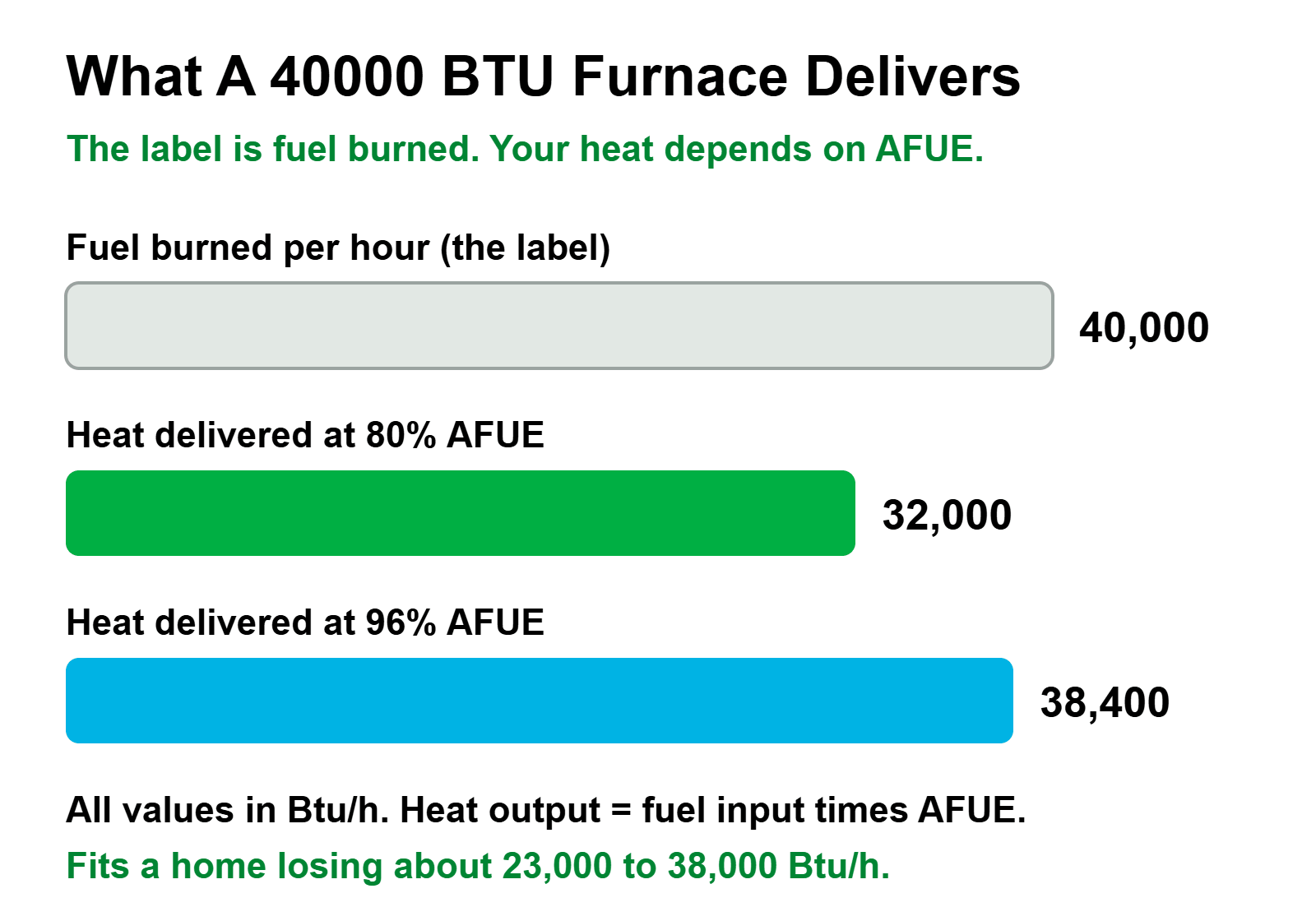
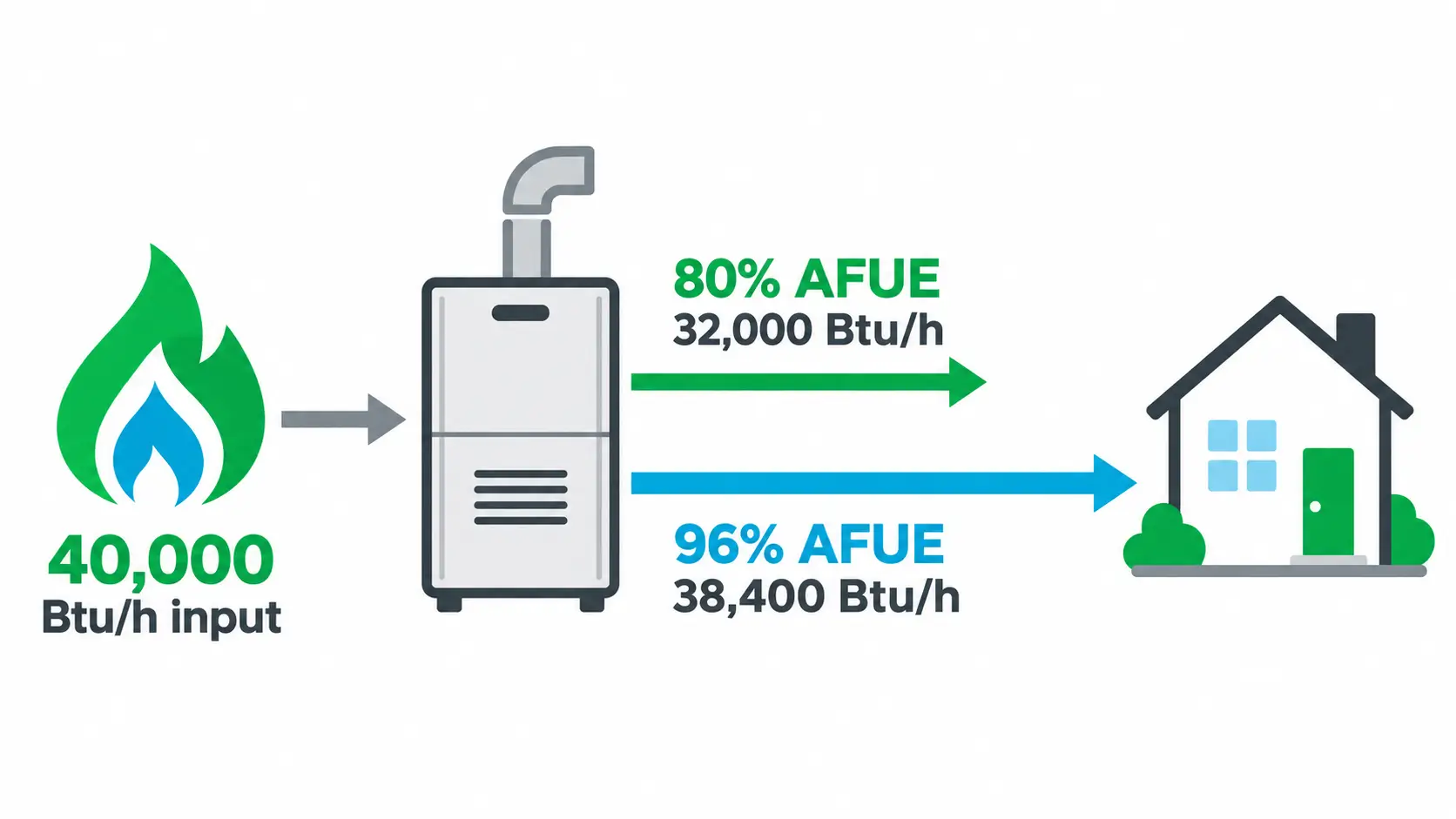
A 40000 BTU furnace burns 40,000 Btu of gas or propane an hour and delivers about 32,000 to 38,400 Btu/h of heat, depending on its efficiency rating (AFUE). That fits a home that loses roughly 23,000 to 38,000 Btu/h on a very cold night, which is common for small homes and cabins. Gas and propane models carry the same rating and take the same filter.
A Manual J load calculation confirms the fit. Getting your home ready for winter? Browse our furnace filter and winter guides. Then take the quick quiz below to find the filter your furnace needs.
Answer a few quick questions and we'll match you to the right filter.
A 40000 BTU furnace sits at the low end of the size range for central gas furnaces. It suits small homes and cabins. The number on the label is fuel input, though, and that one detail decides whether a 40k BTU furnace fits your house.
At Filterbuy, we cut, pleat, and frame air filters to order in our own US plants, so we read a furnace from the return slot outward. This guide follows that path: the rating, floor area, gas versus propane, efficiency, and the filter.
TL;DR
A 40000 BTU furnace burns 40,000 Btu of natural gas or propane per hour. It delivers about 32,000 Btu/h of heat at 80% AFUE (the efficiency rating), or about 38,400 Btu/h at 96% AFUE. That suits a design heat loss (what a home loses on a very cold night) of roughly 23,000 to 38,000 Btu/h. A Manual J load calculation, the industry-standard heat-loss estimate, settles the fit. Gas and propane versions carry the same rating and take the same filters.
Key Takeaways
A 40000 BTU furnace rating is fuel input. A 96% model delivers about 6,400 Btu/h more heat than an 80% model with the same label.
ACCA Manual S, the industry's equipment-sizing standard, keeps furnace output between 100% and 140% of the home's calculated heat loss.
At full fire, a 40k BTU gas furnace burns about 38.6 cubic feet of natural gas per hour, and a 40,000 BTU propane furnace burns about 0.44 gallons.
Filterbuy pleated filters come in MERV 8, 11, and 13 (MERV is the industry's filter efficiency scale), in hundreds of standard sizes plus custom cuts. Check your furnace manual for the MERV rating it's built to handle.
What Is a 40000 BTU Furnace?
A 40000 BTU furnace is a forced-air furnace fueled by natural gas or propane, with a burner input of 40,000 British thermal units per hour. Manufacturers rate furnaces by input, the fuel energy burned. The heat that reaches your rooms is lower. Heat output equals input multiplied by AFUE, the share of fuel energy that becomes usable heat over a year.
Filterbuy's read: the 40k on the label is the number most worth double-checking. The U.S. Department of Energy's Building America HVAC equipment sizing guide shows why: a 60,000 Btu/h furnace at 92.5% AFUE yields about 55,500 Btu/h. The same math at 40,000 Btu/h, paired with the ACCA Manual S limit of 100% to 140% of calculated heating load, gives each efficiency tier its own load range:
80% AFUE delivers 32,000 Btu/h and fits a heat loss of about 22,900 to 32,000 Btu/h.
92% AFUE delivers 36,800 Btu/h and fits about 26,300 to 36,800 Btu/h.
96% AFUE delivers 38,400 Btu/h and fits about 27,400 to 38,400 Btu/h.
How Many Square Feet Does a 40000 BTU Furnace Heat?
A 40000 BTU furnace heats roughly 800 to 2,500 square feet, depending on how fast the house loses heat on a design-cold night. A drafty older home might lose 40 Btu/h per square foot, while a tight newer home can lose 15 or less. Divide the furnace's output by your home's heat loss per square foot to find the most floor area it can carry:
At 15 Btu/h per sq ft, an 80% unit carries up to about 2,130 sq ft and a 96% unit about 2,560 sq ft.
At 20 Btu/h per sq ft: about 1,600 and 1,920 sq ft.
At 40 Btu/h per sq ft: about 800 and 960 sq ft.
Climate moves the answer. The Building America guide's 2,223 sq ft example design needed 41,660 Btu/h in Chicago, with a conditioned basement, and 23,640 Btu/h in Orlando. A 40k BTU furnace falls short in the first house even at 96% AFUE. In the second, an 80% unit lands at about 135% of the load, inside the Manual S limit.
Sizing by square foot alone is how oversized furnaces happen. ACCA notes that a Manual J load calculation is required by national building codes and most local jurisdictions, and the Filterbuy furnace sizing guide walks through how a contractor runs one.
Replacing an Older Furnace? Compare Output, Not Input
The rating plate inside the furnace door lists input in Btu/h. Multiply it by the AFUE to see the heat your current furnace really delivers. Then match that output. Filterbuy's worked examples:
An old 50,000 Btu/h furnace at 80% AFUE delivers 40,000 Btu/h. A new 40000 BTU furnace at 96% delivers 38,400, which is 96% of the old heat from 20% less fuel input.
On a design-cold night, a 38,400 Btu/h furnace in a home that loses 20,000 Btu/h runs about half of each hour. On milder nights it runs even less, in shorter cycles.
If your old furnace ran in short bursts even on the coldest nights, it was likely oversized.
40000 BTU Gas Furnace vs. 40,000 BTU Propane Furnace: What Changes?
A 40000 BTU gas furnace and a 40,000 BTU propane furnace are usually the same appliance set up for a different fuel. Many convert to propane (LP) with the manufacturer's kit, which swaps burner orifices and adjusts the gas valve. Input stays at 40,000 Btu/h, while the fuel volume changes.
Table 1. 40000 BTU Gas Furnace vs. 40,000 BTU Propane Furnace at Full Fire
Energy content from the U.S. Energy Information Administration. Filterbuy calculation.
Figures use energy content from the U.S. Energy Information Administration's Btu conversion table and hold at any AFUE.
To compare fuel cost on equal terms, convert both prices to dollars per million Btu. Divide your propane price per gallon by 0.0915, or multiply your natural gas price per therm by 10.
80% vs. 96% AFUE: Which Efficiency Fits a Small Furnace?
For a 40k BTU furnace, the efficiency choice comes down to climate and venting, with federal rules in flux. A 96% condensing furnace uses about 17% less fuel than an 80% model to deliver the same heat, which pays back fastest where winters run long. In mild climates, the DOE Energy Saver furnace guide notes the step from 80% to 95% can be hard to justify on fuel savings alone.
Table 2. Mid-Efficiency vs. High-Efficiency 40k BTU Furnaces
AFUE ranges from DOE Energy Saver. ENERGY STAR thresholds from current ENERGY STAR furnace criteria.
Federal rules are in motion. The 2023 DOE furnace efficiency standard would require 95% AFUE for most new indoor gas furnaces manufactured from December 18, 2028. In June 2026, the U.S. Supreme Court sent the case back to the appeals court, so that date may still change. An 80% furnace installed today stays legal to run.
The federal Energy Efficient Home Improvement Credit (Section 25C) that once covered efficient furnaces ended for equipment placed in service after December 31, 2025. Check the ENERGY STAR furnace criteria and your gas utility for current rebates instead.
Which Filter Does a 40000 BTU Furnace Need?
A 40000 BTU furnace needs the filter size printed on its current filter frame, in a MERV rating the furnace manual allows.
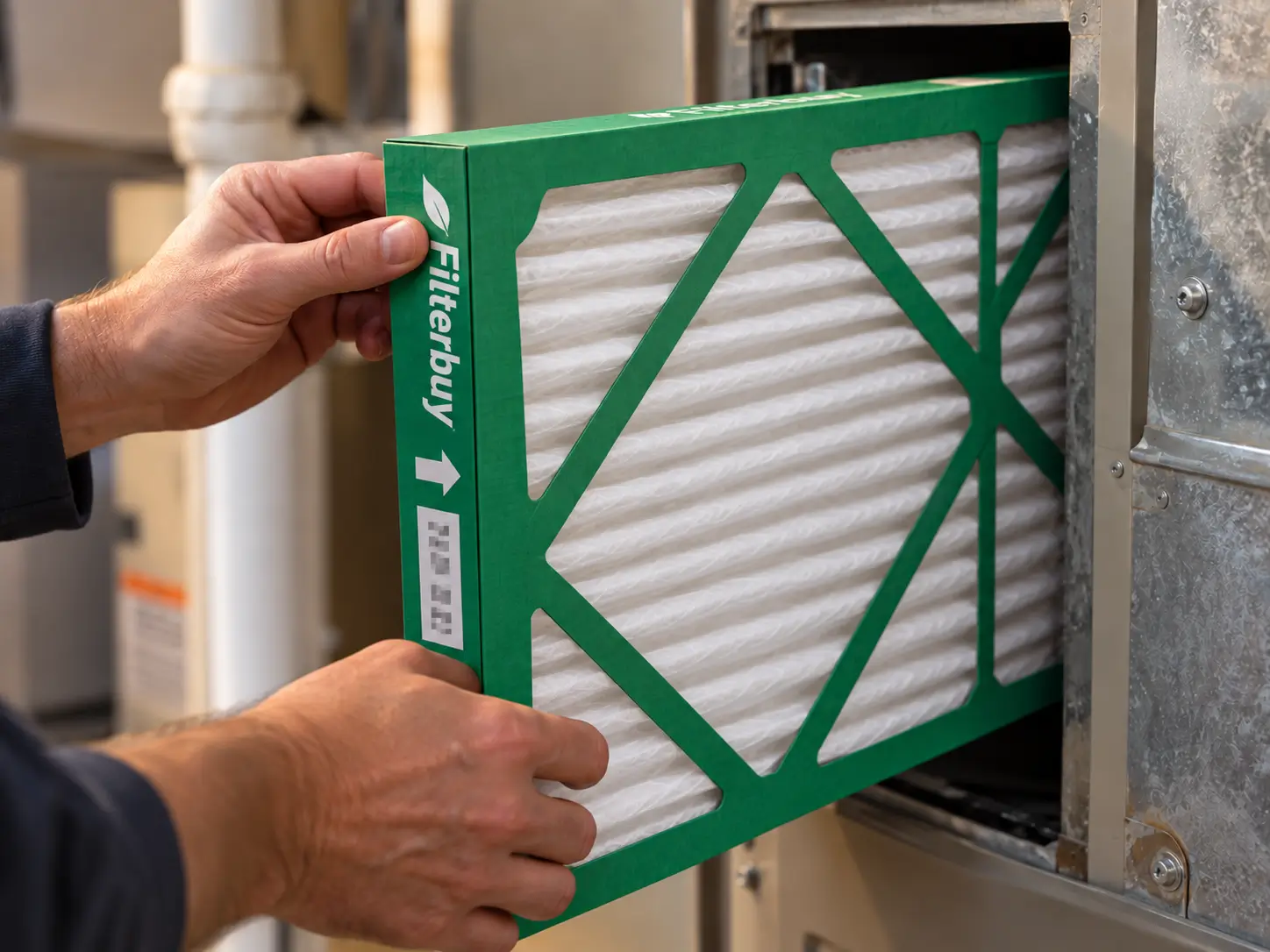
Filterbuy makes pleated filters in MERV 8, 11, and 13 in hundreds of standard sizes, plus a carbon Odor Eliminator. MERV 8 is the standard choice for most homes. MERV 11 is the pick for households with allergies or asthma, pets, or pollen. MERV 13 is the pick for smoke, and Odor Eliminator is the choice for odors. Check your furnace manual for compatibility, the same way you'd confirm the size, and compare the tiers on our MERV rating chart.
Finding Your Filter Size
Finding your size is usually quick. Check the frame of the old filter first. If there isn't a filter in the slot, measure the slot.
Order by the nominal size printed on the frame. That's the ordering name, and the actual filter is cut slightly smaller by design so it fits.
Write down all three dimensions. Depth is the one people miss most.
Size not listed? We cut custom sizes to the eighth of an inch, using the same media as our standard sizes.
Filterbuy's baseline is a fresh filter every 90 days, sooner with pets or heavy dust, and our furnace filter replacement schedule covers the details. Filterbuy auto-delivery sends the next filter before the change is due.
What to Check Before Installing a Small Gas or Propane Furnace
Get a Manual J load calculation and a Manual S equipment selection in writing, with output between 100% and 140% of the load.
Match the vent to the efficiency tier. Condensing furnaces need PVC venting and a condensate drain, and mid-efficiency units often need a chimney liner.
If the furnace also serves central air, confirm its blower can move the airflow the cooling coil needs. A blower picked for heat alone can come up short in summer.
Install carbon monoxide alarms on each level of the home and outside sleeping areas, as the CPSC carbon monoxide alarm guide recommends, and test them monthly.
Expert Insight on Sizing a Small Furnace
The U.S. Department of Energy puts it this way:
"Before buying a new furnace or boiler or modifying your existing unit, it is suggested that you first improve the energy efficiency of your home by adding insulation and/or new energy-efficient windows, then have a heating contractor size your furnace."
Source: U.S. Department of Energy, Energy Saver: Furnaces and Boilers
At the small end of the range, tightening the house can pull its heat loss into a 40000 BTU furnace's window.
Supporting Statistics
42% of new homes heat with gas.
Of 1,005,000 single-family homes completed in 2025, 42% are fueled with gas.
The median home measured 2,142 sq ft.
By Filterbuy's math, a 40000 BTU furnace at 96% AFUE covers that size at about 18 Btu/h per sq ft or less.
Source: U.S. Census Bureau, 2025 Characteristics of New Housing
2.75 times the measured load.
The study covered 74 U.S. homes heated by gas furnaces.
Installed heating equipment averaged 2.75 times the design heating load measured from smart thermostat data.
It's a DOE-funded Purdue University preprint from September 2026.
Source: Purdue University study on design heating loads (arXiv preprint)
About 450 deaths a year.
Carbon monoxide poisoning causes about 450 deaths and 20,000 nonfatal injuries in the U.S. each year.
The CDC lists faulty furnaces among common causes (2011 toolkit).
Homes with a gas or propane furnace should have working CO alarms.
Source: CDC Carbon Monoxide Poisoning Prevention Toolkit
Final Thoughts
Get the load first. Then pick the efficiency your climate pays back and keep a clean, right-size filter in the slot.
Frequently Asked Questions
Is a 40000 BTU Furnace Big Enough for a 1,200 Sq Ft House?
Yes, if the home loses about 26 Btu/h per square foot or less at design conditions with an 80% unit. With a 96% unit, the limit is about 32 or less.
How Much Propane Does a 40,000 BTU Furnace Use?
A 40,000 BTU propane furnace burns about 0.44 gallons of propane per hour while the burner fires. Eight burner hours use about 3.5 gallons.
Can I Convert a 40k BTU Natural Gas Furnace to Propane?
Yes, many can, with the manufacturer's approved LP conversion kit listed in the installation manual. A licensed technician should install it and test the burner.
How Often Should I Change the Filter in a 40000 BTU Furnace?
Filterbuy recommends changing the filter in a 40000 BTU furnace about every 90 days as a baseline, and checking it monthly. Pets, heavy dust, or long heating seasons can shorten that to 30 to 60 days.
Shop Filters for Your 40000 BTU Furnace
Read the size on your current filter frame and shop your exact filter size in MERV 8, 11, or 13. Your order gets fast and free 2-day delivery to most US states. Breathe easy.
Glossary
AFUE: Annual Fuel Utilization Efficiency, the share of a furnace's fuel energy that becomes usable heat over a year.
Nominal Size: The size printed on the frame. The filter itself is cut slightly smaller.
Design Heat Loss: The heat a home loses per hour on a design-cold night.
Manual J: The ACCA residential load calculation for heating and cooling loads.
Manual S: The ACCA standard for matching equipment to the heating load.
MERV: Minimum Efficiency Reporting Value, the ASHRAE scale for how well an HVAC filter captures particles.