August 4, 2026
By Michelle Wan · Reviewed by David Clark, Licensed HVAC Technician · Published August 4, 2026 · Updated August 4, 2026
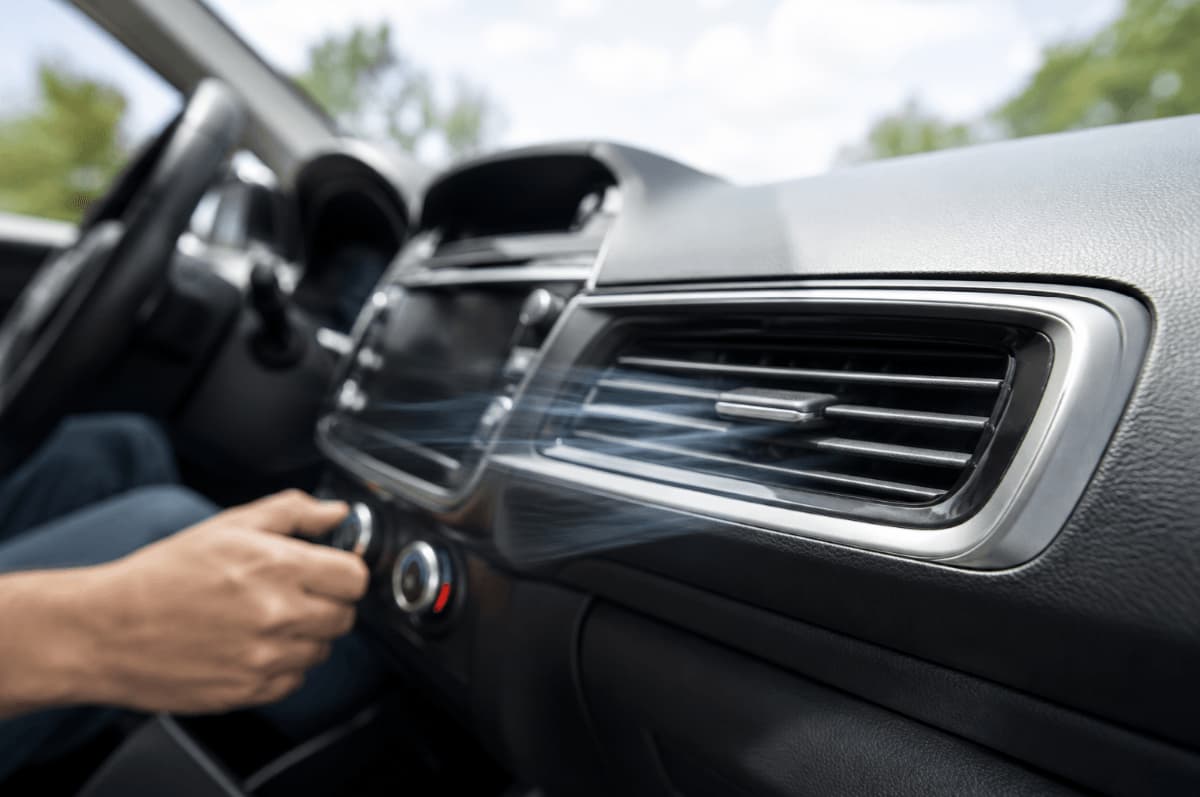
A bad car AC smell almost always starts with water sitting where it should not. The evaporator core behind your dashboard runs cold, moisture condenses on it, and mold grows in what does not drain away. Musty, sour, and wet-dog odors clear once the drain runs free, the coil dries, and an activated carbon cabin filter goes in. Sweet, rotten-egg, gasoline, and exhaust odors are mechanical faults that need a technician today.
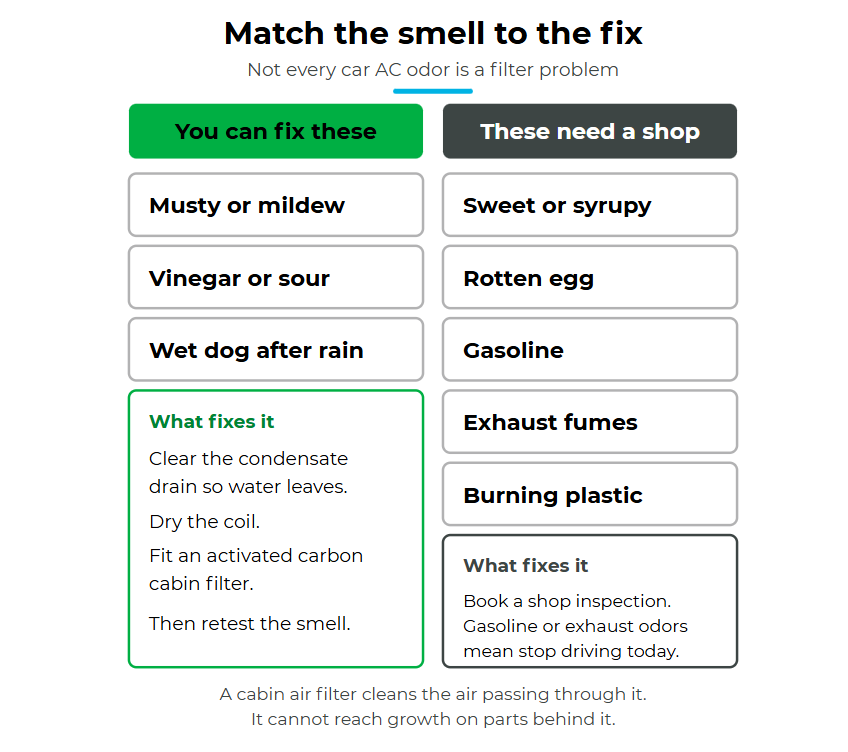
Musty, sour, or wet dog — clear the condensate drain, dry the coil, then fit a carbon cabin filter.
Sweet, syrupy, or rotten egg — book a shop inspection.
Gasoline or exhaust fumes — stop driving and call a shop today.
Match your smell below, then use the quick quiz to find the cabin filter your vehicle takes.
Answer 3 quick questions and we will match you to the right filter for your vehicle.
Rather skip the quiz? Find the cabin air filter for your year, make, and model.
A bad car AC smell almost always starts with water. The evaporator core behind your dashboard runs cold, moisture condenses on it, and mold grows in what does not drain away. Musty and sour odors clear when the drain runs free, and a carbon filter goes in. Sweet, gasoline, and exhaust odors need a technician today.
Musty odors come from mold on the damp evaporator core, which a filter change alone cannot reach.
A gasoline or exhaust odor from the vents is a safety condition. Stop driving and get the vehicle inspected.
Carbon stops controlling odor once its pores fill, before the filter looks dirty enough to worry you.
Your car AC smells bad because water is sitting where it should not. The evaporator core behind your dashboard runs cold enough to pull moisture from incoming air, and that condensation should drain out under the vehicle. When it lingers, mold feeds on trapped dust and the blower pushes the result through your vents.
Any surface colder than the air dew point collects condensation, which makes the coldest part of your system the wettest. The cabin filter sits in that airstream and collects the dust growth feeds on, so it both smells and chokes airflow, as this guide to how a clogged cabin filter affects your AC performance explains.
Match the smell to the cause before buying anything. The first three rows you can handle yourself.
The first three rows are cabin air quality problems you can handle yourself. The last four are mechanical faults that need a technician.
Carbon monoxide has no smell of its own, so an exhaust odor is your only warning. CDC guidance recommends an annual exhaust inspection, because a small leak can build carbon monoxide inside the vehicle.
Time the odor. A Lexus service bulletin filed with NHTSA splits vent odor into cases, and timing tells you where to look. Set the system to low fan and face mode, switch it off, shut the vehicle off, let it sit two hours, then start it and listen.
Fades within 10 to 30 seconds. Odors stored on the evaporator release as the coil changes temperature. Check the coil and drain.
Continues past 30 seconds. Something produces odor continuously, which points to active growth or debris sitting in the housing.
Present with the system off. The source is in the cabin or under the hood rather than in the airstream.
Worse on recirculate than fresh air. Recirculate pushes the same air back across the wet coil, so the source is inside the system.
That bulletin covers specific Lexus models, so treat its repair as model-specific.
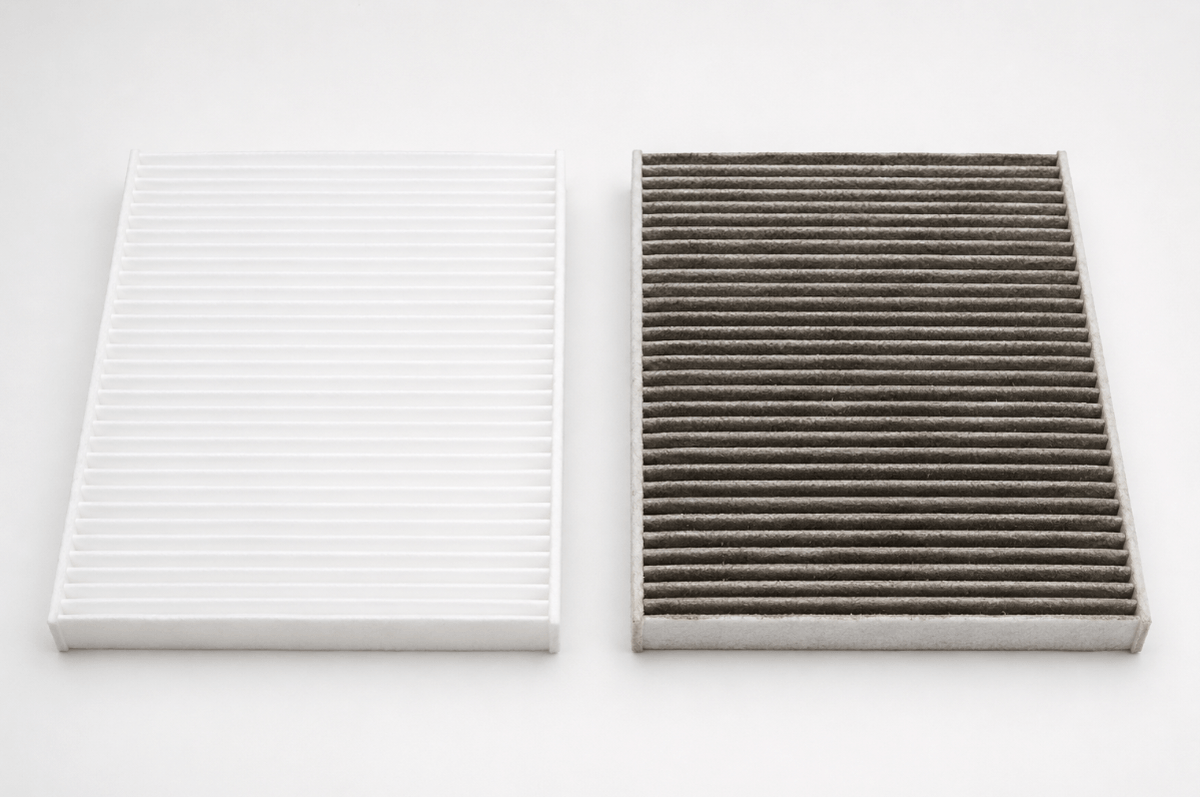
Filterbuy manufactures cabin filters, which puts us in an odd position here. A cabin filter cleans the air moving through it and nothing else, so a new one over a wet evaporator buys a few good days. We would rather say that than sell a part that will not fix your problem. See what a cabin air filter is built to do.
A cabin air filter cleans the air passing through it. It cannot remove growth on parts behind it or seal a leak upstream of it.
A peer-reviewed study examined cabin filters pulled from cars across two seasons.
Both findings match what we see at Filterbuy. Mileage matters more than the calendar, because a filter loads by how much air has passed through it. And summer is the hard season, since the heat that makes you run the AC also feeds the coil.
Work in this order. Each step removes a variable.
Park in the sun, open the windows, and run the fan on high with the AC off for ten minutes.
Find the condensate drain, a short rubber tube under the firewall, and confirm it drips while the AC runs. People who skip this do the job twice.
Replace the cabin air filter, under fifteen minutes in most vehicles. This guide shows where the cabin filter sits in most vehicles.
Clear leaves and grit from the cowl intake at the base of the windshield.
Apply an automotive evaporator cleaner on a cool engine, never spraying into the blower housing with the fan on high. Federal mold guidance is clear that dead mold still causes reactions, so a spray that skips the drain and the drying leaves the cause running.
Dry the system again, then rerun the timing test.
Safety note. If you go underneath, confirm what you are pulling on first. Fuel and brake lines run through the same area.
Not every replacement helps with a smell, and this is the mistake we hear about most at Filterbuy. Carbon handles odor, and a standard particulate filter has none. A driver swaps the filter and sees no change, then decides filters do not help, when they simply bought the wrong type. See the mechanism in how activated carbon adsorbs odor molecules and the trade-offs in choosing between cabin filter types. The same problem shows up indoors, which is what odor eliminator filters for your home system are built for.
Carbon media saturates before it looks dirty, so odor control fades ahead of visible dust. Replace on the vehicle maker interval, or sooner in heavy traffic.
Switch the AC off but leave the fan running for the last few minutes of a drive.
Set the climate control to outside air rather than recirculate before shutdown, as that bulletin recommends.
Replace the cabin filter on your owner manual interval, and check the drain each spring.
If it returns within two weeks, water is still sitting somewhere. Recheck the drain, then the cowl intake and the filter door seal.
"What our work teaches you about odor is that carbon has a budget. It adsorbs until its pores fill, then stops. So when a driver says the smell came back and the filter still looked fine, that tracks. A clean-looking filter was never the test."
The Filterbuy Team
Air you cannot see is still air you breathe for an hour a day. These are the sources the Filterbuy team leans on when a driver asks why the vents smell.
Separates a smell that fades in 10 to 30 seconds from one that keeps going, which tells you whether to check the evaporator or the filter.
Source: Lexus HVAC Odor Service Bulletin
Carbon monoxide is odorless, so an exhaust smell is your warning. Recommends an annual exhaust check, since a small leak can build up inside the car.
Source: CDC Carbon Monoxide Poisoning Basics
Establishes that moisture control is the real control, that drain lines must stay clear, and that dead mold still triggers reactions.
Source: EPA Guide To Mold, Moisture And Your Home
Heaviest fungal loads turned up in the highest-mileage vehicles, with Aspergillus species in most filters tested.
Source: Study Of Fungi In Automobile Cabin Filters
Explains how mold triggers allergic reactions and asthma symptoms, and how dampness irritates airways with nothing visible to point at.
Source: American Lung Association On Mold
Covers mold allergy symptoms including wheezing and chest tightness, and why some reactions arrive after you have parked.
Source: AAFA Mold Allergy Guidance
Explains dew point, the temperature at which moisture condenses onto colder surfaces. Your evaporator is one.
Source: National Weather Service On Dew Point
Mean one-way commute in 2024: 27.2 minutes
Source: U.S. Census Bureau, American Community Survey
Time driving per day in 2024: 60.4 minutes
Source: AAA Foundation American Driving Survey 2024
Passenger cars in 2023: 11.9 years
Source: U.S. Department of Energy Vehicle Age Data
A: Odors stored on the evaporator release as the coil changes temperature, then stop once airflow stabilizes. That points to the evaporator and drain rather than the filter.
A: For most healthy adults the result is irritation rather than illness. For anyone with asthma or a mold allergy, exposure can trigger coughing and wheezing, so it is worth fixing.
A: At idle there is little airflow around the vehicle, so fumes from a leak reach the cowl intake. An odor that clears at speed needs a mechanical inspection.
Michelle Wan is Filterbuy's Brand Manager and air quality writer, working directly with the Filterbuy manufacturing team in Talladega, Alabama.
Evaporator core: The cold coil behind a dashboard where cabin moisture condenses.
Cabin air filter: The pleated filter cleaning air entering a vehicle cabin.
Condensate drain tube: The tube carrying condensation out under the vehicle.
Dew point: The temperature at which moisture condenses onto colder surfaces.
