
How to Protect Horses and Livestock From Wildfire Smoke
September 16, 2026
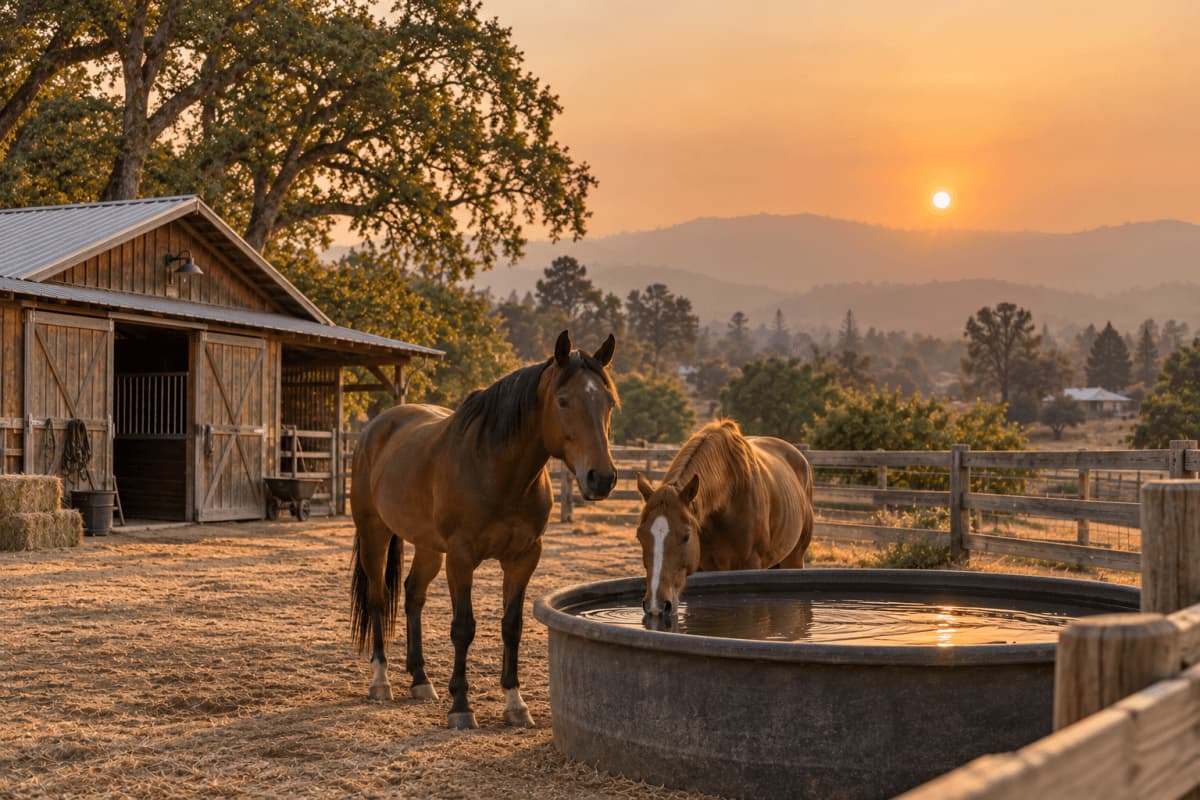
Limit horses and livestock to rest and essential care while the air is smoky, then wait four to six weeks after it clears before hard work. A typical barn isn’t a smoke shelter, because open barns pull in outside air.
Call your vet if an animal breathes fast, coughs, or seems weak. Air filters belong in closed spaces like your home and tack room, so take the quick quiz to find your match.
Shop Filterbuy Air Filters Made in the USA in standard and custom sizes.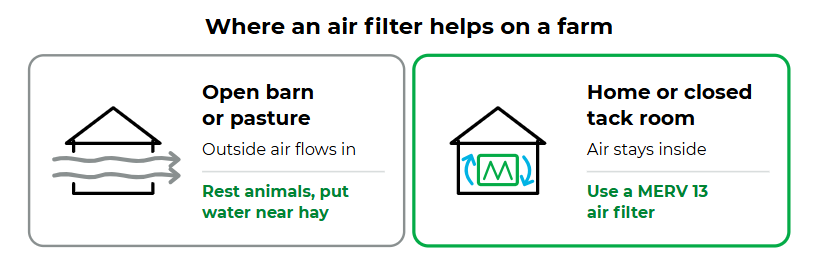
Answer a few quick questions and we’ll match you to the right filter.
TL;DR
To protect horses and livestock from wildfire smoke, limit their activity while the air is smoky and rest them after it clears. Unlike you, they can't wait it out in a closed, filtered house, and a typical barn lets in outdoor air.
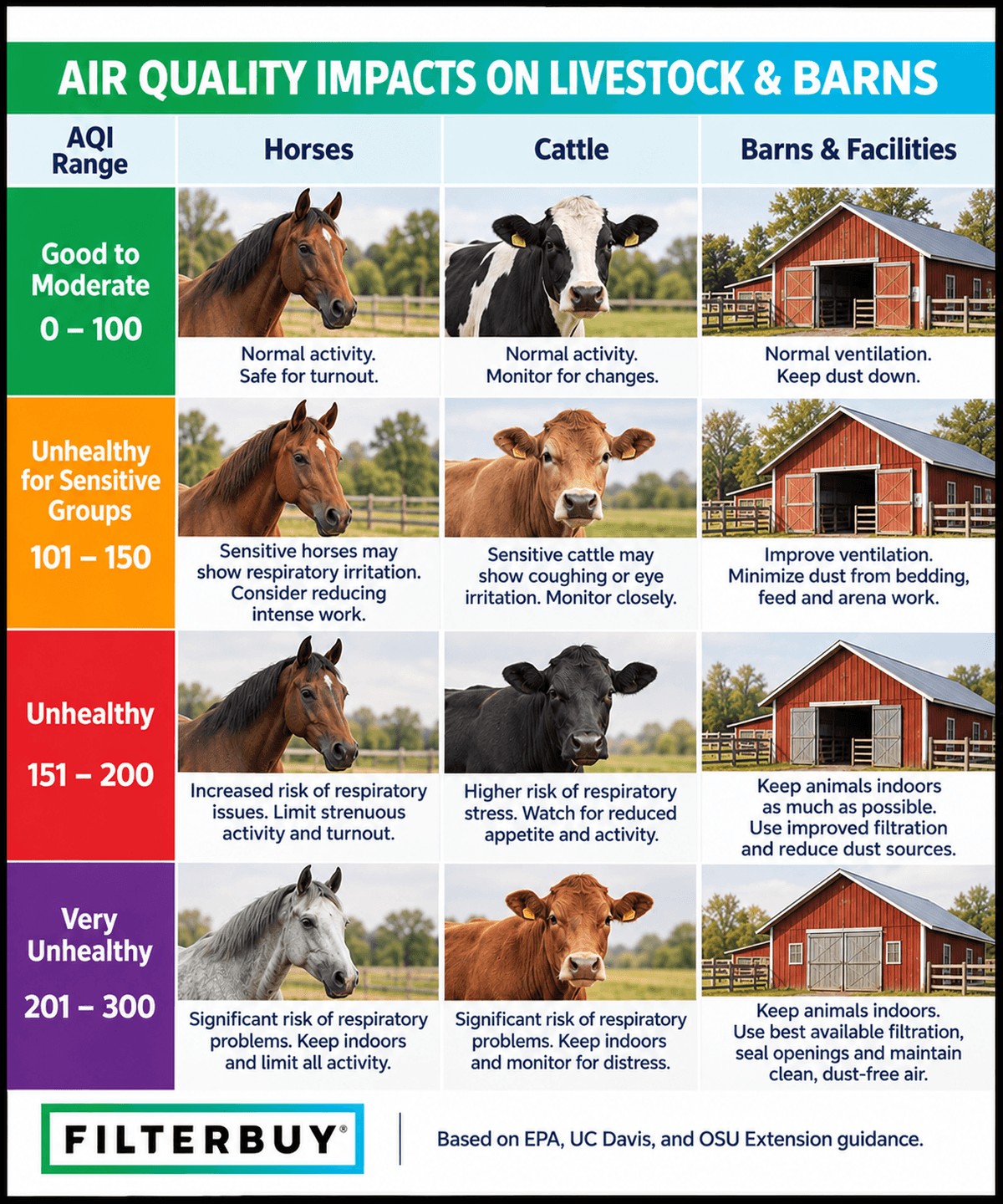
The AQI guide below shows what to do at each level, from riding to chute work. Keep fresh water near their hay. Once the air clears, allow four to six weeks before hard work. Call your vet if an animal breathes fast, shows signs of coughing or weakness. Filterbuy makes air filters, and they do their best work in your home and closed tack rooms, since open barns keep pulling in outside air.
Key Takeaways
Wildfire smoke's fine particles reach deep into animal lungs and reduce lung function (UC Davis Center for Equine Health).
During a smoke event, keep activity to the essentials, as the U.S. Environmental Protection Agency (EPA) advises.
Airways damaged by smoke need four to six weeks to heal.
A typical barn is not a smoke shelter. Horses in unenclosed barns breathe outdoor-quality air (Oregon State University Extension).
Filters help indoors, not in pastures. MERV 13 belongs in your home HVAC and closed tack rooms.
How Does Wildfire Smoke Affect Horses and Livestock?
Most of the harm comes from fine particulate matter (PM2.5), particles small enough to settle in the deepest airways.
The UC Davis Center for Equine Health reports that smoke particles are often smaller than one micron. Filterbuy recommends MERV 13 for smoke indoors, but animals outside have no filter at all.
A 2026 Journal of Animal Science study of beef-on-dairy calves from Oregon State University found that smoke spiked cortisol, a stress hormone, and activated immune responses, yet the calves showed only mild nasal discharge. Smoke stress can hide in plain sight.
Most at risk: EPA livestock guidance flags older, pregnant, and very young animals, plus any with heart or lung disease.
Smoke-Day Decisions: An AQI Planning Guide for Horses and Livestock
Use the Air Quality Index (AQI) to plan animal care.
Filterbuy built this guide from EPA livestock guidance, UC Davis recommendations (which note human-athlete AQI thresholds may reasonably apply to horses), and Oregon State University Extension. Your veterinarian's advice always comes first.
Check Filterbuy's live USA air quality map alongside the EPA and U.S. Forest Service AirNow Fire and Smoke Map.
At AQI 100 and Above: Four Steps for Your Home
Check AirNow and your local air agency for official guidance first. Then, at AQI 100 and above, Filterbuy recommends these steps:
Put a MERV 13 filter in your HVAC system. It filters air for the whole house.
Set the thermostat fan to On. Auto only filters while the system heats or cools.
Run a portable HEPA air cleaner in each occupied room, starting with bedrooms.
Close up the house. Skip candles, frying, and vacuuming without a sealed unit.
The EPA recommends a filter rated MERV 13 or higher in central HVAC systems during smoke events. EPA guidance also notes most furnaces and HVAC systems can use MERV 13 without equipment problems when the filter is replaced often. No central HVAC? Portable HEPA air cleaners become your main defense.
Is It Safe to Ride Horses in Wildfire Smoke?
No, riding horses in wildfire smoke isn't safe. Exercise pulls smoke particles deeper into a horse's lungs and can trigger bronchoconstriction, a narrowing of the small airways. UC Davis and the EPA both advise against exercise when smoke is visible.
How Long Should Horses and Livestock Rest After Smoke Exposure?
Plan on four to six weeks before strenuous activity, a window supported by UC Davis, the EPA, and the American Veterinary Medical Association.
Horses with heaves or EIPH usually need a longer rest phase. Sources: Oregon State University Extension, UC Davis Center for Equine Health, U.S. EPA.
Horses with heaves (equine asthma) or exercise-induced pulmonary hemorrhage (EIPH) often need longer, according to Oregon State University Extension's return-to-work guide. Call your vet if your horse coughs or breathes fast.
Example: A Horse's Recovery Calendar
Say the AQI first holds below 100 for a full 24 hours on September 1:
September 1–7: Rest-only turnout. No work or running.
September 15: Earliest light work, if your horse is cough-free.
September 29–October 13: Ease back into strenuous work with your vet.
Smoky days don't count.
Smoke-Season Moves for Cattle Producers
Delay stressors. When fire is nearby, University of Idaho's Amy Skibiel advises postponing vaccinations, weaning, and transport.
Keep water plentiful. Skibiel notes drinking helps airways make mucus that clears smoke particles.
Document conditions. AQI screenshots and smoke photos support insurance claims.
Are Horses Safer in the Barn During Wildfire Smoke?
A typical barn isn't a smoke shelter. Oregon State University Extension notes horses in barns breathe outdoor-quality air unless the building is enclosed with HVAC or closed air circulation. A closed-up stall can also trap dust and heat.
Barn Air Steps That Actually Help
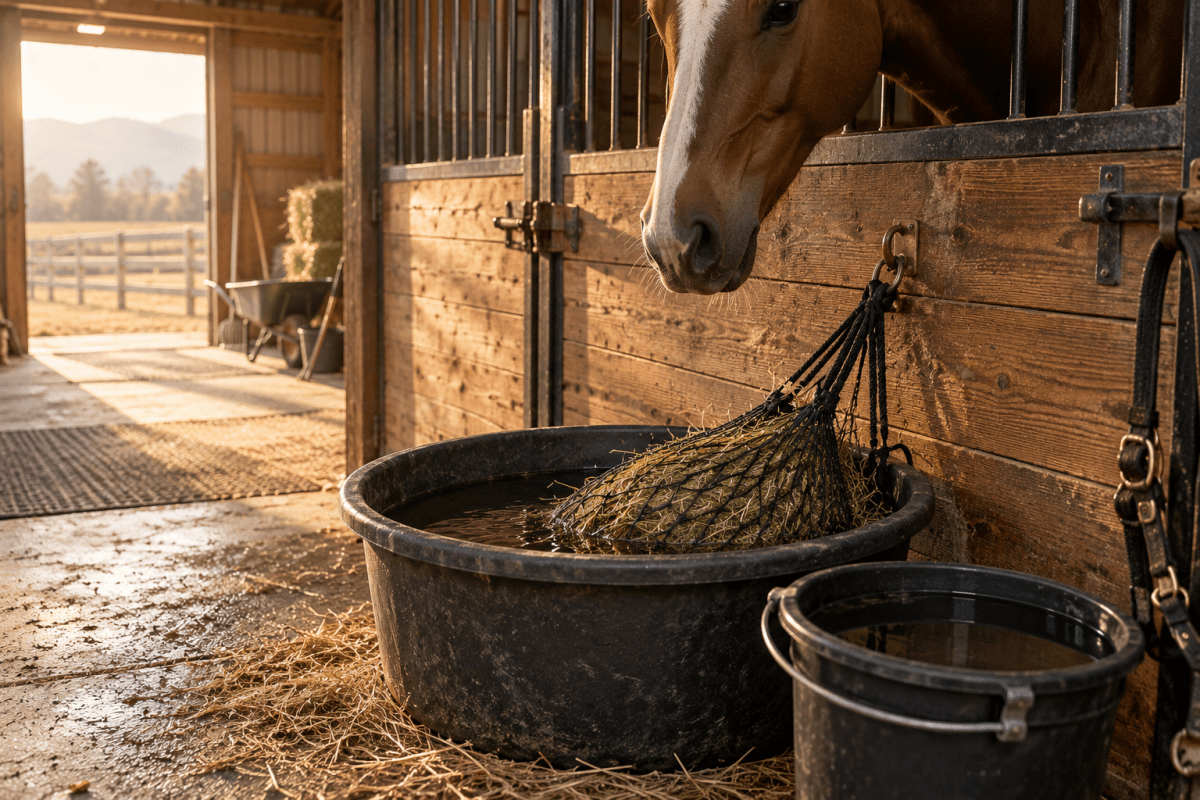
Put water near the hay. Hydrated airways clear particles more easily (UC Davis).
Feed dust-free or soaked hay, and use low-dust bedding.
Skip dusty chores like sweeping aisles (EPA).
Mist holding areas and add shade to settle dust and ease heat.
Where Air Filtration Helps on a Farm: A Filter Maker's Honest Take
Filtration works best in small, closed spaces. EPA research on DIY air cleaners shows a box fan with a MERV 13 filter reduces indoor smoke. In an open barn, outside air keeps replacing filtered air, so a portable filter can't make a real dent.
Filtration pays off in three places:
Your home. Follow the four AQI 100 steps above. Filterbuy's guide on how to keep wildfire smoke out of your house covers the setup.
Tack rooms and farm offices. A room with a door that closes can run a DIY air cleaner, like the one in Filterbuy's Corsi-Rosenthal box build guide. Use a certified box fan from 2012 or newer, and don't leave it running unattended. A DIY unit is a stopgap until you can get a certified air cleaner.
Fully enclosed, mechanically ventilated barns. Confirm MERV 13 filters fit your ventilation system, like any size check.
How Big an Air Cleaner Does Your Tack Room Need?
EPA's cleaner air room guidance says to choose an air cleaner whose smoke CADR is at least two-thirds of the room's square footage. A 300 sq ft tack room, for example, needs a smoke CADR of about 200. In EPA testing, a four-filter Corsi-Rosenthal box reached 401 CFM, enough for about 600 sq ft. Skip ionizers and ozone generators, since EPA advises using air cleaners that produce little or no ozone.
What Filterbuy's Filter-Making Teaches About Farm Air
Filter labels are rounded. Filterbuy's 20x20x1 MERV 13 actually measures 19.5 x 19.5 x 0.75 inches, so tape every edge on a box-fan build or smoky air will slip around the filter.
A smoke-loaded filter still moves air. EPA testing found DIY cleaners almost completely ineffective once their filters were dirty, so judge a filter by how it looks.
Smoke shortens filter life. EPA advises replacing a filter once it looks dirty, dark brown or black, which can be well before the normal interval. Check filters during smoke events and keep spares on hand.
"The fans are fine. It is the filter people forget. I would rather someone run a 2012 fan with a filter they change than a new fan with a filter they never look at," says David Clark, Licensed HVAC Technician at Filterbuy.
Shop Filterbuy MERV 13 filters in your size, made in the USA in standard and custom sizes.
Supporting Statistics: Why Barns and Herds Need a Smoke Plan
Wildland fires, including prescribed burns, cause 44% of U.S. primary fine-particle (PM2.5) emissions.
86.2 million cattle and calves lived on U.S. farms on Jan. 1, 2026.
Source: USDA NASS cattle report, 2026
6.6 million horses lived in the United States in 2023.
When Should You Call a Veterinarian?
Call your vet if a horse's resting respiratory rate stays above 30 breaths per minute, its nostrils flare, or it keeps coughing or has abnormal nasal discharge. Normal is 12 to 24 (UC Davis). To check, count flank movements for 30 seconds; if you keep getting more than 15, make the call.
Nebraska Extension notes healthy cattle take 10 to 30 breaths per minute, and 103.5°F or higher points to fever. Nasal discharge, coughing, and poor appetite overlap with bovine respiratory disease (BRD), so get a vet's diagnosis.
Frequently Asked Questions
Does wildfire smoke affect cattle growth or milk production?
It can. University of Idaho's Amy Skibiel cites studies linking poor calf respiratory health to lower daily gain and first-lactation milk.
Will an air filter clean the air in my barn?
Not in an open barn. Filterbuy recommends MERV 13 for enclosed spaces like your home and tack room.
How do I prepare before the next smoke season?
Stock a week of supplies and spare MERV 13 filters, practice trailer loading, and bookmark Filterbuy's live USA wildfire and smoke map.
Glossary
Air Quality Index (AQI): A 0–500 scale for daily air pollution. The EPA runs it.
PM2.5: Particulate matter 2.5 microns or smaller, the main harmful pollutant in wildfire smoke.
MERV (Minimum Efficiency Reporting Value): A rating of how well an air filter captures particles.
Heaves (equine asthma): A chronic airway disease in horses that smoke and dust make worse.
HEPA air cleaner: A portable room unit with a high-efficiency particulate air filter. HEPA filters don't go in home HVAC systems.
Clean air delivery rate (CADR): How much filtered air an air cleaner delivers each minute.
Bovine respiratory disease (BRD): A common cattle illness complex that stress makes more likely.
About the Author and Reviewer
Michelle Wan is Brand Manager and Air Quality Writer at Filterbuy, which has made HVAC filters in U.S. factories since 2013. David Clark, a Licensed HVAC Technician, reviewed this guide's filtration and airflow guidance.
Sources
U.S. EPA, Protect Your Large Animals and Livestock From Wildfire Smoke
U.S. EPA, Research on DIY Air Cleaners to Reduce Wildfire Smoke Indoors
UC Davis Center for Equine Health, Wildfire Smoke and Horses
Oregon State University Extension, Once the Smoke Clears
American Veterinary Medical Association, Wildfire Smoke and Animals
Ranches et al., Journal of Animal Science (2026), Wildfire smoke exposure in beef-on-dairy calves
UNL BeefWatch via Drovers, Using the D.A.R.T. Method to Identify Smoke-Stressed Calves
Wyoming Livestock Roundup, Smoke and Livestock: UW Extension Outlines Impact of Wildfire Smoke
EPA and U.S. Forest Service, AirNow Fire and Smoke Map
U.S. EPA, Preparing for Smoke and Heat
U.S. EPA, How to Create a Cleaner Air Room at Home
This article is educational and does not replace veterinary care. If an animal is struggling to breathe, contact your veterinarian immediately.