Installation, Costs & Rebates (NJ Guide)
Adding a mini split in New Jersey typically costs $3,000–$6,000 installed for a single-zone system, or $7,500–$12,000+ for a multi-zone system. The federal 25C tax credit expired December 31, 2025, so 2026 installs no longer qualify. New Jersey homeowners can still stack the state's Whole Home program, worth up to $7,500 cash-back, with a utility rebate of about $750–$1,400.
Not sure which setup fits your rooms? Take the quick match quiz below, or browse mini split systems to see what is available.

Answer 3 quick questions and we'll match you to the right mini split setup.
Ready to compare equipment? Shop mini split systems.
Adding a mini split in New Jersey typically runs about $3,000–$6,000 for a single-zone system and roughly $7,500–$12,000+ for a whole-home multi-zone setup, installed. In 2026 the federal 25C tax credit is gone, but New Jersey homeowners can still stack the state's Whole Home program (up to $7,500) with a utility rebate (about $750–$1,400 depending on your provider), and income-qualified households may add federal HEAR rebates. Because most mini splits are heat pumps, one system cools and heats, and modern cold-climate models handle NJ winters. Keep the indoor filters clean, and don't forget the pleated filter in any central system you keep.
Installed cost in NJ is roughly $3,000–$6,000 single-zone and $7,500–$12,000+ multi-zone; zones, tonnage, brand, and electrical work drive the number.
The federal 25C tax credit expired December 31, 2025, so heat pumps installed in 2026 don't qualify (IRS, One Big Beautiful Bill Act).
New Jersey's Whole Home Energy Solutions program offers up to $7,500 cash-back plus 0% financing up to $25,000, stackable with a utility rebate.
Utility mini-split rebates in 2026: PSE&G up to $900, JCP&L about $750, Atlantic City Electric about $1,300, Rockland Electric about $1,400. Verify with your provider.
A cold-climate (ccASHP) model heats efficiently through NJ winters; right-sizing with a Manual J load calculation is what protects comfort and humidity control.
Mini-split heads use washable filters you rinse every few weeks; any central system you keep still needs a quality pleated filter on a regular schedule. Filterbuy makes those in 600+ USA-made sizes.
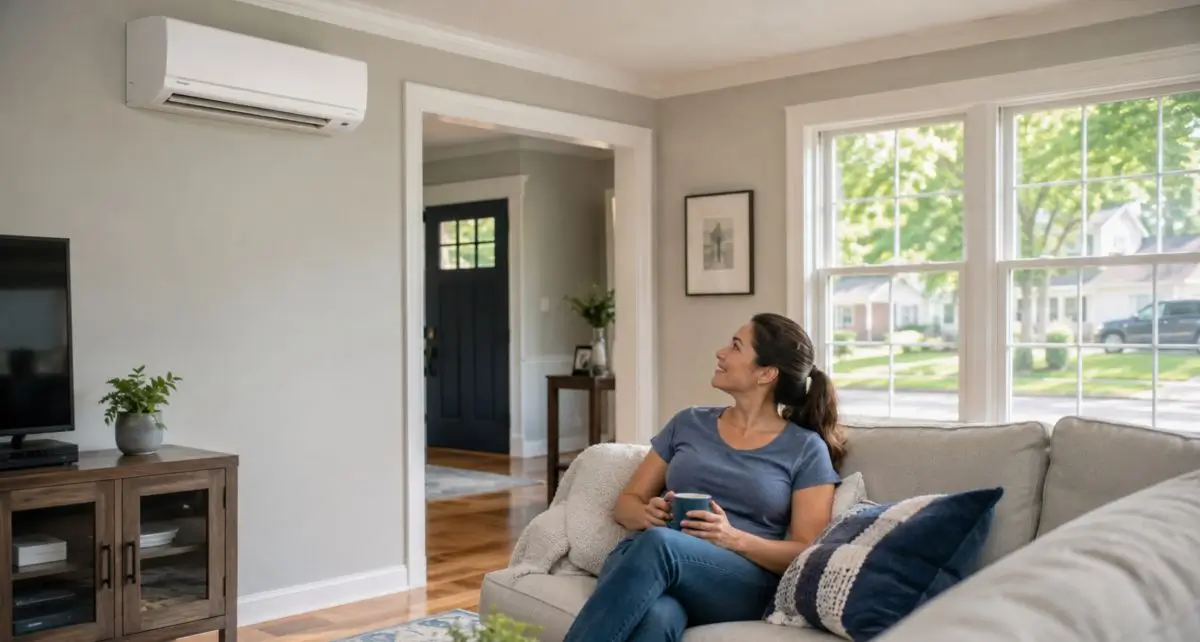
Adding a ductless mini split in New Jersey means mounting one or more indoor “heads” connected by refrigerant lines to an outdoor unit, with no ductwork required. Most models are heat pumps, so the same system cools in summer and heats in winter. Expect roughly $3,000–$6,000 installed for one room and $7,500 or more for a multi-room system, before New Jersey rebates that can total several thousand dollars.
Mini splits have become one of the fastest-growing HVAC choices in New Jersey, especially in the state's many pre-1970 colonials, capes, and split-levels that were built without ductwork. They shine for room additions, finished basements and garages, sunrooms, and that one bedroom that's always too hot or too cold. Below is the honest 2026 picture: what it costs here, which rebates still exist, whether a heat pump can handle our winters and humidity, and how to keep the air clean once it's in.
How we put this together. At Filterbuy, we built this the way we'd want it ourselves. We pulled the 2026 rebate figures straight from each New Jersey utility, checked the expired federal tax credit against the IRS, and had a licensed New Jersey HVAC technician pressure-test our advice on sizing and cold-climate performance. The result is a few things you won't find in most NJ mini-split guides: a straight answer on the credit that ended in 2025, real utility-by-utility rebate numbers, and the filter side of the story that only a filter manufacturer like Filterbuy tends to flag. Where figures move, and in this state they do, we tell you to verify before you budget.
In New Jersey, adding a single-zone mini split typically costs about $3,000–$6,000 installed, while a multi-zone system that cools and heats several rooms usually runs $7,500–$12,000 or more. Your final number depends mostly on how many indoor heads you need, the system's size (BTUs) and efficiency, and how difficult the install is at your home.
Those ranges reflect New Jersey installer pricing, which tends to sit at or above national mini split installation costs (the U.S. average for a standard single-zone install is around $3,000). Labor alone is usually 30–50% of the total, and licensed technicians here bill roughly $75–$150 per hour. A few things move the New Jersey number the most.
What pushes your cost up or down:
Number of zones. Each additional indoor head adds equipment and labor. Planning for two zones up front is usually cheaper than adding a second later.
Size and efficiency. Higher BTU capacity and higher SEER2 / HSPF2 ratings cost more up front but lower running costs, and higher-efficiency models are what qualify for most rebates.
Brand tier. Premium brands (Mitsubishi, Daikin, Fujitsu) typically run 20–40% more than mid-tier options, with strong cold-climate performance.
Install difficulty. Long refrigerant line runs, second-story or ceiling-cassette mounts, electrical-panel upgrades, and township permits (often $250–$400) all add to labor.
A ductless mini split usually lasts 15–20 years when the filters stay clean and the outdoor unit is kept clear of snow and debris, comparable to or longer than a traditional system.
Running costs are modest, which is part of the appeal. Many New Jersey homeowners spend roughly $30–$80 a month to run a single-zone head, depending on how much they use it and the season. See our mini split running-cost breakdown for the full math.
In 2026, New Jersey homeowners can stack the state's Whole Home Energy Solutions program (up to $7,500 cash-back) with a utility rebate on a qualifying ductless heat pump (roughly $750–$1,400 depending on your provider). The federal 25C tax credit is no longer available, but income-qualified households may also access federal HEAR rebates of up to $8,000.
⚠ Important 2026 change: the federal tax credit is gone. The Section 25C Energy Efficient Home Improvement Credit (which offered up to $2,000 toward a heat pump) expired December 31, 2025 under the One Big Beautiful Bill Act (signed July 4, 2025). Equipment “placed in service” on or after January 1, 2026 does not qualify, regardless of when you bought it. If your install finished in 2025, you can still claim it on your 2025 return via IRS Form 5695. Many NJ guides still list this credit for 2026; for the full picture, see our 2026 mini split tax credit & rebate guide.
Run through the New Jersey Clean Energy Program (administered by the NJ Board of Public Utilities), Whole Home pays cash-back of up to $7,500 based on your home's projected Total Energy Savings (TES%), and offers 0% financing up to $25,000 for the balance. Mini-split systems are eligible. It requires a home energy assessment and a BPI-certified installer, and it stacks with your utility's equipment rebate.
Your electric utility offers its own rebate on a qualifying ductless heat pump. Which one applies depends on your provider, so check the logo on your electric bill.
Rebate amounts change and vary by utility and income. Verify current figures with your utility and the NJ Clean Energy Program before budgeting. Not tax or financial advice.
Program pages by provider: PSE&G Whole Home Energy Solutions · PSE&G HVAC instant rebates · JCP&L (FirstEnergy) NJ home programs · Atlantic City Electric Home Energy Savings. Confirm current amounts on each utility's page, since rebates change through the year.
Gas-only customers (New Jersey Natural Gas, Elizabethtown Gas, South Jersey Gas) access these programs through their electric utility, and NJ Natural Gas separately offers ductless heat-pump rebates of roughly $500–$1,000 by efficiency tier.
Funded by the Inflation Reduction Act and administered by the NJ Clean Energy Program, the HEAR (Home Electrification and Appliance Rebates) program can provide up to $8,000 toward a heat pump for households under 150% of Area Median Income, paid as a point-of-sale discount rather than a tax refund. A companion HOMES rebate rewards whole-home energy savings. These survived the 2025 federal tax-credit changes.
How the stack can look (an example). Say a two-zone system is quoted at $8,000 installed. If your Whole Home assessment qualifies you for $3,000 in cash-back and your utility adds a $900 mini-split rebate, your out-of-pocket drops to about $4,100, and you can put the balance on the program's 0% financing. Best case, pairing a full Whole Home award with a utility rebate can total roughly $8,250–$8,900 in combined incentives, before any income-based HEAR rebate. Your real numbers depend on your Total Energy Savings percentage, equipment efficiency (many rebates require SEER2 of about 15.2 or higher), income, and utility, so treat this as an illustration, not a quote.
Rebate programs change and vary by utility and income. Verify current amounts and eligibility with your utility and the NJ Clean Energy Program before you budget. This is general information, not tax or financial advice.
Primary-source links (IRS 25C, IRS Form 5695, NJ Clean Energy Program, PSE&G, JCP&L, Atlantic City Electric, DOE Home Energy Rebates) are wired into the text above and listed in the link-verification table near the end. Re-confirm rebate figures on publish day.
Yes. New Jersey sits in a mixed-humid climate (IECC Zone 4A in the south and Zone 5A in the north), and modern cold-climate mini-split heat pumps are built for exactly this. Premium models keep heating well below freezing (some to −13°F or lower), and their “dry” mode helps manage our sticky summers. Right-sizing is the key to both comfort and humidity control.
Most New Jersey winter days sit between about 25°F and 35°F, the sweet spot where a heat pump runs at 300–400% efficiency, delivering three to four units of heat for every unit of electricity. During the handful of nights that drop toward 10–20°F, a good cold-climate model keeps working; efficiency falls but stays economical. Below-10°F days are rare here.
A few New Jersey specifics worth knowing:
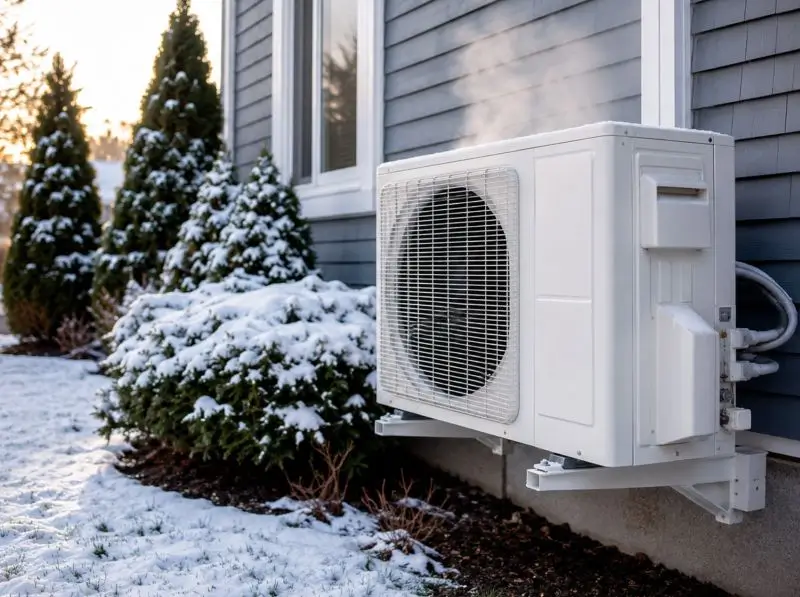
Defrost is normal. In humid weather between about 25°F and 45°F, frost forms on the outdoor coil and the system briefly reverses to melt it. Short puffs of “steam” and a pause in heating are expected, not a malfunction. It's the number-one “is my system broken?” call our reviewer fields every January, and it almost never is.
Humidity control depends on sizing. An oversized unit cools the room fast, then shuts off before it wrings out enough moisture. A right-sized system (set by a Manual J load calculation) runs longer and dehumidifies better. Use the “dry” mode on muggy July days.
Shore homes need salt-air protection. Near the coast, ask for a coastal-rated outdoor unit or an anti-corrosion coating so salt air doesn't shorten its life.
Backup heat is optional. Some homeowners keep an existing furnace or boiler as backup for the coldest nights (a “dual-fuel” setup). Most New Jersey homes with a quality cold-climate system don't need it, but it's there for peace of mind.
“Nine times out of ten, when a New Jersey homeowner tells me the room feels cold but clammy, the unit was oversized. In our humid summers a slightly smaller, right-sized head runs longer and pulls out more moisture than a bigger one ever will. That's why I want a Manual J on the table before anyone picks equipment, not a rule-of-thumb guess.”
David Clark · Licensed HVAC Technician · guide reviewer
For most New Jersey homes without ductwork (or with one room that never gets comfortable), a ductless mini split is the simplest, most efficient fix. But it isn't the only option, and it isn't always the best one. This is how to tell before you spend a dollar.
A mini split is usually a great fit if:
Your home has no ductwork (the classic New Jersey colonial, cape, or split-level) and you'd rather not open walls and ceilings to add it.
You're conditioning an addition, finished basement, garage, sunroom, or a single room that's always too hot or too cold.
You want room-by-room control, or a few rooms get far more use than the rest.
You're replacing electric baseboard, window units, or aging equipment and want lower running costs.
Consider a ducted heat pump or central system instead if:
Your home already has sound, well-sealed ductwork. A central heat pump can cost less per conditioned square foot than several heads.
You want one thermostat for the whole house and don't need zoning.
Wall-mounted indoor heads are a dealbreaker for you, though floor-mount and recessed ceiling-cassette heads are worth a look before you rule ductless out.
On the fence? The home energy assessment in the steps below will tell you which path your specific house rewards. For the state rebate, that assessment is the first step anyway, so you lose nothing by starting there.
Choose single-zone when you need to fix one space: an addition, garage, sunroom, or a room that never gets comfortable. Choose multi-zone when you want whole-home comfort in a house without ductwork. One outdoor unit can typically support up to four or five indoor heads, each with its own temperature control.
If you might expand later, tell your installer now: sizing the outdoor unit for future heads up front is usually cheaper than upsizing it down the road.
Your installer sizes equipment with a Manual J load calculation. That's the real answer for your home, and it's what keeps you from the oversizing trap. For rough budgeting only, mini-split heads come in standard sizes, and cooling load in our climate runs about 20–25 BTU per square foot. Use the ranges below to set expectations, not to order equipment; insulation, ceiling height, sun exposure, and window count all move the number.
Bedroom or home office, ~150–250 sq ft: around a 9,000 BTU head.
Living room, ~250–400 sq ft: around 12,000 BTU.
Open living/dining, ~400–550 sq ft: around 18,000 BTU.
Great room or small floor, ~550–800 sq ft: around 24,000 BTU.
When two sizes are close, the right-sized smaller one usually wins in humid New Jersey: it runs longer and dehumidifies better, exactly as our reviewer noted above.
Adding a mini split in New Jersey is a five-step path: book an energy assessment, get right-sized quotes from a qualified contractor, choose a rebate-eligible system, confirm permits and rebate paperwork, then install and file. Working with a BPI-certified or NJ Clean Energy participating contractor is what qualifies you for the biggest incentives.
Book a home energy assessment. For the Whole Home program, a BPI-certified assessor evaluates your home and estimates your Total Energy Savings percentage, which sets your cash-back amount.
Get two or three quotes. Use NJ DCA-licensed HVAC contractors; for the state rebate the contractor must be BPI-certified. Ask each for a Manual J load calculation so the system is sized to your home, not guessed.
Pick a rebate-eligible system. Choose ducted, ductless, or hybrid based on your home. In North Jersey (Zone 5A) request a cold-climate model; at the shore, a coastal-rated outdoor unit. Confirm the SEER2/HSPF2 ratings meet your utility's rebate threshold.
Confirm permits and paperwork. Your contractor typically pulls the township permit. Line up the rebate applications for both the state Whole Home program and your utility before work begins.
Install, commission, and file. A single-zone install often takes 4–8 hours; multi-zone can run one to three days. After commissioning, submit your rebate documents. Timelines from assessment to rebate payout commonly run 8–12 weeks.
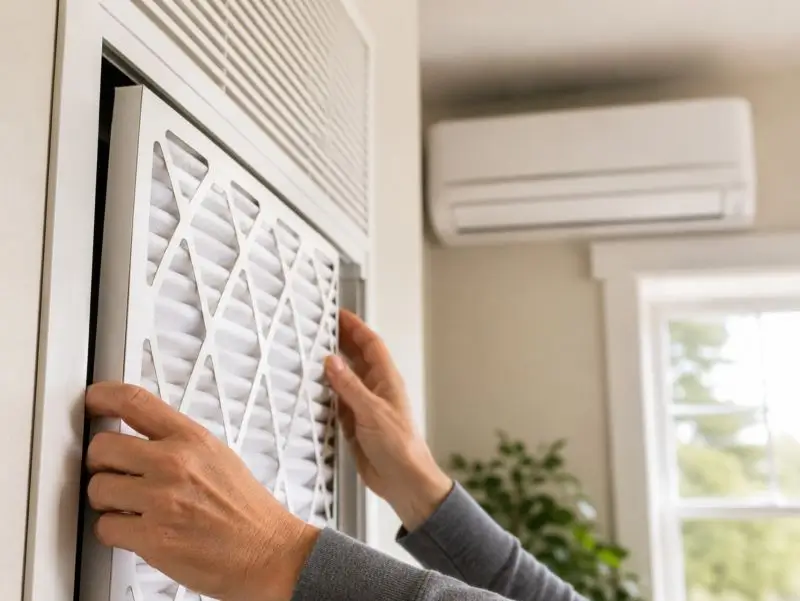
A mini split doesn't remove filter maintenance from your home. It changes it. Each indoor head has a washable mesh filter you rinse every few weeks. And if you keep a central furnace or air handler anywhere in the house, that system still needs a quality pleated filter on a regular schedule to protect both your air and the equipment.
At Filterbuy, as an American filter manufacturer, the mix-up we see most often is this: people assume “ductless” means “no more filters.” It doesn't. Ductless splits the job in two, and the half most homeowners forget is the one that matters most for New Jersey's spring pollen and summer wildfire haze. The honest breakdown:
The mini-split heads: clean the reusable mesh filters roughly every two to four weeks: pop them out, rinse, dry, and slide back in. Clogged filters cut capacity right when the system is working hardest (see our step-by-step mini split maintenance guide).
Any central system you keep: dual-fuel and hybrid setups (and homes that keep central air in part of the house) still rely on a standard pleated filter. That's where a properly sized, regularly changed filter earns its keep, trapping dust, pollen, and wildfire smoke before it reaches your ducts and lungs.
Filterbuy makes pleated filters in the USA in 600+ sizes, ships factory-direct, and can auto-deliver replacements on your schedule so a clean filter is never the thing you forget. If you're adding a mini split but keeping central air anywhere in the home, find your central filter size and set up auto-delivery. Keeping that filter fresh is one of the simplest ways to protect you, your home, and your HVAC.
Three findings from U.S. government sources. Each backs a claim on this page. Each links to its source.
20–30% of conditioned air leaks out of typical ductwork.
Mini splits have no ducts, so they skip this loss.
Source: ENERGY STAR (U.S. EPA).
~50% less heating electricity than furnaces and baseboard heaters.
Air-source heat pumps power a mini split.
That efficiency keeps one affordable through NJ winters.
Source: U.S. Department of Energy.
Half of Northeast homes cool with individual units, not central AC.
That includes window, wall, and mini-split units.
A mini split fits how the region already cools.
Source: U.S. EIA, 2020 RECS.
Note: these are general U.S. and regional patterns, not a guarantee for any single home. Based on the 2020 EIA RECS and current ENERGY STAR / DOE guidance.
No. The federal 25C Energy Efficient Home Improvement Credit expired December 31, 2025. Heat pumps installed in 2026 don't qualify. New Jersey's Whole Home program, utility rebates, and (for income-qualified homes) federal HEAR rebates are the paths that remain.
Roughly $3,000–$6,000 installed for a single-zone system and $7,500–$12,000+ for a multi-zone system, before rebates. Zones, size, efficiency, brand, and electrical work drive the final price.
As of 2026, Rockland Electric (about $1,400) and Atlantic City Electric (about $1,300) tend to be highest, with PSE&G up to $900 and JCP&L about $750. Confirm current amounts with your provider, since these change.
Yes. A cold-climate (ccASHP) model heats efficiently through typical NJ winters, and many keep working well below freezing. Right-sizing and, if you like, keeping a backup heat source for the coldest nights make it dependable.
They do when sized correctly. A right-sized unit runs long enough to pull moisture out, and “dry” mode helps on muggy days. Oversized units short-cycle and leave the air clammy, which is one more reason to insist on a Manual J calculation.
Sometimes. A single-zone head often runs on one dedicated 15–20 amp circuit, and many New Jersey homes have room for it. Larger multi-zone systems draw more, so an older 100-amp panel may need an upgrade. Ask your installer to check your panel during the quote so it isn't a surprise. Panel work, when it's needed, is one of the bigger swings in the final price.
Plan on roughly 8–12 weeks end to end in New Jersey. Figure a week or two for the energy assessment and quotes, then scheduling and the install itself (a single zone is often a day; multi-zone can run one to three), then several weeks for the rebate to process after your paperwork is filed. Booking the Whole Home assessment early is the usual way to keep things moving.
Rinse each indoor head's washable filter every two to four weeks, keep the outdoor unit clear of snow and debris, and have it professionally serviced yearly. If you keep a central system, change its pleated filter on schedule too. Filterbuy can auto-ship the right size so it's one less thing to track.
Ductless mini split: A heating and cooling system with an outdoor compressor connected by refrigerant lines to one or more wall-, floor-, or ceiling-mounted indoor “heads,” with no ductwork required.
Heat pump: Equipment that moves heat rather than burning fuel, so it both cools and heats. Most mini splits are heat pumps.
Cold-climate heat pump (ccASHP): An air-source heat pump engineered to keep useful heating capacity in sub-freezing temperatures, suited to North Jersey winters.
Zone: One indoor head serving one area. Single-zone systems have one head; multi-zone systems have several, each independently controlled.
SEER2 / HSPF2: Updated efficiency ratings for cooling (SEER2) and heating (HSPF2). Higher numbers mean lower running costs; utility rebates usually set a minimum SEER2 (often about 15.2).
Manual J: The industry-standard room-by-room heating and cooling load calculation used to size a system correctly for your home.
Section 25C: The federal Energy Efficient Home Improvement Credit (up to $2,000 for heat pumps) that expired December 31, 2025 and does not apply to 2026 installs.
NJ Whole Home Energy Solutions: New Jersey's state incentive (via the NJ Clean Energy Program / Board of Public Utilities) offering up to $7,500 cash-back plus 0% financing for qualifying efficiency upgrades, including mini splits.
HEAR: The federal Home Electrification and Appliance Rebates program: up to $8,000 toward a heat pump for income-qualified households, administered in NJ by the Board of Public Utilities.
Total Energy Savings (TES%): The projected whole-home energy-savings percentage from a Whole Home energy assessment, which determines your cash-back amount.
Written by Michelle Wan. Michelle writes about home comfort, indoor air quality, and HVAC for Filterbuy, and verified the 2026 rebate and tax-credit figures in this guide against each New Jersey utility and the IRS.
Reviewed by David Clark, Licensed HVAC Technician. David reviewed this guide for technical accuracy; his field experience with New Jersey installs shapes the right-sizing, humidity, and defrost guidance above, including the quoted insight.
Filterbuy is an American manufacturer of air filters, producing 600+ sizes factory-direct with auto-delivery. Better Air For All.
Last updated: July 6, 2026. Rebate amounts change; verify with your utility and the NJ Clean Energy Program before budgeting. This guide is general information, not tax or financial advice.