Do Mini Splits Work in Cold Weather? Winter Performance Guide (2026)
Yes, mini splits keep heating below freezing, and cold-climate models hold most of their rated power down to 5°F or lower. Standard mini splits often lose over half their capacity between 20°F and 30°F. The tier installed decides how much heat comes out on the coldest night of the year.
- Standard mini splits: capacity often drops below 50% between 20°F and 30°F
- Cold-climate (ccASHP-listed): hold about 70% or more of capacity at 5°F
- ENERGY STAR Cold Climate / CEE Advanced Tier: hold 70% to 100% of capacity at 5°F, built for sustained sub-zero winters
Answer a few quick questions below to find the mini split tier built for your winters.

Answer 3 quick questions and we'll match you to your perfect mini split.
If you live in a region that gets hit hard by winter storms, you might be skeptical about relying on a heat pump to keep your home warm. When temperatures drop below freezing, generating enough heat to stay comfortable becomes a top priority. You might wonder if a ductless system can handle the freezing temperatures of the Northeast, Midwest, or Mountain states.
The short answer is yes. Modern systems, particularly cold-climate models, are specifically designed for sub-zero temperatures. They can keep your home warm even when the snow is piling up outside.
Understanding how these systems operate in freezing conditions will help you make an informed decision for your home. This post will look at real performance data, clarify how heat pump technology operates, and help you determine if a cold-weather mini split is the right primary heating source for your specific climate.
Key Takeaways
Modern cold-climate mini splits are designed to operate efficiently even in sub-zero temperatures, making them a viable heating option for harsh winters.
Understanding performance data and technological advancements is essential in evaluating if a mini split is suitable for your needs.
Cold-weather mini splits can serve as a primary heating source in many climates, offering both energy efficiency and consistent comfort.
Researching your specific climate and heating requirements will help you make a well-informed decision about investing in this technology.
The Biggest Myth About Mini Splits in Winter
The most common misconception about mini splits is that they simply stop working the moment temperatures drop below freezing. Older heat pumps did struggle with extreme cold, but technology has drastically improved over the last decade.
Today, systems still operate reliably well below 0°F. While overall efficiency naturally drops as the weather gets colder, these units still produce consistent heat. According to U.S. Department of Energy (DOE) testing, cold-climate heat pumps maintain high efficiency ratings even in freezing conditions, making them a highly capable heating solution for North American winters.
How Mini Split Heating Works
To understand mini split AC and heat capabilities, you have to look at how they create warmth. Traditional furnaces burn fuel or use electric resistance to generate heat from scratch. A mini split heat pump does not generate heat at all. Instead, it transfers heat from one place to another.
Even when it feels freezing outside, there is still thermal energy in the air. Modern mini splits use inverter-driven compressors and specialized refrigerants to absorb that ambient outdoor heat and move it inside your home. Think of it like squeezing heat out of cold air. The compressor adjusts its speed based on the temperature needs, allowing the system to provide a steady, continuous flow of warmth without constantly turning on and off.
So, What Happens When Temperatures Drop?
Marketing claims are one thing, but real-world numbers paint a clearer picture of cold climate mini split performance. The Coefficient of Performance (COP) measures how efficiently a unit operates. A COP of 2.0 means the system produces twice as much heat energy as the electrical energy it consumes.
Here is a look at what happens to a mini split’s performance as temperatures drop:
DOE testing shows that heat pumps in U.S. homes routinely achieve COPs of 1.6 to 2.7 even when temperatures sit below 30°F. This means they remain highly efficient long after the freezing point.
Comparing Standard vs Cold-Climate Mini Splits
Choosing the right equipment determines your winter comfort. There is a massive difference between a standard unit and one built for harsh winters.
Standard systems work best when the temperature stays above 25°F to 30°F. Once the weather dips below freezing, these standard units lose their heating capacity quickly and struggle to keep rooms warm.
Cold-climate systems are engineered specifically for extreme weather. They are designed to operate in temperatures ranging from -5°F to -15°F. These robust units maintain 70% to 100% of their heating capacity even in deep freezes, making them the ideal choice for the northern U.S.
Key Features That Make Mini Splits Work in Cold Weather
Several specific engineering features allow low ambient heating mini split systems to thrive in the snow.
Low Ambient Heating Technology: Specialized refrigerants and larger coils allow the system to capture thermal energy in extreme cold.
Inverter Compressors: These compressors vary their speed to maintain consistent heat, rather than blasting hot air and shutting off.
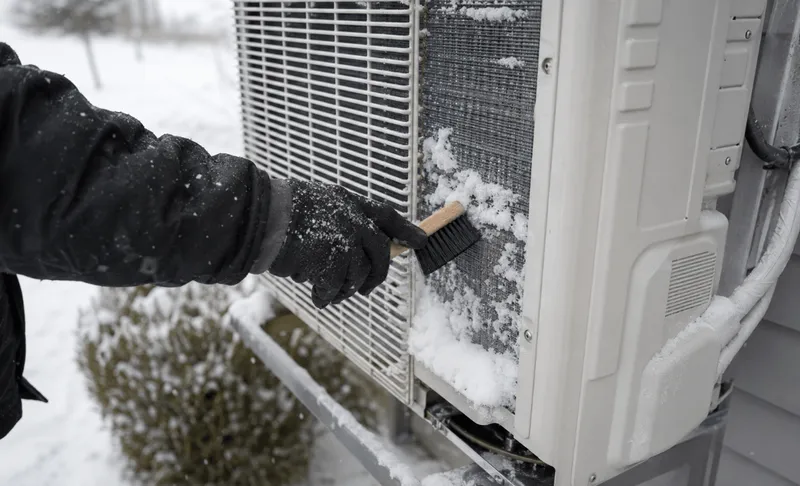
Intelligent Defrost Cycles: The system automatically detects frost buildup on the outdoor coils and briefly reverses operation to melt the ice, ensuring continuous airflow.
Chassis/Base Pan Heater: A built-in heating element prevents melted ice from refreezing in the base of the outdoor unit, protecting the fan blades and compressor.
Can a Mini Split Replace a Furnace?
Homeowners frequently ask if they can ditch their furnace entirely. The answer depends heavily on your location and climate zone.
Yes, they can act as a primary heat source in Climate Zones 3 through 5. If your area typically experiences winters that stay above 0°F, a properly sized cold-climate mini split can easily handle the entire heating load.
They serve perfectly as a hybrid system in Zones 5 and 6. If you experience occasional sub-zero temperatures, using a mini split for the bulk of your heating and keeping a furnace for the coldest weeks is a smart strategy.
They should not be the sole heat source in extreme climates where temperatures regularly sit below -15°F. In these environments, you will need a dedicated backup heating system.
Real Costs & Energy Savings
Operating a mini split heat pump winter efficiency translates directly into lower utility bills. On average, homeowners in cold climates spend between $120 and $180 per month to run their mini splits during the winter.
Because these systems can achieve up to 300% efficiency at around 17°F, they use significantly less electricity than traditional methods. Homeowners typically see savings of 30% to 50% when switching from electric resistance baseboards or oil heating systems.
Recommended Option for Cold Weather Performance
Finding a unit equipped for freezing weather takes the guesswork out of winter preparation. The Filterbuy 12,000 BTU Mini Split comes with essential cold-ready features straight out of the box.
It reliably heats down to 5°F (-15°C) and utilizes an intelligent defrost system to prevent winter freeze-ups. A built-in chassis heating belt keeps the outdoor unit clear of damaging ice. This specific size is ideal for 250 to 300 square foot spaces, making it perfect for single-car garages, workshops, or master bedrooms. It is available in both 115V and 230V options, and ships fast and free.
For larger spaces, you can easily scale up. An 18,000 BTU system handles 350 to 400 square feet (great for large 1-car or small 2-car garages), while a 24,000 BTU unit comfortably heats 500 to 550 square feet.
When You Might Need Backup Heat
Needing a secondary heat source is completely normal and does not mean your mini split has failed. You will likely need backup heat if the outdoor temperature drops below -15°F, as even the best systems lose capacity at that extreme. Poor insulation in older homes can also cause heat to escape faster than the unit can replace it. Finally, an undersized system will always struggle to keep up with the demands of a harsh winter.
Final Verdict: Are Mini Splits Good for Cold Climates?
Mini splits are an incredibly effective heating solution for cold climates, provided you choose the right equipment. You must select a cold-climate model explicitly designed for sub-zero temperatures, and it must be properly sized for your specific square footage.
With the right system, you can enjoy reliable, energy-efficient warmth all winter long. Find the right mini split size for your space from Filterbuy and explore energy-efficient heating options to keep your home comfortable this winter.
Frequently Asked Questions