
Nampa, ID Live Wildfire Smoke Map
Get Alerts For Wildfires In Your Area
The moment a wildfire starts near you, you'll get an instant alert and simple tips to reduce your smoke exposure.
What's In The Smoke
30xSmaller than a human hair
Fine enough to reach deep into the lungs. A MERV 13 is built to capture it.
How Far It Travels


It Doesn't Stay Local
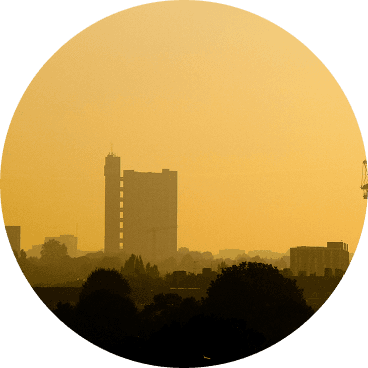
Smoke rides the wind far downwind — you can get smoky air with no fire nearby.
What To Do During A Smoke Event
Simple steps to reduce indoor exposure.
- Stay In, Close UpShut windows and doors to keep smoke out.
- Set Fan To "On"Keeps air cycling through your filter, not just when heating or cooling.
- Recirculate AirSwitch off fresh-air intake so you're not pulling smoke in.
- Run A MERV 13Built to capture the fine PM2.5 in smoke.
- Add A PurifierExtra filtration for the room you use most.
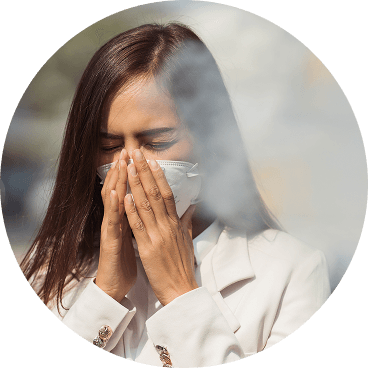
- Wear an N95 if OutsideFits snug to block fine particles — a cloth mask won't.


The Best Air Filter For Wildfire Smoke
During smoke events, the EPA recommends upgrading to a MERV 13 filter — or the highest-rated filter your system can handle — to help reduce the fine particles smoke brings indoors. MERV 13 is the level most home HVAC systems can run while still capturing PM2.5, the fine particulate that makes up the bulk of wildfire smoke.
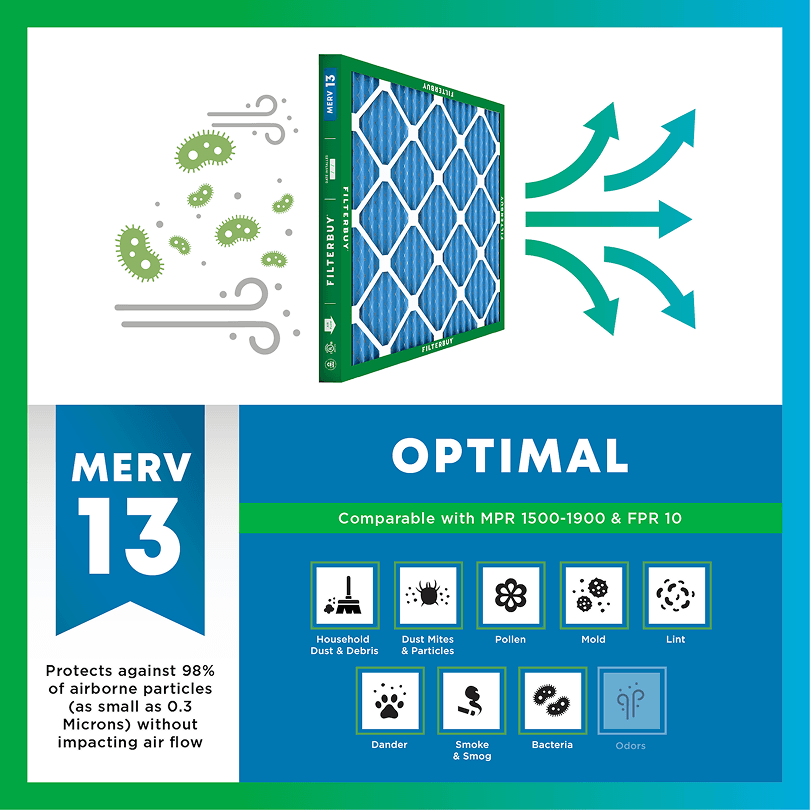
- Captures PM2.5 particles
- Blocks ash, soot, and smoke odor
- Keeps your indoor air safe—even when the outdoor air is dangerous
- Meets the EPA's recommended rating for filtering fine wildfire smoke particles.

Wildfire Smoke FAQs
Facts About Wildfires
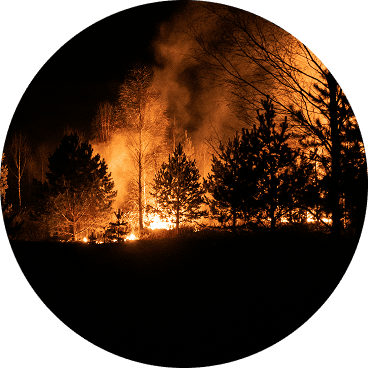
Over 70,000 wildfires burn in the U.S. every year.
Wildfire smoke can travel 1,000+ miles, affecting states that aren't even near the blaze.
Exposure to wildfire smoke can worsen asthma, trigger heart issues, and lead to ER visits.
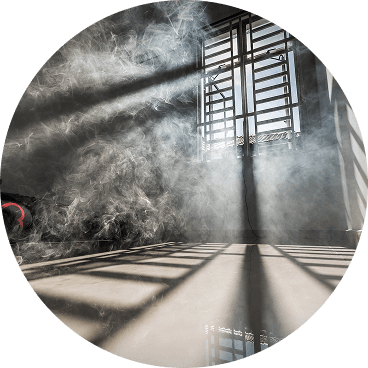
Indoor air can hold more fine particles during wildfire events unless it's properly filtered.
The EPA advises using MERV 13 filters or portable HEPA air cleaners during wildfire smoke events.
Don't Wait Until The Smoke's Inside.
Use the live wildfire smoke tracker and upgrade your air filters today to protect your lungs and your home.
Shop Filters For Smoke Protection
Live Nampa, ID Forest Wildfire & Smoke Map Today: Local Air Quality Tracking & Indoor Protection Solutions
TL;DR
Nampa's worst 2026 smoke came from fires southwest and west of town, and it lingers longer here than in Boise because inversions settle hardest on the valley's west end. Check the live map with a DEQ monitor. At AQI 100, Filterbuy's action line, switch to a MERV 13 filter, set the fan to "On," run a portable HEPA air cleaner in each occupied room, and close up the house.
Key Takeaways
• Nampa sits on the Treasure Valley's west end, where inversions usually outlast those in Boise and Meridian.
• AQI 60 is Nampa's early-warning number. Open burning stops there, and DEQ advisories limit indoor wood burning at 74.
• AQI 100 is Filterbuy's action line for MERV 13, fan on, and a HEPA air cleaner in each occupied room.
• The EPA recommends a MERV 13 or higher filter in central systems during smoke events.
What the Live Nampa Wildfire and Smoke Map Shows Right Now
The live map shows active fires from the National Interagency Fire Center's WFIGS feed and satellite smoke from NOAA's Hazard Mapping System (HMS). For street-level readings, pair it with Idaho DEQ's real-time monitor map.
At Filterbuy, we read the layers in this order:
1. Smoke layer: what's coming. HMS shows smoke overhead before it reaches the ground.
2. DEQ monitor: what has arrived. The nearest reading shows what you're breathing.
3. Fire layer: how long it will last. Large fires usually mean days of smoke.
Smoke but no wildfire on the map? As of November 3, 2026, wildfire season is over, so fall haze may be permitted farm burning. Most Idaho field burning needs a DEQ crop residue burn permit, and full-field burns aren't allowed on weekends or holidays. Check DEQ's daily burn decision map or call DEQ's smoke line at (800) 345-1007.
Where Nampa's Wildfire Smoke Comes From
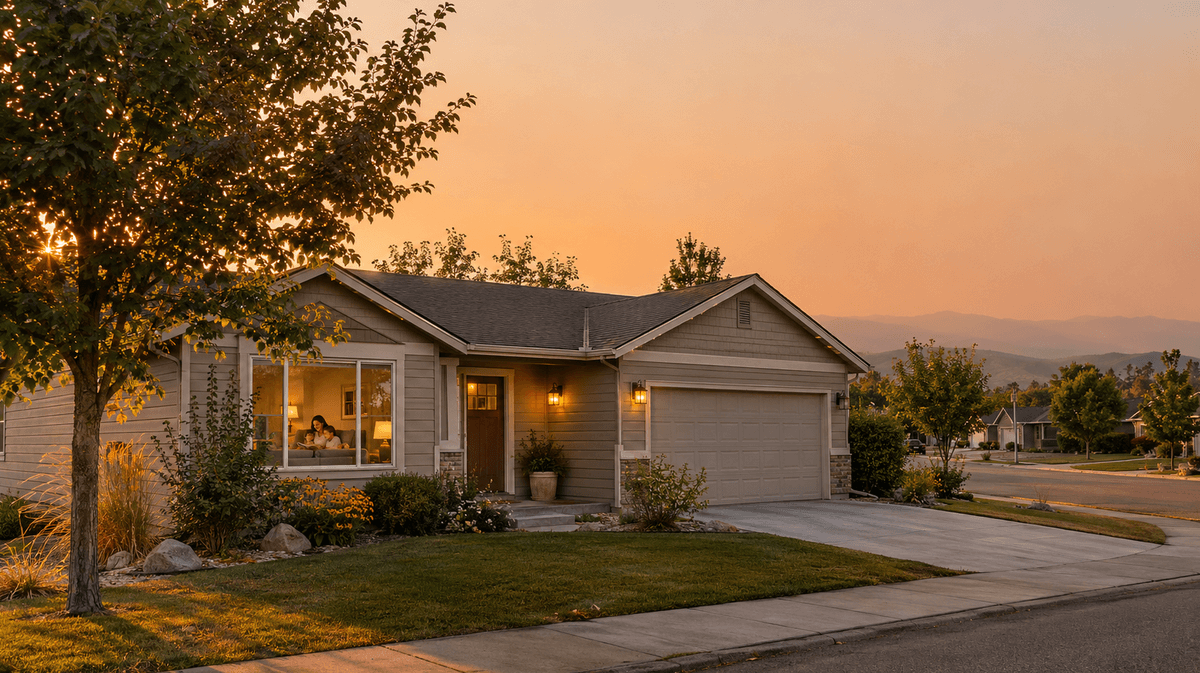
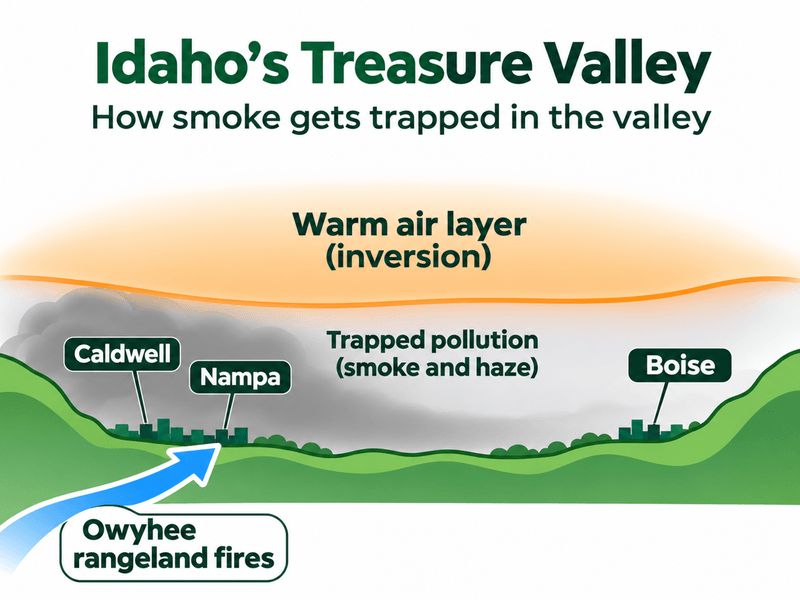
Nampa's smoke rarely starts nearby. As the Idaho wildfire and smoke map shows, it usually rides in from southwest Idaho rangeland or from Oregon and Washington. In 2026, the valley went from Moderate to Very Unhealthy in one weekend.
Why Nampa's Smoke Hangs On Longer Than Boise's
Smoke lingers in Nampa because the town sits on the lower, western end of the Treasure Valley, where inversions are harder to break. Meteorologists told the Idaho Press that inversions last longer here than in Boise and Meridian.
An inversion is warm air sitting over cooler ground air. It acts like a lid, holding smoke and PM2.5, the fine particles 2.5 micrometers or smaller, near the ground, often overnight. The same lid traps winter pollution.
What Today's Nampa AQI Means for Your Home
AQI 100 is Filterbuy's action line. At 100 and above, run a MERV 13 filter in your HVAC with the fan set to "On," put a portable HEPA air cleaner in each occupied room, bedrooms first, and close up the house. Below 100, use the time to get a MERV 13 in and spares on hand.
Categories and ranges follow the U.S. EPA AQI. We act at 100, the top of Moderate, rather than waiting for the Unhealthy for Sensitive Groups range to begin at 101. Kids, older adults, pregnant people, and people with heart or lung disease face the most risk and should follow their doctor's advice and guidance from Idaho Health and Welfare.
What Nampa's Burn Rules Allow on Smoky Days
Inside Nampa city limits, open burning is banned once the forecast AQI reaches 60, per Idaho DEQ's local ordinance table, and DEQ advisory notices limit indoor wood burning at 74. Because 60 sits below the point where most people smell smoke, Filterbuy treats it as the day to check the DEQ burn map and your filter.
Thresholds from Idaho DEQ's Treasure Valley ordinance table and DEQ advisory notices. Confirm current rules with your city or county before burning.
During a DEQ Air Quality Advisory, all outdoor burning is off limits, fire pits included. Outside city limits, you also need an Idaho Department of Lands burn permit from May 10 to October 20
How to Protect Your Nampa Home's Indoor Air
Start with official guidance: check AirNow's smoke and health guidance and Idaho DEQ, and follow any instructions to stay in or leave. Then, at AQI 100 and above, take these steps in order.
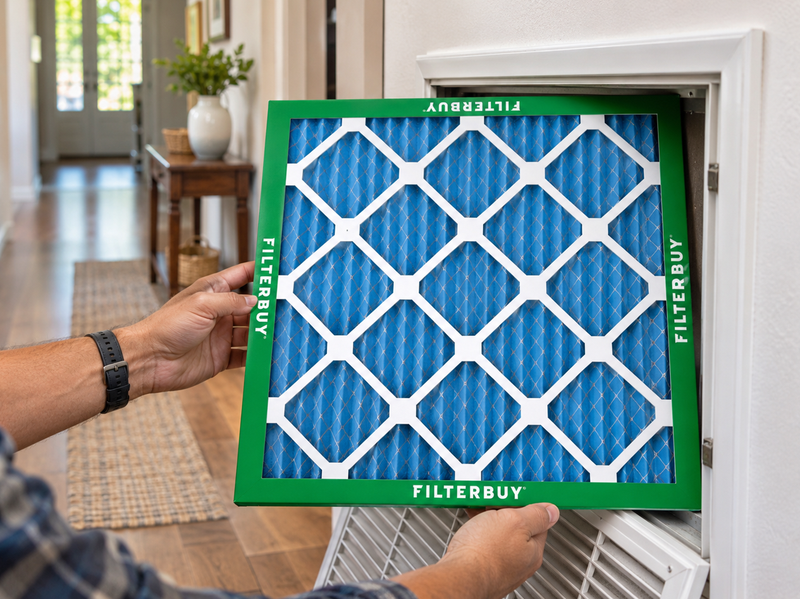
1. Put a MERV 13 in the HVAC. It's the whole-home layer. The EPA recommends MERV 13 or higher in central systems during smoke events and notes most furnaces can take it when the filter is replaced often. Find your filter size first.
2. Set the thermostat fan to "On." "Auto" filters only while heating or cooling runs. Running the fan is the one smoke fix Filterbuy recommends that costs nothing.
3. Run a portable HEPA air cleaner in each occupied room, bedrooms first. That's Filterbuy's recommendation, and it's a second layer that treats a single room harder than the central system can. Choose one that doesn't produce ozone, since the EPA advises against ozone-producing cleaners, and skip ionizers.
4. Close up the house. Shut windows and doors before dawn, when overnight inversions push smoke down. Switch to recirculate at home and in the car on I-84, go easy on swamp coolers, and skip candles, frying, smoking, and non-HEPA vacuuming.
No central HVAC? In apartments, homes with window units, or houses without ductwork, portable HEPA air cleaners are your main defense.
Check the filter during a smoke event, and replace it when it looks dark brown or black. That can be well before the normal interval, so keep spares on hand or use auto-delivery.
How big an air cleaner do you need? EPA's clean-room guidance calls for a smoke CADR of at least two-thirds of the room's square footage, so a 300 sq ft bedroom needs a smoke CADR of about 200. A DIY box-fan cleaner with MERV 13 filters is a reasonable stopgap, not a replacement for a certified unit. Here's how EPA-tested builds size up:
Smoke CADR from EPA chamber tests of DIY air cleaners. Room sizes use EPA's two-thirds clean-room rule.
A Filterbuy 20x20x1 MERV 13 fits the basic build. Use a certified fan from 2012 or newer, and don't leave it running unattended.
Which Filter a Nampa Home Needs, Season by Season
MERV 13 is the filter for Nampa from summer smoke through winter inversions, while MERV 11 covers spring pollen.
Seasonal pattern based on 2026 Idaho DEQ advisories.
Three lessons from building Filterbuy filters in the USA since 2013:
• MERV is a floor. It reflects the lowest efficiency a filter holds as it loads, so two "13" filters can perform differently.
• Depth helps airflow. In EPA's box-fan tests, a shrouded 4-inch MERV 13 moved 123% more smoke-cleaning air than the basic 1-inch design.
• Fit beats both. As our MERV 13 filter guide puts it, "The mistake we see most often isn't the MERV rating. It's the size."
A three-pack of 20x25x1 MERV 13 filters runs about $33 at our November 2026 multipack price, so spares are easy to keep on hand. Our guide to MERV ratings explains the full scale.
A filter can look fine by the calendar and still be dark with smoke. Once the air clears, swap in a fresh MERV 13 instead of waiting for the label date.
David Clark, Licensed HVAC Technician at Filterbuy HVAC Solutions
Supporting Statistics: What the Research Says for Nampa Homes
1. Canyon County averages 8.7 unhealthy particle-pollution days a year. The American Lung Association's 2026 report named it the Boise metro's worst county for short-term particle pollution.
Source: 188,940 Kids in Idaho are Breathing Unhealthy Levels of Air Pollution
2. Asthma ER visits rose 17% on smoke days. CDC found asthma emergency visits ran 17% above expected across 19 smoke days with an AQI of 101 or higher in 2023.
Source: Asthma-Associated Emergency Department Visits During the Canadian Wildfire Smoke Episodes
3. More than 9 million acres burned nationwide in 2026. The National Interagency Fire Center counted 64,718 fires and 9,028,873 acres from January 1 through October 16, 2026.
Source: National Fire News
Frequently Asked Questions
What MERV Rating Do I Need for Wildfire Smoke in Nampa?
MERV 13. It's the tier Filterbuy recommends for smoke, and the EPA recommends MERV 13 or higher in central systems during smoke events.
Where Can I See Live Wildfire Smoke in Nampa Right Now?
Use the live map on this page, then confirm ground-level air with Idaho DEQ's air quality forecasts, the NWS Boise smoke forecasts, or the AirNow Fire and Smoke Map.
When Does Wildfire Smoke Season End in Nampa?
In 2026, Canyon County's smoke advisories ran from late July to mid-August. Inversion season follows, usually November through February.
Do I Need a Mask Outdoors in Nampa Smoke?
Yes, if you must spend time outside on smoky days. A snug NIOSH-approved N95 helps, but dust masks and bandanas don't, and children under two shouldn't wear one, per the EPA.
Get Your Nampa Home Ready Before Fire Season
Filterbuy builds filters in our own U.S. plants in more than 600 sizes plus custom sizes. Shop MERV 13 filters in your size, or set up auto-delivery so spares arrive before next summer. Our Boise smoke map covers the rest of the valley.
Glossary
AQI (Air Quality Index): The EPA's 0 to 500 scale that turns pollutant levels into color-coded health categories.
PM2.5: Particles 2.5 micrometers or smaller, the main harmful pollutant in smoke.
MERV (Minimum Efficiency Reporting Value): A scale rating how well an HVAC filter captures particles. Filterbuy makes MERV 8, 11, and 13 filters.
CADR (Clean Air Delivery Rate): How much filtered air an air cleaner delivers.
HEPA: A high-efficiency filter standard used in portable air cleaners.
Subscribe to wildfire smoke alerts for Nampa, ID, to get a heads-up before the next event reaches your area.